
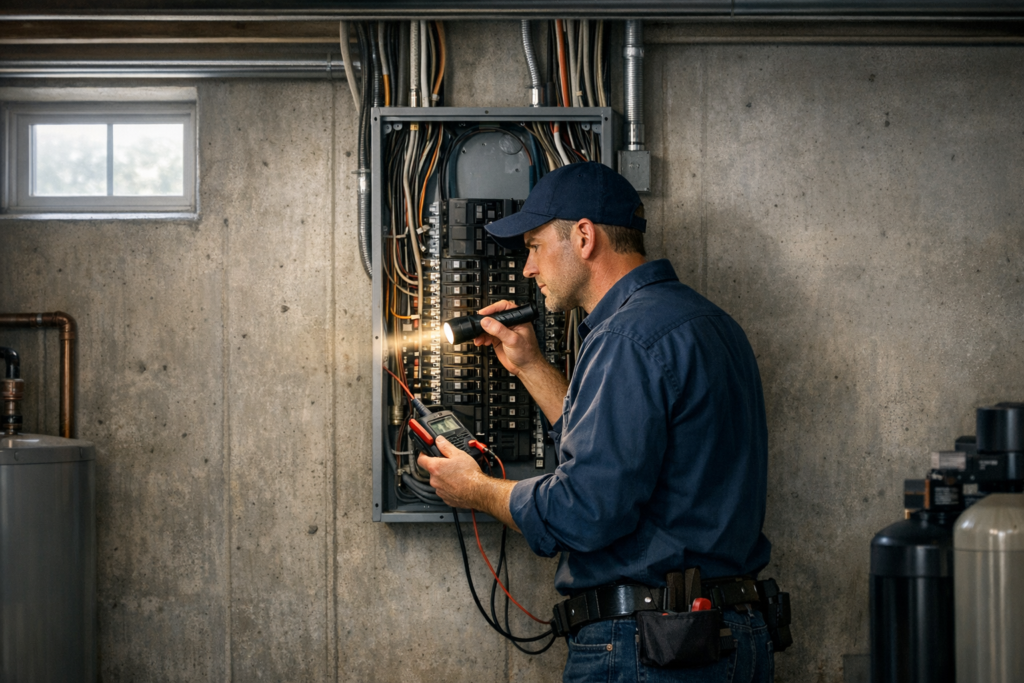
A home electrical inspection often reveals issues that are easy to miss during a walkthrough but important for safety, reliability, and future repair costs. Common findings include outdated electrical panels, improper wiring, overloaded circuits, missing GFCI protection, faulty outlets, unsafe do-it-yourself work, and electrical systems that no longer meet the demands of modern homes.
For homeowners, buyers, sellers, and real estate professionals, these findings can raise important questions: Is the issue dangerous? Is it expensive to correct? Should it be fixed before closing? Does it require a licensed electrician? Understanding what inspectors commonly find helps you make informed decisions and avoid overlooking problems that could become serious later.
Why Electrical Problems Show Up During Home Inspections
Many electrical defects develop over time. Homes throughout New Hampshire, Massachusetts, Maine, and Vermont often have a mix of original wiring, older renovations, later additions, and modern appliances placed on systems that were not designed for today’s electrical load.
A general home inspector typically performs a visual inspection of accessible electrical components. They may check the service panel, visible wiring, outlets, light fixtures, grounding, GFCI protection, and general safety conditions. However, a home inspection is not the same as a full diagnostic electrical evaluation. When an inspector identifies a concern, the next step is usually to have a qualified electrician evaluate the condition and recommend proper repairs.
This is especially important in older New England homes, where previous electrical work may have been completed in phases over many decades. Even if the lights turn on and the outlets work, hidden defects can still create shock hazards, fire risks, nuisance tripping, or unreliable power.
Outdated Electrical Panels
The electrical panel is one of the first places inspectors look because it controls power distribution throughout the home. Problems inside or around the panel often indicate whether the electrical system has been properly maintained, expanded, or overloaded.
Common panel-related findings include:
- Older panels that may not have enough capacity for modern appliances
- Double-tapped breakers where more than one conductor is improperly connected to a breaker not designed for it
- Missing breaker blanks or open spaces in the dead front cover
- Rust, corrosion, or water staining near the panel
- Improperly labeled or unlabeled circuits
- Overcrowded wiring inside the panel
- Signs of overheating, buzzing, or scorching
A panel does not need to be replaced simply because it is old, but age becomes a concern when the equipment is damaged, overloaded, obsolete, poorly maintained, or unable to support the home’s electrical demands. A licensed electrician can determine whether repair, cleanup, or a full electrical panel upgrade is the appropriate solution.
Overloaded Circuits and Insufficient Electrical Capacity
Many homes were built before central air conditioning, electric ranges, home offices, large entertainment systems, EV chargers, hot tubs, and standby generators became common. As electrical demand increases, older circuits may be pushed beyond what they were designed to handle.
Signs of possible overload include frequently tripping breakers, flickering lights, warm outlets, dimming when appliances start, and heavy reliance on extension cords or power strips. Inspectors may also note too few receptacles in certain rooms, suggesting the home’s electrical layout does not match modern usage.
Overloaded circuits should not be ignored. Breakers are designed to protect wiring from overheating, but repeated tripping indicates an underlying problem. Adding more breakers is not always the answer. The system may need dedicated circuits, load calculations, service upgrades, or redistribution of electrical loads.
Unsafe or Improper Wiring
Wiring defects are among the most important issues found during a home electrical inspection because many are hidden behind walls, ceilings, and finished surfaces. Inspectors can only evaluate visible and accessible wiring, but even visible issues can reveal a pattern of unsafe work.
Common wiring problems include:
- Open junction boxes without proper covers
- Loose or unsupported wiring
- Exposed conductors
- Improper wire connections outside approved enclosures
- Damaged cable sheathing
- Incorrect wire size for the circuit
- Unprotected wiring in basements, attics, garages, or crawl spaces
Improper wiring can create shock and fire hazards. It is often found in areas where previous owners added lighting, finished basements, installed appliances, or modified outlets without professional oversight. Electrical repairs should be completed by a licensed electrician who can correct the visible issue and evaluate whether related wiring needs attention.
Missing or Defective GFCI Protection
Ground-fault circuit interrupter protection, commonly called GFCI protection, helps reduce the risk of electric shock in areas where electricity and moisture may be present. During inspections, missing or non-functioning GFCI protection is a frequent finding.
Inspectors commonly check for GFCI protection in areas such as kitchens, bathrooms, garages, basements, laundry areas, exterior outlets, and other moisture-prone locations. Requirements have changed over time, so an older home may have been built before some current safety practices became standard.
If GFCI outlets do not trip or reset properly, or if expected protection is missing, the issue should be evaluated and corrected. In some cases, protection can be added at the receptacle. In other cases, a GFCI breaker or circuit-level solution may be more appropriate.
Ungrounded or Miswired Outlets
Outlet problems are common because receptacles wear out, get replaced incorrectly, or remain in service long after the wiring behind them has become outdated. Inspectors often use outlet testers to identify visible problems.
Common outlet defects include:
- Open grounds
- Reversed polarity
- Loose receptacles
- Cracked or damaged outlet covers
- Painted-over outlets
- Two-prong outlets in older homes
- Three-prong outlets installed without proper grounding
A three-prong outlet does not automatically mean the outlet is grounded. In older homes, someone may have replaced a two-prong receptacle with a three-prong device without installing a proper grounding path. This can create a false sense of safety, especially for electronics, appliances, and surge protection devices.
Correcting outlet issues may require replacing devices, repairing wiring, adding GFCI protection, or upgrading circuits. The right solution depends on the wiring method, age of the home, and condition of the circuit.
DIY Electrical Work and Unprofessional Repairs
One of the most common red flags during a home inspection is electrical work that appears inconsistent, improvised, or incomplete. Homeowners may not realize how often small electrical projects create long-term hazards when they are not done properly.
Examples of questionable electrical work include:
- Improper splices hidden above ceilings or behind walls
- Extension cords used as permanent wiring
- Incorrect breaker replacements
- Fixtures installed without proper electrical boxes
- Overfilled electrical boxes
- Improperly installed ceiling fans
- Unlabeled wiring from unfinished renovation projects
DIY electrical work may function temporarily but still be unsafe. A professional electrician can trace circuits, inspect connections, verify grounding and bonding, and correct work so the system operates safely and reliably.
Knob-and-Tube, Aluminum, and Aging Wiring Concerns
Older homes in New England may contain legacy wiring methods that require careful evaluation. Not all older wiring is automatically unsafe, but age, condition, modifications, insulation contact, and electrical load all matter.
Knob-and-Tube Wiring
Knob-and-tube wiring may still be found in some older homes. It was designed for a different era of electrical use and may lack grounding. Problems become more serious when the wiring has been altered, damaged, concealed improperly, or surrounded by insulation in ways that affect heat dissipation.
Aluminum Branch Circuit Wiring
Some homes may have aluminum branch circuit wiring. Aluminum wiring requires specific devices, connectors, and installation methods. Improper connections can loosen over time and create overheating risks. If an inspection notes aluminum wiring, a licensed electrician should evaluate it carefully.
Aging Cloth-Covered or Damaged Wiring
Older cable insulation can become brittle, cracked, or damaged. In basements, attics, and crawl spaces, wiring may also be affected by moisture, pests, physical impact, or past renovations. An electrician can determine whether targeted repairs or broader rewiring should be considered.
Improper Grounding and Bonding
Grounding and bonding are essential parts of electrical safety. They help provide a path for fault current and help reduce shock hazards. During a home inspection, grounding and bonding issues may be identified at the panel, outlets, water piping, grounding electrode system, or equipment connections.
These issues can be difficult for homeowners to understand because the electrical system may appear to work normally. However, improper grounding or bonding can reduce the effectiveness of safety devices and increase risk during a fault condition.
If an inspector reports grounding or bonding concerns, it is important to have them reviewed by a licensed electrician. The solution may involve correcting connections, replacing damaged components, updating grounding conductors, or addressing improper modifications.
Outdated or Unsafe Light Fixtures and Ceiling Fans
Light fixtures and ceiling fans are frequently replaced by homeowners, which makes them a common source of inspection findings. Problems may include loose fixtures, missing electrical boxes, improper fan-rated support boxes, exposed wiring, overheating trim, or incompatible bulbs.
Ceiling fans require secure mounting and proper electrical support. A standard light fixture box may not be rated to support a moving fan. If a fan wobbles, hums, or appears improperly mounted, it should be evaluated before it causes damage or becomes a safety issue.
Lighting upgrades are also an opportunity to improve efficiency. LED lighting, properly selected dimmers, occupancy controls, and updated fixture placement can make a home safer, more comfortable, and less expensive to operate over time.
Exterior Electrical Problems
Exterior electrical components face moisture, freeze-thaw cycles, snow, ice, and physical wear. In New Hampshire, Massachusetts, Maine, and Vermont, harsh winter weather can be especially hard on outdoor wiring and devices.
Inspectors may identify:
- Missing weather-resistant outlet covers
- Damaged exterior receptacles
- Improperly buried or exposed outdoor wiring
- Loose service mast components
- Deteriorated conduit or fittings
- Unsafe wiring to sheds, garages, pools, or landscape lighting
- Missing GFCI protection for exterior outlets
Outdoor electrical issues should be corrected promptly because moisture intrusion can lead to corrosion, nuisance tripping, equipment damage, and shock hazards. Winter weather can also expose weak points in exterior electrical systems, especially around generators, heat tape, outdoor lighting, and detached structures.
Smoke Alarm and Carbon Monoxide Alarm Issues
Home inspectors often report missing, outdated, improperly located, or non-functioning smoke and carbon monoxide alarms. These devices are critical safety components, but they are commonly overlooked until a real estate transaction or inspection brings them to attention.
Depending on the home and the type of system installed, alarms may be battery-operated, hardwired, interconnected, or part of a broader safety system. A licensed electrician can help replace hardwired alarms, troubleshoot interconnection problems, and ensure devices are powered correctly.
Generator and Transfer Switch Concerns
Power outages are a practical concern across New England, especially during heavy snow, ice storms, high winds, and severe weather. Many homes have portable generator connections or standby generator systems, but inspectors may identify unsafe or incomplete installations.
Generator-related findings may include improper backfeed setups, missing transfer equipment, exposed wiring, poor placement, inadequate labeling, or systems that have not been maintained. Improper generator connections can be extremely dangerous because they may backfeed utility lines or energize circuits unexpectedly.
Any generator system should be installed and serviced by qualified professionals. Proper transfer equipment, load planning, grounding considerations, and routine maintenance are essential for safe, reliable backup power.
Electrical Issues That Can Affect a Home Sale
Electrical findings can influence negotiations, insurance questions, lender concerns, and buyer confidence. Minor issues such as a damaged outlet cover may be simple to correct. More significant findings, such as obsolete panels, unsafe wiring, or missing GFCI protection, may require professional evaluation before closing.
Sellers can benefit from addressing electrical defects before listing a property. Buyers should avoid assuming that every inspection finding is either minor or catastrophic. The best approach is to have a licensed electrician separate cosmetic concerns from true safety issues and provide a practical path forward.
For property managers and real estate professionals, a prompt electrical evaluation can reduce uncertainty and help prevent delays. Clear documentation from an electrical contractor can also help all parties understand what repairs are needed, what is optional, and what should be prioritized for safety.
What to Do After an Electrical Issue Is Found
If a home electrical inspection identifies a concern, start by reviewing the inspection report carefully. Look for photos, descriptions, affected locations, and any safety recommendations. Then schedule an evaluation with a licensed electrician, especially when the issue involves the panel, wiring, grounding, overheating, GFCI protection, or signs of amateur work.
A professional electrician may recommend one or more of the following:
- Repairing unsafe wiring or connections
- Replacing damaged outlets, switches, breakers, or fixtures
- Adding GFCI or AFCI protection where appropriate
- Correcting grounding and bonding issues
- Upgrading an electrical panel or service
- Installing dedicated circuits for appliances or equipment
- Performing more detailed troubleshooting
- Planning a larger rewiring or modernization project
Do not remove panel covers, open junction boxes, or attempt repairs if you are not qualified. Electrical work can expose you to shock, arc flash, fire hazards, and code-related consequences. A licensed electrician has the tools, training, and experience to evaluate the system safely.
How to Reduce Electrical Problems Before an Inspection
Homeowners can take practical steps before a home inspection or listing appointment. While major electrical work should be left to professionals, routine observation can help identify obvious issues early.
- Test visible GFCI outlets using the test and reset buttons
- Replace cracked outlet and switch covers
- Make sure breakers are labeled as clearly as possible
- Remove extension cords being used as permanent wiring
- Check for flickering lights, buzzing devices, or warm outlets
- Confirm exterior outlet covers are intact
- Look for missing junction box covers in accessible areas
- Schedule professional service for recurring electrical issues
If your home has an older panel, frequent breaker trips, ungrounded outlets, past DIY renovations, or plans for major upgrades such as an EV charger or generator, consider having an electrician inspect the system before problems appear in a buyer’s report.
When to Call Electrical Constructors LLC
Electrical Constructors LLC provides residential and commercial electrical inspections, troubleshooting, repairs, panel upgrades, service upgrades, rewiring, lighting installation, generator installation, EV charger installation, surge protection, code corrections, and preventative maintenance throughout New Hampshire, Massachusetts, Maine, and Vermont.
If a home inspection uncovered electrical concerns, Electrical Constructors LLC can evaluate the findings, explain the risks in plain language, and recommend practical solutions based on safety, reliability, and long-term value. Whether you are buying, selling, managing, or maintaining a property, professional electrical guidance helps you move forward with confidence.
A thorough home electrical inspection can reveal hidden issues before they become expensive or hazardous. The key is knowing which problems require immediate attention, which repairs can be planned, and when an experienced licensed electrician should be involved.