
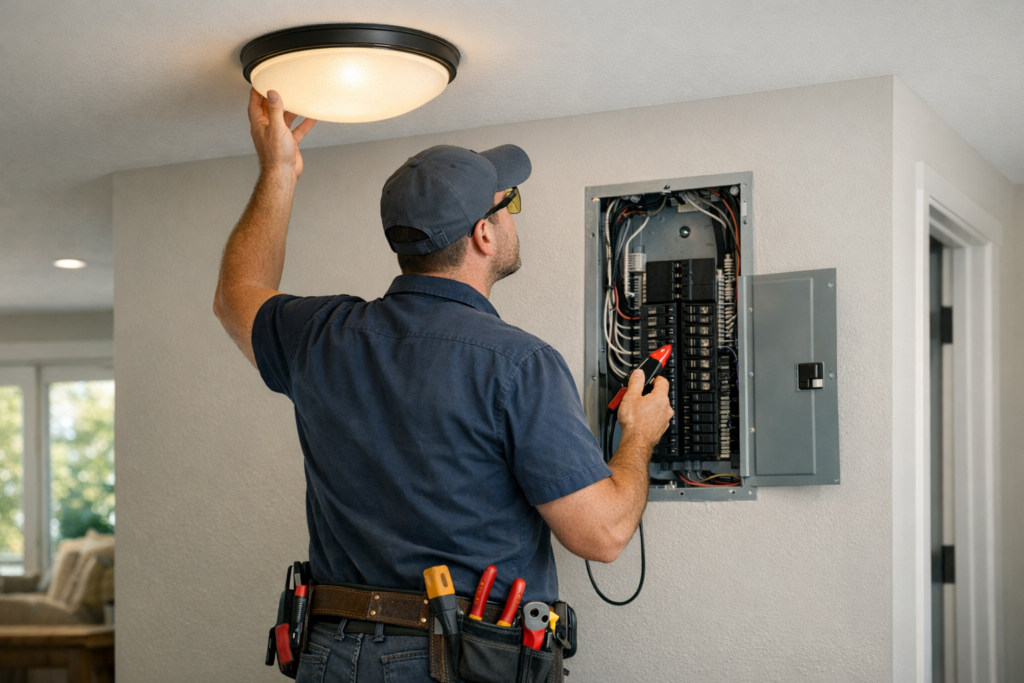
Flickering lights are more than an annoyance. While an occasional brief dimming may come from a harmless load change, repeated flickering can indicate loose wiring, an overloaded circuit, a failing switch, a damaged fixture, or a problem inside the electrical panel. Because some causes create heat, arcing, and fire risk, persistent or unexplained light flicker should be evaluated by a qualified electrician.
What Flickering Lights Can Mean
Lights flicker when the electrical supply to the fixture is interrupted, weakened, or unstable. That instability may happen at the bulb, the fixture, the switch, the circuit, the panel, or even at the utility service connection. The key is determining whether the issue is isolated to one light or appears throughout the property.
In homes and commercial buildings throughout New Hampshire, Massachusetts, Maine, and Vermont, lighting issues are especially common in older properties, renovated spaces, and buildings with growing electrical demands. Modern appliances, HVAC equipment, office technology, EV chargers, and backup power systems can all place new stress on electrical infrastructure that was not originally designed for today’s usage.
Common Causes of Flickering Lights
The right repair depends on the source of the problem. Some causes are simple, but others require immediate professional attention.
Loose or Failing Bulbs
A bulb that is not fully seated can lose contact with the socket and flicker. This is one of the easiest issues to check. Turn the light off, allow the bulb to cool, and confirm it is properly installed. If the bulb continues to flicker after replacement, the problem is likely deeper than the bulb itself.
Incompatible Dimmer Switches
LED bulbs and dimmer switches must be compatible. Older dimmers designed for incandescent bulbs may cause LED lights to flicker, buzz, shimmer, or fail prematurely. In many cases, replacing the dimmer with an LED-compatible model solves the issue, but the wiring and load rating should still be verified.
Loose Wiring Connections
Loose wiring is one of the most serious causes of flickering lights. A poor connection can create resistance, heat, and electrical arcing. This can happen at a switch, receptacle, junction box, fixture, breaker, neutral connection, or panel termination. If flickering is accompanied by buzzing, warmth, discoloration, a burning smell, or intermittent power loss, stop using the affected area and call a licensed electrician.
Overloaded Circuits
Lights may dim or flicker when a major appliance starts because motors require a surge of power at startup. Brief dimming when an air conditioner, furnace blower, sump pump, refrigerator, compressor, or power tool turns on can be normal in some systems. However, frequent or severe dimming may point to an overloaded circuit, undersized wiring, excessive voltage drop, or a panel that needs evaluation.
Failing Light Fixtures or Switches
Fixtures and switches wear over time. Internal contacts can loosen, sockets can degrade, and heat damage may occur if a fixture has been used with the wrong bulb type or wattage. Flickering that follows one fixture, even after the bulb is replaced, often means the fixture or switch needs inspection.
Electrical Panel Problems
If flickering affects multiple rooms or circuits, the electrical panel may be involved. Potential issues include loose breakers, deteriorated bus connections, damaged neutral conductors, corrosion, improper past repairs, or a service capacity problem. Panel-related symptoms should never be ignored because they can affect the safety and reliability of the entire property.
Utility Service Issues
Sometimes the source is outside the building. A damaged service drop, loose utility connection, failing transformer, or storm-related issue may cause lights to pulse or dim across the property. Severe winter weather, ice, wind, and downed limbs in New England can all contribute to service instability. An electrician can help determine whether the issue is within the building or should be reported to the utility provider.
When Flickering Is a Warning Sign
Not every flicker is an emergency, but certain patterns should be taken seriously. The more widespread, frequent, or intense the flickering is, the more important it becomes to schedule an electrical inspection.
- Lights flicker in several rooms at the same time.
- Flickering gets worse when appliances or equipment start.
- Switches, receptacles, or fixtures feel warm.
- You hear buzzing, sizzling, crackling, or popping sounds.
- There is a burning smell or visible discoloration.
- Breakers trip repeatedly or will not reset properly.
- Lights brighten and dim unpredictably.
- The issue began after renovations, storm damage, or new equipment installation.
If lights brighten suddenly while others dim, that can point to a neutral problem, which may damage electronics and create unsafe voltage conditions. This should be handled promptly by a qualified electrician.
Residential Concerns Homeowners Should Understand
In a home, flickering lights can be linked to everyday usage, aging wiring, outdated panels, or past electrical work that was not completed properly. Older and historic homes throughout New England may have had multiple renovations over the years, and lighting circuits are sometimes extended, patched, or combined in ways that create long-term reliability problems.
Homeowners should pay attention to where and when the flickering occurs. A single lamp may be a bulb issue. A single ceiling fixture may indicate a fixture, switch, or connection problem. Flickering across an entire floor or the whole house is more concerning and may require panel or service troubleshooting.
It is also important to consider recent changes. New appliances, heat pumps, workshop equipment, EV chargers, generators, hot tubs, or additions can change how the electrical system performs. If flickering started after new equipment was installed, the circuit design and electrical capacity should be reviewed.
Commercial and Property Management Considerations
For businesses, facility managers, and property managers, flickering lights can affect more than comfort. They can disrupt productivity, create tenant complaints, shorten the life of lighting systems, and signal electrical issues that could lead to downtime.
Commercial lighting systems often include larger panelboards, multi-circuit lighting layouts, emergency lighting, occupancy sensors, contactors, transformers, and LED drivers. Flicker can come from a failing driver, poor phase balancing, voltage fluctuation, overloaded circuits, or deteriorating connections inside distribution equipment.
In commercial buildings, it is especially important to document the pattern. Note whether the flicker affects a single fixture, one tenant area, one panel, or the entire building. This information helps an electrician troubleshoot more efficiently and reduces unnecessary disruption.
Why You Should Not Ignore Repeated Flickering
Repeated flickering can be an early warning before a more serious failure. Electrical systems often show subtle symptoms before breakers trip, equipment fails, or wiring overheats. Addressing the problem early can help prevent damage, improve safety, and avoid more expensive repairs later.
- Fire prevention: Loose connections and arcing can generate dangerous heat.
- Equipment protection: Voltage instability can damage appliances, electronics, lighting drivers, and business systems.
- System reliability: Small electrical faults often become larger problems when left unresolved.
- Energy efficiency: Poor connections and outdated controls can waste power and shorten component life.
- Code correction opportunities: An inspection may reveal outdated or unsafe conditions that should be corrected.
What You Can Safely Check Before Calling an Electrician
There are a few simple observations you can make without opening electrical equipment or exposing wiring.
- Replace the bulb with a known good bulb of the correct type.
- Confirm the bulb is compatible with the fixture and dimmer.
- Check whether the flicker happens in one fixture, one room, or the whole building.
- Notice whether the flicker occurs when a large appliance or motor starts.
- Look for visible signs of heat, discoloration, or damage at switches and fixtures.
- Write down when the issue happens and how long it lasts.
Do not remove panel covers, open junction boxes, tighten breakers, or handle wiring unless you are qualified to do so. Electrical components can remain dangerous even when a switch is off.
How a Licensed Electrician Troubleshoots Flickering Lights
A professional electrical diagnosis is more than replacing parts until the flicker stops. An experienced electrician looks at the complete system and follows the symptoms to the source.
Depending on the situation, troubleshooting may include inspecting fixtures and switches, testing voltage, checking neutral and grounding connections, evaluating circuit loads, examining panel components, identifying shared circuits, and reviewing the condition of service equipment. For commercial properties, testing may also involve lighting controls, transformers, LED drivers, and distribution equipment.
The goal is to determine whether the issue is a simple component failure, a wiring problem, an overloaded circuit, a panel issue, or a service-related concern. Once the source is known, the electrician can recommend a repair that improves safety and long-term reliability.
Repair and Upgrade Options
The proper solution depends on the cause of the flickering lights. Common corrective work may include replacing incompatible dimmers, repairing loose connections, replacing damaged fixtures, installing dedicated circuits, correcting overloaded circuits, upgrading lighting controls, repairing panel issues, or recommending an electrical panel upgrade when capacity or condition is a concern.
For older homes and commercial buildings, flickering may also reveal the need for broader improvements such as rewiring, service upgrades, surge protection, or preventative maintenance. These upgrades can support modern electrical loads, improve reliability during seasonal demand changes, and reduce the risk of recurring issues.
Cost Factors to Keep in Mind
The cost to resolve flickering lights depends on the complexity of the problem. A simple dimmer replacement or fixture repair is typically less involved than tracing an intermittent wiring fault or correcting a panel issue. Commercial troubleshooting may also require more time if the building has multiple panels, lighting zones, or tenant spaces.
Factors that influence cost include the number of affected fixtures, accessibility of wiring, age of the electrical system, whether new circuits are needed, panel condition, fixture type, and whether the issue is intermittent. A thorough diagnosis is important because the cheapest quick fix may not address the actual safety concern.
Preventing Lighting Problems Before They Become Serious
Preventative maintenance helps reduce lighting issues in both homes and commercial buildings. Property owners should replace failing fixtures promptly, use bulbs and controls that are rated for each other, avoid overloading circuits, and schedule electrical inspections when adding major equipment.
Businesses and managed properties benefit from routine electrical maintenance because lighting systems often run for long hours. Periodic inspections can identify loose terminations, heat damage, aging breakers, failing LED drivers, and overloaded panels before they cause outages or safety concerns.
In New Hampshire, Massachusetts, Maine, and Vermont, generator preparedness and surge protection are also worth considering because storms, outages, and utility fluctuations can be hard on electrical systems and sensitive electronics.
When to Call Electrical Constructors LLC
If flickering lights are frequent, widespread, worsening, or accompanied by heat, noise, odor, tripped breakers, or power loss, it is time to call a licensed electrical contractor. Electrical Constructors LLC provides residential, commercial, industrial, and new construction electrical services throughout New Hampshire, Massachusetts, Maine, and Vermont.
Our team can inspect the affected lighting, troubleshoot circuits, evaluate electrical panels, correct unsafe wiring conditions, install updated lighting controls, and recommend practical upgrades when needed. Whether the problem is in a single room, an older home, a commercial tenant space, or an entire building, professional diagnosis is the safest way to protect your property and restore reliable power.
Flickering may seem minor at first, but electrical warning signs should never be dismissed. A timely inspection can identify the cause, reduce risk, and give you confidence that your electrical system is operating safely.