
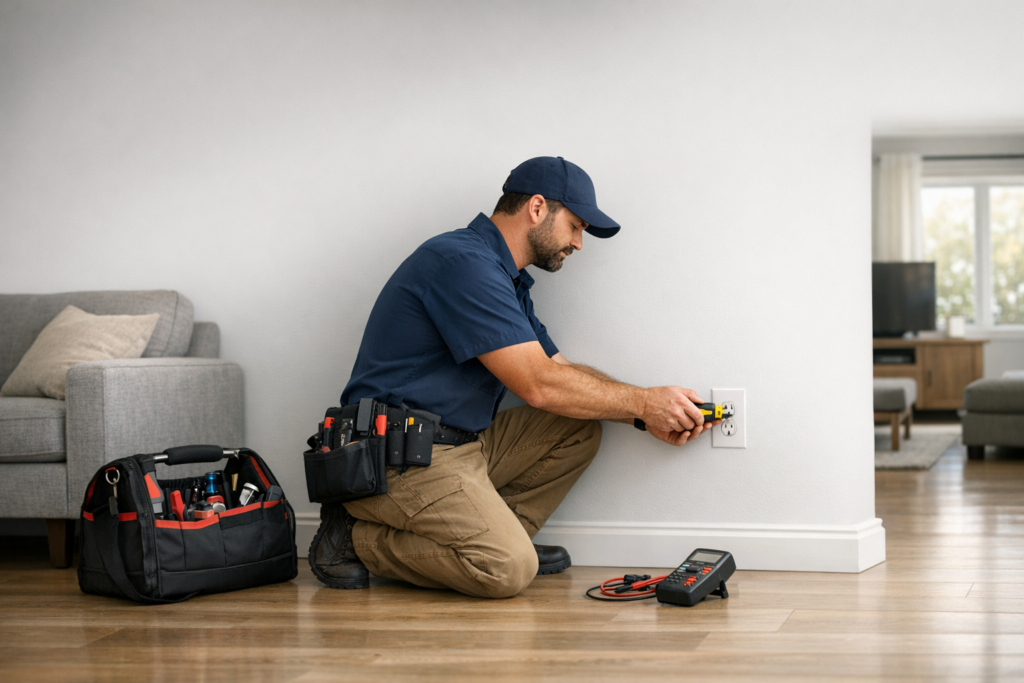
If you have an electrical outlet not working, the cause may be as simple as a tripped GFCI outlet or as serious as damaged wiring inside the wall. The safest first step is to stop using the outlet, unplug anything connected to it, and look for obvious signs of trouble such as burning smells, discoloration, sparks, buzzing, or heat. Some outlet problems can be checked safely from the outside, but many require proper testing by a licensed electrician.
A dead outlet is not just an inconvenience. In homes, businesses, rental properties, and older New England buildings throughout New Hampshire, Massachusetts, Maine, and Vermont, a nonworking receptacle can be a warning sign of loose connections, overloaded circuits, aging wiring, moisture exposure, or a failing breaker. Understanding the most common causes can help you decide what is safe to check and when it is time to call a professional.
Common Reasons an Electrical Outlet Stops Working
An outlet can stop working for several reasons. Some problems are isolated to one receptacle, while others affect multiple outlets, lights, or appliances on the same circuit. The most common causes include a tripped GFCI, a tripped circuit breaker, a loose wire connection, a damaged receptacle, an overloaded circuit, or a wiring problem upstream from the outlet.
Before assuming the outlet itself has failed, it helps to think of your electrical system as a connected path. Power leaves the electrical panel, travels through wiring, passes through devices or junction points, and eventually reaches the outlet. A problem anywhere along that path can make one or more receptacles stop working.
Start With the Safest Basic Checks
There are a few simple checks homeowners and property managers can make without removing the outlet cover or touching wiring. These steps do not repair the underlying issue, but they may help identify an obvious cause.
- Unplug the device and test it in a known working outlet.
- Check whether other outlets or lights in the room are also out.
- Look for a nearby GFCI outlet with a reset button.
- Check the electrical panel for a tripped breaker.
- Look for visible damage, burn marks, cracks, or a loose receptacle.
- Stop immediately if you smell burning, hear buzzing, see sparks, or feel heat.
Never remove an outlet from the wall, touch exposed wiring, or attempt electrical repairs unless you are qualified to do so. Even when an outlet appears dead, conductors inside the box may still be energized.
A Tripped GFCI Outlet May Be the Cause
One of the most common reasons for an electrical outlet not working is a tripped GFCI. A ground fault circuit interrupter is designed to shut power off quickly when it detects an imbalance in electrical current. This helps reduce shock hazards, especially in damp or moisture-prone areas.
GFCI protection is commonly found in kitchens, bathrooms, garages, unfinished basements, laundry areas, exterior receptacles, and other locations where moisture may be present. Depending on how the circuit is wired, one GFCI device can protect multiple downstream outlets. That means a dead outlet may be controlled by a GFCI located in another room, the basement, the garage, or outside.
How to Check a GFCI Safely
Look for outlets with small Test and Reset buttons. Press the Reset button firmly. If power returns, the GFCI had tripped. If it immediately trips again, will not reset, or only works intermittently, there may be moisture, a fault on the circuit, a defective GFCI device, or a wiring issue that needs professional attention.
Outdoor outlets in New England are especially vulnerable to moisture, snow, ice, and weather exposure. A wet exterior receptacle, damaged cover, or improperly sealed outdoor box can cause repeated GFCI trips and should be inspected by a licensed electrician.
A Circuit Breaker May Have Tripped
A tripped circuit breaker is another common cause of a dead outlet. Breakers are safety devices that shut off power when a circuit draws too much current or experiences a fault. If several outlets or lights stopped working at the same time, the electrical panel is a logical place to check.
A tripped breaker may not always look dramatically different from the others. Some breakers move to the middle position rather than fully to Off. To reset a breaker safely, it typically must be moved fully to Off and then back to On. If it trips again, do not keep resetting it. Repeated tripping can indicate an overload, short circuit, ground fault, faulty appliance, damaged wiring, or failing breaker.
Why Breakers Trip
Breakers can trip when too many devices are running on the same circuit. Space heaters, window air conditioners, microwaves, hair dryers, power tools, and commercial equipment can draw significant current. In older homes and buildings, circuits may not have been designed for today’s electrical loads, which can lead to nuisance trips or unsafe operating conditions.
If a breaker trips frequently, the answer is not to install a larger breaker. Breakers must be properly matched to the circuit wiring and equipment. Increasing breaker size without evaluating the wiring can create a fire hazard. A licensed electrician can determine whether the circuit is overloaded, damaged, improperly wired, or in need of an upgrade.
The Outlet Itself May Be Worn Out or Damaged
Receptacles do not last forever. Over time, the internal contacts that grip a plug can loosen. If plugs fall out easily, feel loose, or only work when positioned a certain way, the outlet may be worn or damaged. A loose connection can create heat and arcing, which increases the risk of electrical failure or fire.
Visible damage is also a warning sign. Cracked outlet faces, discoloration, scorch marks, melted plastic, or a burnt odor should be treated seriously. Do not use an outlet that appears damaged. Shut off power to the circuit if it is safe to do so and contact a qualified electrician for inspection and replacement.
Loose Wiring Can Interrupt Power
Loose wiring is one of the more concerning reasons an outlet stops working. Wires can loosen over time because of age, vibration, poor installation, repeated plugging and unplugging, or thermal expansion and contraction. When a conductor is not firmly connected, the outlet may work intermittently, stop working completely, or create heat inside the electrical box.
Loose connections can also affect downstream outlets. In many circuits, power passes through one device box before continuing to the next. If a connection fails at one receptacle, the outlets after it may lose power even though they are not damaged.
This is one reason professional troubleshooting matters. A skilled electrician does not simply replace the visible dead outlet. They test for voltage, inspect the circuit path, check connections, and determine whether the problem is at the receptacle, upstream device, junction box, breaker, or wiring.
Backstabbed Connections and Poor Installation Practices
Some receptacles are wired using push-in terminals on the back of the device, often called backstab connections. While these may be allowed on certain devices when used within listing requirements, they can be more prone to poor contact or loosening over time than properly tightened terminal connections. In homes with intermittent outlets, flickering lights, or outlets that fail after years of use, weak connections are often worth investigating.
Other installation issues can also cause outlet failures, including overcrowded boxes, damaged insulation, loose wire nuts, improper splices, or receptacles not secured firmly in the wall. These problems are not always visible from the outside, which is why removing devices and testing wiring should be left to qualified professionals.
An Upstream Outlet or Junction May Have Failed
If one outlet is dead but the breaker is on and no local GFCI appears tripped, the issue may be upstream. Electrical circuits commonly serve multiple outlets in sequence. A failed connection at one device can shut off power to another outlet farther down the line.
This can make troubleshooting confusing. The outlet that appears to be the problem may only be the first obvious symptom. An electrician may need to test several receptacles, switches, and junction points to locate where power is being lost.
This is especially common in older homes, renovated spaces, additions, and buildings with a mix of original and newer wiring. New England properties often have electrical systems that have been modified over many decades, making professional diagnosis especially valuable.
Moisture Can Cause Outlet Problems
Moisture and electricity are a dangerous combination. Outlets in bathrooms, kitchens, basements, garages, exterior walls, porches, and outdoor areas are more likely to experience moisture-related issues. Water intrusion can trip GFCI protection, corrode terminals, damage receptacles, and create shock hazards.
Severe winter weather, snow melt, wind-driven rain, and freeze-thaw conditions can all affect exterior electrical components in New Hampshire, Massachusetts, Maine, and Vermont. A weather-resistant cover, properly rated exterior receptacle, and correctly installed box help protect outdoor circuits, but equipment can still wear out or become damaged over time.
If an outdoor outlet stopped working after a storm, heavy rain, snow, or ice buildup, avoid using it until it has been inspected. Moisture may still be present inside the box even after the exterior appears dry.
An Overloaded Circuit Can Lead to Dead Outlets
An overloaded circuit occurs when more current is demanded than the circuit is designed to safely carry. The breaker should trip to protect the wiring, but repeated overload conditions can still stress outlets, plugs, and connections over time.
Common overload situations include using multiple high-wattage devices on one circuit, relying heavily on extension cords, running portable heaters for long periods, or adding modern electronics to older circuits that were not designed for today’s usage. Commercial spaces may also overload circuits when office equipment, point-of-sale systems, refrigerators, tools, or specialty equipment are added without evaluating available capacity.
If an outlet stops working when certain equipment runs, or if breakers trip during predictable usage patterns, a licensed electrician can assess load demand and determine whether additional circuits, dedicated outlets, panel upgrades, or service upgrades are appropriate.
The Electrical Panel or Breaker May Be the Problem
Sometimes the issue is not the wall outlet but the panel feeding it. Breakers can wear out, panel connections can loosen, and older electrical panels may develop reliability concerns. If multiple circuits are behaving unpredictably, lights flicker, breakers feel hot, or there are signs of corrosion or burning in the panel area, professional evaluation is important.
Electrical panels should only be opened and serviced by qualified electricians. There are energized components inside a panel even when individual breakers are turned off. For homeowners and business owners, the safest action is to observe from the outside and call a professional when something does not look, sound, or smell right.
Warning Signs That Require Immediate Attention
A nonworking outlet should be taken seriously when it comes with signs of overheating, arcing, or electrical damage. Stop using the outlet and contact a licensed electrician if you notice any of the following:
- Burning smell near an outlet, switch, or panel
- Scorch marks, discoloration, or melted plastic
- Sparks when plugging in or unplugging a device
- Buzzing, crackling, or sizzling sounds
- An outlet or wall plate that feels warm or hot
- Repeated breaker trips or GFCI trips
- Lights flickering when using the outlet
- Plugs that fit loosely or fall out
- Power that comes and goes intermittently
These symptoms can indicate loose connections, damaged wiring, overloaded circuits, or failing equipment. Delaying repair can allow heat damage to worsen behind the wall where it is not visible.
Why You Should Avoid DIY Outlet Repairs
Replacing an outlet may look simple, but electrical troubleshooting is not always straightforward. A dead receptacle can involve multiple conductors, shared circuits, GFCI protection, multi-wire branch circuits, older wiring methods, aluminum wiring concerns in some properties, or hidden junctions. Incorrect repairs can create shock hazards, fire hazards, reverse polarity, open grounds, or unreliable connections.
Professional electricians use proper test instruments and safe procedures to confirm whether power is present, verify grounding, identify open neutrals, evaluate downstream loads, and ensure the repaired outlet operates safely. They also know when a simple receptacle replacement is not enough.
For landlords, property managers, commercial owners, and facility managers, professional repair also supports tenant safety, business continuity, and long-term building reliability.
What a Licensed Electrician Checks During Outlet Troubleshooting
When Electrical Constructors LLC investigates an electrical outlet not working, the goal is to identify the actual source of the failure rather than guessing. Depending on the situation, a professional electrician may evaluate:
- Voltage at the outlet and along the circuit
- GFCI and AFCI protection where applicable
- Breaker condition and circuit performance
- Loose, damaged, or overheated conductors
- Worn receptacles and poor plug retention
- Grounding and polarity
- Upstream and downstream device connections
- Signs of moisture, corrosion, or pest damage
- Whether the circuit is overloaded for its current use
This type of methodical troubleshooting helps prevent repeat failures. If the outlet failed because of a loose upstream connection, replacing only the dead receptacle would not solve the real problem.
Preventing Future Outlet Problems
Many outlet issues can be prevented with proper use, routine inspection, and timely electrical upgrades. Homeowners and commercial property owners should pay attention to how outlets perform over time instead of waiting for a complete failure.
- Do not overload outlets with too many high-demand devices.
- Avoid using extension cords as permanent wiring.
- Replace loose, cracked, or damaged receptacles promptly.
- Use dedicated circuits for large appliances and high-load equipment when appropriate.
- Keep outdoor outlet covers closed and in good condition.
- Schedule electrical inspections for older homes, renovations, and commercial spaces.
- Address frequent breaker trips instead of repeatedly resetting them.
- Upgrade outdated electrical systems when modern demand exceeds available capacity.
Preventive maintenance is especially valuable in older homes, multi-unit properties, offices, retail spaces, workshops, and buildings with seasonal electrical demands. Catching loose connections, aging devices, and overloaded circuits early can improve safety and reduce unexpected downtime.
When a Dead Outlet Points to a Larger Electrical Issue
Sometimes a single nonworking outlet is a sign of a broader electrical problem. If your property has frequent outlet failures, flickering lights, weak power, repeated trips, outdated two-prong receptacles, limited circuits, or an older panel, the system may need a more complete evaluation.
Modern homes and businesses use far more power than properties built decades ago. Electric vehicles, home offices, mini-split systems, smart devices, commercial equipment, backup generators, and high-efficiency appliances can all change electrical demand. In some cases, the right solution may include adding circuits, upgrading the electrical panel, improving grounding, replacing damaged wiring, or planning a service upgrade.
Electrical Constructors LLC provides residential, commercial, industrial, and new construction electrical services throughout New Hampshire, Massachusetts, Maine, and Vermont, including troubleshooting, repairs, panel upgrades, service upgrades, rewiring, lighting, generators, EV chargers, surge protection, inspections, maintenance, and code corrections.
Frequently Asked Questions About Dead Outlets
Why is one outlet not working but the breaker is not tripped?
If one outlet is dead and the breaker appears on, the cause may be a tripped GFCI, a loose connection, a failed receptacle, an open neutral, or a problem at an upstream outlet or junction. A breaker that looks on may also be partially tripped, so it should be checked carefully.
Can a dead outlet be dangerous?
Yes. A dead outlet can be dangerous if the cause is loose wiring, overheating, arcing, moisture, or damaged electrical components. Do not use an outlet that shows burn marks, smells hot, sparks, buzzes, or works intermittently.
Why do several outlets stop working at the same time?
Several outlets may stop working together because they are on the same circuit. A tripped breaker, tripped GFCI, failed upstream connection, or damaged circuit wiring can interrupt power to multiple receptacles.
Should I reset the breaker if it keeps tripping?
No. If a breaker trips repeatedly, there is likely an underlying problem. Repeatedly resetting it without correcting the cause can be unsafe. Unplug connected devices and contact a licensed electrician for troubleshooting.
How do I know if an outlet needs to be replaced?
An outlet may need replacement if plugs feel loose, the face is cracked, there are scorch marks, it feels warm, it sparks, or it only works intermittently. However, the circuit should also be checked to make sure the outlet is the true source of the issue.
Need Help With an Outlet That Stopped Working?
If you have an electrical outlet not working and basic resets do not solve the problem, it is best to have the circuit inspected by a licensed electrician. Dead outlets can be caused by simple device failure, but they can also point to hidden wiring problems that require professional diagnosis.
Electrical Constructors LLC helps homeowners, businesses, contractors, developers, and property managers throughout New Hampshire, Massachusetts, Maine, and Vermont with safe, reliable electrical troubleshooting and repairs. Whether the issue is a single dead outlet, repeated breaker trips, damaged wiring, or a larger electrical system concern, professional service helps protect your property and restore dependable power.