A hot electrical outlet is not something to ignore. An outlet that feels noticeably warm, hot to the touch, smells unusual, shows discoloration, or makes crackling sounds may indicate overloaded wiring, a loose connection, a failing receptacle, or another electrical hazard that should be evaluated by a qualified electrician.
What a Hot Electrical Outlet Usually Means
An electrical outlet can heat up when resistance increases somewhere in the circuit. Resistance creates heat. In a properly installed and properly loaded outlet, that heat should be minimal. When an outlet feels hot, it often means electricity is not flowing through the device or wiring as safely and efficiently as it should.
Some outlets may feel slightly warm under certain conditions, especially when powering high-demand devices for a long period. However, there is an important difference between slightly warm and hot. If you instinctively pull your hand away, smell a burning odor, see a discolored cover plate, or notice a plug that feels hot when removed, treat the situation seriously.
Safety first: If an outlet is hot, unplug connected devices if it is safe to do so, stop using the outlet, and have it inspected by a licensed electrician. If you see smoke, sparks, melting, or signs of fire, move away from the area and contact emergency services.
Is Any Outlet Heat Normal?
Standard receptacles should not become hot during normal use. A slight temperature change may occur when an outlet is powering a large appliance, battery charger, or electronic device, but the outlet should not feel uncomfortably hot.
It is also important to distinguish between receptacles and some specialty devices. Certain dimmer switches, smart switches, USB receptacles, GFCI devices, and AFCI devices contain internal electronics that may generate slight warmth. Even then, they should not smell burnt, discolor the wall plate, buzz loudly, melt, or become too hot to touch.
If you are unsure whether the warmth is normal, the safest answer is to have the outlet checked. Electrical heat problems rarely improve on their own, and early attention can prevent damage to wiring, devices, and surrounding building materials.
Common Causes of a Hot Electrical Outlet
A hot electrical outlet can have several causes. Some are related to the device plugged into the outlet, while others involve the outlet itself, branch circuit wiring, or the electrical panel. The most common causes include circuit overloads, loose connections, worn receptacles, damaged wiring, and improper installation methods.
Overloaded Circuit
An overloaded circuit occurs when the devices connected to that circuit draw more power than the wiring and breaker are designed to handle. The breaker should trip when a circuit is overloaded, but outlets and connections can still heat up before that happens, especially if the load is heavy or continuous.
Common overload situations include plugging space heaters, portable air conditioners, dehumidifiers, microwaves, power tools, or multiple office devices into the same circuit. In homes and businesses throughout New Hampshire, Massachusetts, Maine, and Vermont, winter heating equipment and seasonal electrical loads often reveal circuits that were already close to capacity.
Warning signs of an overloaded circuit include frequently tripping breakers, dimming lights when an appliance starts, warm outlet covers, buzzing, or cords that feel hot during use.
Loose Wire Connections
Loose wiring is one of the most serious causes of outlet heat. When a wire is not securely connected to the receptacle terminal, electricity may arc or pass through a smaller contact area than intended. That resistance can generate significant heat.
Loose connections can happen over time due to vibration, repeated plug use, thermal expansion and contraction, poor installation, or older wiring methods. In some cases, wires may be connected using push-in terminals on the back of a receptacle instead of properly tightened screw terminals, and those connections can become unreliable as the outlet ages.
A loose wire connection should be corrected promptly by a qualified electrician. Simply replacing the cover plate or avoiding the outlet does not fix the underlying hazard.
Worn or Damaged Receptacle
Outlets wear out. If a plug feels loose, slips out easily, or does not stay firmly seated, the internal contacts may no longer grip the plug blades properly. Poor contact increases resistance, and resistance creates heat.
A worn receptacle is especially common in high-use areas such as kitchens, offices, workshops, commercial tenant spaces, retail counters, maintenance rooms, and living areas where devices are plugged in and removed often. Replacing a worn receptacle is a routine electrical repair, but it should still be done correctly with proper wiring methods and appropriate device ratings.
High-Wattage Appliances and Space Heaters
Portable space heaters, toaster ovens, hair dryers, window air conditioners, and similar high-wattage appliances can place a heavy demand on a circuit. If the outlet, wiring, or connection points are already weak, these loads can make heat problems more noticeable.
Space heaters deserve particular caution. They should be plugged directly into a properly rated wall outlet, not into extension cords or power strips. If the outlet becomes warm or hot while operating a space heater, stop using that outlet and arrange a professional inspection.
Damaged Plugs, Cords, or Power Strips
The outlet is not always the only problem. A damaged plug, loose cord end, cracked charger, overloaded power strip, or low-quality extension cord can create heat at the point of connection. If both the outlet and plug feel warm, the device or cord may be contributing to the issue.
Do not continue using cords with cracked insulation, bent plug blades, burn marks, or melted plastic. These are warning signs that the equipment should be removed from service.
Incorrect Outlet Rating or Improper Replacement
Receptacles must be appropriate for the circuit they serve and installed according to accepted electrical practices. Installing the wrong type of receptacle, using improper connections, or replacing an outlet without understanding the circuit can create unsafe conditions.
This is one reason outlet replacement is not always as simple as it appears. A licensed electrician can confirm the circuit rating, wire condition, grounding, device type, box condition, and connection method before installing a replacement.
Aging Electrical Systems
Many homes and commercial buildings in New England have older electrical systems that have been modified over decades. Additions, renovations, finished basements, older panels, aging receptacles, and changing electrical demands can all contribute to heat-related outlet problems.
Older properties may have circuits that were never designed for today’s appliance loads, computer equipment, entertainment systems, power tools, EV charging needs, or backup power equipment. A hot outlet can be a small symptom of a larger capacity or wiring issue.
Possible Aluminum Wiring Concerns
Some older properties may contain aluminum branch circuit wiring. Aluminum wiring requires specific materials and installation practices. Improper connections between devices and aluminum conductors can overheat.
If you suspect aluminum wiring or are unsure what type of wiring your building has, do not attempt repairs yourself. An electrician can identify the wiring and recommend appropriate, code-compliant corrective options.
What You Should Do If an Outlet Feels Hot
If you discover a hot electrical outlet, take a careful, step-by-step approach. The goal is to reduce immediate risk without disturbing wiring or exposing yourself to electrical shock.
- Unplug devices from the outlet if it is safe and there is no smoke, sparking, or visible melting.
- Do not plug anything else into that outlet.
- Check whether the plug, cord, or power strip also feels hot.
- If the outlet remains hot, turn off the circuit breaker for that area if you can identify it safely.
- Look for warning signs such as discoloration, buzzing, burning odor, flickering lights, or repeated breaker trips.
- Contact a licensed electrician for troubleshooting before using the outlet again.
Do not remove the outlet cover or pull the receptacle from the box unless you are qualified to work on electrical systems. Even after a breaker is turned off, improper testing or contact with energized conductors can be dangerous.
Warning Signs That Require Immediate Attention
Some outlet problems are more urgent than others. A warm outlet should be inspected, but certain symptoms call for immediate action because they may indicate active overheating, arcing, or fire risk.
- Burning plastic or fishy electrical odor near the outlet
- Brown, black, or yellow discoloration on the receptacle or cover plate
- Sparks when plugging in or unplugging a device
- Crackling, sizzling, or buzzing sounds from the outlet
- Melted plug ends, scorched cords, or warped outlet plastic
- Breaker trips repeatedly after resetting
- Lights flicker or dim when the outlet is used
- The wall around the outlet feels hot
If you see smoke, flames, or active melting, do not troubleshoot the outlet. Leave the area and contact emergency services.
Why You Should Not Ignore a Hot Outlet
A hot outlet is more than an inconvenience. Heat is one of the key signs that an electrical connection may be failing. Left uncorrected, the problem can damage the receptacle, weaken insulation, affect connected equipment, or increase the risk of an electrical fire.
Ignoring the issue can also make troubleshooting more expensive later. A receptacle replacement may be straightforward when caught early. If heat damages wiring inside the box or affects other devices on the same circuit, the repair may become more involved.
For property managers, business owners, and facility managers, hot outlets should be treated as a maintenance priority. A single overheated receptacle can disrupt operations, damage equipment, create tenant concerns, or indicate a broader electrical system issue that needs professional evaluation.
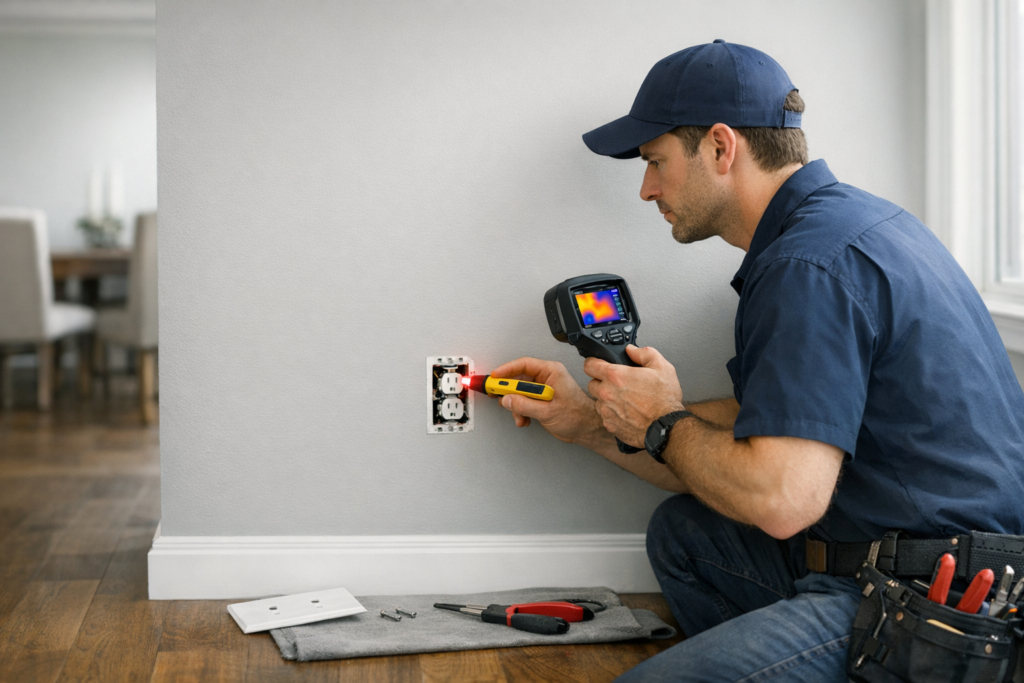
How an Electrician Diagnoses an Overheating Outlet
A professional inspection looks beyond the surface temperature of the outlet. The electrician needs to determine why heat is being produced and whether the problem is isolated or part of a larger circuit issue.
Depending on the situation, troubleshooting may include:
- Checking the outlet for heat damage, wear, cracks, and loose plug tension
- Testing voltage and confirming proper circuit behavior
- Inspecting wire terminations and device connections
- Evaluating the electrical box for overheating or damaged insulation
- Identifying other outlets or fixtures on the same branch circuit
- Checking for signs of overloaded circuits or nuisance breaker trips
- Determining whether the receptacle type is appropriate for the circuit
- Assessing whether connected equipment is drawing excessive current
In some cases, the solution may be replacing a worn receptacle. In others, the electrician may find damaged wiring, overloaded circuits, an undersized electrical service for the building’s demand, or a need for additional dedicated circuits.
Hot Outlets in Older Homes and Buildings
Older homes and commercial buildings throughout New Hampshire, Massachusetts, Maine, and Vermont often have electrical systems that were installed long before modern electrical loads became common. Historic homes, older multifamily properties, converted buildings, and aging commercial spaces can all have hidden wiring concerns.
Common issues include limited circuit capacity, outdated receptacles, ungrounded outlets, older panels, previous do-it-yourself modifications, and circuits that serve too many rooms or devices. Severe winter weather can also increase electrical demand when occupants rely on supplemental heat, dehumidification, generator connections, or additional equipment during power outages.
If a hot electrical outlet appears in an older property, it may be worth scheduling a broader electrical inspection. The immediate outlet may need repair, but the larger goal is to understand whether the system can safely support current and future electrical needs.
Can a Hot Outlet Be Fixed by Replacing the Receptacle?
Sometimes, yes. If the receptacle is worn, cracked, loose, or internally damaged, replacing it with the correct device and proper wiring connections may solve the problem. However, replacement is not always enough.
If the heat is caused by an overloaded circuit, damaged branch wiring, poor connections upstream, an incompatible device, or a panel-related issue, a new outlet may only hide the symptom temporarily. That is why proper diagnosis matters.
A qualified electrician will look for the cause before making repairs. The goal is not just to install a new outlet. The goal is to restore a safe, reliable electrical connection.
How to Help Prevent Overheated Outlets
You can reduce the risk of overheated outlets by using electrical systems as intended and addressing early warning signs before they become serious.
- Avoid overloading outlets with multiple high-wattage devices.
- Plug space heaters and large appliances directly into wall outlets.
- Do not rely on extension cords or power strips as permanent wiring.
- Replace loose, cracked, or damaged receptacles promptly.
- Stop using cords and plugs that show heat damage.
- Schedule electrical inspections for older homes and commercial buildings.
- Consider dedicated circuits for equipment with heavy electrical demand.
- Have frequent breaker trips or flickering lights professionally diagnosed.
Preventative maintenance is especially valuable for rental properties, commercial spaces, industrial facilities, and buildings with critical equipment. Routine inspections can identify weak connections, overloaded circuits, aging devices, and panel concerns before they cause downtime or safety issues.
When to Call Electrical Constructors LLC
Call a licensed electrician if an outlet feels hot, smells burnt, shows discoloration, sparks, buzzes, or causes breakers to trip. You should also schedule service if plugs fit loosely, if multiple outlets feel warm, or if the problem happens when using high-demand equipment.
Electrical Constructors LLC provides residential, commercial, industrial, and new construction electrical services throughout New Hampshire, Massachusetts, Maine, and Vermont. Our team can troubleshoot overheating outlets, repair damaged wiring, replace worn receptacles, evaluate overloaded circuits, perform electrical inspections, and recommend upgrades that improve safety and long-term reliability.
Whether the issue is a single outlet in a home or recurring electrical problems in a commercial property, professional diagnosis is the safest way to protect your building, equipment, and occupants.
Frequently Asked Questions About Hot Outlets
Should I unplug everything if an outlet feels hot?
Yes, if it is safe to do so. Unplug connected devices, stop using the outlet, and contact a licensed electrician. If there is smoke, melting, sparks, or fire, do not touch the outlet or devices. Leave the area and contact emergency services.
Can a hot outlet cause a fire?
A hot outlet can be a fire hazard, especially if the heat is caused by loose wiring, arcing, damaged insulation, overloaded circuits, or a failing receptacle. Any outlet that becomes hot should be inspected before it is used again.
Why does my outlet feel hot only when I use a space heater?
Space heaters draw a large amount of power. If the outlet, wiring, or circuit is weak, overloaded, or not suitable for that load, heat may build up. Stop using that outlet for the heater and have the circuit evaluated.
Is a warm USB outlet normal?
Some USB receptacles contain internal electronics and may feel slightly warm during use. However, they should not become hot, smell burnt, discolor, buzz, or affect the surrounding wall. If they do, they should be inspected.
Can I replace a hot outlet myself?
Outlet replacement may look simple, but a hot outlet can indicate problems beyond the receptacle. A licensed electrician can determine whether the issue is the outlet, wiring, circuit load, electrical box, or panel. For safety, professional troubleshooting is recommended.
What if the breaker never trips but the outlet gets hot?
A breaker does not need to trip for a connection to overheat. Loose terminals, worn receptacle contacts, damaged plugs, or localized resistance can create heat without exceeding the breaker rating. That condition still requires attention.