
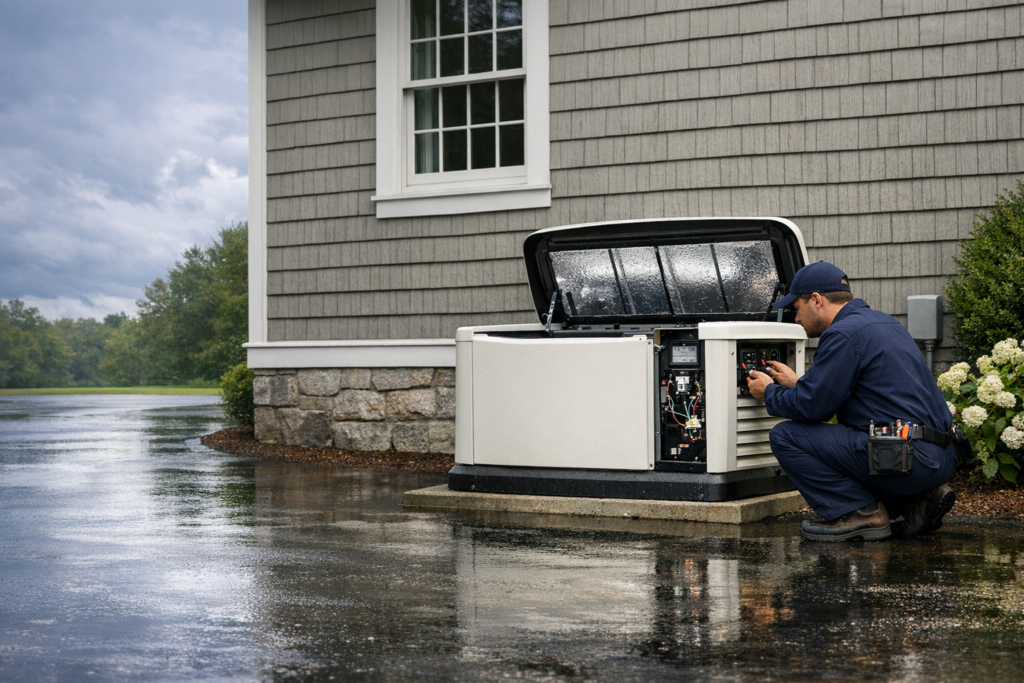
A reliable generator can make the difference between a minor inconvenience and a serious disruption during storm season. The best time to find a weak battery, low oil level, blocked air intake, or transfer switch issue is before high winds, snow, ice, or heavy rain threaten your home or business. This generator maintenance checklist explains what should be reviewed before severe weather arrives, what owners can safely observe, and when a licensed electrician should service the system.
Why Generator Maintenance Matters Before Storm Season
Generators often sit quietly for months at a time, then are expected to start instantly during a power outage. That long idle period is exactly why preventative maintenance is so important. Fuel conditions can change, batteries can weaken, rodents can damage wiring, air passages can become obstructed, and electrical connections can loosen over time.
Throughout New Hampshire, Massachusetts, Maine, and Vermont, storm-related outages are a real concern. Heavy wet snow, ice buildup, fallen branches, coastal storms, and strong winds can interrupt utility power with little warning. A standby generator or portable generator that has not been inspected may fail when it is needed most.
Regular generator maintenance helps protect:
- Heating equipment during winter outages
- Refrigerators, freezers, and sump pumps
- Medical devices and essential home circuits
- Business operations, security systems, and communications
- Electrical equipment connected through the transfer switch
- Long-term generator reliability and service life
Generator Maintenance Checklist for Homeowners and Businesses
This generator maintenance checklist is designed to help property owners understand the key areas that should be reviewed before storm season. Some basic visual checks can be performed by the owner, but service work involving electrical wiring, transfer switches, fuel connections, diagnostics, or internal components should be handled by qualified professionals.
1. Review the Generator Location and Clearance
Start with the area around the generator. A standby generator needs proper airflow to cool the engine and safely exhaust combustion gases. Leaves, snow, mulch, weeds, shrubs, storage items, and windblown debris can interfere with operation.
Check that the generator is not crowded by landscaping, fencing, outdoor furniture, or stored materials. In New England, it is especially important to consider snow accumulation and drifting. A generator that was clear in the fall may become partially blocked after the first major winter storm.
Look for:
- Leaves, sticks, or debris around the enclosure
- Vegetation growing too close to intake or exhaust areas
- Evidence of standing water near the generator pad
- Snow storage areas that could bury or block the unit
- Signs of rodents or nesting materials
- Physical damage to the enclosure or base
If the unit appears tilted, unstable, corroded, damaged, or exposed to drainage problems, have it assessed before relying on it during an outage.
2. Inspect for Visible Wear, Corrosion, or Damage
A visual inspection can reveal problems early. Walk around the generator and look for cracked covers, missing fasteners, rust, damaged conduit, frayed wiring, oil staining, fuel odors, or unusual residue. These signs do not always mean the generator is unsafe, but they should not be ignored.
For commercial properties and multifamily buildings, visual inspections should also include surrounding electrical equipment, disconnects, enclosures, and the transfer switch area. Any signs of moisture intrusion, corrosion, overheating, or impact damage should be reviewed by a licensed electrician.
3. Check Oil and Fluid Levels According to the Manufacturer
Generator engines require clean oil at the proper level. Low oil, dirty oil, or overdue oil changes can prevent the generator from running properly and may shorten engine life. Many generators will shut down automatically if oil pressure is inadequate.
Owners should follow the manufacturer’s instructions for checking oil and coolant levels where applicable. If you are unsure how to check fluids safely, schedule professional generator service instead. Never open hot components immediately after operation, and never ignore oil leaks or unexplained fluid loss.
4. Confirm the Battery Is Strong and Clean
A weak battery is one of the most common reasons a standby generator fails to start. Batteries age even when the generator is not used often. Cold weather can reduce cranking power, making marginal batteries more likely to fail during winter storms.
Battery maintenance may include checking charge condition, inspecting terminals, cleaning corrosion, confirming connections are secure, and replacing the battery when it is near the end of its service life. Because battery systems vary by model, this work should follow manufacturer guidance.
If your generator cranks slowly, shows battery warnings, fails self-tests, or has visible corrosion at the terminals, arrange service before storm season.
5. Inspect Air Filters, Intake Openings, and Exhaust Areas
Generators need clean air for combustion and cooling. A clogged air filter or blocked intake can reduce performance and contribute to overheating. Dust, pollen, insects, leaves, and nesting materials can restrict airflow, especially if the unit has not been serviced recently.
The exhaust area also needs attention. Exhaust must be able to discharge safely away from the structure. Obstructions, snow buildup, or damaged exhaust components can create serious safety concerns.
Safety warning: Never operate a generator in a garage, enclosed porch, basement, shed, or any confined space. Carbon monoxide can be deadly and may build up quickly, even if doors or windows are open.
6. Verify Fuel Supply and Fuel System Condition
A generator is only useful if it has reliable fuel. Standby generators commonly run on natural gas or propane, while many portable generators use gasoline or propane. Each fuel type has its own maintenance concerns.
For propane standby systems, confirm that the tank has adequate fuel before storm season and before predicted severe weather. For natural gas systems, a qualified professional should evaluate any concerns related to fuel supply, regulator condition, or gas piping. For gasoline-powered portable generators, old fuel can cause starting and performance problems, so storage practices and fuel condition matter.
Never attempt gas piping changes, regulator work, or fuel system repairs unless you are properly qualified. If you smell gas near a generator or fuel connection, leave the area and contact the appropriate emergency or utility resources.
7. Test the Automatic Transfer Switch
The transfer switch is the equipment that safely transfers selected loads from utility power to generator power. For standby generators, it is a critical part of the backup power system. Even if the generator engine starts, the building may not receive backup power if the transfer switch is not working correctly.
Transfer switch testing should be performed by a qualified electrician or trained generator technician. This service may include checking operation, inspecting connections, confirming proper sequencing, and verifying that the generator supports the intended circuits.
Never attempt to backfeed a home or business with a generator through a dryer outlet, receptacle, or improvised cord. Backfeeding is extremely dangerous and can injure utility workers, damage equipment, and create fire and shock hazards.
8. Run the Generator Under Proper Conditions
Many standby generators perform automatic exercise cycles. These short runs help keep the engine lubricated and allow the system to identify certain faults. However, an exercise cycle is not the same as a full maintenance inspection.
Before storm season, a professional may recommend testing the generator’s startup sequence, monitoring voltage and frequency, checking for warning codes, and evaluating operation under load where appropriate. Load testing can help confirm whether the generator is capable of supporting the circuits or equipment it is expected to power.
If the generator sounds unusual, vibrates excessively, produces smoke, struggles under load, or shuts down unexpectedly, stop using it and schedule service.
9. Review What the Generator Is Actually Powering
Many property owners assume their generator powers the entire building, but that is not always true. Some systems support only selected circuits, such as heating equipment, refrigeration, lighting, well pumps, sump pumps, internet equipment, or essential business systems.
Before storm season, review which circuits are connected to generator power. This is especially important if you have added major electrical loads since the generator was installed, such as EV chargers, heat pumps, finished living space, commercial equipment, or additional refrigeration.
A qualified electrician can help determine whether the generator and transfer equipment still match your current electrical needs.
10. Confirm Carbon Monoxide and Smoke Alarms Are Working
Generator safety does not stop at the generator itself. Carbon monoxide alarms and smoke alarms are essential, especially when backup power equipment is in use. Test alarms according to manufacturer instructions and replace batteries or outdated units as needed.
If your building relies on hardwired alarms with battery backup, confirm that the backup batteries are functioning. Older homes throughout New England may have alarm systems that need updates as part of broader electrical safety improvements.
Standby Generator Versus Portable Generator Maintenance
Standby and portable generators both require maintenance, but the safety and setup considerations are different.
Standby Generator Maintenance
A standby generator is permanently installed outside the building and connected to an automatic or manual transfer switch. These systems are typically designed to start automatically when utility power fails. Maintenance should include engine service, battery inspection, transfer switch testing, control panel review, fuel system checks, and electrical inspection.
Because standby generators are integrated into the building’s electrical system, service should be performed by qualified professionals familiar with generator equipment and electrical code considerations.
Portable Generator Maintenance
Portable generators require safe setup every time they are used. They must be located outdoors, away from doors, windows, vents, and enclosed spaces. Extension cords must be properly rated and in good condition, or the generator should connect through an approved transfer method installed by a licensed electrician.
Portable generator maintenance often includes checking fuel condition, oil level, air filters, spark plugs, cords, receptacles, and grounding instructions according to the manufacturer. Improper use can create carbon monoxide, fire, shock, and backfeed hazards.
Common Generator Problems Found Before Storm Season
Preventative service often identifies small issues before they become outage-day failures. Common problems include weak batteries, dirty oil, clogged filters, corroded terminals, rodent-damaged wiring, outdated firmware or controller faults, low propane levels, blocked airflow, loose electrical connections, and transfer switch issues.
In older residential and commercial properties, the backup power system may also reveal broader electrical concerns. Aging panels, overloaded circuits, deteriorated wiring, undersized services, and outdated equipment can affect how safely and reliably generator power is distributed.
If your generator was installed years ago and your electrical demand has changed, a maintenance visit is a smart time to discuss whether the system still meets your needs.
How Often Should a Generator Be Serviced?
A generator should be inspected and serviced according to the manufacturer’s maintenance schedule, operating hours, age, and site conditions. At minimum, many property owners schedule professional generator maintenance before storm season so the system is ready before outages become more likely.
More frequent service may be needed when a generator:
- Runs for extended periods during outages
- Serves a business, facility, or rental property
- Operates in harsh weather or coastal conditions
- Shows warning lights, fault codes, or startup problems
- Has not been professionally inspected recently
- Supports critical equipment or essential building systems
For commercial and managed properties, documenting inspections and maintenance can also help support safety programs, budgeting, and long-term asset planning.
What Owners Can Safely Check Before Calling an Electrician
Homeowners and property managers can perform basic observations without opening electrical equipment or working on energized components. These checks can help you identify when professional service is needed.
Safe owner-level checks may include:
- Keeping the area around the generator clear
- Looking for visible damage, debris, or nesting materials
- Checking for warning lights or error messages on the control panel
- Confirming propane fuel level where applicable
- Listening for unusual noises during normal exercise cycles
- Testing smoke and carbon monoxide alarms
- Reviewing which appliances or circuits are intended to receive backup power
Do not remove electrical covers, alter wiring, bypass safety controls, modify transfer equipment, or repair fuel connections yourself. Generator systems combine electricity, combustion, moving parts, and fuel, which makes professional maintenance important for safety and reliability.
When to Schedule Professional Generator Service
You should schedule professional generator service before storm season if the generator has missed maintenance, failed to start, shown fault codes, run roughly, leaked oil, produced unusual odors, or struggled during a previous outage. You should also call if recent renovations, electrical upgrades, new equipment, or EV charger installation may have changed your building’s power requirements.
Professional generator maintenance may include:
- Electrical connection inspection
- Battery testing and replacement recommendations
- Oil and filter service according to manufacturer guidance
- Air filter and spark plug evaluation where applicable
- Transfer switch inspection and operational testing
- Controller and warning code review
- Voltage and frequency checks
- Load evaluation for current electrical needs
- Inspection for weather, corrosion, or rodent damage
Electrical Constructors LLC provides residential and commercial electrical services throughout New Hampshire, Massachusetts, Maine, and Vermont, including generator installation, generator maintenance support, transfer switch service, electrical inspections, panel upgrades, troubleshooting, and storm preparedness improvements.
Storm Readiness Tips Beyond Generator Maintenance
A well-maintained generator is only one part of electrical storm preparedness. Before severe weather arrives, consider the condition of your overall electrical system and the equipment you depend on during an outage.
Helpful storm readiness steps include:
- Labeling electrical panels clearly so essential circuits are easy to identify
- Installing surge protection to help reduce damage from transient voltage events
- Keeping flashlights and battery-powered devices ready
- Charging essential electronics before forecasted storms
- Testing sump pumps and backup systems
- Reviewing emergency procedures with family members, tenants, or staff
- Scheduling electrical inspections for older homes or buildings with recurring issues
For businesses, storm preparation may also include reviewing backup power for point-of-sale systems, refrigeration, security equipment, data networks, access control, emergency lighting, and critical operational equipment.
Final Pre-Storm Generator Checklist
Use this quick generator maintenance checklist as a final review before storm season or a forecasted severe weather event:
- Generator area is clear of leaves, snow, storage items, and vegetation
- Enclosure, conduit, and visible components show no obvious damage
- Oil and fluids have been checked or serviced according to the manufacturer
- Battery condition has been reviewed
- Air intake and exhaust areas are unobstructed
- Fuel supply is adequate
- Automatic exercise cycle is operating normally
- Transfer switch has been professionally inspected when needed
- Carbon monoxide and smoke alarms are working
- Essential circuits and backup power expectations are understood
- Professional service has been scheduled if anything seems unusual
Storms are unpredictable, but generator reliability should not be left to chance. Reviewing your system before severe weather arrives gives you time to correct problems safely, protect essential equipment, and improve your confidence that backup power will be ready when utility power goes out.