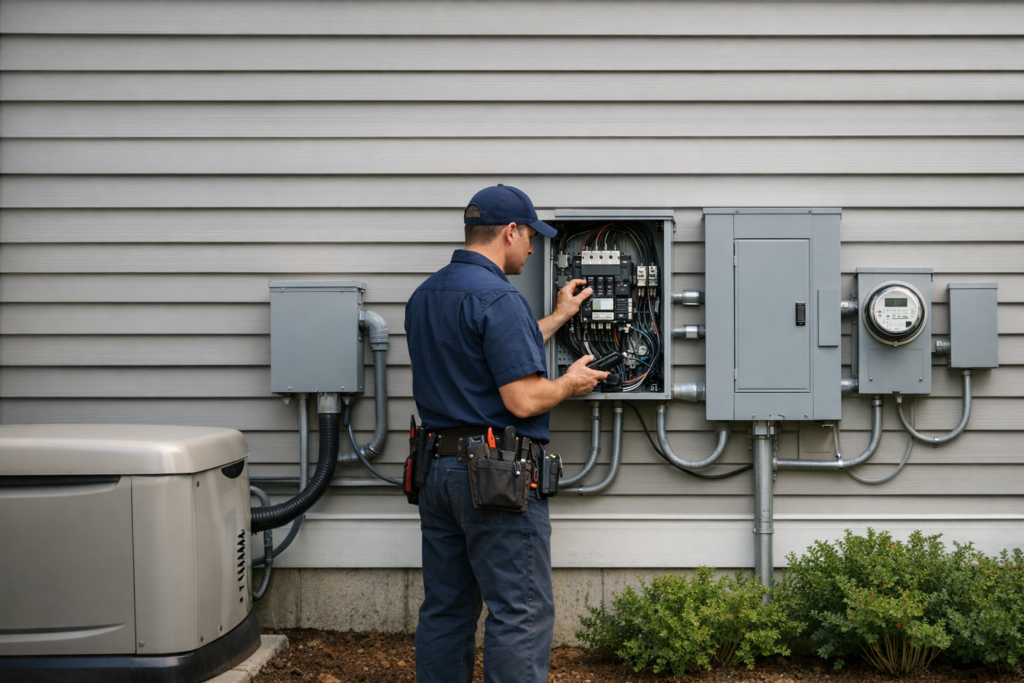
An automatic transfer switch is the device that allows a standby generator to power a home or business safely when utility power fails. Instead of running extension cords or manually moving circuits during an outage, the transfer switch detects the outage, disconnects the building from utility power, starts the generator, and transfers selected electrical loads to backup power. When the utility supply returns, it transfers the building back and shuts the generator down in an orderly way.
For homeowners, business owners, property managers, and builders throughout New Hampshire, Massachusetts, Maine, and Vermont, automatic transfer switches are an important part of reliable generator preparedness. New England weather can bring heavy snow, ice, wind, and extended outages, and a properly designed backup power system helps protect heating equipment, refrigeration, sump pumps, communications, security systems, and critical business operations.
What an Automatic Transfer Switch Does
A transfer switch is the safe connection point between the utility electrical service, the generator, and the electrical loads that need backup power. Its most important job is to prevent two power sources from feeding the same wiring at the same time.
During normal operation, utility power supplies the electrical panel. When the automatic transfer switch senses that utility voltage has been lost or has dropped outside acceptable operating conditions, it signals the standby generator to start. After the generator stabilizes, the switch transfers the selected circuits or service load from utility power to generator power.
When utility power is restored and remains stable, the switch transfers the load back to the utility. The generator then runs through a cool-down cycle before shutting off. This sequence helps protect electrical equipment and reduces unnecessary wear on the generator.
Why Transfer Switches Are Essential For Generator Safety
A generator should never be connected directly to a building electrical system without approved transfer equipment. The transfer switch isolates the utility source from the generator source, which helps prevent dangerous backfeeding.
Backfeeding can energize utility lines that workers may expect to be de-energized. It can also damage the generator, electrical equipment, and connected appliances. A properly installed transfer switch provides a controlled, code-conscious method for connecting standby power to a residence or commercial property.
Electrical safety warning: generator connections, service equipment, panels, and transfer switches should be installed and serviced by qualified licensed electricians. These systems involve high voltage, utility service conductors, grounding and bonding considerations, and load calculations that should not be handled as do-it-yourself work.
Automatic Transfer Switch Vs. Manual Transfer Switch
Both automatic and manual transfer switches are designed to move electrical loads between utility power and generator power, but they operate differently.
Automatic Transfer Switch
An automatic transfer switch, often called an ATS, works without someone needing to be present. It senses utility power loss, starts the generator, transfers power, and later restores the system to normal utility operation. This is the preferred option for standby generators, properties that may be unattended, businesses with critical equipment, and homeowners who want seamless outage protection.
Manual Transfer Switch
A manual transfer switch requires a person to start the generator and physically move the switch from utility power to generator power. Manual switches are often used with portable generators or smaller backup power setups. They can be effective, but they do not provide the same convenience or automatic protection as an ATS.
How an Automatic Transfer Switch Works Step By Step
Although transfer switch systems vary by application, most standby generator systems follow a similar sequence:
- Normal utility power: The building runs on utility power while the generator remains on standby.
- Power interruption: The transfer switch senses a utility outage or unacceptable voltage condition.
- Generator start signal: The ATS sends a signal to the generator controller.
- Warm-up period: The generator starts and reaches proper voltage and frequency.
- Load transfer: The switch disconnects from utility power and connects selected loads to generator power.
- Generator operation: The generator supplies backup power to the connected circuits or service.
- Utility restoration: The ATS senses stable utility power.
- Return transfer: The electrical load transfers back to utility power.
- Cool-down and shutdown: The generator runs briefly without load, then shuts down.
This automated sequence is one of the main reasons standby generator systems are so valuable during severe weather. If an outage happens overnight, during a storm, or while a building is unoccupied, the system can respond without waiting for someone to intervene.
Types of Automatic Transfer Switches
The right transfer switch depends on the electrical service, generator size, building load, and how much of the property needs backup power. A licensed electrician evaluates these factors before recommending equipment.
Service Entrance Rated Transfer Switches
A service entrance rated transfer switch may be installed at or near the main electrical service and can serve as part of the service disconnecting arrangement when designed for that purpose. These switches are commonly used in whole-home and whole-building generator systems where the generator is intended to support a large portion of the electrical load.
Non-Service Entrance Rated Transfer Switches
A non-service entrance rated transfer switch is typically installed downstream of existing service equipment. These switches are often used for selected loads or subpanels. They must be coordinated correctly with the main service disconnect and electrical distribution design.
Load Center Transfer Switches
Some systems use a transfer switch combined with a small load center. This setup can be useful when only selected circuits need generator backup, such as heating equipment, well pumps, refrigerators, sump pumps, lighting, internet equipment, or specific business-critical circuits.
Whole-Building Transfer Switches
Whole-building transfer switch systems are designed to transfer all or most of the building electrical load to generator power. However, this does not mean every appliance can run at full capacity at the same time. Proper generator sizing, load management, and electrical design remain essential.
Load Management: A Critical Part of Backup Power Design
One of the most frequently overlooked parts of generator planning is load management. A generator has a limited output capacity, and the transfer switch system must be designed around what the generator can safely support.
In many homes and commercial spaces, large electrical loads may include electric heat, air conditioning, water heaters, well pumps, commercial refrigeration, elevators, kitchen equipment, compressors, or EV chargers. If too many high-demand loads start at once, the generator can become overloaded.
Load management equipment can prioritize critical circuits and temporarily shed nonessential loads. For example, a system may allow heating equipment and refrigeration to remain powered while preventing an electric range, central air conditioner, or EV charger from operating at the same time if generator capacity is limited.
This is especially important for properties in New England where winter reliability matters. During a cold-weather outage, maintaining heat, pumps, lighting, and communications may be more important than powering every convenience load in the building.
Residential Uses For Automatic Transfer Switches
For homeowners, an automatic transfer switch adds convenience, safety, and peace of mind during utility outages. It is most commonly installed with a permanently mounted standby generator fueled by natural gas, propane, or diesel, depending on the property and generator type.
Common residential loads connected to backup power may include:
- Heating system controls, circulator pumps, or furnace equipment
- Refrigerators and freezers
- Sump pumps and well pumps
- Lighting in key areas
- Internet, home office, and communication equipment
- Medical support equipment where appropriate backup power planning is needed
- Garage doors, security systems, and smoke or carbon monoxide alarm circuits
- Selected kitchen and bathroom circuits
Older homes in New Hampshire, Massachusetts, Maine, and Vermont may also have aging panels, limited service capacity, or previous electrical modifications that need to be evaluated before installing a generator and transfer switch. In some cases, a panel upgrade, service upgrade, rewiring, grounding improvements, or code correction work may be needed as part of the project.
Commercial and Property Management Applications
For businesses and managed properties, an automatic transfer switch can help reduce downtime, protect equipment, and support tenant safety during outages. Commercial generator systems often require more detailed planning than residential systems because electrical loads are larger and operational priorities vary by property type.
Backup power may be used to support:
- Emergency and egress lighting
- Fire alarm and security systems
- IT equipment, communications, and network closets
- Refrigeration or temperature-sensitive storage
- Point-of-sale systems and office workstations
- Heating, ventilation, and selected mechanical equipment
- Pumps, controls, access systems, and building automation equipment
Facility managers and property owners should consider how long the building can operate during an outage, which loads are truly critical, who will maintain the system, and how testing will be documented. A well-designed system is not just about installing a generator. It is about matching electrical infrastructure to real operational needs.
Important Installation Considerations
Installing an automatic transfer switch involves more than mounting equipment on a wall. The electrician must evaluate the electrical service, generator specifications, grounding and bonding arrangement, panel configuration, available space, conductor sizing, overcurrent protection, and the location of both indoor and outdoor equipment.
Key installation considerations include:
- The size and condition of the existing electrical service
- The generator output capacity and fuel source
- Which circuits or panels need backup power
- Whether whole-building or selected-load backup is appropriate
- Available mounting space and working clearances
- Weather exposure and outdoor equipment ratings
- Coordination with existing panels, subpanels, and disconnects
- Utility coordination when required
- Inspection and permitting requirements that may apply in the local jurisdiction
Because requirements can vary by property and location, it is important to work with an experienced electrical contractor familiar with residential, commercial, and new construction electrical systems throughout New Hampshire, Massachusetts, Maine, and Vermont.
Common Mistakes To Avoid
Transfer switch and generator systems perform best when they are planned carefully. Some of the most common mistakes include undersizing the generator, assuming every circuit can run at once, overlooking large motor loads, ignoring future electrical needs, or failing to maintain the system after installation.
Another common problem is adding major electrical loads after the generator system has been designed. EV chargers, heat pumps, hot tubs, finished basements, additions, and new commercial equipment can change the electrical load profile of a property. If you are planning future upgrades, the transfer switch and generator design should account for them whenever practical.
Property owners should also avoid treating the transfer switch as a stand-alone purchase. It is one component in a complete backup power system. The safest and most reliable installations are designed as an integrated system that includes the generator, electrical service, transfer equipment, load controls, fuel supply, and maintenance plan.
Maintenance and Testing
An automatic transfer switch should be inspected and tested periodically as part of a broader generator maintenance routine. Even though the switch may sit idle most of the time, it must operate correctly when an outage occurs.
Maintenance and testing may include visual inspection, checking for signs of corrosion or overheating, verifying connections are secure, confirming proper operation during a simulated outage, and ensuring the generator starts and transfers load as expected. Commercial properties may require more formal maintenance procedures depending on the use of the system and applicable requirements.
Homeowners and property managers should keep the area around transfer equipment accessible and free from stored items. Outdoor equipment should be checked for physical damage, snow accumulation, ice, and water intrusion concerns. In New England, seasonal weather makes this particularly important before winter storm season.
Signs Your Transfer Switch or Generator System Needs Attention
A transfer switch should be evaluated by a qualified electrician if you notice unusual operation, visible damage, corrosion, burning odors, repeated generator errors, failed exercise cycles, or inconsistent power transfer during outages. Flickering lights, tripped breakers, or equipment that does not energize as expected may also indicate a problem in the backup power system.
If your property has an older generator setup, a manual transfer arrangement, or electrical panels that have not been inspected in years, it may be time to review the system. Electrical loads have changed significantly in many homes and businesses, especially with added electronics, HVAC equipment, EV charging, and modern appliances.
Cost Factors For Automatic Transfer Switch Installation
The cost of installing an automatic transfer switch depends on the size of the electrical service, the type of transfer switch, generator capacity, wiring distance, existing panel condition, whether load management is needed, and whether service or panel upgrades are part of the project.
A straightforward selected-circuit installation is typically different from a whole-building commercial transfer system. Properties with older wiring, limited panel space, outdated equipment, or complex distribution systems may require additional electrical work before the transfer switch can be installed properly.
The best way to plan accurately is to have a licensed electrician evaluate the property, identify critical loads, review future electrical needs, and recommend a system that balances reliability, safety, convenience, and budget.
Is an Automatic Transfer Switch Worth It?
For many homes and businesses, an automatic transfer switch is worth it because it makes backup power safer, faster, and more reliable. It removes the need to be present during an outage, eliminates unsafe generator connection methods, and allows a standby generator to support critical systems automatically.
The value is especially clear for properties that rely on heat, well pumps, sump pumps, refrigeration, security systems, remote work equipment, tenant systems, or business operations. In areas prone to winter storms and utility interruptions, automatic standby power can reduce stress and help prevent costly disruption.
Professional Transfer Switch Installation For Reliable Backup Power
An automatic transfer switch is one of the most important components in a dependable generator system. When properly selected, installed, and maintained, it allows a home or business to move safely between utility power and generator power with minimal interruption.
Electrical Constructors LLC provides residential, commercial, industrial, and new construction electrical services throughout New Hampshire, Massachusetts, Maine, and Vermont. From generator installation and transfer switch wiring to panel upgrades, service upgrades, inspections, troubleshooting, and preventative maintenance, working with an experienced electrical contractor helps ensure your backup power system is designed for safety, performance, and long-term reliability.