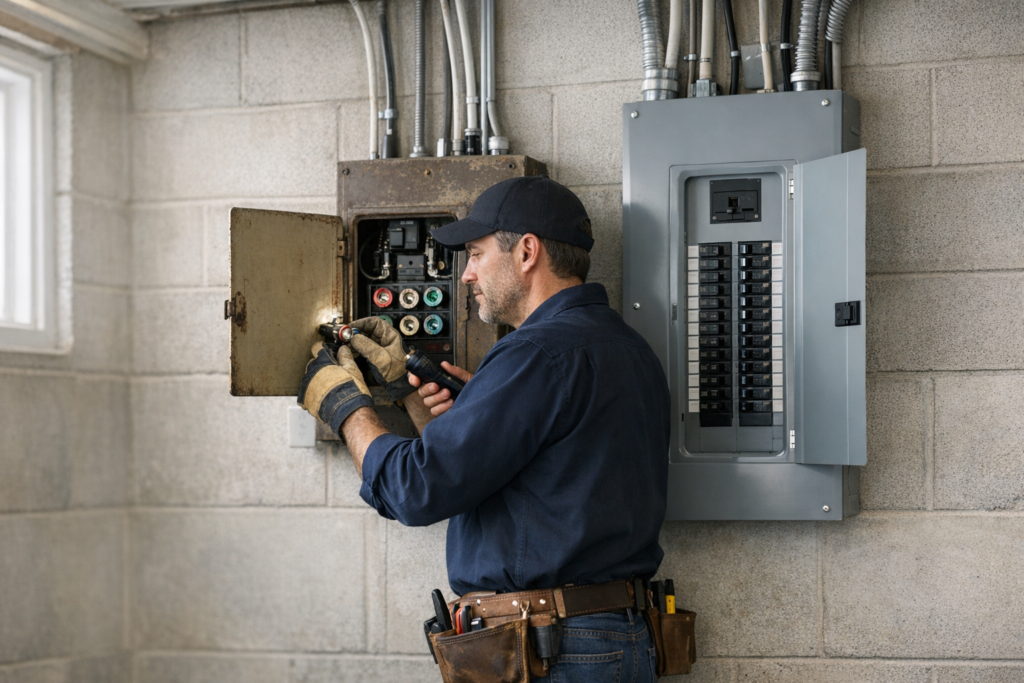
If your home or building still has a fuse box, you may be wondering whether it is unsafe, outdated, or simply different from a modern circuit breaker panel. The short answer is that both systems protect electrical circuits from overloads, but a breaker panel is usually more convenient, easier to maintain, and better suited for today’s electrical demands. In many older properties, fuse box replacement becomes a smart investment when the system can no longer safely or practically support modern appliances, heating and cooling equipment, EV chargers, generators, or expanded lighting and receptacle needs.
What a Fuse Box Does
A fuse box is an electrical distribution panel that uses fuses to protect individual circuits. Each fuse contains a metal element designed to melt when too much current flows through the circuit. When that happens, the circuit opens and power shuts off to help prevent overheating, damaged wiring, and fire hazards.
Fuses are not automatically unsafe. A properly sized fuse in a well-maintained system can provide effective overcurrent protection. The concern is that many fuse boxes are old, undersized for modern use, or have been modified over time in ways that create risk. In New England homes, especially older properties throughout New Hampshire, Massachusetts, Maine, and Vermont, it is common to find electrical systems that were designed before today’s appliance loads, home offices, heat pumps, EV charging equipment, and standby generator needs became common.
What a Circuit Breaker Panel Does
A circuit breaker panel performs the same basic safety function as a fuse box, but it uses resettable breakers instead of one-time-use fuses. When a circuit overloads or a short circuit occurs, the breaker trips and cuts power. After the problem is corrected, the breaker can typically be reset without replacing a component.
Modern breaker panels also provide more flexibility for electrical upgrades. They can often support additional circuits, dedicated appliance wiring, updated grounding and bonding methods, surge protection equipment, generator interlock or transfer equipment, and other improvements when designed and installed by a qualified electrician.
Fuse Box vs. Circuit Breaker Panel: Key Differences
The biggest difference is how each system responds after an overload. A fuse must be replaced after it opens, while a circuit breaker can be reset. However, the practical differences go well beyond convenience.
| Feature | Fuse Box | Circuit Breaker Panel |
|---|---|---|
| Overcurrent protection | Uses replaceable fuses | Uses resettable breakers |
| Convenience | Requires replacement fuses | Usually reset with a switch after the issue is resolved |
| Modern electrical capacity | Often limited in older systems | Better suited for current household and commercial loads |
| Expansion potential | Often limited space and configuration | Typically easier to configure for new circuits |
| Common maintenance concern | Incorrect fuse sizes, corrosion, aging components | Wear, improper additions, overloaded circuits, aging breakers |
| Typical upgrade path | Fuse box replacement and possible service upgrade | Panel upgrade, circuit additions, or service modernization |
Is a Fuse Box Dangerous?
A fuse box is not automatically dangerous just because it uses fuses. The real concern is condition, capacity, workmanship, and whether the system is being used as originally intended. Many fuse boxes were installed decades ago, and electrical demand has changed dramatically since then.
Potential safety concerns include:
- Fuses that are larger than the circuit wiring can safely handle
- Signs of overheating, scorching, buzzing, or melting
- Loose connections or deteriorated insulation
- Corrosion from moisture in basements, garages, or utility rooms
- Repeatedly blown fuses that indicate an unresolved electrical problem
- Improvised repairs or nonstandard modifications
- Limited grounding compared with modern expectations
Never replace a fuse with a larger size to stop it from blowing. A fuse that opens repeatedly is warning you that the circuit is overloaded, damaged, or experiencing another fault. Oversizing a fuse can allow wiring to overheat before the fuse operates, creating a serious fire risk.
When Fuse Box Replacement Makes Sense
Fuse box replacement is often recommended when the existing equipment is outdated, damaged, undersized, or unable to support the property’s electrical needs. Even if the fuse box still works, upgrading to a circuit breaker panel may improve safety, convenience, reliability, and future flexibility.
You may want to schedule an electrical evaluation if you notice any of the following:
- Fuses blow frequently under normal use
- You rely on extension cords or power strips because outlets are limited
- Lights dim when appliances, pumps, or HVAC equipment start
- The panel feels warm or you notice a burning odor
- You see rust, moisture, stains, or corrosion near the electrical equipment
- You are renovating, finishing a basement, or adding new rooms
- You plan to install an EV charger, heat pump, generator, hot tub, or major appliance
- Your insurance provider, buyer, lender, or inspector raises concerns about the fuse box
- The system has visible amateur wiring or outdated electrical components
For homeowners, landlords, and commercial property owners, replacing a fuse box is often part of a broader electrical modernization plan. The goal is not only to remove old equipment but to ensure the electrical system can safely support how the property is actually used today.
What Happens During a Fuse Box Replacement?
A professional fuse box replacement involves more than swapping one enclosure for another. A licensed electrician evaluates the existing service, circuit layout, grounding, wiring condition, available capacity, and the property’s current and future load requirements.
A typical evaluation may include:
- Inspecting the existing fuse box and service equipment
- Identifying circuit sizes and the condition of branch wiring
- Checking for signs of overheating, corrosion, improper fusing, or unsafe modifications
- Reviewing existing electrical loads and planned upgrades
- Determining whether the service size is adequate
- Assessing grounding and bonding components
- Planning the new breaker panel layout
- Coordinating safe power shutdown and reconnection procedures
Depending on the condition of the system, fuse box replacement may also involve service entrance updates, new meter equipment, grounding improvements, labeled circuits, surge protection, or dedicated circuits for appliances and equipment. In some cases, a full service upgrade is the right solution. In other cases, replacing the panel while keeping the same service capacity may be appropriate. The correct approach depends on the property.
Panel Replacement vs. Service Upgrade
Many people use the terms panel replacement and service upgrade interchangeably, but they are not always the same thing. A panel replacement typically means replacing the fuse box or older panel with a modern breaker panel. A service upgrade usually means increasing the electrical capacity available to the property, which may involve changes to service conductors, meter equipment, grounding, and utility coordination.
If your electrical demand is increasing, a licensed electrician may perform a load evaluation to determine whether the current service can support new equipment. This is especially important before installing EV chargers, electric ranges, heat pumps, workshops, commercial kitchen equipment, large HVAC systems, or standby generators.
Why Older New England Properties Often Need Electrical Modernization
Homes and buildings throughout New Hampshire, Massachusetts, Maine, and Vermont often have electrical systems from different eras layered together over time. It is not unusual to find older fuse equipment serving a property that has since added modern appliances, renovated spaces, finished basements, garage equipment, or expanded commercial use.
New England weather also places added demands on electrical systems. Winter storms, snow, ice, and wind can contribute to outages and increase reliance on generators, sump pumps, heating systems, and backup power planning. A modern breaker panel can make it easier to integrate these systems properly when the overall electrical service is designed for them.
Historic and older homes deserve special attention. The goal is to improve safety and reliability while respecting the structure of the building. An experienced electrician can help identify outdated wiring methods, overloaded circuits, insufficient receptacles, and panel limitations before they become larger problems.
Common Mistakes to Avoid With Fuse Boxes
Many fuse box problems are made worse by well-intentioned but unsafe fixes. If your fuse box is frustrating or unreliable, avoid these common mistakes:
- Installing oversized fuses: This can defeat the protection the fuse is supposed to provide.
- Ignoring repeated blown fuses: Frequent fuse failure usually means there is an underlying overload or fault.
- Using extension cords as permanent wiring: Extension cords are not a substitute for properly installed outlets and circuits.
- Adding new loads without an electrical evaluation: Large appliances and EV chargers should not be added without confirming capacity.
- Attempting panel work yourself: Electrical service equipment can remain hazardous even when circuits appear off.
- Replacing devices without addressing old wiring: A new switch or receptacle will not correct an undersized or aging electrical system.
Electrical panels and fuse boxes are not good places for trial-and-error repairs. When service equipment is involved, the safest choice is to work with a qualified electrical contractor.
Cost Considerations for Replacing a Fuse Box
The cost of fuse box replacement varies because every property is different. A straightforward panel replacement in a clean, accessible location is very different from a full service upgrade in an older building with outdated wiring, limited workspace, grounding deficiencies, or utility coordination requirements.
Factors that can affect the project include:
- Existing service size and whether additional capacity is needed
- Condition of the service entrance equipment
- Number of circuits in the existing fuse box
- Whether circuits need to be extended, corrected, or relabeled
- Panel location and working space
- Grounding and bonding improvements
- Surge protection, generator equipment, or EV charger readiness
- Access to walls, basement areas, utility rooms, or mechanical spaces
- Required coordination with utility providers or local authorities where applicable
The best way to understand cost is to have the existing electrical system inspected. A thorough assessment helps prevent surprises and ensures the recommended scope matches the property’s actual needs.
How a Modern Breaker Panel Improves Daily Use
A breaker panel does more than eliminate the need to keep spare fuses on hand. When properly installed, it can make a property safer, more organized, and easier to maintain. Clearly labeled breakers help homeowners, tenants, maintenance teams, and emergency personnel identify circuits quickly. Dedicated circuits can reduce nuisance trips and help large appliances operate more reliably.
A modern panel can also support upgrades such as:
- Dedicated kitchen, laundry, workshop, and mechanical equipment circuits
- EV charger installation
- Whole-home or whole-building surge protection
- Standby generator transfer equipment
- Outdoor lighting and landscape power
- Basement finishing and renovations
- Commercial tenant improvements
- Energy-efficient lighting upgrades
For commercial properties, a properly planned panel upgrade can also reduce maintenance confusion, improve equipment reliability, and make future buildouts easier to manage.
Should You Replace a Working Fuse Box?
You do not always need immediate fuse box replacement simply because the equipment still uses fuses. However, a working fuse box should be evaluated if it is old, overloaded, repeatedly blowing fuses, visibly damaged, or limiting your ability to use the property safely and comfortably.
Replacement is often worth considering before major renovations, property sales, tenant improvements, appliance upgrades, generator installation, or EV charger installation. Proactive replacement can be less disruptive than waiting until the system fails or an inspection identifies concerns at an inconvenient time.
If you are unsure, schedule an electrical inspection. An electrician can explain whether the fuse box is functioning safely, whether repairs are appropriate, or whether a breaker panel upgrade is the better long-term solution.
Questions to Ask Before Upgrading to a Breaker Panel
Before authorizing a fuse box replacement, it helps to ask practical questions that clarify the scope of work and future value:
- Is the existing service capacity adequate for current and future electrical loads?
- Are any circuits overloaded or improperly fused?
- Does the property need dedicated circuits for appliances or equipment?
- Are grounding and bonding components up to appropriate modern standards?
- Is there enough panel space for future additions?
- Should surge protection, generator readiness, or EV charger capacity be considered now?
- Will circuits be clearly labeled after replacement?
- Are there signs of old wiring that should be addressed during the project?
These questions help ensure the project solves the whole problem rather than simply replacing visible equipment.
Trust Electrical Constructors LLC for Panel Upgrades and Fuse Box Replacement
Electrical Constructors LLC provides residential, commercial, industrial, and new construction electrical services throughout New Hampshire, Massachusetts, Maine, and Vermont. Our team helps homeowners, business owners, contractors, developers, facility managers, and property managers evaluate aging electrical systems and plan safe, reliable upgrades.
Whether you need troubleshooting for a fuse box that keeps blowing, a complete fuse box replacement, a service upgrade, generator installation, EV charger installation, surge protection, lighting improvements, or a full electrical system installation, working with an experienced electrical contractor helps protect your property and your long-term investment.
If your electrical system is outdated or no longer keeping up with your needs, a professional inspection is the right first step. A modern breaker panel can improve safety, convenience, and future flexibility when it is properly designed for the way your home or business uses power.