
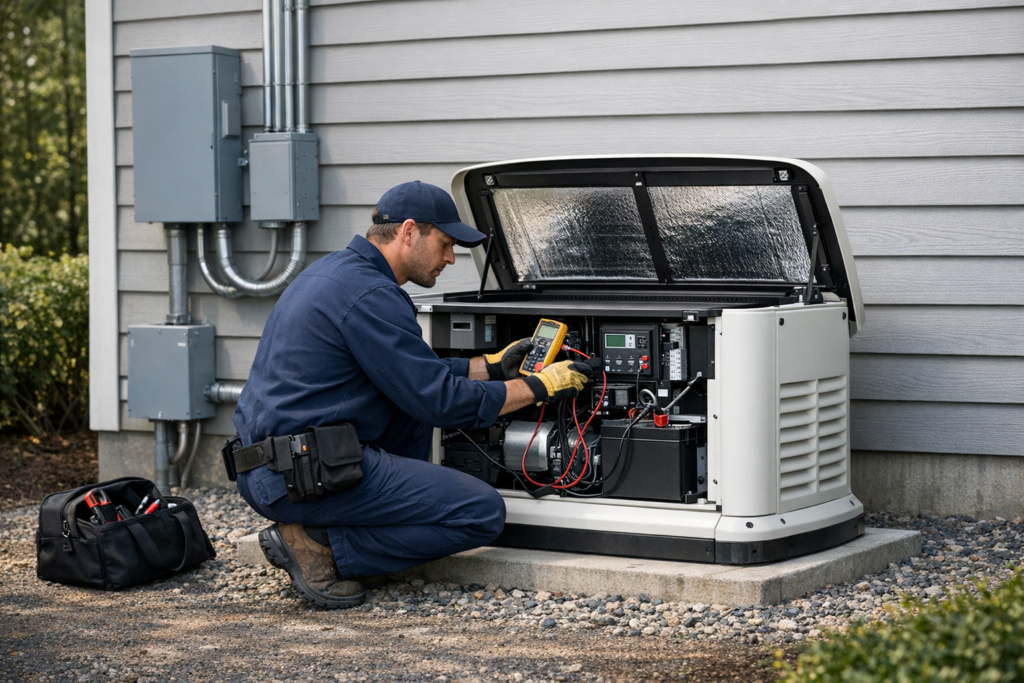
A backup generator is only dependable if it runs properly when utility power fails. Regular generator testing confirms that the unit starts, transfers power safely, carries the intended electrical load, and shuts down correctly after power is restored. For homes and businesses throughout New Hampshire, Massachusetts, Maine, and Vermont, routine testing is especially important because severe winter weather, ice storms, high winds, and extended outages can put backup power systems under real pressure.
Why Generator Testing Matters
Generator testing helps identify problems before an outage exposes them. A standby generator may look ready from the outside, but weak batteries, low fluid levels, fuel issues, corroded connections, clogged air filters, control errors, or transfer switch problems can prevent it from operating when it is needed most.
For homeowners, a failed generator can mean no heat, no refrigeration, no sump pump, no medical equipment support, and no basic electrical service during a storm. For businesses and property managers, generator failure can disrupt operations, security systems, refrigeration, communications, servers, building access, and life safety systems.
Routine generator testing is not just about turning the unit on. Proper testing evaluates whether the entire backup power system is ready, including the generator, automatic transfer switch, fuel supply, electrical connections, controls, battery, and load performance.
What Happens During Professional Generator Testing?
A thorough generator test looks beyond whether the engine starts. A qualified electrician or generator technician evaluates the system as a complete emergency power solution. The exact process depends on the generator type, manufacturer requirements, building use, and installed electrical system, but common checks include several important components.
Startup and Exercise Cycle Verification
Many standby generators are programmed to run a scheduled exercise cycle. This short automatic run helps keep internal components lubricated and allows the system to detect certain faults. During testing, the technician confirms that the generator starts reliably, runs smoothly, and does not produce unusual sounds, vibration, smoke, or fault codes.
Battery and Charging System Check
The starting battery is one of the most common weak points in standby generator systems. Even a high-quality generator cannot operate if the battery cannot crank the engine. Testing may include checking battery voltage, terminals, corrosion, charger function, wiring condition, and overall battery health.
Automatic Transfer Switch Operation
The transfer switch is the equipment that safely shifts selected electrical loads from utility power to generator power. It also prevents unsafe backfeeding into utility lines. Professional testing confirms that the transfer switch responds properly, transfers power as intended, and returns the system to normal utility power after the outage condition is resolved.
Load Performance
A generator should be tested under realistic electrical demand when appropriate. Running with no load may confirm that the engine operates, but it does not prove the generator can support the equipment it is intended to power. Load testing helps identify voltage instability, overheating, performance problems, or capacity concerns before an actual outage.
Fuel System Review
Backup generators may use natural gas, propane, or diesel depending on the installation. Fuel delivery must be reliable, properly sized, and in good condition. Testing may involve reviewing fuel lines, regulators, valves, tank levels, visible leaks, and combustion performance indicators. Diesel systems may also require attention to fuel quality and storage conditions.
Visual Electrical Inspection
Generator testing should include a visual inspection of wiring, conduit, grounding and bonding components, disconnects, breakers, terminations, and weatherproof equipment. Outdoor electrical equipment in New England is exposed to snow, ice, rain, temperature swings, pests, and corrosion, all of which can affect long-term reliability.
How Often Should a Generator Be Tested?
Most standby generators should be exercised automatically on a regular schedule and professionally inspected at least periodically according to the manufacturer’s maintenance recommendations. The right testing schedule depends on the equipment, the environment, how critical the loads are, and how often the generator has operated during real outages.
Homes that rely on a generator for heat, well pumps, sump pumps, or essential medical equipment may need more consistent attention than a lightly used system. Commercial buildings, multi-tenant properties, industrial sites, and facilities with critical operations often require more structured testing and documentation.
After any extended outage, it is also wise to have the generator evaluated. Long run times can reveal issues with oil level, filters, cooling, fuel delivery, or electrical performance that may not appear during a short exercise cycle.
Common Problems Found During Generator Testing
Many generator failures are preventable. Testing often uncovers small issues before they become expensive or disruptive. Common findings include:
- Weak or dead starting batteries
- Corroded battery terminals or loose electrical connections
- Low oil, coolant concerns, or overdue filters
- Fuel delivery issues or inadequate fuel supply
- Automatic transfer switch malfunctions
- Control panel fault codes or sensor problems
- Rodent damage to wiring or insulation
- Blocked ventilation or poor airflow around the unit
- Improperly balanced or excessive electrical loads
- Weather-related deterioration of outdoor components
Finding these problems during scheduled generator testing is far better than discovering them during a winter outage when the generator is expected to carry the building.
Generator Testing for Homes
Residential standby generators are commonly installed to keep critical systems running during outages. Depending on the design, a home generator may power selected circuits, major appliances, heating equipment, well pumps, sump pumps, refrigeration, internet equipment, or the entire electrical service.
Testing helps confirm that the generator is matched to the home’s real electrical needs. This is especially important when homeowners add new loads after the original installation, such as heat pumps, finished basement equipment, kitchen upgrades, electric vehicle chargers, or additional appliances. A generator that was properly sized years ago may not support every new electrical demand without careful load management.
Homeowners should also pay attention to where the generator is located. Snow accumulation, landscaping, fallen leaves, and stored items can restrict airflow or block service access. A generator needs adequate clearance for safe operation, cooling, and maintenance.
Generator Testing for Commercial Properties
Commercial generator testing is often more complex because facilities may have multiple panels, larger loads, three-phase equipment, elevators, refrigeration, pumps, fire alarm interfaces, security systems, data equipment, or tenant spaces. A commercial generator must do more than start; it must support the right systems in the right sequence without overloading the equipment.
For property managers and facility managers, routine testing also supports better planning. Documented maintenance helps track recurring issues, aging components, battery replacement intervals, and system performance over time. This can reduce emergency repair costs and improve confidence during storms and utility interruptions.
Businesses in New Hampshire, Massachusetts, Maine, and Vermont often face seasonal electrical demands. Winter heating loads, storm preparation, and summer cooling loads can all affect how a generator performs. Testing under realistic conditions helps verify that the system is prepared for the building’s actual operating needs.
Why the Transfer Switch Deserves Special Attention
The automatic transfer switch is one of the most important parts of a standby generator system. It monitors utility power, starts the generator when needed, transfers selected loads to generator power, and then returns the building to utility power when service is stable.
If the transfer switch fails, the generator may run without powering the building. In other cases, transfer problems can create power quality issues or prevent equipment from operating correctly. Because the transfer switch connects directly to the building’s electrical distribution system, it should only be inspected, serviced, or tested by qualified electrical professionals.
Safety warning: Generator systems can involve utility power, generator power, high fault current, fuel sources, and automatic operation. Homeowners and unqualified personnel should not open electrical panels, transfer switches, or generator control compartments unless they are specifically trained and authorized to do so.
Signs Your Generator Needs Testing or Service
Even if your generator has an automatic exercise cycle, do not ignore warning signs. Schedule generator testing or service if you notice any of the following:
- The generator fails to run its scheduled exercise cycle
- The unit starts hard, stalls, or runs roughly
- Warning lights or fault codes appear on the control panel
- The generator runs but the building does not receive backup power
- Lights flicker or equipment behaves unusually during generator operation
- You smell fuel or notice visible leaks
- The unit makes unusual noises or vibrates excessively
- The battery is more than a few years old or has visible corrosion
- The generator has not been professionally inspected in a long time
- The building’s electrical loads have changed since installation
These symptoms should be taken seriously. Small generator issues can become major failures when the system is asked to perform for hours or days during an outage.
Testing Helps Protect Sensitive Electrical Equipment
Modern homes and businesses rely on sensitive electronics, including computers, smart appliances, security systems, network equipment, HVAC controls, point-of-sale systems, and automation equipment. Poor generator performance can expose these systems to voltage fluctuations or inconsistent power quality.
Professional generator testing helps confirm that voltage and frequency remain within an appropriate operating range for the connected loads. In some cases, a technician may recommend surge protection, load adjustments, dedicated circuits, or other electrical improvements to better protect equipment during transfer events and generator operation.
Generator Testing Before Storm Season
The best time to test a generator is before the weather turns severe. In New England, waiting until a major snowstorm or wind event is in the forecast can create scheduling challenges and unnecessary risk. Pre-season testing gives homeowners, businesses, and property managers time to correct problems before reliable backup power becomes urgent.
Before winter, it is especially important to confirm that the generator starts well in colder temperatures, the battery is strong, outdoor components are accessible, and the fuel supply is dependable. Where snow and ice accumulate, the generator should remain clear of drifts, roof shedding, and blocked exhaust areas.
Can You Test a Generator Yourself?
Property owners can usually observe whether a generator completes its automatic exercise cycle, keep the area around the unit clear, and check the control panel for visible alerts. However, complete generator testing should be performed by qualified professionals because it involves electrical transfer equipment, energized conductors, fuel systems, and manufacturer-specific procedures.
Do not attempt to modify wiring, bypass safety controls, force transfer switch operation, or connect portable generator equipment directly to a building without proper transfer equipment. Improper generator connections can create shock hazards, fire risks, equipment damage, and dangerous backfeed conditions.
What to Ask Before Scheduling Generator Testing
When hiring an electrical contractor for generator testing, it helps to ask practical questions:
- Will the test include the generator and the transfer switch?
- Will the technician check the battery and charger?
- Can the system be tested under load?
- Will visible wiring, conduit, and disconnects be inspected?
- Will you review any fault codes or maintenance alerts?
- Can you identify whether the generator is properly supporting current building loads?
- Will you explain any recommended repairs or maintenance clearly?
Clear answers help ensure the service goes beyond a simple startup and provides meaningful insight into the reliability of the system.
Reliable Backup Power Starts With Routine Testing
Generator testing is a practical investment in safety, comfort, business continuity, and peace of mind. A standby generator may sit quietly for most of the year, but when utility power fails, it needs to respond immediately and operate reliably for as long as necessary.
Electrical Constructors LLC provides knowledgeable residential and commercial electrical service throughout New Hampshire, Massachusetts, Maine, and Vermont, including generator installation, inspection, maintenance support, troubleshooting, and backup power system evaluation. Whether you manage a commercial facility or want to protect your home from the next outage, professional testing helps ensure your generator is ready before you need it most.