The most valuable home electrical upgrades are the ones that improve safety, support modern technology, reduce nuisance problems, and make the property easier to live in. For homeowners planning a renovation, preparing to sell, or updating an older New England home, electrical improvements can strengthen buyer confidence while making the home more reliable every day.
Electrical systems are often hidden behind walls, ceilings, and panels, but they affect nearly every part of a home. Lighting, heating equipment, appliances, home offices, EV charging, generators, security systems, and smart devices all depend on safe, properly sized electrical infrastructure. When that infrastructure is outdated, undersized, or poorly maintained, it can limit the usefulness and appeal of the entire property.
Why Electrical Improvements Matter to Home Value
Home value is not determined by appearance alone. Buyers, inspectors, appraisers, and real estate professionals also look at the condition, capacity, and safety of major systems. A home with an outdated panel, limited outlets, old wiring, or visible electrical concerns may raise questions that affect negotiations, inspection results, and buyer confidence.
Thoughtful home electrical upgrades can help a property feel more modern and move-in ready. They may not always be as visually dramatic as a kitchen remodel, but they support the features buyers increasingly expect: reliable power, efficient lighting, dedicated circuits for appliances and equipment, EV charging readiness, generator capability, and protection for sensitive electronics.
In New Hampshire, Massachusetts, Maine, and Vermont, electrical upgrades are especially important because many homes were built long before today's electrical demands. Older homes, seasonal properties, historic structures, and homes affected by harsh winter weather often benefit from professional evaluation and targeted improvements.
Electrical Panel and Service Upgrades
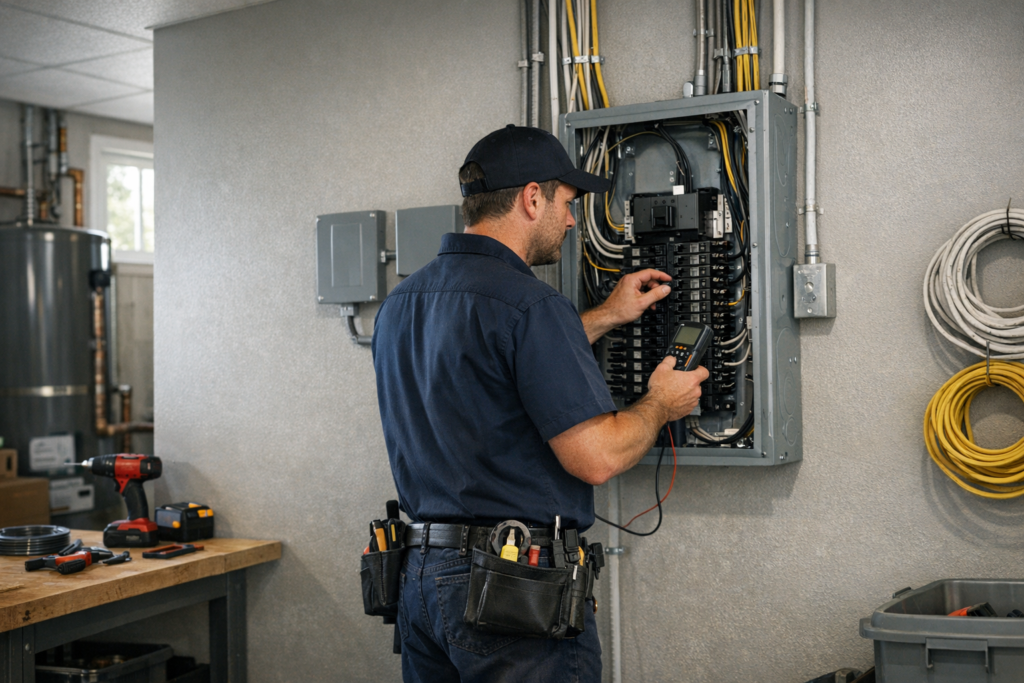
An electrical panel is the distribution point for power throughout the home. If the panel is outdated, crowded, damaged, poorly labeled, or unable to support the home's electrical load, it can limit renovations and create reliability concerns.
Panel upgrades are among the most practical home electrical upgrades because they can support larger appliances, heat pumps, central air conditioning, hot tubs, workshops, finished basements, additions, EV chargers, and backup power systems. In some cases, a service upgrade may also be needed to increase the amount of power available from the utility to the home.
Signs a panel upgrade may be worth considering
- Breakers trip frequently or lights dim when equipment starts.
- The panel is full and has no room for additional circuits.
- The home still uses an older fuse panel.
- Major renovations or new appliances are planned.
- An EV charger, generator, heat pump, or workshop circuit is being considered.
- The panel shows rust, heat damage, corrosion, or signs of past overheating.
- Circuits are not clearly labeled, making maintenance and troubleshooting difficult.
A panel upgrade is not just about adding capacity. It also gives a licensed electrician the opportunity to improve organization, correct unsafe conditions, evaluate grounding and bonding, and ensure the system is better suited for long-term use.
Whole-Home Rewiring and Wiring Corrections
Rewiring is one of the most important improvements for homes with aging, damaged, outdated, or unsafe wiring. While not every older home needs complete rewiring, many benefit from targeted wiring corrections, new branch circuits, and replacement of unsafe or deteriorated wiring methods.
Older homes throughout New England may have been modified many times over the years. That can leave behind hidden junctions, overloaded circuits, mixed wiring methods, ungrounded outlets, abandoned wiring, or electrical work that no longer meets accepted safety practices. These issues can become more visible during a renovation, home inspection, or troubleshooting visit.
Professional rewiring can improve safety, support modern loads, reduce nuisance problems, and make the home easier to insure, sell, and maintain. It is especially valuable before finishing basements, remodeling kitchens, renovating bathrooms, or opening walls during a larger project.
Areas where wiring updates often add practical value
- Kitchens with modern appliance and countertop power needs.
- Bathrooms that require reliable lighting, ventilation, and protected receptacles.
- Home offices with computers, monitors, printers, and network equipment.
- Garages and workshops with tools, chargers, and dedicated equipment.
- Finished basements and additions that need new circuits and lighting.
- Bedrooms and living areas with limited or poorly located outlets.
Because wiring is concealed, homeowners should not guess about its condition. A licensed electrician can inspect visible components, test circuits, identify warning signs, and recommend whether repair, partial rewiring, or a more comprehensive upgrade is appropriate.
Dedicated Circuits for Modern Appliances and Equipment
Dedicated circuits help prevent overloads by supplying power to specific appliances or equipment. This is often necessary for high-demand devices and is commonly part of kitchen renovations, laundry upgrades, garage improvements, and mechanical system updates.
Common equipment that may require or benefit from dedicated circuits includes electric ranges, wall ovens, microwaves, dishwashers, refrigerators, freezers, washers, dryers, sump pumps, well pumps, heat pumps, air conditioning equipment, dehumidifiers, workshop tools, and home office equipment.
From a resale perspective, dedicated circuits show that the home has been updated with modern function in mind. They can also reduce the chance of nuisance tripping, overheated wiring, and overreliance on extension cords or power strips.
Additional Outlets and Better Outlet Placement
Few things make a home feel more dated than a shortage of outlets. Older homes were not designed for today's device-heavy lifestyle. Homeowners often compensate with extension cords, outlet adapters, and crowded power strips, which can create safety and convenience problems.
Adding receptacles in the right locations is a relatively simple upgrade that can make everyday living easier. This is especially useful in living rooms, bedrooms, kitchens, home offices, garages, basements, outdoor living areas, and near wall-mounted televisions.
Outlet upgrades may also include grounded receptacles, tamper-resistant devices where appropriate, weather-resistant exterior receptacles, and ground-fault or arc-fault protection where required or recommended for safety. Requirements vary by application, so this work should be evaluated and completed by a qualified electrician.
Lighting Upgrades That Improve Comfort and Appeal
Lighting has an immediate effect on how a home looks and feels. Poor lighting can make even a well-maintained home appear dark, dated, or inconvenient. Modern lighting upgrades can improve comfort, energy efficiency, safety, and visual appeal.
Useful lighting improvements include recessed lighting, under-cabinet lighting, bathroom vanity lighting, stairway lighting, exterior security lighting, landscape lighting, dimmer controls, motion sensors, and LED fixture upgrades. In many homes, the best results come from layering lighting rather than relying on a single overhead fixture.
High-value lighting areas to consider
- Kitchens, where task lighting improves cooking and food preparation.
- Bathrooms, where balanced lighting improves grooming and usability.
- Entryways and stairways, where lighting supports safety and first impressions.
- Basements, where better lighting can make finished or semi-finished space more usable.
- Exterior areas, where lighting improves security, visibility, and curb appeal.
- Home offices, where glare control and proper brightness support productivity.
LED lighting is especially attractive because it uses less energy than older lighting technologies, lasts longer, and is available in a wide range of color temperatures and fixture styles. Choosing the right brightness and color temperature is important. Lighting that is too dim, too harsh, or poorly placed can reduce the benefit of the upgrade.
EV Charger Installation and EV-Ready Wiring
Electric vehicle charging is becoming a priority for many homeowners and buyers. A professionally installed EV charger or EV-ready circuit can make a home more convenient for current owners and more appealing to future buyers who drive or plan to drive electric vehicles.
EV charger installation is not as simple as adding a standard outlet. The electrician must evaluate the electrical panel, available capacity, circuit requirements, charger location, wiring route, grounding, protection, and manufacturer specifications. In some homes, load management equipment or a service upgrade may be needed before installation.
Even if a homeowner does not currently own an electric vehicle, planning for future charging during a panel upgrade, garage renovation, or new construction project can be a smart long-term decision. Adding the infrastructure while other electrical work is underway is often more efficient than retrofitting later.
Generator Installation and Transfer Equipment
Backup power is a serious consideration throughout New Hampshire, Massachusetts, Maine, and Vermont. Heavy snow, ice, wind, and severe weather can cause outages that disrupt heating systems, refrigeration, well pumps, sump pumps, internet equipment, and medical devices.
A standby generator or properly installed portable generator connection can add practical value by improving home resilience. For many homeowners, the most important part of a generator system is not just the generator itself, but the safe transfer equipment that prevents dangerous backfeeding and allows selected circuits or whole-home loads to be powered correctly.
A professional generator installation may include load evaluation, transfer switch installation, dedicated circuits, equipment placement coordination, and testing. Homeowners should avoid improvised generator connections. Improper generator wiring can create serious shock, fire, and utility worker safety hazards.
Whole-Home Surge Protection
Surge protection helps protect electrical equipment from damaging voltage spikes. Surges can come from utility events, storms, equipment cycling, or other sources. While plug-in surge strips may help protect individual devices, whole-home surge protection provides a broader level of defense at the electrical panel.
This upgrade is especially relevant for homes with expensive electronics, smart appliances, HVAC equipment, home offices, entertainment systems, security systems, and generator or solar-related equipment. It is a relatively small improvement that can support long-term protection for a large number of connected devices.
Whole-home surge protection does not make a home immune to every electrical event, and it should be installed correctly as part of a coordinated protection strategy. A licensed electrician can recommend appropriate equipment and installation methods for the home's electrical system.
Smart Switches, Controls, and Energy Monitoring
Smart electrical upgrades can add convenience and efficiency when they are properly installed and thoughtfully selected. Smart switches, dimmers, timers, occupancy sensors, programmable controls, and energy monitoring devices can help homeowners manage lighting, reduce wasted power, and better understand how electricity is used.
These upgrades are most valuable when they solve real problems. For example, occupancy sensors can improve convenience in laundry rooms, closets, garages, and storage areas. Smart exterior lighting controls can improve security and reduce energy waste. Energy monitoring can help homeowners identify high-use equipment or unusual consumption patterns.
Smart devices should be installed with attention to compatibility, neutral conductors, load ratings, and safe wiring practices. Not every switch box is ready for every smart device, so professional evaluation can prevent frustration and unsafe installations.
Electrical Safety Inspections Before Renovating or Selling
An electrical inspection is one of the most useful steps before investing in upgrades. It can identify safety concerns, outdated components, overloaded circuits, poor workmanship, and opportunities for improvement before they become expensive surprises.
For homeowners preparing to sell, an inspection can help address issues before a buyer's home inspection. For homeowners planning renovations, it helps determine whether the existing system can support the planned work. For property managers and real estate professionals, inspections support safer decision-making and better maintenance planning.
What an electrician may evaluate during an inspection
- Electrical panel condition, labeling, and available capacity.
- Visible wiring condition and signs of overheating or damage.
- Grounding and bonding components that can be safely accessed.
- Outlet and switch condition.
- GFCI and AFCI protection where applicable.
- Smoke, carbon monoxide, and life-safety wiring where relevant.
- Exterior electrical equipment exposed to weather.
- Code concerns related to renovations, additions, or repairs.
An inspection does not require every possible upgrade, but it provides a practical roadmap. That makes it easier to prioritize the improvements that matter most.
Electrical Updates for Older New England Homes
Many homes across New Hampshire, Massachusetts, Maine, and Vermont have older electrical systems that were installed for a very different lifestyle. A home built decades ago may have had fewer appliances, fewer outlets, less lighting, no central air conditioning, no EV charging, and no modern home office equipment.
Older homes require careful evaluation because electrical work may be layered from multiple owners, renovations, and repairs. Some systems may still function but lack the capacity, grounding, protection, or organization expected in a modern home.
High-priority home electrical upgrades in older properties often include panel replacement, grounding improvements, rewiring of unsafe circuits, additional outlets, dedicated appliance circuits, improved lighting, exterior electrical updates, and generator readiness. Historic homes may require additional planning to protect architectural features while still improving safety and performance.
The goal is not to replace everything without reason. The goal is to understand the condition of the existing system and improve it in a way that supports safety, preservation, function, and long-term value.
Which Electrical Upgrades Are Best Before Selling?
Before selling, the best electrical upgrades are usually the ones that remove buyer concerns and improve inspection outcomes. Cosmetic upgrades can help, but visible safety issues, an obsolete panel, improper wiring, or a lack of functional outlets may have a greater impact on negotiations.
Homeowners preparing to list a property should consider an electrical inspection, repair of known defects, panel corrections, replacement of damaged devices, GFCI protection in appropriate areas, improved lighting in dark spaces, exterior fixture repairs, and clear labeling of electrical circuits.
If the budget allows, upgrades such as EV-ready wiring, generator transfer equipment, new lighting, or a panel upgrade may also improve marketability. The right choice depends on the home's condition, age, buyer expectations, and planned sale timeline.
Which Upgrades Are Best If You Plan to Stay?
If you plan to stay in the home for years, prioritize upgrades that improve safety, reliability, comfort, and future flexibility. These may include a service upgrade, panel replacement, rewiring, EV charger installation, generator installation, whole-home surge protection, improved lighting, dedicated circuits, and smart controls.
Long-term homeowners should think beyond immediate needs. If you may add a heat pump, finish a basement, build an addition, install a hot tub, buy an electric vehicle, or upgrade major appliances, the electrical system should be planned with those future loads in mind.
Planning ahead can reduce the need to redo work later. For example, it may be more efficient to install a larger panel, add conduit pathways, or reserve space for future circuits during a current project than to reopen finished areas later.
How to Prioritize Home Electrical Upgrades
Not every electrical upgrade has the same urgency. The best priorities are based on safety, system capacity, current problems, planned renovations, and budget.
A practical order of priority usually starts with safety hazards first. This includes damaged wiring, overheating equipment, unreliable breakers, exposed conductors, improper connections, and any condition that creates a fire or shock risk. Next, address reliability issues such as frequent tripping, insufficient circuits, or overloaded panels. After that, focus on upgrades that improve function, efficiency, convenience, and resale appeal.
Questions to ask before choosing upgrades
- Is there any immediate safety concern?
- Does the panel have enough capacity for current and future needs?
- Are circuits overloaded or frequently tripping?
- Are there enough outlets in the right locations?
- Will upcoming renovations require electrical changes?
- Would backup power reduce risk during winter outages?
- Is EV charging likely to be needed soon?
- Are lighting improvements needed for safety, comfort, or energy efficiency?
A qualified electrician can help separate must-do repairs from optional improvements, which is especially useful when balancing a renovation budget or preparing a property for sale.
Electrical Work That Should Not Be DIY
Some home projects are suitable for handy homeowners, but electrical work has serious risks. Mistakes may not be obvious right away and can create hidden fire, shock, equipment damage, or insurance concerns. Panel work, service upgrades, rewiring, generator connections, EV charger installation, new circuits, and troubleshooting should be handled by licensed electricians.
Homeowners should also be cautious with temporary fixes. Extension cords, outlet adapters, oversized breakers, unapproved splices, and makeshift generator hookups can create dangerous conditions. If a circuit cannot handle the load, the safe answer is not to force it to work. The safe answer is to have the electrical system evaluated and corrected properly.
If you see sparks, burning odors, warm outlets, buzzing panels, frequent breaker trips, or visible damage, stop using the affected equipment and contact a qualified electrician.
How Electrical Constructors LLC Helps Homeowners Upgrade With Confidence
Electrical Constructors LLC provides residential electrical services for homeowners throughout New Hampshire, Massachusetts, Maine, and Vermont. Whether a home needs troubleshooting, an electrical panel upgrade, service upgrade, rewiring, lighting installation, generator installation, EV charger installation, surge protection, code corrections, or a comprehensive electrical inspection, the work should begin with a clear understanding of the property's needs.
The most effective home electrical upgrades are not one-size-fits-all. They are planned around the age of the home, the condition of the existing wiring, the homeowner's goals, and the electrical demands of modern living. A professional evaluation helps ensure the upgrade improves safety, performance, and long-term value instead of simply adding equipment.
For homeowners who want a safer, more capable, and more marketable property, electrical improvements are a smart place to start. With the right planning and qualified installation, your electrical system can better support the way you live today and the way future buyers expect a home to perform.