
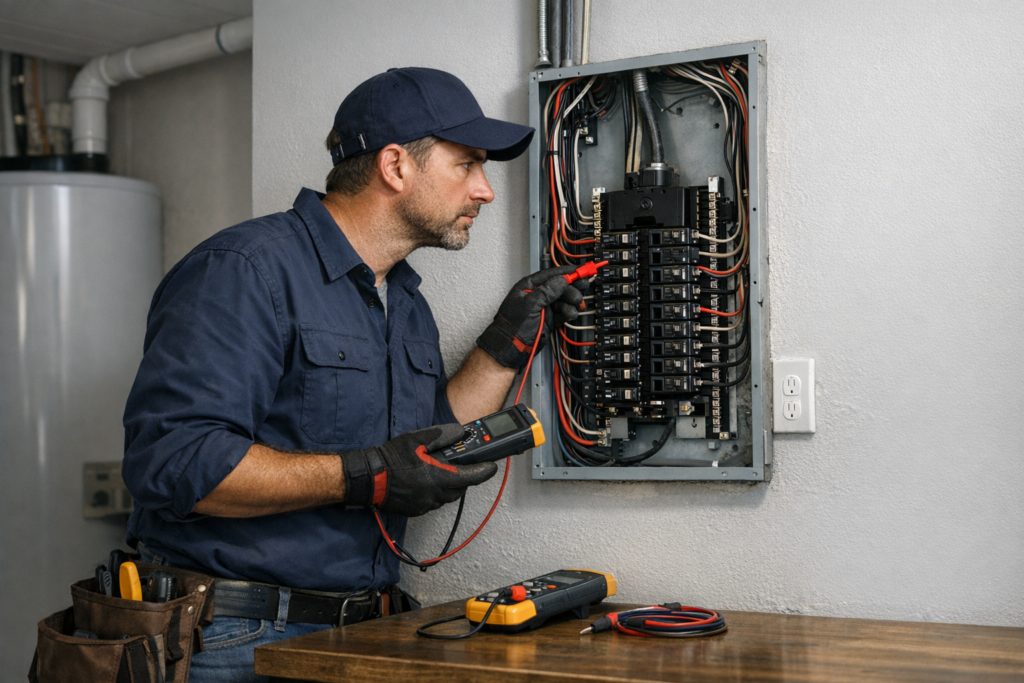
Resetting a breaker once may be safe if you know what caused it to trip, such as too many devices running on the same circuit. But if the same breaker trips again after being reset, do not keep resetting it. A repeatedly tripping breaker is a warning sign that the circuit may be overloaded, shorted, damaged, or connected to faulty equipment that needs professional electrical troubleshooting.
What a Circuit Breaker Is Actually Telling You
A circuit breaker is a safety device, not just an on-off switch. Its job is to interrupt power when it detects a condition that could overheat wiring, damage equipment, or create a fire or shock hazard.
When a breaker trips, it is responding to a problem somewhere in the circuit. That problem may be simple, such as a space heater and microwave running together. It may also be more serious, such as damaged wiring, a short circuit, moisture intrusion, a failing appliance, or an aging breaker panel.
In homes and commercial buildings throughout New Hampshire, Massachusetts, Maine, and Vermont, repeated breaker trips are especially common in older properties where electrical systems were not originally designed for today’s electrical demand. Modern kitchens, home offices, HVAC equipment, EV chargers, servers, lighting controls, and power tools can all place added stress on older circuits.
Is Resetting a Breaker More Than Once Safe?
Resetting a breaker more than once is generally not safe if the breaker keeps tripping without a clear, corrected cause. A breaker that trips repeatedly is doing its job. Forcing it back on without identifying the problem can allow an unsafe electrical condition to continue.
One reset may be reasonable if you first remove a likely overload. For example, if a breaker trips while several high-demand devices are operating at the same time, you can unplug or turn off those devices, then reset the breaker once. If the breaker holds and the load is reduced, the issue may have been a simple overload.
If the breaker trips again immediately or shortly after being reset, stop. Continued resetting can increase the risk of overheating, equipment damage, arcing, or a fire hazard. At that point, the circuit should be evaluated by a qualified electrician.
When It May Be Okay to Reset a Breaker Once
Before resetting a breaker, take a moment to look for an obvious and correctable cause. A safe reset starts with reducing the electrical load and checking for visible signs of trouble.
It may be appropriate to reset a breaker one time when:
- The breaker tripped after several appliances or devices were used on the same circuit.
- You unplugged or turned off the equipment that may have caused the overload.
- There is no burning smell, smoke, buzzing, heat, sparking, or visible damage.
- The panel is dry, accessible, and safe to approach.
- The breaker resets normally and does not trip again.
Even in these situations, pay attention to what caused the trip. If it happens repeatedly when using the same appliance, receptacle, lighting circuit, or piece of equipment, the issue should not be ignored.
When You Should Not Reset the Breaker Again
There are situations where resetting a breaker is not worth the risk. Electrical problems can escalate quickly, especially when heat, damaged insulation, loose connections, or moisture are involved.
Do not keep resetting a breaker if you notice any of the following:
- The breaker trips immediately after you reset it.
- The breaker feels hot to the touch.
- You hear buzzing, crackling, popping, or sizzling from the panel.
- You smell burning plastic, smoke, or an unusual electrical odor.
- Lights flicker or dim when the breaker is reset.
- An outlet, switch, or device shows scorch marks or discoloration.
- The trip happens during wet weather, snowmelt, or after water exposure.
- The same breaker has tripped multiple times over days or weeks.
If you see smoke, active sparking, or signs of fire, stay away from the panel and call emergency services. Electrical panels should never be handled during an active emergency.
Common Reasons a Breaker Keeps Tripping
A breaker that trips repeatedly is trying to protect the circuit. The underlying cause can range from a simple load issue to a serious wiring fault. Understanding the possibilities can help you describe the problem clearly when you call an electrician.
Overloaded Circuit
An overload occurs when the devices connected to a circuit draw more current than the circuit is designed to handle. This is common in kitchens, bathrooms, workshops, home offices, garages, and older rooms with limited outlets.
Portable heaters, air conditioners, microwaves, hair dryers, refrigerators, power tools, and commercial equipment can all overload a circuit if combined with other loads. If resetting a breaker only works after unplugging several devices, the circuit may need load balancing, dedicated circuits, or an electrical upgrade.
Short Circuit
A short circuit happens when electrical current takes an unintended path, often due to damaged insulation, loose wiring, or a faulty device. Short circuits can create heat and arcing, which makes repeated resetting especially dangerous.
A breaker that trips instantly after being reset may be reacting to a short circuit. This should be inspected by a licensed electrician before the circuit is used again.
Ground Fault
A ground fault occurs when current leaks to a grounded surface or equipment path. This can happen when moisture, damaged wiring, faulty appliances, or exterior electrical components are involved.
Ground faults are a particular concern in damp areas such as basements, kitchens, bathrooms, garages, exterior outlets, utility spaces, and commercial work areas. In New England, snow, ice, rain, and freeze-thaw cycles can also contribute to moisture-related electrical issues outdoors.
Faulty Appliance or Equipment
Sometimes the breaker is not the problem. A failing appliance, motor, compressor, pump, lighting ballast, power supply, or piece of commercial equipment may be drawing abnormal current and causing the trip.
If the breaker trips only when one device is plugged in or turned on, leave that equipment off until it can be checked. Repeatedly energizing faulty equipment can damage the device and create a safety hazard.
Loose Connection or Aging Electrical Panel
Loose connections can create heat and unstable electrical performance. Older panels, worn breakers, corroded components, or improperly installed wiring can also contribute to nuisance trips or unsafe conditions.
Many homes and commercial buildings in New Hampshire, Massachusetts, Maine, and Vermont have electrical systems that have been expanded over time. Additions, renovations, tenant improvements, and equipment upgrades can create demand that the original system was never designed to support.
How to Reset a Breaker Safely
If there are no warning signs and you believe the trip was caused by a simple overload, follow a cautious process. Never rush electrical work, even something as routine as resetting a breaker.
- Turn off or unplug devices on the affected circuit.
- Stand to the side of the panel, not directly in front of it.
- Make sure your hands are dry and the floor is dry.
- Identify the tripped breaker, which is often between the on and off positions.
- Move the breaker fully to the off position first.
- Firmly switch it back to the on position.
- Restore devices gradually instead of turning everything on at once.
If the breaker trips again, do not continue. Leave the circuit off and call a licensed electrical contractor for troubleshooting.
Why Repeated Resetting Can Be Dangerous
Repeatedly resetting a breaker can mask an electrical problem that needs attention. A breaker trip is not the problem itself; it is the symptom. The risk comes from re-energizing a circuit that may have damaged wiring, excessive load, or an active fault.
Repeated resets may contribute to:
- Overheated conductors inside walls or ceilings
- Damage to connected appliances or electronics
- Arcing at loose or damaged connections
- Premature breaker wear
- Increased fire risk if the underlying issue is not repaired
- Unreliable power for important equipment
For businesses, repeated breaker trips can also disrupt operations, damage sensitive equipment, and create safety concerns for employees, tenants, or customers. Facility managers and property managers should treat recurring trips as a maintenance priority, not a minor inconvenience.
What an Electrician Will Check
A licensed electrician does more than reset the breaker. Proper troubleshooting looks at the entire circuit and the conditions that caused the protective device to trip.
Depending on the situation, an electrician may check:
- The load on the circuit
- Breaker condition and panel connections
- Signs of overheating, arcing, or corrosion
- Outlet and switch wiring
- Appliances, equipment, pumps, motors, or lighting loads
- Ground fault or short circuit conditions
- Moisture exposure around exterior or basement wiring
- Whether a dedicated circuit or service upgrade is needed
Professional testing helps separate a simple overload from a dangerous wiring fault. It also helps determine whether the right solution is a repair, a new circuit, a panel upgrade, load redistribution, or equipment replacement.
Special Considerations for Older Homes and Commercial Buildings
Older properties often have electrical systems that have been modified many times. It is common to find circuits serving more areas than expected, undersized capacity for modern use, outdated devices, or wiring that no longer matches the demands placed on it.
In a home, repeated trips may show up when using kitchen appliances, window air conditioners, portable heaters, laundry equipment, or home office electronics. In commercial spaces, they may happen when operating refrigeration, computers, printers, lighting systems, shop tools, HVAC equipment, or tenant improvements added over time.
Resetting a breaker may temporarily restore power, but it does not correct poor circuit design, overloaded panels, or aging infrastructure. If your electrical needs have changed, a professional evaluation can help determine whether upgrades are needed for safety, performance, and long-term reliability.
How to Prevent Future Breaker Trips
Preventing breaker trips starts with understanding how power is being used. Many recurring problems are caused by overloaded circuits, aging equipment, or deferred maintenance.
Helpful prevention steps include:
- Avoid running multiple high-wattage devices on the same circuit.
- Use dedicated circuits for major appliances and specialized equipment when appropriate.
- Replace damaged cords, loose receptacles, and worn switches promptly.
- Keep electrical panels accessible and free from stored items.
- Schedule electrical inspections when buying, renovating, or changing occupancy.
- Plan for added load before installing EV chargers, generators, HVAC systems, or large equipment.
- Have recurring breaker trips diagnosed instead of repeatedly resetting them.
Preventative maintenance is especially valuable for commercial buildings, rental properties, and facilities where downtime, tenant safety, and equipment reliability matter. A small electrical issue is usually easier and less expensive to address before it becomes an emergency.
When to Call Electrical Constructors LLC
Call a licensed electrician if the same breaker trips more than once, trips immediately after resetting, feels warm, makes noise, or is connected to a circuit with flickering lights, damaged outlets, moisture exposure, or essential equipment.
Electrical Constructors LLC provides residential, commercial, industrial, and new construction electrical services throughout New Hampshire, Massachusetts, Maine, and Vermont. Our electricians help homeowners, business owners, property managers, contractors, and facility teams troubleshoot breaker problems, repair unsafe wiring, upgrade panels, add circuits, improve reliability, and prepare electrical systems for modern demand.
If you are unsure whether resetting a breaker is safe, the cautious answer is simple: reset it once only after removing an obvious overload. If it trips again, leave it off and have the circuit professionally inspected. A breaker that keeps tripping is not an inconvenience to work around; it is a safety signal that deserves attention.