Childproofing your home’s electrical system starts with preventing small hands from accessing energized outlets, cords, power strips, and electrical equipment. The safest approach combines childproof electrical outlets, properly selected outlet covers, GFCI protection where appropriate, better cord management, and a professional inspection if your home has older wiring or outdated devices.
For families throughout New Hampshire, Massachusetts, Maine, and Vermont, electrical childproofing is especially important in older homes where receptacles, panels, grounding, and previous repairs may not meet today’s safety expectations. While plug-in covers can help in some situations, the most reliable protection often comes from permanent electrical improvements installed by a qualified electrician.
Why Electrical Childproofing Matters
Young children explore with their hands. Outlets, lamp cords, chargers, extension cords, and power strips are often at their eye level, making them easy to touch, pull, chew, or misuse. Even a brief encounter with electricity can cause burns, shock, or injury.
Electrical childproofing is not only about covering receptacles. A complete safety plan should reduce access to energized parts, minimize cord hazards, correct outdated wiring issues, and make sure protective devices are working as intended.
Common household electrical risks for children include:
- Uncovered or loose electrical outlets
- Broken receptacle faces or exposed wiring
- Plug-in outlet caps that can be removed by a child
- Extension cords used as permanent wiring
- Overloaded power strips in bedrooms, playrooms, and living areas
- Chargers left plugged in near cribs, beds, or toy areas
- Outlets near sinks, bathrooms, laundry areas, basements, or exterior doors without proper protection
- Older two-prong receptacles or ungrounded wiring
Start With Childproof Electrical Outlets
The most effective way to childproof many standard outlets is to install tamper-resistant receptacles. These devices look similar to regular outlets, but they include internal shutters that help prevent a child from inserting objects into one slot. The shutters are designed to open only when equal pressure is applied to both slots at the same time, as happens when a plug is inserted properly.
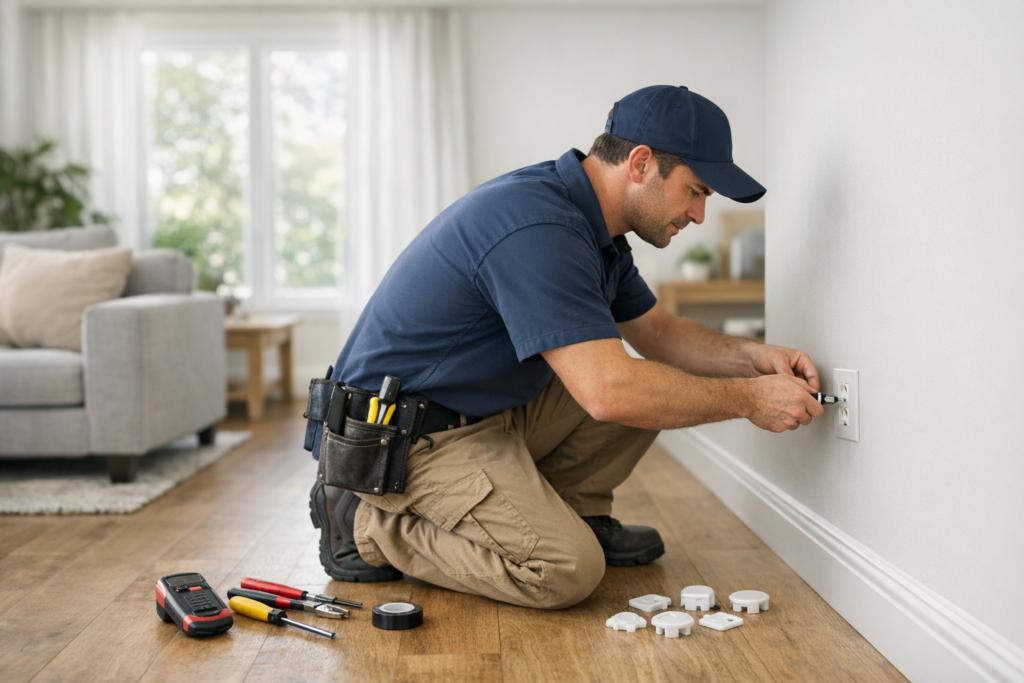
Childproof electrical outlets are a better long-term solution than loose plastic caps because the protection is built into the receptacle itself. There is no small part to misplace, forget to reinstall, or create a choking concern. For busy households, that convenience matters.
Tamper-Resistant Receptacles vs. Plastic Outlet Caps
Plastic outlet caps can reduce access to unused outlets, but they rely on consistent use. If an adult removes a cap to plug in a vacuum, charger, lamp, or holiday decoration and forgets to replace it, the outlet is no longer protected. Some children also learn to remove basic caps over time.
Tamper-resistant receptacles offer continuous protection because the safety mechanism remains inside the outlet. They are especially helpful in nurseries, children’s bedrooms, playrooms, family rooms, hallways, and other areas where children spend time.
When Outlet Covers Still Make Sense
Outlet covers can still be useful when selected carefully and used correctly. Sliding plate covers, box-style covers for plugged-in cords, and weather-resistant exterior covers can help limit access to plugs and receptacles in specific locations. The best choice depends on whether the outlet is unused, actively powering a device, located outdoors, or positioned where a child can pull on a cord.
If a cover feels loose, cracked, difficult to close, or easy for a child to remove, it should be replaced with a safer option.
Do Not Overlook GFCI Protection
GFCI protection is designed to reduce the risk of electric shock by shutting off power quickly when it detects an imbalance in electrical current. It is commonly used in areas where moisture increases shock risk, such as bathrooms, kitchens, laundry areas, basements, garages, and outdoor receptacles.
For families with children, GFCI protection is an important layer of safety because children may touch outlets with damp hands, play near sinks, or use devices in areas where water is present. A licensed electrician can check whether your outlets have the right type of protection for their location and whether the devices trip and reset properly.
Pressing the test and reset buttons on GFCI devices periodically is a simple habit, but it does not replace a professional evaluation if outlets are old, unreliable, or frequently tripping.
Inspect Outlets for Warning Signs
Childproofing is not complete if the outlet itself is damaged or unsafe. Before adding covers or replacing receptacles, look for signs that an outlet needs professional attention.
Call a licensed electrician if you notice:
- Cracked, broken, or missing outlet covers
- Outlets that feel warm to the touch
- Buzzing, sizzling, or crackling sounds
- Burn marks, discoloration, or a melted appearance
- Plugs that fall out easily or feel loose
- Sparks when plugging in or unplugging devices
- Lights that flicker when using nearby outlets
- Frequent breaker trips or GFCI trips
- Two-prong outlets in rooms where grounded power is needed
Safety warning: Do not ignore heat, burning smells, sparking, or buzzing from any outlet. Stop using the outlet and have it evaluated by a qualified electrician.
Manage Cords, Chargers, and Power Strips
Many child electrical hazards come from cords rather than the outlet itself. A child may pull a lamp cord, chew on a charger, unplug a device, or trip over an extension cord. Cord management is one of the most practical parts of electrical childproofing.
Use these steps to reduce cord-related risks:
- Keep cords behind furniture when ventilation and manufacturer instructions allow.
- Use cord shorteners or cord channels designed for residential use.
- Unplug chargers when they are not in use.
- Keep charging cables away from cribs, beds, and play areas.
- Avoid running cords under rugs, carpets, or furniture where heat can build up.
- Do not staple, pinch, or sharply bend electrical cords.
- Replace damaged cords immediately instead of taping them.
- Use only extension cords rated for the device and the environment.
Extension cords should be temporary, not a substitute for properly installed outlets. If you rely on extension cords every day, your home may need additional receptacles in safer, more convenient locations.
Make Power Strips Safer Around Children
Power strips are common in home offices, entertainment areas, bedrooms, and playrooms, but they can be attractive to children because of their switches, lights, and multiple plug openings. A power strip placed on the floor can create several hazards at once.
To use power strips more safely, choose units with built-in overload protection, keep them out of reach when possible, and avoid plugging high-demand appliances into them. Do not connect one power strip to another. If a room does not have enough outlets for normal use, consider having additional outlets installed by a licensed electrician.
Also remember that surge protectors and power strips are not the same as permanent wiring. They can be helpful for electronics, but they are not a fix for an undersized or outdated electrical system.
Pay Special Attention to High-Risk Rooms
Some areas of the home deserve extra attention because they combine moisture, frequent device use, or heavy electrical demand with child access.
Nurseries and Bedrooms
Install childproof electrical outlets, secure cords from lamps and sound machines, and keep chargers away from beds and cribs. Avoid placing furniture where a child can climb to reach switches, outlets, or cords.
Living Rooms and Playrooms
Entertainment centers often have multiple cords, power strips, game systems, lamps, and chargers. Use cord management products, cover unused outlets, and keep power strips mounted or enclosed where children cannot easily reach them.
Kitchens and Bathrooms
Water and electricity require extra caution. Make sure receptacles near sinks and countertops have appropriate protection and keep small appliances unplugged when not in use. Never leave cords dangling from counters where a child can pull them.
Basements, Garages, and Utility Areas
In New England homes, basements and utility spaces may include older wiring, sump pumps, freezers, heating equipment, tools, and extension cords. These areas should be locked or supervised when children are present, and any questionable wiring should be inspected.
Older Homes Need a Closer Electrical Safety Review
Many homes throughout New Hampshire, Massachusetts, Maine, and Vermont were built before modern electrical demands existed. Older properties may have fewer outlets, outdated panels, ungrounded wiring, worn receptacles, or previous do-it-yourself repairs. Childproofing products can help, but they cannot correct underlying electrical problems.
A professional electrical inspection can identify issues such as loose connections, improper grounding, damaged devices, outdated receptacles, overloaded circuits, unsafe extension cord use, and missing protective devices. This is especially valuable before bringing home a new baby, renovating a child’s bedroom, finishing a basement, or buying an older home.
If your home still has older two-prong outlets or a panel that struggles with daily electrical demand, ask a licensed electrician about safe upgrade options. In some cases, replacing receptacles alone is not enough. The wiring, grounding, circuit protection, and panel capacity all need to be considered together.
Childproofing and Modern Electrical Upgrades
Electrical childproofing is often a good time to think about broader safety and reliability improvements. Families today use more electronics, smart devices, appliances, computers, chargers, and home comfort equipment than previous generations. A safer home is not only child-resistant; it is also properly powered for real daily use.
Depending on your home, a licensed electrician may recommend:
- Tamper-resistant receptacle installation
- GFCI outlet replacement or testing
- AFCI protection where appropriate for added fire-risk reduction
- Dedicated circuits for high-demand equipment
- Additional outlets to reduce extension cord use
- Electrical panel evaluation or upgrades
- Whole-home surge protection
- Lighting improvements for safer stairs, hallways, and entrances
- Generator readiness for severe winter weather and outages
These upgrades can improve safety for children while also making the home more reliable, functional, and prepared for future electrical needs.
Common Electrical Childproofing Mistakes
Well-intentioned homeowners sometimes rely on products or habits that do not provide enough protection. Avoid these common mistakes:
- Using loose outlet caps as the only childproofing method in frequently used rooms
- Leaving chargers plugged in where children can reach them
- Assuming a covered outlet is safe even when it is damaged or loose
- Running extension cords across floors or under rugs
- Overloading power strips with too many devices
- Ignoring warm outlets, flickering lights, or tripping breakers
- Using indoor extension cords outdoors
- Replacing outlets without understanding grounding or circuit protection needs
The safest solution is a combination of durable products, careful daily habits, and professional electrical work where needed.
When to Call a Licensed Electrician
You should call a licensed electrician when outlets are damaged, outdated, loose, warm, sparking, frequently tripping, or located in areas where moisture is present. You should also schedule professional service if you want tamper-resistant receptacles installed throughout the home or if you are unsure whether your current outlets are properly grounded and protected.
Electrical work behind the wall can involve energized wiring, grounding, circuit protection, and code considerations. A qualified electrician can identify hidden problems, install the correct devices, and make sure the finished work is safe for everyday family use.
Electrical Constructors LLC provides residential electrical services for homeowners throughout New Hampshire, Massachusetts, Maine, and Vermont, including outlet replacement, electrical inspections, panel upgrades, troubleshooting, lighting, surge protection, generator installation, and other safety-focused electrical improvements.
Practical Electrical Safety Habits for Families
After childproof electrical outlets and other safety devices are installed, everyday habits still matter. Teach children as they grow that outlets, cords, panels, and electrical equipment are not toys. Keep appliances away from water, unplug unused devices, and check cords regularly for wear.
Parents, grandparents, babysitters, and caregivers should all understand the home’s basic electrical safety rules. Consistency is important because children often notice when adults make exceptions.
Use this quick checklist as a starting point:
- Install tamper-resistant receptacles in child-accessible areas.
- Use secure covers for outlets with plugged-in cords.
- Test GFCI devices regularly and replace unreliable units.
- Keep cords and chargers out of children’s reach.
- Remove damaged cords, cracked covers, and loose plugs from service.
- Avoid using extension cords as permanent wiring.
- Keep children away from electrical panels and utility areas.
- Schedule an electrical inspection if your home is older or has warning signs.
A Safer Home Starts With the Electrical System
Childproofing your electrical system is one of the most important steps you can take to make your home safer for infants, toddlers, and young children. Outlet caps may help in limited situations, but tamper-resistant receptacles, proper GFCI protection, safe cord management, and professional electrical repairs provide stronger long-term protection.
If you are preparing your home for a child or updating an older property, Electrical Constructors LLC can help evaluate your electrical system and recommend practical safety improvements. A safer home starts with reliable wiring, properly installed devices, and electrical work completed by professionals who understand how families actually use their homes.