
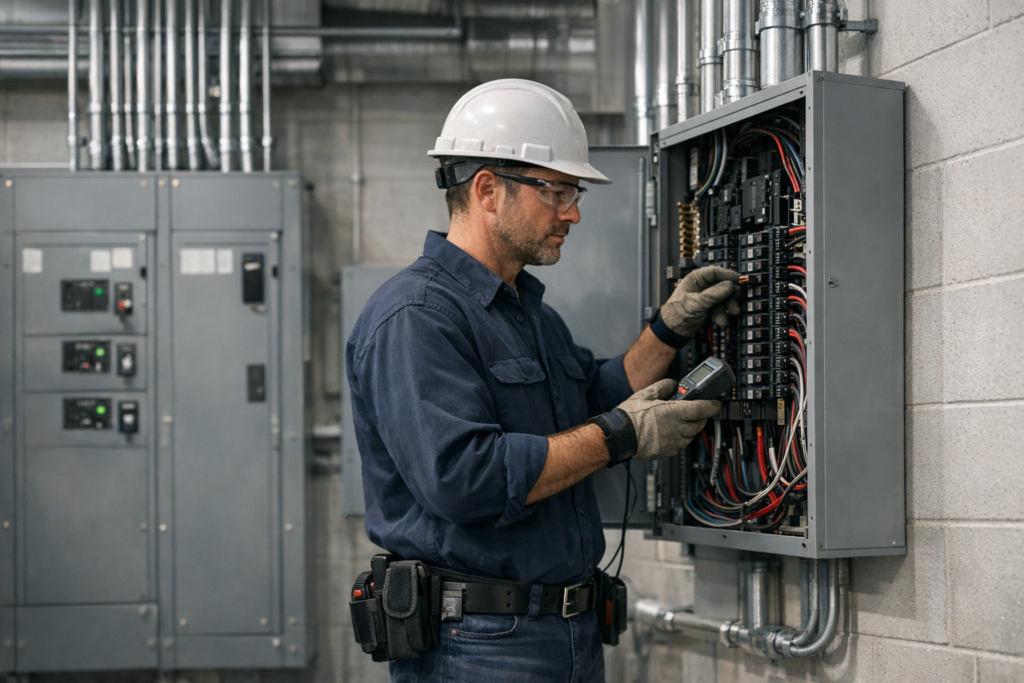
Preventive electrical maintenance saves businesses money by finding small electrical problems before they become expensive failures, safety hazards, production delays, or emergency service calls. For commercial buildings, a proactive maintenance plan helps protect equipment, reduce downtime, extend the life of electrical infrastructure, and keep daily operations running reliably.
For business owners, facility managers, property managers, and contractors throughout New Hampshire, Massachusetts, Maine, and Vermont, electrical reliability is not just a convenience. It affects employee productivity, tenant satisfaction, customer experience, equipment performance, and operating costs. A neglected electrical system may appear to be working fine until a breaker trips repeatedly, a panel overheats, a lighting system fails, or critical equipment shuts down at the worst possible time.
Commercial electrical maintenance is one of the most practical ways to control these risks. Instead of waiting for a failure, a qualified electrician evaluates the condition of the system, identifies warning signs, corrects deficiencies, and helps plan upgrades before they become urgent.
What Commercial Electrical Maintenance Includes
Commercial electrical maintenance is the routine inspection, testing, cleaning, adjustment, repair, and documentation of a building’s electrical system. The goal is to keep the system safe, efficient, code-conscious, and dependable under real operating conditions.
Every facility is different, but a professional maintenance program may include:
- Electrical panel and switchgear inspections
- Breaker testing and evaluation
- Loose connection checks and torque verification where appropriate
- Inspection of wiring, conduits, junction boxes, and terminations
- Lighting system maintenance and troubleshooting
- Emergency and exit lighting review
- Grounding and bonding evaluations
- Surge protection assessment
- Generator system inspection and load readiness review
- Thermal imaging where appropriate to identify abnormal heat
- Electrical load review for growing businesses
- Identification of outdated, damaged, or overloaded equipment
- Documentation of recommended repairs and future upgrades
The right maintenance plan depends on the building type, age of the electrical system, equipment loads, occupancy, business hours, and the consequences of downtime. A retail space, manufacturing facility, apartment building, office, restaurant, warehouse, and medical-related facility may all have very different maintenance priorities.
How Preventive Electrical Maintenance Reduces Emergency Repair Costs
Emergency electrical repairs are almost always more expensive than planned maintenance. When a problem happens unexpectedly, the business may face after-hours service, lost productivity, temporary shutdowns, damaged equipment, and rushed decision-making.
Preventive maintenance reduces the likelihood of sudden failures by identifying early warning signs such as:
- Discolored breakers or panel components
- Buzzing, humming, or crackling electrical equipment
- Repeatedly tripping breakers
- Warm outlets, switches, panels, or disconnects
- Flickering or dimming lights
- Loose or damaged wiring connections
- Corrosion, moisture intrusion, or rust
- Improperly labeled circuits
- Overloaded panels or branch circuits
- Outdated equipment that no longer supports modern electrical demand
Many costly electrical issues start small. A loose connection can create heat. Heat can damage insulation, breakers, terminals, or connected equipment. A poorly balanced load can stress certain circuits. A failing breaker may not perform properly when needed. Preventive service gives a licensed electrician the opportunity to correct these conditions before they interrupt operations.
Downtime Is Often the Biggest Hidden Cost
The repair bill is only one part of the true cost of an electrical failure. For many commercial properties, downtime can be far more expensive than the electrical work itself.
An unexpected outage can affect:
- Point-of-sale systems
- Computers, servers, and internet equipment
- Security systems and access control
- Refrigeration and food storage
- HVAC systems
- Manufacturing or production equipment
- Lighting and life safety systems
- Tenant operations in multi-unit properties
- Customer access and employee productivity
Even a short interruption can create scheduling problems, lost sales, spoiled inventory, uncomfortable indoor conditions, or security concerns. In colder New England weather, electrical problems affecting heat, controls, pumps, or backup systems can become especially disruptive.
A planned commercial electrical maintenance program helps businesses schedule work at practical times, such as during off-hours, seasonal slowdowns, planned shutdowns, or tenant turnover periods. That level of control can save money and reduce stress.
Maintenance Helps Extend the Life of Electrical Equipment
Electrical systems age, but neglect can accelerate that process. Heat, dust, vibration, moisture, overloaded circuits, and loose connections all shorten the service life of electrical components. Preventive maintenance helps electrical equipment operate within safer and more stable conditions.
Well-maintained equipment is less likely to experience premature wear. Panels, breakers, disconnects, lighting controls, transformers, and wiring connections all benefit from periodic inspection. In buildings with older electrical infrastructure, routine maintenance can also help owners plan for upgrades before existing equipment becomes unreliable or difficult to service.
This is especially important in New Hampshire, Massachusetts, Maine, and Vermont, where many commercial buildings, mixed-use properties, and older structures may have electrical systems that have been expanded over time. Additions, tenant improvements, new equipment, and technology upgrades can place demands on systems that were not originally designed for today’s loads.
Electrical Maintenance Supports Workplace Safety
Cost savings matter, but safety is the most important reason to maintain a commercial electrical system. Electrical hazards can create risks of shock, burns, fire, equipment damage, and unsafe working conditions.
A qualified electrician can help identify conditions that may require correction, including damaged wiring, missing covers, exposed conductors, improper extensions, overloaded circuits, inadequate labeling, deteriorated equipment, and signs of overheating.
Commercial electrical work should be performed by qualified, licensed electricians. Business owners and maintenance staff should not open energized electrical panels, troubleshoot live equipment, or attempt repairs beyond their training. Electrical systems can remain dangerous even when a problem seems minor.
Preventive maintenance also helps support compliance efforts by keeping electrical systems organized, documented, and reviewed. While specific requirements vary by property type, occupancy, equipment, and jurisdiction, maintaining a safe electrical system is an essential responsibility for commercial building owners and managers.
Preventive Maintenance Can Improve Energy Efficiency
Electrical maintenance is not only about preventing failures. It can also reveal opportunities to reduce energy waste and improve system performance.
During an inspection, an electrician may identify inefficient lighting, outdated controls, unnecessary energy loads, poor circuit organization, or equipment that is drawing more power than expected. These findings can guide practical upgrades such as LED lighting, occupancy sensors, improved exterior lighting controls, dedicated circuits for equipment, or more efficient panel layouts during renovations.
For larger facilities, maintenance can also help identify trends. If equipment is repeatedly causing nuisance trips or drawing unusual loads, the underlying issue may be mechanical, operational, or electrical. Finding the root cause helps prevent wasted energy and repeated repairs.
Why Electrical Inspections Are Valuable Before Problems Appear
Many business owners wait until something fails before calling an electrician. That reactive approach can work for minor noncritical issues, but it is risky for commercial electrical systems that support daily operations.
Electrical inspections are valuable because they help answer important questions:
- Is the existing service adequate for current and future demand?
- Are panels properly labeled and accessible?
- Are there signs of overheating, corrosion, or deterioration?
- Are circuits overloaded or poorly distributed?
- Is the building prepared for seasonal power demands?
- Are emergency systems, generators, or surge protection devices ready when needed?
- Do planned renovations or equipment additions require electrical upgrades?
For property managers and commercial owners, inspections also create useful documentation. Knowing the condition of the electrical system helps with budgeting, capital planning, tenant improvements, insurance discussions, and long-term asset management.
Common Electrical Maintenance Mistakes Businesses Should Avoid
Good maintenance is proactive and organized. Businesses that only respond to visible failures often miss the warning signs that lead to larger expenses.
Ignoring Repeated Breaker Trips
A breaker that trips repeatedly is not an inconvenience to work around. It is a sign that the circuit needs evaluation. The cause may be an overload, short circuit, ground fault, failing breaker, equipment problem, or wiring issue. Resetting the breaker over and over without diagnosing the cause can create unnecessary risk.
Using Extension Cords as Permanent Wiring
Extension cords and power strips are often misused in offices, retail spaces, maintenance areas, and temporary workspaces. If a business relies on them regularly, the building may need additional outlets, dedicated circuits, or a safer wiring layout.
Postponing Panel Upgrades
As businesses add computers, kitchen equipment, HVAC equipment, machinery, EV chargers, lighting, or security systems, the electrical system may need more capacity. Delaying a panel or service upgrade can lead to overloaded circuits, limited expansion options, and repeated service calls.
Neglecting Exterior Electrical Equipment
Outdoor disconnects, lighting, signage circuits, rooftop equipment feeds, and weather-exposed components face moisture, temperature swings, snow, ice, and corrosion. New England weather can be hard on exterior electrical equipment, making periodic inspection especially important.
Failing to Maintain Generators and Backup Power
A generator must be ready before an outage occurs. Businesses that depend on backup power should not wait until a storm to discover a dead battery, transfer issue, fuel problem, or neglected maintenance item. Generator-related electrical components should be reviewed as part of broader facility planning.
How Often Should a Business Schedule Electrical Maintenance?
The right maintenance frequency depends on the type of facility, electrical load, equipment sensitivity, occupancy, and risk tolerance. Some businesses benefit from annual inspections, while higher-demand facilities may need more frequent reviews.
Factors that may justify more frequent commercial electrical maintenance include:
- Older electrical panels or wiring
- Heavy machinery or production equipment
- Restaurants, refrigeration, or commercial kitchens
- Multi-tenant commercial properties
- Frequent tenant build-outs or space changes
- Critical technology, servers, or security systems
- High lighting demand or exterior lighting systems
- History of nuisance tripping or unexplained outages
- Buildings exposed to moisture, vibration, dust, or temperature extremes
A licensed commercial electrician can evaluate the facility and recommend a practical schedule that balances reliability, safety, and budget.
What Businesses Should Expect During a Maintenance Visit
A professional maintenance visit should be organized, safety-focused, and tailored to the building. The electrician should review known concerns, inspect accessible electrical equipment, document findings, and explain recommended repairs or upgrades in clear language.
Depending on the scope of work, a visit may involve:
- Reviewing past electrical issues or recent equipment additions
- Inspecting panels, breakers, disconnects, and visible wiring
- Checking for heat, discoloration, corrosion, moisture, and physical damage
- Testing selected circuits or equipment where appropriate
- Verifying labeling and access to electrical equipment
- Evaluating lighting, controls, and emergency lighting concerns
- Discussing future electrical needs for renovations or expansion
- Providing prioritized recommendations
Not every issue needs to be corrected immediately. A good maintenance plan separates urgent safety concerns from recommended repairs, efficiency improvements, and longer-term capital upgrades. This helps businesses make informed decisions instead of reacting under pressure.
Preventive Maintenance Helps with Budget Planning
One of the biggest advantages of preventive maintenance is financial predictability. Unexpected electrical failures can force businesses to spend money at inconvenient times. Planned maintenance allows owners and managers to budget for repairs, upgrades, and replacements before they become emergencies.
For example, a maintenance inspection may reveal that a panel is aging, a tenant space needs additional circuits, or exterior lighting should be upgraded before winter. When these needs are identified early, the business can compare options, schedule work efficiently, coordinate with tenants or staff, and avoid rushed decisions.
This is especially useful for property managers and commercial owners managing multiple buildings. Consistent documentation across properties helps prioritize electrical investments based on risk, age, condition, and business impact.
When Maintenance Reveals the Need for an Upgrade
Preventive maintenance does not always mean a simple repair. Sometimes the most cost-effective decision is an upgrade that improves safety, capacity, or reliability.
A business may need an electrical upgrade when:
- The existing service no longer supports current equipment
- Panels are full, outdated, damaged, or difficult to maintain
- New HVAC, kitchen, production, or technology loads are being added
- EV charging stations are planned
- Lighting systems are inefficient or unreliable
- Repeated repairs are no longer cost-effective
- Power quality issues affect sensitive equipment
- Backup power or surge protection is needed
A planned upgrade can be scheduled strategically, often with less operational disruption than an emergency replacement after a failure.
Why Local Experience Matters in New England
Commercial electrical systems in New Hampshire, Massachusetts, Maine, and Vermont face practical regional challenges. Cold winters, snow and ice, storm-related outages, freeze-thaw cycles, older building stock, and seasonal power demands can all affect electrical reliability.
Local experience matters because maintenance recommendations should reflect real-world conditions. Exterior equipment should be evaluated for weather exposure. Backup power should be considered before storm season. Older buildings may need careful planning when modern equipment is added. Tenant improvements should be coordinated without compromising existing electrical capacity.
Electrical Constructors LLC works with homeowners, businesses, contractors, developers, and property managers throughout the region, providing residential, commercial, industrial, and new construction electrical services. That broad experience helps identify practical solutions that support safety, reliability, and long-term value.
The Bottom Line for Businesses
Commercial electrical maintenance is an investment that helps businesses avoid larger expenses. It reduces emergency repairs, limits downtime, protects equipment, improves safety, supports energy efficiency, and gives owners better control over long-term electrical planning.
The businesses that save the most are often the ones that do not wait for visible failure. They inspect, maintain, document, and upgrade their electrical systems before small issues become costly disruptions.
If your facility has aging electrical equipment, repeated breaker trips, flickering lights, growing power demands, planned renovations, or concerns about generator readiness, scheduling a professional electrical maintenance evaluation is a practical next step. A qualified electrician can help you understand the condition of your system, prioritize improvements, and keep your business running safely and reliably.