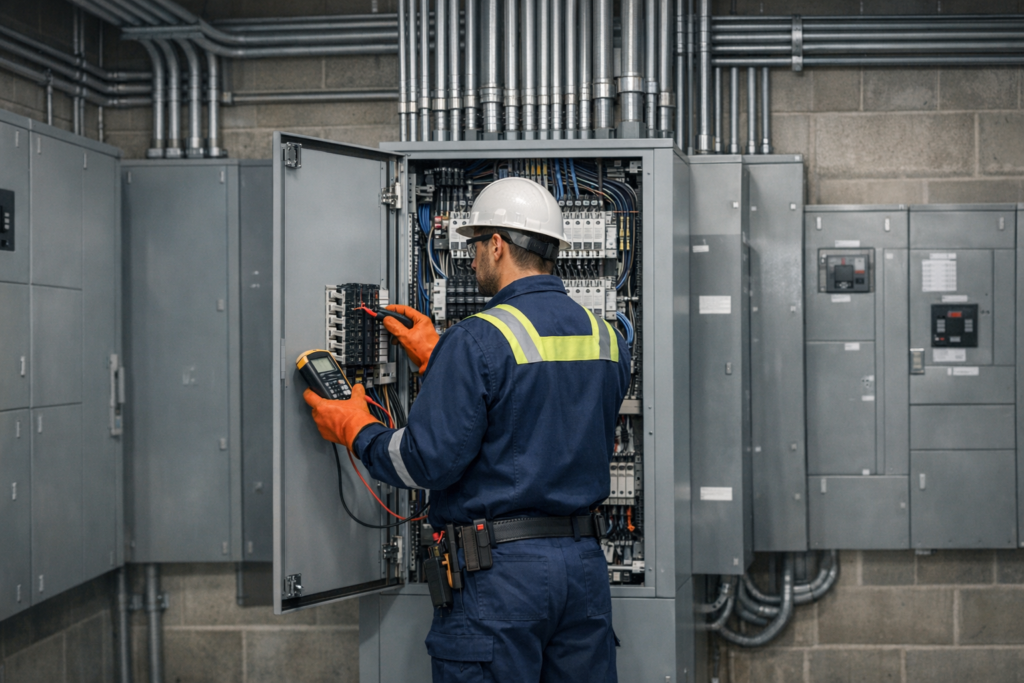
Commercial electrical safety starts with a simple goal: keeping people, property, equipment, and daily operations protected from preventable electrical hazards. For business owners, facility managers, property managers, and contractors, that means more than reacting when something fails. A safer workplace depends on routine inspections, properly maintained electrical equipment, employee awareness, and timely repairs performed by qualified electricians.
Electrical problems in commercial buildings can interrupt operations, damage expensive equipment, create fire risks, and expose employees or customers to serious injury. The good news is that many hazards can be reduced with practical habits, professional maintenance, and a clear understanding of when to call a licensed electrical contractor.
Why Commercial Electrical Safety Deserves Ongoing Attention
Commercial electrical systems often support far greater loads than residential systems. Lighting, HVAC equipment, computers, machinery, refrigeration, commercial kitchens, security systems, point-of-sale equipment, EV chargers, and backup power systems may all depend on the same electrical infrastructure. When that infrastructure is outdated, overloaded, damaged, or poorly maintained, small problems can become costly disruptions.
In New Hampshire, Massachusetts, Maine, and Vermont, many commercial properties also face New England-specific challenges. Older buildings may have electrical systems that were designed for much lower power demands. Winter storms, snow, ice, high winds, and power outages can place additional stress on electrical systems and backup power equipment. Seasonal heating, cooling, and lighting demands can also reveal weaknesses that were not obvious during milder months.
A strong commercial electrical safety plan helps reduce risk by identifying issues before they lead to equipment failure, downtime, fire hazards, or unsafe working conditions.
Schedule Regular Electrical Inspections
Routine electrical inspections are one of the most effective ways to identify hidden hazards in a commercial building. Many electrical issues develop gradually. Loose connections, overheated components, damaged wiring, overloaded circuits, and deteriorated equipment may not be obvious until a failure occurs.
A professional commercial electrical inspection may include evaluation of panels, breakers, wiring, grounding and bonding, disconnects, receptacles, lighting systems, emergency lighting, surge protection, dedicated equipment circuits, and visible signs of overheating or damage. The exact scope depends on the property, equipment, and concerns being evaluated.
Businesses should consider inspections when:
- Moving into a new commercial space
- Renovating, expanding, or changing the use of a space
- Adding major equipment, appliances, machinery, or EV charging
- Experiencing frequent breaker trips or unexplained power issues
- Managing an older building with unknown electrical history
- Preparing for seasonal storms or backup generator use
- Addressing insurance, property management, or safety concerns
Inspections are especially valuable for property managers and facility managers responsible for multiple tenants or high-traffic commercial spaces. Preventative attention often costs less than emergency repairs, downtime, or damaged equipment.
Do Not Ignore Warning Signs of Electrical Problems
Electrical systems usually provide warning signs before serious failures occur. Recognizing those signs early is an important part of commercial electrical safety.
Contact a qualified electrician if your business notices:
- Breakers that trip repeatedly
- Lights that flicker, dim, or brighten unexpectedly
- Warm outlets, switches, plugs, or panel surfaces
- Burning odors, smoke, or discoloration near electrical equipment
- Buzzing, crackling, or sizzling sounds from panels or devices
- Outlets that no longer hold plugs securely
- Damaged cords, exposed conductors, or cracked device covers
- Equipment that shuts down, resets, or loses power unexpectedly
Burning smells, smoke, arcing, visible sparks, or hot electrical components should be treated as urgent safety concerns. If conditions appear dangerous, keep people away from the area and contact emergency services or a qualified electrical professional as appropriate.
Keep Electrical Panels Accessible and Clearly Identified
Electrical panels, disconnects, and service equipment must remain accessible for maintenance, troubleshooting, and emergency shutoff. In busy commercial spaces, panels often become blocked by stored inventory, cleaning supplies, office furniture, tools, or tenant equipment. That creates unnecessary risk during an emergency and makes routine service more difficult.
Businesses should maintain clear access to electrical panels and avoid using electrical rooms as general storage areas. Panel directories should also be accurate enough for electricians, maintenance staff, or authorized personnel to identify circuits quickly. Unlabeled or incorrectly labeled circuits can increase troubleshooting time and raise the risk of shutting down the wrong equipment.
If your building has outdated panel labeling, missing circuit information, or unknown electrical modifications, a licensed electrician can help trace circuits and improve identification.
Avoid Overloaded Circuits and Improper Power Use
Overloaded circuits are a common commercial electrical hazard. They often occur when a business grows, adds equipment, rearranges workstations, or relies too heavily on temporary power strips and extension cords instead of properly installed circuits.
Examples of risky power use include:
- Connecting multiple high-demand devices to one outlet or power strip
- Using extension cords as permanent wiring
- Daisy-chaining power strips together
- Running cords under rugs, mats, doors, or furniture
- Using damaged, undersized, or indoor-only cords in unsuitable locations
- Adding commercial equipment without verifying available electrical capacity
Power strips and extension cords may be useful for temporary, low-demand applications, but they are not a substitute for properly designed branch circuits. If employees regularly need more outlets, equipment circuits, or dedicated power locations, the safer long-term solution is to have the electrical system evaluated and upgraded where necessary.
Match Electrical Capacity to Business Operations
As businesses evolve, electrical demand often increases. A space that once supported basic office equipment may later need servers, kitchen appliances, production equipment, refrigeration, HVAC changes, specialized lighting, or EV charging stations. Without proper planning, added loads can strain panels, circuits, and service capacity.
Before installing new equipment, businesses should confirm that the electrical system can safely support the added load. This is particularly important for equipment with motors, compressors, heating elements, large power supplies, or continuous operating requirements.
A commercial electrician can evaluate whether your current system is adequate or whether you need dedicated circuits, panel upgrades, service upgrades, transformer considerations, improved grounding, or other electrical modifications. This planning helps protect both the building and the investment in new equipment.
Use Ground Fault and Surge Protection Where Appropriate
Ground fault protection and surge protection both play important roles in electrical safety and equipment protection. Ground fault protection helps reduce shock risk in areas where electricity and moisture may be present. Surge protection helps protect sensitive electronics and electrical systems from voltage spikes caused by utility disturbances, storms, switching events, or internal equipment operation.
Commercial buildings may contain many sensitive devices, including computers, network equipment, security systems, medical or laboratory equipment, controls, point-of-sale systems, and automated building systems. A surge event can cause immediate failure or shorten equipment life over time.
Whole-building surge protection, equipment-level protection, and proper grounding practices can work together to improve system resilience. The right approach depends on the building, equipment, and electrical design.
Maintain Lighting, Exit Signs, and Emergency Systems
Lighting is often treated as a comfort issue, but it is also a safety issue. Poor lighting can contribute to slips, trips, falls, security concerns, and unsafe working conditions. Emergency lighting and exit signs are especially important because they help occupants navigate safely during outages or emergencies.
Businesses should regularly check:
- Interior and exterior lighting performance
- Parking lot and walkway lighting
- Exit signs and emergency lighting units
- Stairwell, hallway, loading dock, and warehouse lighting
- Occupancy sensors, timers, and lighting controls
- Fixtures showing signs of flickering, buzzing, overheating, or moisture intrusion
LED lighting upgrades can improve visibility, reduce energy use, lower maintenance needs, and support safer working environments. For commercial properties with older lighting systems, an evaluation can identify opportunities to improve efficiency and reliability while correcting unsafe or outdated components.
Train Employees to Recognize Basic Electrical Hazards
Employees do not need to be electricians to play a role in commercial electrical safety. Basic awareness can help prevent unsafe behavior and encourage early reporting of problems.
Employees should know to report:
- Damaged outlets, switches, covers, plugs, or cords
- Repeatedly tripping breakers
- Flickering lights or unusual equipment behavior
- Burning smells or heat near electrical devices
- Water leaks near electrical panels, outlets, or equipment
- Blocked electrical panels or disconnects
They should also understand that electrical panels, wiring, breakers, and hardwired equipment should only be serviced by qualified personnel. Resetting a breaker once may seem routine, but a breaker that trips repeatedly is not a nuisance to ignore. It is a sign that the circuit needs professional evaluation.
Protect Electrical Equipment From Moisture, Dust, and Physical Damage
Commercial environments can be tough on electrical systems. Warehouses, manufacturing spaces, garages, restaurants, retail back rooms, mechanical rooms, and exterior areas may expose equipment to moisture, dust, vibration, temperature changes, chemical vapors, or accidental impact.
Electrical equipment should be suitable for its environment and protected from avoidable damage. For example, exterior outlets, mechanical areas, damp locations, washdown areas, and industrial spaces may require different devices, enclosures, or installation methods than a standard office environment.
Property managers and maintenance teams should watch for broken covers, loose conduits, damaged boxes, missing knockouts, corroded equipment, water staining, and signs that cords or wiring are being exposed to wear. These issues should be corrected before they become larger hazards.
Plan for Storms, Outages, and Backup Power
New England businesses are no strangers to winter storms, coastal weather patterns, heavy snow, ice, wind, and extended power interruptions. For many businesses, an outage can mean lost revenue, frozen pipes, spoiled inventory, security concerns, interrupted communications, or unsafe building conditions.
Backup generator systems can help maintain critical loads during outages, but they must be properly selected, installed, tested, and maintained. A generator that is too small, incorrectly connected, poorly maintained, or rarely tested may not perform when it is needed most.
Businesses considering backup power should identify which loads are truly critical. These may include heating systems, refrigeration, sump pumps, security systems, network equipment, emergency lighting, selected outlets, or essential production equipment. A licensed electrician can help determine the safest and most reliable way to integrate generator power with the building electrical system.
Be Careful With DIY Repairs and Unqualified Electrical Work
Commercial electrical work is not the place to cut corners. Temporary fixes, unpermitted modifications, improper wiring, mismatched breakers, overloaded panels, and unqualified repairs can create serious safety and liability concerns. They can also make future troubleshooting more difficult and expensive.
Even simple-looking issues may reflect a larger problem. A warm outlet may involve a loose connection. A tripping breaker may indicate an overloaded circuit, faulty equipment, damaged wiring, or a ground fault. Flickering lights may be tied to a failing connection, an overloaded circuit, or service-related concerns.
For safety, reliability, and compliance with applicable requirements, commercial electrical repairs and installations should be handled by qualified licensed electricians familiar with commercial systems.
Include Electrical Safety in Renovation and Build-Out Planning
Electrical safety should be part of every commercial renovation, tenant fit-out, equipment installation, and new construction project. Waiting until the end of a project to address electrical needs can lead to delays, change orders, undersized circuits, poor outlet placement, insufficient lighting, or inadequate capacity for future growth.
Early electrical planning helps answer important questions:
- Does the existing service have enough capacity?
- Will new equipment require dedicated circuits?
- Are panels located where they remain accessible?
- Is the lighting design appropriate for the work being performed?
- Are emergency and exit lighting needs being considered?
- Will future expansion require additional electrical infrastructure?
- Are low-voltage, security, data, and control systems coordinated with power needs?
For general contractors, builders, developers, architects, and business owners, involving an experienced electrical contractor early helps reduce surprises and supports a safer, more functional finished space.
Create a Preventative Maintenance Checklist
A preventative maintenance program does not need to be complicated to be effective. The key is consistency. Businesses should document concerns, schedule periodic reviews, and address deficiencies before they become emergencies.
A practical commercial electrical safety checklist may include:
- Keep electrical panels and disconnects clear and accessible
- Confirm panel directories are accurate and legible
- Inspect visible cords, plugs, switches, and receptacles for damage
- Report flickering lights, buzzing sounds, burning smells, or warm devices
- Avoid permanent use of extension cords
- Check lighting, exterior fixtures, exit signs, and emergency lighting
- Review electrical needs before adding new equipment
- Test and maintain backup power systems according to manufacturer guidance
- Schedule professional inspections for older buildings or recurring issues
Documentation is useful for property managers and facility teams because it creates a record of observed issues, completed repairs, and planned upgrades. It also helps prioritize work across multiple buildings or tenant spaces.
Know When to Call a Commercial Electrician
Some electrical concerns require immediate professional attention, while others should be planned as part of maintenance, renovation, or system upgrades. In general, call a commercial electrician when a problem involves wiring, panels, breakers, service equipment, repeated power interruptions, code corrections, equipment circuits, generator connections, EV chargers, or any situation that may pose a shock or fire hazard.
You should also involve an electrician before making changes that increase electrical demand. This includes adding commercial appliances, expanding office workstations, installing production equipment, upgrading lighting systems, adding EV charging, reconfiguring tenant spaces, or preparing a building for backup power.
Electrical Constructors LLC provides commercial electrical services for businesses, property managers, contractors, developers, and facility teams throughout New Hampshire, Massachusetts, Maine, and Vermont. From troubleshooting and repairs to panel upgrades, lighting, inspections, preventative maintenance, generators, EV charging, and complete electrical installations, experienced electrical support helps keep your workplace safer and more reliable.
A Safer Business Starts With a Reliable Electrical System
Commercial electrical safety is not a one-time task. It is an ongoing responsibility that combines professional inspections, safe daily habits, timely repairs, employee awareness, and careful planning for future electrical demand. By paying attention to warning signs and maintaining your electrical system proactively, your business can reduce hazards, protect equipment, limit downtime, and create a safer environment for everyone in the building.
If your facility has recurring electrical issues, aging equipment, planned upgrades, or concerns about workplace safety, scheduling a professional evaluation is a smart next step. A dependable electrical system supports more than code compliance and convenience. It supports the people and operations that keep your business moving.