Older homes often have strong bones, timeless character, and electrical systems that were never designed for today’s appliances, electronics, heating equipment, EV chargers, home offices, and standby generators. The most important electrical upgrades for older homes focus on safety first, then capacity, reliability, energy efficiency, and convenience. If your home has flickering lights, frequent breaker trips, ungrounded outlets, outdated wiring, or a small electrical service, it may be time to have a licensed electrician evaluate which upgrades make sense.
Why Older Homes Need a Different Electrical Review
Many homes throughout New Hampshire, Massachusetts, Maine, and Vermont were built long before modern electrical demand became normal. A house that once powered basic lighting, a refrigerator, and a few small appliances may now need to support central air conditioning, sump pumps, workshops, laundry equipment, computers, smart devices, heat pumps, kitchen appliances, and vehicle charging.
Older electrical systems are not automatically unsafe, but age, past repairs, changing code requirements, and increased electrical loads can create risk. The concern is not only whether the lights turn on. A qualified electrician looks at whether the system can safely carry the load, whether wiring methods are appropriate, whether protective devices work correctly, and whether the installation matches the way the home is actually being used.
In New England, older homes also face seasonal challenges. Long winters, ice, storm-related outages, portable generator use, electric heating loads, and damp basement conditions can all expose weaknesses in aging electrical systems.
Start With a Professional Electrical Inspection
The best first upgrade is often not an installation at all. It is a thorough electrical inspection. Before replacing panels, rewiring rooms, or adding new circuits, a licensed electrician should evaluate the existing system and identify the highest-priority safety and performance issues.
An electrical inspection for an older home may include:
- Condition and capacity of the main electrical panel
- Service size and available load capacity
- Grounding and bonding conditions
- Presence of outdated wiring methods
- Ungrounded two-prong receptacles
- Overloaded circuits or improper breaker sizing
- GFCI and AFCI protection where appropriate
- Signs of overheating, arcing, corrosion, or water damage
- Unsafe DIY repairs or abandoned wiring
- Smoke, carbon monoxide, and heat alarm wiring considerations
This inspection helps separate cosmetic improvements from true safety priorities. It also gives homeowners a practical roadmap, which is especially useful when upgrades need to be completed in phases.
Upgrade an Outdated Electrical Panel
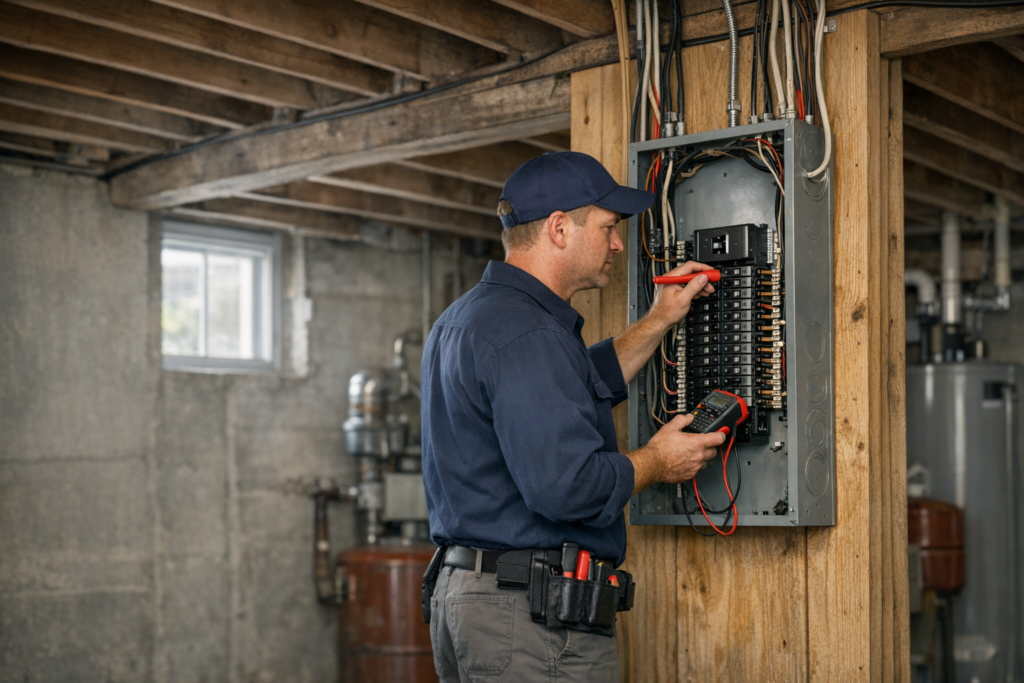
An electrical panel is the distribution center for the home’s power. If the panel is outdated, damaged, overcrowded, or too small for modern demand, a panel upgrade can improve safety and make future electrical improvements easier.
Older panels may have limited breaker space, signs of corrosion, loose connections, improper double-tapped conductors, or equipment that is no longer recommended for continued use. Some panels may still function but lack the capacity needed for additions such as heat pumps, finished basements, EV chargers, hot tubs, workshops, or generator equipment.
Common reasons to consider a panel upgrade include:
- Breakers trip frequently under normal use
- The panel feels warm or shows discoloration
- Lights dim when appliances start
- The home still has fuses instead of circuit breakers
- There is no room for new circuits
- Major appliances are sharing circuits with general outlets
- You are planning an addition, remodel, or new electrical load
A modern panel does not simply provide more breaker spaces. It allows the electrician to organize circuits properly, improve labeling, install appropriate protection, and prepare the home for future electrical needs.
Consider a Service Upgrade for Modern Electrical Loads
A service upgrade increases the amount of electrical capacity available to the home. Many older homes were built with smaller services that may not adequately support today’s lifestyle, particularly when electric appliances, HVAC equipment, or vehicle charging are added.
A service upgrade may involve utility coordination, replacement of service entrance equipment, meter equipment, grounding components, and the main panel. Because this work affects the home’s connection to the utility supply, it should only be performed by qualified professionals.
Homeowners often consider a service upgrade when adding:
- Central air conditioning or heat pumps
- Electric ranges, dryers, or water heaters
- EV charging equipment
- Finished living spaces
- Workshops or garage equipment
- Standby generators with transfer equipment
- Large kitchen or whole-home renovations
The correct service size depends on the home, existing loads, planned equipment, and applicable code requirements. A licensed electrician can perform a load calculation to determine whether a service upgrade is necessary or whether the existing service can safely support planned improvements.
Replace Unsafe or Outdated Wiring
Wiring is one of the most important electrical upgrades for older homes because hidden defects can create serious safety concerns. Older wiring may have insulation that has become brittle, grounding that is incomplete, or connections that have been altered many times over decades of renovations.
Some older homes may still contain knob-and-tube wiring, cloth-insulated wiring, early nonmetallic cable, or other outdated wiring methods. The presence of older wiring does not always mean the entire house must be rewired immediately, but it does mean the system should be evaluated carefully by a licensed electrician.
Warning signs that wiring may need attention include:
- Burning odors near outlets, switches, or fixtures
- Warm switch plates or receptacles
- Flickering lights that are not related to bulbs
- Frequent breaker trips or blown fuses
- Crackling sounds from outlets or switches
- Discolored outlets or scorch marks
- Extension cords used as permanent wiring
- Visible damaged cable in basements, attics, or garages
Electrical burning smells, sparking, or hot outlets should be treated as safety concerns. Stop using the affected circuit if it is safe to do so and contact a qualified electrician promptly.
Add Grounded Outlets Where Needed
Many older homes still have two-prong outlets, which usually indicates the receptacle does not have an equipment grounding conductor. Grounding helps provide a safer path for fault current and supports the proper operation of many modern devices and surge protection systems.
It is common for homeowners to replace two-prong outlets with three-prong outlets for appearance or convenience, but that does not create a ground. A three-prong receptacle installed without proper grounding or required protection can create a false sense of safety.
Depending on the existing wiring and the intended use of the outlet, an electrician may recommend adding a properly grounded circuit, installing appropriate GFCI protection where allowed, or rewiring specific areas. Kitchens, bathrooms, laundry areas, garages, basements, home offices, and entertainment spaces often benefit from properly grounded outlets and dedicated circuits.
Install GFCI Protection in Shock-Prone Areas
Ground-fault circuit interrupter protection helps reduce shock risk by shutting off power when it detects an imbalance in electrical current. GFCI protection is especially important in areas where electricity and moisture may be present.
Older homes may have bathrooms, kitchens, unfinished basements, garages, laundry areas, exterior outlets, or utility spaces without modern GFCI protection. Adding GFCI protection is often a relatively targeted upgrade that can significantly improve electrical safety.
GFCI devices should be installed correctly and tested periodically. If a GFCI trips repeatedly, do not ignore it or replace it without finding the cause. Recurring trips may point to moisture intrusion, damaged equipment, wiring problems, or a failing device.
Add AFCI Protection Where Appropriate
Arc-fault circuit interrupter protection helps detect certain dangerous arcing conditions that standard breakers may not identify in the same way. Arcing can occur when wiring is damaged, connections loosen, cords are pinched, or older electrical components deteriorate.
AFCI protection has become an important part of modern residential electrical safety. In older homes, adding AFCI protection may be considered during panel changes, circuit extensions, renovations, or rewiring projects. Whether AFCI protection is required or recommended depends on the scope of work and applicable electrical code requirements.
An electrician can evaluate compatibility with the existing wiring. In some older systems, nuisance tripping may reveal actual wiring issues that need repair rather than simply indicating a problem with the breaker.
Create Dedicated Circuits for High-Demand Appliances
Older homes often have too many devices connected to too few circuits. When multiple large appliances, countertop devices, office electronics, and lighting loads share the same circuit, overloads and nuisance tripping become more likely.
Dedicated circuits may be recommended for:
- Refrigerators and freezers
- Microwaves and kitchen appliances
- Dishwashers and garbage disposals
- Washers and dryers
- Sump pumps
- Home office equipment
- Window air conditioners or heat pump equipment
- Workshop tools
- Bathroom receptacles
Dedicated circuits improve reliability because critical equipment is not competing with unrelated loads. For example, a sump pump should not lose power because a countertop appliance overloaded a shared circuit. In regions with heavy rain, snowmelt, and basement moisture concerns, dedicated circuits for pumps and mechanical equipment can be especially important.
Improve Kitchen and Bathroom Electrical Systems
Kitchens and bathrooms are two of the most common areas where older electrical systems fall short. They also tend to involve moisture, high-demand appliances, and frequent use, which makes proper wiring and protection especially important.
Older kitchens may have too few countertop outlets, inadequate small-appliance circuits, outdated lighting, or appliances sharing circuits that should be separated. Bathroom electrical systems may lack GFCI protection, exhaust fan wiring, dedicated receptacle circuits, or properly rated fixtures for damp locations.
During a remodel, it is wise to evaluate the electrical layout before cabinets, tile, or finished walls are installed. Planning early helps avoid costly changes later and allows the electrician to coordinate wiring for lighting, appliances, ventilation, smart controls, and code-compliant receptacle placement.
Upgrade Lighting for Safety, Efficiency, and Comfort
Lighting upgrades are not only cosmetic. In an older home, better lighting can improve safety on stairs, in basements, at entrances, in garages, and around exterior walkways. Modern LED lighting also uses less energy than older incandescent or halogen fixtures and can reduce heat output in enclosed areas.
Useful lighting upgrades may include:
- LED recessed lighting in living areas or kitchens
- Under-cabinet lighting for safer food preparation
- Exterior security and entry lighting
- Basement and attic lighting improvements
- Stairway and hallway lighting
- Dimmer controls compatible with LED fixtures
- Occupancy sensors in utility areas
Older fixture boxes should also be evaluated before installing heavier fixtures or ceiling fans. Not every existing box is rated to support a fan or large light fixture, even if something was previously mounted there.
Add Whole-Home Surge Protection
Whole-home surge protection helps protect electrical equipment from voltage spikes that can enter through utility lines or originate from equipment inside the home. While plug-in surge strips can provide point-of-use protection, a professionally installed whole-home surge protective device adds a broader layer of defense.
This upgrade is especially valuable in homes with sensitive electronics, smart appliances, home offices, security equipment, HVAC controls, entertainment systems, and generator equipment. Severe weather and power interruptions in New England can also make surge protection a practical reliability upgrade.
Surge protection works best as part of a complete system that includes proper grounding and bonding. If the home’s grounding system is outdated or incomplete, that should be addressed as part of the overall electrical evaluation.
Prepare for Generator Installation and Power Outages
Power outages are a real concern across New Hampshire, Massachusetts, Maine, and Vermont, particularly during winter storms, heavy wind, ice events, and extended severe weather. Older homes may not be properly equipped for safe generator connection.
A safe generator setup requires appropriate transfer equipment so generator power does not backfeed into utility lines or energize circuits in an unsafe way. Extension cords running through windows or improvised connections are not a substitute for properly installed generator equipment.
Depending on the home and the homeowner’s goals, options may include a standby generator with automatic transfer equipment or a manual transfer solution for selected critical circuits. Important loads to consider may include heating equipment, refrigerators, freezers, well pumps, sump pumps, medical equipment, lighting, and essential outlets.
Plan for EV Charger Installation
Electric vehicle charging is one of the most common modern electrical upgrades for older homes. While some vehicles can charge from a standard receptacle, many homeowners prefer a Level 2 charger for faster and more convenient charging.
Before installing an EV charger, an electrician should evaluate the panel, service capacity, grounding, wiring route, charger specifications, and installation location. In some homes, EV charging can be added without a service upgrade. In others, load management, a panel upgrade, or a service upgrade may be necessary.
Planning matters. The best charger location is not always the easiest place to mount equipment. The electrician should consider parking layout, cable reach, weather exposure, future vehicle needs, and whether the installation is indoors or outdoors.
Update Smoke, Carbon Monoxide, and Heat Alarm Wiring
Life-safety alarms are often overlooked during electrical upgrades. Older homes may have outdated alarms, missing alarms, battery-only units, or alarms that are not interconnected. During renovations or electrical improvements, it is smart to review smoke alarm, carbon monoxide alarm, and heat alarm placement and power options.
Hardwired and interconnected alarm systems can improve occupant safety by sounding throughout the home when one alarm detects a hazard. Requirements can vary depending on the scope of work and local rules, so homeowners should rely on qualified professionals for proper placement and installation guidance.
Correct Unsafe DIY Electrical Work
Many older homes have decades of electrical changes behind the walls. Some were performed correctly. Others were improvised by previous owners, handymen, or unqualified workers. These issues often surface during renovations, panel upgrades, lighting projects, or home inspections.
Common unsafe conditions include open junction boxes, buried splices, mismatched wire sizes and breakers, reversed polarity, loose devices, overcrowded boxes, improper outdoor wiring, and circuits extended without proper protection. These problems may not be obvious until an electrician opens panels, devices, attics, basements, or crawl spaces.
Correcting unsafe work is one of the most valuable electrical upgrades for older homes because it addresses hidden hazards before they lead to equipment damage, shock risk, or fire concerns.
Improve Outdoor and Garage Electrical Safety
Exterior outlets, garages, sheds, and detached structures often show signs of wear in older properties. Moisture, freezing temperatures, snow, ice, rodents, lawn equipment, and physical damage can all affect outdoor electrical components.
Important improvements may include weather-resistant receptacles, in-use covers where appropriate, GFCI protection, properly rated exterior lighting, safe wiring to detached structures, and dedicated circuits for garage equipment. If you use outdoor power for tools, holiday lighting, de-icing equipment, pumps, or landscape features, the wiring should be installed for the environment where it operates.
Think About Energy Efficiency and Future Electrical Needs
Electrical upgrades should solve today’s problems while preparing the home for tomorrow’s needs. Many homeowners are adding efficient heat pumps, induction cooking, smart thermostats, LED lighting, battery systems, and EV chargers. These improvements can be excellent investments, but they depend on a safe and properly sized electrical system.
When planning upgrades, consider whether the home may need additional capacity for future renovations, finished basements, rental spaces where allowed, workshops, outdoor living areas, or aging-in-place improvements. A well-designed electrical system should reduce the need to reopen finished walls or replace recently installed equipment.
How to Prioritize Electrical Upgrades in an Older Home
Not every older home needs every upgrade at once. The right priority depends on safety concerns, how the home is used, planned renovations, budget, and the condition of existing equipment.
A practical priority order often looks like this:
- Address urgent safety hazards such as sparking, overheating, damaged wiring, or burning odors.
- Evaluate the panel, service capacity, grounding, and bonding.
- Correct unsafe wiring, improper splices, and overloaded circuits.
- Add GFCI and AFCI protection where appropriate.
- Provide dedicated circuits for critical appliances and high-demand equipment.
- Upgrade kitchens, bathrooms, basements, garages, and exterior areas.
- Plan for generators, EV chargers, heat pumps, and future loads.
- Improve lighting, controls, surge protection, and convenience features.
This approach helps homeowners invest in upgrades that improve safety and reliability first, then comfort and efficiency.
When to Call a Licensed Electrician
You should call a licensed electrician if your older home has flickering lights, frequent breaker trips, warm outlets, two-prong receptacles, outdated wiring, a fuse panel, limited breaker space, or plans for major appliances, remodeling, EV charging, or generator installation. Electrical systems are not a safe place for guesswork.
A professional electrician can determine whether you need a small repair, a targeted circuit upgrade, a panel replacement, a service upgrade, or a larger rewiring plan. More importantly, they can identify conditions that may not be visible to the homeowner but could affect safety and long-term reliability.
Electrical Constructors LLC provides residential and commercial electrical services throughout New Hampshire, Massachusetts, Maine, and Vermont. For older homes, the goal is always to improve safety, support modern electrical needs, and help homeowners make informed decisions that protect the property for years to come.