Before buying an older home, schedule an older home electrical inspection to identify unsafe wiring, outdated panels, grounding problems, overloaded circuits, and upgrade needs that may not be obvious during a standard showing. Many homes throughout New Hampshire, Massachusetts, Maine, and Vermont have decades of additions, renovations, and electrical changes behind their walls, and a careful inspection can help you understand the true condition of the electrical system before you commit.
Why Electrical Systems Deserve Extra Attention In Older Homes
Older homes often have strong construction, character, and desirable locations, but their electrical systems may not have been designed for modern living. Large appliances, home offices, air conditioning, heat pumps, EV chargers, sump pumps, workshop equipment, and home entertainment systems place demands on wiring that may have been installed generations ago.
In New England, older and historic homes may also have been updated in stages. One part of the house may have modern grounded wiring while another area still relies on older cable, undersized circuits, or questionable repairs. Severe winter weather, power outages, moisture, and aging materials can add another layer of concern.
A professional electrical inspection helps separate cosmetic concerns from meaningful safety and reliability issues. It can also give buyers a more realistic understanding of what may need to be repaired, upgraded, or budgeted for after purchase.
What An Older Home Electrical Inspection Should Evaluate
A thorough older home electrical inspection should examine the major components that affect safety, capacity, and long-term reliability. The goal is not only to find visible defects, but also to understand whether the electrical system is appropriate for the way the home will be used today.
- Electrical service size and overall capacity
- Main electrical panel condition
- Breaker or fuse operation
- Visible wiring type and condition
- Grounding and bonding concerns
- GFCI and AFCI protection where applicable
- Outlet spacing, condition, and grounding
- Lighting, switches, and fixture wiring
- Evidence of overheating, arcing, or improper repairs
- Electrical safety around kitchens, bathrooms, basements, garages, and exterior areas
- Generator, EV charger, or future upgrade readiness
Some issues can be identified visually. Others require testing, panel evaluation, experience, and professional judgment. Buyers should not remove panel covers, test live components, or investigate wiring inside boxes themselves.
Start With The Main Electrical Service
The electrical service is the entry point for power into the home. It includes the service conductors, meter equipment, main disconnect, grounding system, and main panel. In an older home, this is one of the first areas a licensed electrician should review.
Many older homes were originally built with lower electrical demand in mind. Even if the service has been upgraded, the quality of the upgrade matters. An inspector should evaluate whether the service equipment appears properly installed, weather-tight, safely supported, and appropriate for the visible electrical load.
Questions To Ask About Electrical Service Capacity
- Does the home have enough capacity for current appliances and daily use?
- Will the service support future plans such as an EV charger, heat pump, hot tub, workshop, or addition?
- Are there signs that circuits have been added without an overall load review?
- Is the meter area or service entrance showing corrosion, damage, or weather exposure?
Service size alone does not tell the full story. A larger panel does not automatically mean the system is safe or properly balanced. The entire installation should be evaluated as a system.
Check The Electrical Panel Carefully
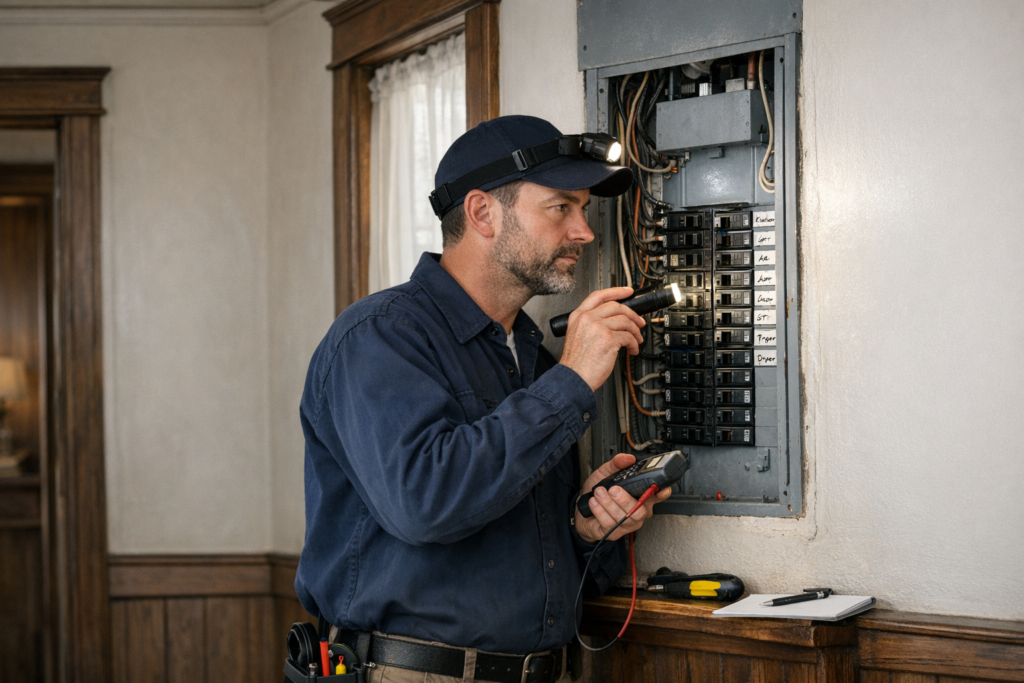
The electrical panel is one of the most important parts of an older home electrical inspection. It distributes power throughout the house and provides overcurrent protection through breakers or fuses. A panel that is outdated, damaged, overcrowded, or poorly modified can create serious safety and reliability concerns.
A qualified electrician will typically look for signs such as corrosion, missing covers, open knockouts, overheated conductors, improper breaker sizing, poor labeling, double-tapped breakers where not allowed for the equipment, and circuits that appear to be added without proper planning.
Fuse Panels And Older Breaker Panels
Some older homes still have fuse panels. Fuses are not automatically unsafe when properly installed and maintained, but they can be inconvenient and may indicate an electrical system that has not been modernized. Problems arise when fuses are oversized, bypassed, or used to compensate for circuits that trip frequently.
Older breaker panels may also require careful evaluation. Some may have obsolete components, limited replacement parts, insufficient space for new circuits, or signs of past overheating. If the panel is near capacity, a buyer should understand whether future electrical needs will require a panel upgrade or service upgrade.
Identify Outdated Or Problematic Wiring
Wiring type matters because insulation, grounding, capacity, and installation methods have changed over time. An older home may contain more than one wiring system, especially if additions or renovations were completed over several decades.
Common wiring concerns in older homes include ungrounded branch circuits, aging cloth-insulated wiring, aluminum branch wiring in some homes, improperly extended circuits, and wiring that has been damaged by pests, moisture, or previous renovations.
Knob And Tube Wiring
Knob and tube wiring can still be found in some older properties. Its presence requires careful professional evaluation. Concerns may include lack of grounding, insulation deterioration, improper splices, overloaded circuits, and unsafe interaction with insulation or renovation work.
If knob and tube wiring is present, buyers should ask for a clear explanation of where it remains, whether it is active, and what replacement may involve. This is not a system that should be casually modified by an unqualified person.
Ungrounded Outlets
Two-prong receptacles or three-prong receptacles without an effective equipment ground are common in many older homes. This can affect surge protection, appliance safety, electronics, and certain modern devices. Simply replacing a two-prong outlet with a three-prong outlet does not create a grounded circuit.
An electrician can determine whether grounding is present, whether GFCI protection is being used where appropriate, and whether a wiring upgrade is the better long-term solution.
Look For Signs Of Unsafe Electrical Work
Older homes often contain work performed by multiple owners, handymen, or contractors over many years. Some work may be safe and professional. Other work may be hidden behind finished walls, basement ceilings, attics, or additions.
Warning signs that deserve attention include:
- Frequent breaker trips or blown fuses
- Lights that flicker when appliances start
- Warm outlets, switches, or cover plates
- Buzzing sounds from switches, outlets, or the panel
- Burn marks, melted insulation, or discoloration
- Extension cords used as permanent wiring
- Power strips overloaded with high-demand devices
- Exposed splices or open junction boxes
- Unlabeled or confusing panel directories
- DIY wiring in basements, garages, attics, or additions
Safety warning: if you notice burning smells, sparking, buzzing at the panel, or hot electrical components during a showing or inspection, do not touch the equipment. Have the issue evaluated by a licensed electrician promptly.
Evaluate Kitchens, Bathrooms, Basements, Garages, And Exterior Areas
Some areas of an older home carry higher electrical risk because of water, moisture, outdoor exposure, or heavy appliance loads. These spaces should receive extra attention during the inspection.
Kitchens
Older kitchens may not have enough dedicated circuits for modern appliances. Refrigerators, microwaves, dishwashers, disposals, coffee makers, and countertop appliances can quickly overload outdated wiring. GFCI protection and proper circuit layout are important considerations.
Bathrooms
Bathrooms combine electricity and moisture, so outlet protection, fan wiring, lighting, and circuit capacity matter. In older homes, bathroom outlets may have been added later or tied into lighting circuits that were not intended for today’s loads.
Basements And Crawl Spaces
Basements often reveal the history of an electrical system. Look for exposed wiring, open junction boxes, abandoned cables, moisture damage, corrosion, and questionable additions for laundry equipment, boilers, sump pumps, refrigerators, or workshops.
Garages And Outdoor Areas
Garages and exterior locations should be reviewed for weather-resistant equipment, proper covers, safe wiring methods, GFCI protection, lighting, detached structure wiring, and capacity for future equipment such as EV chargers or power tools.
Consider Grounding, Bonding, And Surge Protection
Grounding and bonding are essential safety features, but they are often misunderstood. Grounding helps provide a reference to earth, while bonding connects conductive parts so fault current can follow a safer path back to the source and help protective devices operate properly.
In older homes, grounding and bonding may be incomplete, altered, or difficult to verify without professional testing. This is especially important if the home has metal water piping, older service equipment, mixed wiring types, or past renovations.
Whole-home surge protection is also worth considering. New England homes can experience storms, utility disturbances, and generator transitions. Sensitive electronics, appliances, heating controls, and smart home equipment can benefit from a layered surge protection strategy installed by a qualified electrician.
Review Generator Readiness And Backup Power Needs
Power outages are a practical concern across New Hampshire, Massachusetts, Maine, and Vermont, especially during winter storms, heavy winds, and ice events. If you are buying an older home, it is wise to evaluate whether the electrical system can safely support backup power.
An electrician can determine whether the home has an existing generator inlet, transfer switch, standby generator connection, or unsafe temporary setup. Generator systems must be installed so they do not backfeed utility lines or create hazards for occupants, utility workers, or equipment.
If backup power is important to you, ask whether the panel has space and capacity for a properly installed transfer solution and whether critical loads such as heat, refrigeration, sump pumps, well pumps, and essential lighting can be supported.
Plan Ahead For EV Chargers And Modern Electrical Loads
Even if the home appears functional today, buyers should think about future electrical needs. EV chargers, heat pumps, induction ranges, electric water heaters, home offices, finished basements, and additions can significantly change the electrical load.
An older home electrical inspection can help determine whether the existing panel and service are ready for these upgrades or whether improvements should be planned. This is especially valuable before closing because it gives buyers a clearer picture of near-term and long-term costs.
For EV charging in particular, an electrician should review panel capacity, available breaker space, service load, wiring route, charger location, and whether the installation can be completed safely and neatly.
Understand What A Standard Home Inspection May Miss
A general home inspection is useful, but it is not the same as a dedicated electrical inspection by a licensed electrician. Home inspectors typically perform a visual review of accessible components. They may identify obvious defects, but they generally do not perform the same level of electrical troubleshooting, load evaluation, panel assessment, or code-focused review as an electrical contractor.
For an older property, the electrical system can be one of the most important areas to assess before purchase. A specialized inspection can help clarify whether the concerns are minor maintenance items, safety repairs, or major upgrades.
Buyers should also remember that no inspection can see through walls or guarantee the condition of every hidden wire. However, an experienced electrician can often identify patterns, risk factors, and visible clues that help guide smarter decisions.
Electrical Questions To Ask Before Buying
Use the following questions during your buying process, especially if the home is older, renovated, expanded, or located in an area with many historic properties.
- When was the electrical service last upgraded?
- Has the panel been replaced, expanded, or modified?
- Are there any active knob and tube, cloth-insulated, or ungrounded circuits?
- Are outlets properly grounded where grounding is required or expected?
- Do kitchens, bathrooms, garages, basements, and outdoor areas have appropriate protection?
- Are there permits or documentation for recent electrical work, if available?
- Are there recurring issues with tripping breakers, flickering lights, or dead outlets?
- Is there enough capacity for planned renovations, EV charging, or backup power?
- Are there visible signs of overheating, corrosion, moisture, or improper repairs?
- What repairs or upgrades should be prioritized immediately after purchase?
The answers can help you compare homes more realistically and avoid being surprised by electrical work after closing.
How Electrical Findings Can Affect Your Buying Decision
Electrical issues do not always mean you should walk away from a home. Many problems can be repaired or upgraded by a licensed electrician. The key is understanding the seriousness, scope, and likely timing of the work.
Minor findings may include damaged cover plates, missing labels, a few worn outlets, or isolated repairs. More significant findings may include an outdated panel, insufficient service capacity, active knob and tube wiring, widespread ungrounded circuits, unsafe modifications, or evidence of overheating.
Cost considerations depend on accessibility, home size, wiring condition, panel location, service requirements, finish materials, and the extent of upgrades needed. Replacing a few devices is very different from rewiring major portions of a finished older home. A professional evaluation helps define the scope before you make financial decisions.
When To Bring In A Licensed Electrician
You should bring in a licensed electrician before buying an older home if the property has an old panel, fuse box, two-prong outlets, visible outdated wiring, frequent electrical complaints, additions, renovation history, generator equipment, or plans for major future electrical loads.
It is also wise to schedule a professional inspection if the home has been vacant, has moisture issues, contains historic materials, or shows signs of amateur electrical work. Electrical systems can affect safety, comfort, insurance considerations, renovation budgets, and long-term reliability.
Electrical Constructors LLC provides residential and commercial electrical services throughout New Hampshire, Massachusetts, Maine, and Vermont. For buyers evaluating older homes, a knowledgeable electrical inspection can provide clarity before purchase and a practical plan for repairs or upgrades after closing.
Final Checklist For Buyers
Before you move forward with an older home purchase, use this condensed checklist to guide your next steps:
- Review the main electrical service and panel condition.
- Identify outdated wiring types and ungrounded circuits.
- Check kitchens, bathrooms, basements, garages, and exterior areas carefully.
- Look for signs of overheating, corrosion, moisture, or unsafe repairs.
- Ask about past electrical upgrades and documentation.
- Consider future needs such as EV charging, generators, heat pumps, and renovations.
- Have a licensed electrician evaluate concerns before closing when possible.
- Budget for repairs, safety upgrades, and long-term modernization if needed.
An older home can be a dependable and rewarding property when its electrical system is safe, properly maintained, and suited for modern use. A thorough older home electrical inspection gives you the information you need to buy with confidence and plan responsibly for the years ahead.