
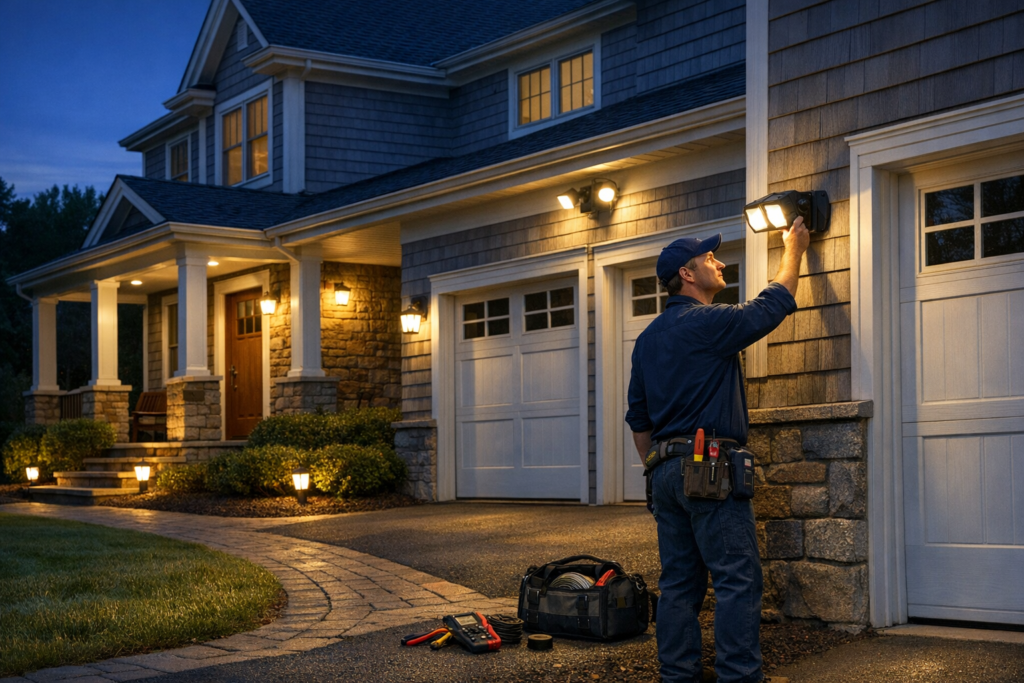
Outdoor security lighting works best when it does more than simply make a yard brighter. The right design helps eliminate dark hiding spots, improves visibility around entrances and walkways, supports cameras, and makes your home look occupied and cared for. For homeowners throughout New Hampshire, Massachusetts, Maine, and Vermont, a well-planned lighting system can also improve winter safety when snow, ice, and early sunsets make exterior visibility especially important.
Why Outdoor Lighting Matters for Home Security
Security lighting is one of the most practical improvements homeowners can make because it affects how people move around a property after dark. A well-lit exterior can discourage unwanted activity, help family members and guests avoid trip hazards, and make it easier to identify visitors at the door.
Effective outdoor security lighting focuses on visibility, control, and reliability. The goal is not to flood the entire property with harsh light. Instead, the best systems place the right fixtures in the right locations, use appropriate brightness levels, and avoid glare that can make it harder to see.
Lighting also plays an important role in how other security features perform. Doorbell cameras, surveillance cameras, and motion alerts are more useful when the area is evenly illuminated. Poorly placed lighting can create shadows, wash out camera images, or shine directly into lenses.
Start by Identifying Dark and Vulnerable Areas
Before choosing fixtures, walk around your property after sunset and look for areas where visibility is limited. Pay attention to places where someone could approach unnoticed, where guests might have trouble seeing, or where existing lights fail to reach.
Common areas that benefit from improved exterior lighting include:
- Front doors, side doors, and back entrances
- Garage doors and driveway areas
- Walkways, steps, ramps, and exterior stairs
- Basement doors and bulkhead entrances
- Decks, patios, and porches
- Detached garages, sheds, and outbuildings
- Trash, recycling, and utility areas
- Blind corners along the side of the home
In older New England homes, exterior lighting may be limited to a single porch fixture or an outdated garage light. That often leaves large sections of the property in shadows. Modern lighting layouts are more intentional and can be designed to improve safety without overwhelming the home’s appearance.
Use Motion Sensor Lights Where Activity Should Stand Out
Motion sensor lighting is one of the most popular choices for outdoor security lighting because it turns on when movement is detected. This sudden change in light can draw attention to activity around the property while conserving energy when the area is not in use.
Motion-activated fixtures are especially useful near garages, side yards, driveways, and back entrances. They can also help homeowners safely carry groceries, take out trash, or walk to a detached structure after dark.
Where Motion Lights Work Best
For best performance, motion lights should be aimed toward the area where movement is expected, not directly at neighboring properties, windows, or busy roads. Poor placement can cause false activations from passing vehicles, tree movement, or animals.
A licensed electrician can help position fixtures at the proper height, choose suitable sensor coverage, and make sure the wiring is protected from weather exposure. This is especially important in areas exposed to snow, wind, and freezing rain.
Install Entryway Lighting at Every Exterior Door
Every exterior door should have dependable lighting. Front door lights help identify visitors, side door lights reduce blind spots, and back door lighting improves security around less visible entry points.
Many homeowners focus heavily on the front entry but overlook basement doors, garage entry doors, and rear access points. These locations may be less visible from the street, which makes proper lighting even more important.
Good entryway lighting should illuminate the lockset, threshold, steps, and nearby walking surface. Fixtures should be bright enough to see clearly but not so bright that they create glare at eye level.
Light Walkways, Steps, and Driveways for Safety
Security lighting and safety lighting often overlap. A dark walkway is inconvenient, but in winter weather it can also become hazardous. Snowbanks, ice patches, uneven pavers, and exterior stairs are much easier to navigate when lighting is properly placed.
Path lights, step lights, wall-mounted fixtures, and low-profile landscape lighting can guide movement around the property. For driveways, lighting near the garage and parking areas can help homeowners see vehicles, packages, pets, and visitors more clearly.
When lighting steps or walkways, even coverage matters more than extreme brightness. Harsh lighting can create deep shadows behind objects, while softer layered lighting improves visibility across the entire walking surface.
Consider Floodlights for Larger Areas
Floodlights can be effective for illuminating larger outdoor areas such as driveways, backyards, loading areas, garage aprons, and side yards. They provide broad coverage and are often paired with motion sensors or photocells for automatic operation.
However, floodlights need to be used carefully. Oversized or poorly aimed fixtures can create glare, annoy neighbors, and reduce visibility by shining directly into people’s eyes. More light is not always better. The best floodlight installations direct light downward and outward where visibility is needed.
For homes on larger lots in New Hampshire, Maine, Vermont, and Massachusetts, floodlights can be useful around detached garages, barns, workshops, and equipment areas. A professional installation helps ensure the fixture is properly mounted, weather-rated, and connected to a safe electrical circuit.
Use Dusk-to-Dawn Lighting for Consistent Coverage
Dusk-to-dawn lights use a photocell to turn on automatically when natural light fades and turn off when daylight returns. This type of lighting is helpful for homeowners who want consistent exterior visibility without remembering to flip a switch.
Dusk-to-dawn fixtures are often used near entrances, garages, parking areas, and common exterior pathways. They can make a home appear occupied and provide reliable illumination during long winter nights.
For energy efficiency, LED fixtures are typically preferred over older lighting technologies. LEDs use less electricity, last longer, and perform well in cold weather when properly rated for outdoor use.
Layer Lighting Instead of Relying on One Bright Fixture
A layered lighting approach usually works better than one extremely bright light. Layering combines different fixture types to create balanced, useful coverage across the property.
A strong residential lighting plan may include:
- Wall-mounted lights at exterior doors
- Motion lights near driveways and side yards
- Path lights along walkways
- Step lights on stairs and deck areas
- Floodlights for larger open areas
- Accent lighting that reduces dark corners near landscaping
This approach improves visibility while maintaining curb appeal. It also gives homeowners more control over which areas are illuminated continuously and which areas light only when motion is detected.
Choose the Right Brightness and Color Temperature
Outdoor lights should be bright enough to improve visibility but not so intense that they create glare or light trespass. Brightness is commonly measured in lumens. The right lumen output depends on the fixture type, mounting height, and area being illuminated.
Color temperature also affects how exterior lighting looks and performs. Warm white lighting often works well for porches and architectural fixtures because it feels comfortable and inviting. Neutral white lighting may be better for security-focused areas where clearer visibility is needed.
Very cool or bluish lighting can feel harsh in residential settings and may not always improve visibility as much as homeowners expect. A balanced design considers both security and the appearance of the property.
Do Not Overlook Garages and Detached Structures
Garages, sheds, barns, workshops, and detached outbuildings are often targets for better lighting because they may store tools, equipment, vehicles, or seasonal items. These areas may also be located away from the main home, making visibility more difficult.
Good lighting around detached structures should cover entry doors, overhead doors, walkways, and the approach from the driveway or home. If the structure has existing electrical service, an electrician can evaluate whether the circuit can safely support new lighting. If not, additional wiring or circuit upgrades may be needed.
Exterior wiring should always be installed with proper weather-resistant materials and methods. Improper outdoor electrical work can create shock hazards, nuisance tripping, corrosion problems, and long-term reliability issues.
Make Lighting Work with Security Cameras
If your home has exterior cameras, lighting placement matters. Cameras need enough light to capture usable images, but fixtures should not point directly into the lens. Direct glare can wash out the image and make it harder to see faces, vehicles, or movement.
Lighting should support the camera’s field of view. For example, a camera aimed at a driveway often performs better when the driveway is evenly illuminated from above or from the side. A doorbell camera may benefit from a porch light that illuminates visitors without shining directly into the camera.
Homeowners planning both lighting and cameras should think about them as one system. Coordinating fixture placement, switching, and power availability during installation can reduce future changes and improve performance.
Smart Outdoor Lighting Can Add Control and Convenience
Smart lighting controls allow homeowners to schedule exterior lights, control fixtures remotely, and adjust settings based on routines. Some systems can integrate with motion sensors, cameras, and home automation equipment.
Smart controls are particularly useful for homeowners who travel, manage second homes, or want lights to operate automatically during early morning and evening hours. They can also help reduce unnecessary energy use by keeping lights off when they are not needed.
When adding smart switches, timers, or connected outdoor fixtures, compatibility matters. Not every device is suitable for every wiring setup, location, or load type. A qualified electrician can verify that controls are installed safely and that outdoor-rated equipment is used where required.
Outdoor Lighting Safety Considerations
Outdoor electrical installations are exposed to moisture, temperature swings, wind, snow, ice, and physical wear. That makes proper materials and installation methods essential.
Important safety considerations include:
- Using fixtures rated for outdoor or wet locations where appropriate
- Protecting wiring from moisture and physical damage
- Using proper boxes, covers, and connectors
- Ensuring circuits are not overloaded
- Replacing damaged, corroded, or loose fixtures promptly
- Keeping fixtures clear of combustible materials
- Having flickering or repeatedly tripping lights inspected
Outdoor electrical work should be performed by a qualified licensed electrician. Even a simple-looking exterior fixture replacement can reveal damaged wiring, improper boxes, missing grounding, or moisture intrusion behind the mounting surface.
Common Outdoor Lighting Mistakes to Avoid
Many lighting problems come from poor planning rather than poor products. Avoiding common mistakes can improve safety, performance, and long-term reliability.
Installing Lights That Are Too Bright
Excessive brightness can create glare and dark contrast areas. A balanced layout with multiple properly aimed fixtures is often more effective than one overpowering light.
Ignoring Side and Rear Entrances
Security lighting should cover all practical access points, not just the front door. Side doors, back doors, and basement entries often need attention.
Using Indoor-Rated Fixtures Outside
Outdoor fixtures must be suitable for the environment where they are installed. Indoor-rated products can deteriorate quickly when exposed to moisture and temperature changes.
Relying Only on Solar Lights
Solar pathway lights can be useful for accent lighting, but they may not provide consistent security illumination during winter, after cloudy days, or in shaded areas. Hardwired lighting is typically more reliable for critical safety and security locations.
Forgetting About Maintenance
Security lighting needs occasional inspection. Dirty lenses, misaligned sensors, failing bulbs, loose fixtures, and corroded connections can reduce performance over time.
When to Upgrade Existing Exterior Lighting
It may be time to upgrade your outdoor lighting if your current system leaves dark areas, uses outdated fixtures, trips breakers, flickers, or no longer meets your family’s needs. Older homes throughout New England often have limited exterior electrical infrastructure, especially if additions, garages, decks, or patios were added over time.
You should consider a professional evaluation if you notice:
- Lights that flicker or dim unexpectedly
- Breakers that trip when exterior lights operate
- Old fixtures with rust, corrosion, or water staining
- Extension cords being used for permanent outdoor lighting
- Insufficient lighting around steps or entrances
- Security cameras struggling to capture clear nighttime images
- New exterior spaces that need safe power and illumination
An electrician can inspect the existing wiring, determine whether additional circuits are needed, and recommend lighting options that fit the home’s layout and electrical capacity.
Energy Efficiency and Long-Term Reliability
Modern outdoor security lighting can improve safety without creating unnecessary energy costs. LED fixtures, timers, photocells, motion sensors, and smart controls all help reduce wasted electricity while keeping important areas illuminated.
Reliability is especially important in New England, where winter storms, heavy rain, and temperature swings can be hard on exterior equipment. Choosing durable fixtures, proper mounting methods, and weather-appropriate materials helps the system perform year after year.
For homeowners considering other electrical upgrades, exterior lighting can often be planned alongside panel upgrades, generator installation, EV charger installation, or broader home improvement projects. Coordinating electrical work can reduce disruption and support a more complete long-term plan.
Why Professional Installation Matters
A professional electrician does more than mount fixtures. Proper outdoor security lighting requires safe wiring, appropriate circuit planning, weather-resistant installation, careful fixture placement, and an understanding of how lighting affects visibility around the property.
Electrical Constructors LLC provides residential and commercial electrical services throughout New Hampshire, Massachusetts, Maine, and Vermont. Whether you need new exterior lights, motion sensor fixtures, lighting troubleshooting, electrical repairs, or a larger electrical upgrade, working with an experienced electrical contractor helps ensure the work is safe, reliable, and built for the demands of New England weather.
The best lighting plan is the one that fits your property, improves everyday safety, and gives you confidence after dark. With the right design and professional installation, outdoor security lighting can make your home more secure, more functional, and easier to enjoy throughout the year.