
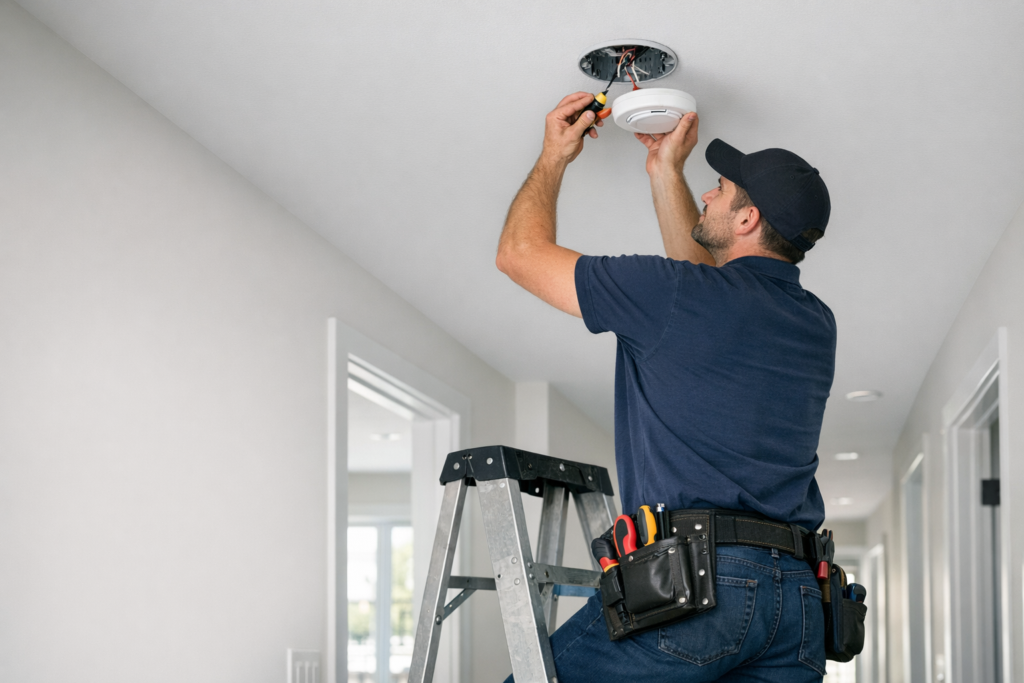
Smoke detector installation may look simple, but proper placement, wiring, interconnection, power source selection, and code considerations all affect whether the system will work when it matters most. For homeowners, property managers, builders, and business owners, hiring a qualified electrical contractor is the safest way to make sure smoke detectors are installed correctly, tested properly, and integrated with the electrical system without creating hidden hazards.
Why Smoke Detectors Are Too Important for Guesswork
Smoke detectors are life safety devices, not convenience devices. Their job is to provide early warning during a fire so occupants have time to get out safely. A detector that is installed in the wrong location, wired incorrectly, or not interconnected where needed can leave dangerous gaps in protection.
Many people assume that installing a smoke alarm only involves attaching a device to the ceiling and adding a battery. In reality, many residential and commercial properties use hardwired smoke detectors, interconnected alarms, combination smoke and carbon monoxide units, or devices tied into larger fire alarm systems. Each setup requires a different level of electrical knowledge.
Professional smoke detector installation helps ensure the detectors are positioned, powered, connected, and tested in a way that supports reliable performance over the long term.
Professional Installation Helps Ensure Proper Placement
Smoke detector location is one of the most important parts of a reliable installation. A detector placed too close to a kitchen, bathroom, air vent, ceiling fan, or high-humidity area may create nuisance alarms. A detector placed too far from sleeping areas or high-risk zones may not provide adequate early warning.
An experienced electrician evaluates the layout of the building, including bedrooms, hallways, stairways, finished basements, mechanical rooms, garages, and common areas. In commercial and multi-unit properties, the evaluation may also include tenant spaces, corridors, offices, equipment rooms, and shared exit pathways.
Professional electricians understand that smoke movement is affected by airflow, ceiling height, room configuration, and building construction. This matters in New England properties, where homes and buildings throughout New Hampshire, Massachusetts, Maine, and Vermont often include additions, finished attics, older framing, renovated floor plans, and mixed ceiling heights.
Hardwired Smoke Detectors Require Electrical Expertise
Battery-only alarms are common in some applications, but many modern homes and commercial properties use hardwired smoke detectors with battery backup. These devices connect directly to the electrical system and remain protected during normal operation while still providing backup power if the circuit loses power.
Hardwired smoke detector installation is not the same as replacing a battery-operated unit. It may involve safely accessing wiring, identifying the correct circuit, working inside electrical boxes, connecting conductors properly, and ensuring the detector is securely mounted. Improper wiring can cause nuisance alarms, device failure, circuit issues, or an unsafe condition hidden above the ceiling.
A licensed electrician has the training and tools to verify the wiring, make proper connections, and test the finished installation. This is especially important in older homes and buildings where existing wiring may have been modified over the years.
Interconnected Smoke Detectors Must Communicate Correctly
Interconnected smoke detectors are designed so that when one alarm sounds, the others sound as well. This is an important safety feature, especially in larger homes, multi-level properties, rental units, and commercial buildings where a fire may start far from occupied areas.
Interconnection can be accomplished through hardwired connections or compatible wireless technology, depending on the system and property. The key is that all devices must be compatible and installed so they communicate reliably.
Common interconnection problems include:
- Mixing incompatible smoke detector models or technologies
- Incorrect wiring between alarms
- Loose or poorly made electrical connections
- Failure to test every alarm after installation
- Replacing one device without confirming system compatibility
A professional electrician can determine whether the existing devices can be reused, whether replacement is recommended, and whether the interconnected alarm system is functioning as intended.
Code Considerations Are Not Always Obvious
Smoke detector requirements can vary depending on the type of property, age of the building, scope of work, occupancy, renovation history, and local authority requirements. Home sales, rental properties, additions, remodels, new construction, and commercial tenant improvements can all raise different life safety considerations.
Because electrical and fire safety requirements are not always obvious to property owners, professional installation helps reduce the risk of missed details. A qualified electrical contractor understands how to approach smoke detector installation with current safety practices in mind and can identify when additional review or coordination may be needed.
This is particularly valuable for general contractors, builders, property managers, and real estate professionals who need installations completed correctly as part of a larger project timeline.
Older Homes Often Need Extra Attention
Many homes throughout New Hampshire, Massachusetts, Maine, and Vermont were built before today’s electrical expectations existed. Older houses may have limited ceiling boxes, outdated wiring methods, insufficient detector coverage, or previous do-it-yourself modifications. Some homes have battery alarms added over time without a comprehensive plan for placement or interconnection.
During professional smoke detector installation, an electrician can look for practical concerns that may affect reliability, such as:
- Outdated or damaged wiring near the detector location
- Overcrowded electrical boxes
- Improperly supported devices
- Missing battery backup in hardwired units
- Detectors located too close to drafts, vents, or cooking areas
- Alarms that are past their recommended service life
These details are easy to overlook, but they can make a significant difference in whether the system functions properly during an emergency.
Commercial Properties Have Additional Life Safety Concerns
Commercial smoke detector installation can involve more than individual alarms mounted to ceilings. Depending on the property, smoke detection may be part of a larger fire alarm system, emergency notification system, tenant improvement project, or facility maintenance plan.
Business owners and facility managers need smoke detection systems that are reliable, accessible for maintenance, and appropriate for the building’s use. Offices, retail spaces, warehouses, mixed-use buildings, mechanical areas, and multi-tenant properties may each have different considerations.
A professional electrical contractor can help evaluate the electrical side of the installation, coordinate detector placement with other building systems, and support a safer environment for employees, tenants, customers, and visitors.
Professional Testing Is Part of the Installation
Installing the device is only part of the job. Smoke detectors should be tested after installation to confirm that they power on, respond correctly, and communicate with other alarms where applicable. For hardwired units, electricians also verify that the device is connected properly and that backup power is in place when required by the selected unit.
Professional testing can help identify problems immediately instead of months later when the alarm is needed. This is especially important for interconnected systems, where one incorrect connection can prevent alarms from communicating throughout the property.
After installation, property owners should understand how to test their alarms, when to replace batteries if applicable, and when the detectors themselves are approaching the end of their service life.
Common DIY Smoke Detector Installation Mistakes
Do-it-yourself smoke detector installation can create a false sense of security if the devices are not installed correctly. Some mistakes are easy to make and difficult to notice without electrical experience.
Common mistakes include:
- Installing detectors in locations that cause frequent nuisance alarms
- Failing to install coverage in important areas of the home or building
- Using incompatible devices in an interconnected system
- Connecting hardwired alarms incorrectly
- Leaving loose connections inside electrical boxes
- Mounting alarms to surfaces that do not properly support the device
- Ignoring older detectors that should be replaced
- Assuming a chirping alarm only needs a battery when the unit may be at end of life
Because smoke detectors are safety devices, these mistakes are not minor. If there is any uncertainty about wiring, placement, age, compatibility, or coverage, it is best to have the system evaluated by a licensed electrician.
When Smoke Detectors Should Be Replaced
Smoke detectors do not last forever. Over time, sensors can become less reliable due to age, dust, humidity, temperature changes, and normal wear. Many manufacturers recommend replacing smoke alarms after a specific service life, often listed on the device itself or in the manufacturer’s instructions.
Replacement should also be considered if detectors are yellowed with age, damaged, missing from key areas, no longer responding to testing, frequently alarming without an obvious cause, or part of an outdated system. In homes with renovations, additions, or occupancy changes, it may be wise to reassess the entire smoke detection layout rather than simply replacing one alarm at a time.
A professional electrician can inspect the current setup and recommend a practical replacement approach based on the building, device type, wiring condition, and safety needs.
Smoke Detectors and Carbon Monoxide Protection
Many properties also need carbon monoxide detection, especially where fuel-burning appliances, fireplaces, attached garages, or standby generators are present. Smoke detectors and carbon monoxide detectors respond to different hazards, so one does not automatically replace the other.
Combination smoke and carbon monoxide alarms may be appropriate in some locations, while separate devices may be better in others. Placement matters because smoke and carbon monoxide behave differently. An electrician can help determine the right device type and installation approach for the property.
In New England, where winter heating systems and generator preparedness are common concerns, carbon monoxide protection should be considered as part of a complete home or building safety plan.
Professional Installation Supports Long-Term Reliability
A properly installed smoke detector system should be easy to test, easy to maintain, and reliable during normal daily use. Professional installation helps avoid future problems such as recurring false alarms, disconnected devices, failed interconnection, or improper replacements.
For property managers and commercial property owners, professional installation also supports more consistent maintenance. When detectors are installed in appropriate locations and documented clearly, future inspections, replacements, and troubleshooting become more straightforward.
For homeowners, professional installation provides confidence that the alarms are not only mounted on the ceiling but also planned as part of a complete safety system.
What to Expect From a Professional Smoke Detector Installation
During a professional smoke detector installation, an electrician typically reviews the existing devices, evaluates the building layout, identifies power and wiring needs, installs compatible alarms, and tests all new or affected devices. If the property has older wiring, incomplete coverage, or outdated devices, the electrician can explain the options clearly before work proceeds.
A professional installation may include:
- Assessment of current smoke detector placement and condition
- Installation of hardwired smoke detectors where appropriate
- Replacement of outdated or unreliable alarms
- Verification of wiring and electrical connections
- Testing of interconnected alarm communication
- Recommendations for carbon monoxide detection where applicable
- Guidance on routine testing and maintenance
The goal is not simply to install devices. The goal is to create a dependable warning system that fits the property and protects the people inside it.
Trust a Qualified Electrical Contractor for Life Safety Work
Smoke detector installation is one of the most important electrical safety upgrades a property owner can make. Because detector performance depends on correct placement, wiring, compatibility, and testing, this work should be handled by professionals rather than left to trial and error.
Electrical Constructors LLC provides residential and commercial electrical services throughout New Hampshire, Massachusetts, Maine, and Vermont, including smoke detector installation, electrical inspections, troubleshooting, code corrections, rewiring, panel upgrades, and safety-focused electrical improvements. Whether you are updating an older home, managing a commercial property, preparing for a renovation, or improving life safety across a building, working with an experienced electrical contractor helps ensure the job is done correctly and reliably.