
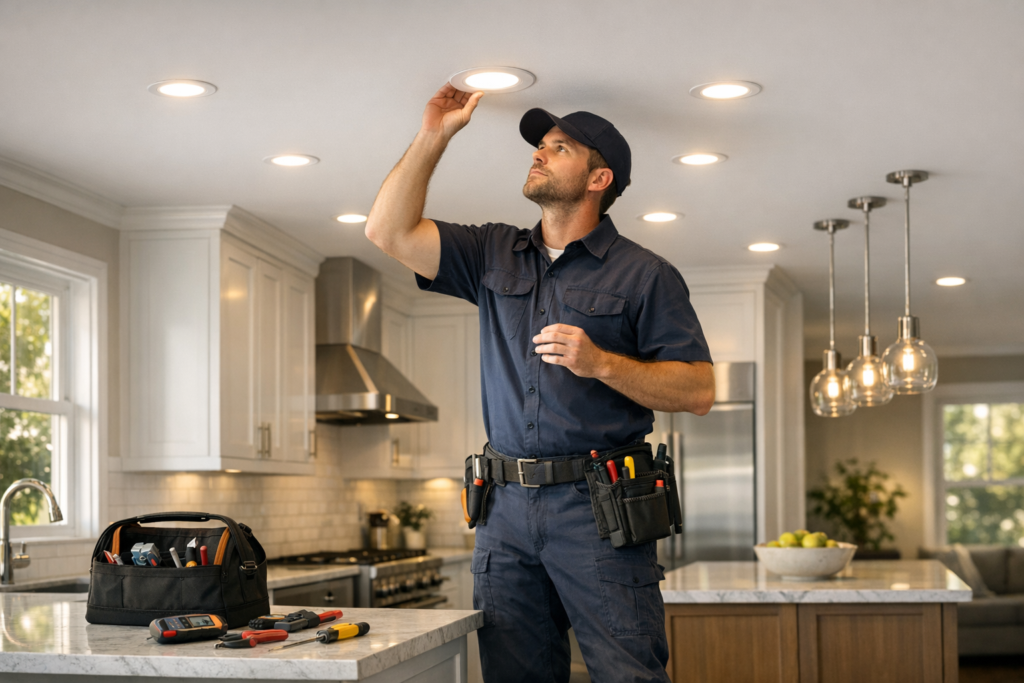
Upgrading to LED lighting is one of the most practical ways homeowners can reduce energy use, improve comfort, and modernize their living space without a major renovation. A professionally planned LED lighting installation can lower electricity consumption, reduce bulb replacement costs, improve lighting quality, and make your home safer and more functional year-round.
For homeowners throughout New Hampshire, Massachusetts, Maine, and Vermont, lighting also plays an important role in seasonal comfort. Long winter evenings, older homes, finished basements, workshops, kitchens, garages, and exterior walkways all benefit from efficient, dependable lighting. The key is choosing the right LED products, placing them correctly, and ensuring the electrical system is installed safely by a qualified electrician.
Why LED Lighting Saves Homeowners Money
LED lighting saves money because it uses significantly less electricity than traditional incandescent or halogen lighting while lasting much longer. Instead of wasting much of the electrical energy as heat, LEDs convert more energy into usable light. That efficiency can reduce lighting-related energy costs and decrease how often homeowners need to purchase and replace bulbs.
The true savings come from several areas working together:
- Lower energy consumption for everyday lighting
- Longer fixture and bulb life compared with older lighting types
- Reduced heat output, especially helpful in kitchens and finished living areas
- Fewer maintenance needs in high ceilings, stairwells, exterior fixtures, and hard-to-reach locations
- Better compatibility with modern controls, dimmers, timers, occupancy sensors, and smart switches
While a single bulb swap can help, the biggest long-term value usually comes from a complete lighting plan. That may include recessed lighting, under-cabinet lighting, exterior security lighting, dimmer upgrades, fixture replacements, and careful circuit evaluation to ensure the installation is safe and reliable.
How Professional LED Lighting Installation Improves Results
Many LED products appear simple to install, but the best results depend on more than replacing one bulb with another. Professional LED lighting installation helps homeowners avoid flickering lights, poor dimming performance, uneven brightness, overloaded switch boxes, incompatible controls, and fixtures that are not suitable for the location.
A licensed electrician can evaluate the existing wiring, switches, fixture boxes, grounding, circuit capacity, and lighting layout before recommending an upgrade. This is especially important in older New England homes, where previous renovations, aging wiring, outdated fixtures, and limited electrical capacity may affect what can be safely installed.
Professional installation also helps ensure the lighting is practical for the room. Brightness, color temperature, fixture spacing, beam angle, dimmer compatibility, and moisture ratings all matter. A kitchen needs different lighting than a bedroom, basement, bathroom, mudroom, garage, or exterior entryway.
Common LED Lighting Upgrades That Deliver Strong Value
Not every home needs the same lighting upgrade. The right approach depends on how the space is used, the age of the electrical system, and the homeowner’s goals. The following LED upgrades often provide excellent value when properly designed and installed.
Recessed LED Lighting
Recessed LED lighting is popular in kitchens, living rooms, finished basements, hallways, and home offices because it delivers clean, even illumination without bulky fixtures. Modern LED recessed fixtures are available in low-profile designs that can work well in many remodeling applications.
Good recessed lighting design requires more than placing fixtures in a grid. The layout should account for ceiling height, cabinet locations, furniture placement, task areas, shadows, and dimming needs. Poor spacing can create dark corners, glare, or uneven lighting that makes a room feel uncomfortable.
Kitchen and Under-Cabinet Lighting
Kitchens are one of the most important areas for lighting upgrades. LED under-cabinet lighting improves visibility for food preparation, reduces shadows on countertops, and adds a polished appearance. When combined with recessed ceiling lights or pendant fixtures, the result is a more functional and comfortable kitchen.
Homeowners should pay close attention to color temperature in kitchens. Light that is too warm may make task areas feel dim, while light that is too cool can feel harsh. A balanced, neutral color temperature often works well for kitchens, but the best choice depends on finishes, natural light, and personal preference.
Bathroom and Vanity Lighting
Bathrooms require lighting that is bright, flattering, and suitable for damp or wet locations where applicable. LED vanity fixtures, recessed shower-rated lights, and properly placed overhead lighting can improve safety and usability.
Because bathrooms involve moisture and specific electrical safety considerations, fixture selection and installation should be handled carefully. The right products and proper wiring methods help support long-term reliability in a demanding environment.
Exterior LED Lighting
Exterior LED lighting can improve safety, security, and curb appeal while keeping operating costs low. Common upgrades include porch lights, walkway lighting, garage-mounted fixtures, motion-sensor floodlights, deck lighting, and driveway lighting.
In New Hampshire, Massachusetts, Maine, and Vermont, exterior fixtures must stand up to snow, ice, rain, wind, and temperature swings. Outdoor-rated LED fixtures, weather-resistant installation methods, and proper placement make a noticeable difference in performance and durability.
Basement, Garage, and Utility Area Lighting
Basements, garages, mechanical rooms, and workshops are often underlit. LED strip fixtures, surface-mounted fixtures, or properly placed recessed lights can make these areas safer and more useful.
Better lighting can help homeowners see tripping hazards, electrical panels, storage areas, tools, laundry equipment, and mechanical systems more clearly. In work areas, the right LED fixtures can also reduce eye strain and make projects easier to complete.
Understanding LED Brightness, Color, and Dimming
One common mistake homeowners make is choosing LED lights based only on wattage. With LED lighting, wattage tells you how much power the product uses, not how bright it will appear. Brightness is measured in lumens.
Choosing the right lumen output helps prevent rooms from feeling too dim or overly bright. Task areas such as kitchens, desks, bathrooms, and workshops usually need more light than bedrooms, dining areas, or living rooms.
Color temperature also matters. It is measured in kelvins and affects how warm or cool the light appears:
- Warm white lighting can feel comfortable in bedrooms, living rooms, and dining areas.
- Neutral white lighting often works well in kitchens, bathrooms, laundry rooms, and home offices.
- Cooler light may be useful in garages, workshops, utility rooms, and some commercial-style spaces.
Dimming requires special attention. Not all LED lamps, fixtures, and dimmer switches are compatible. Mismatched products can cause flickering, buzzing, limited dimming range, or lights that do not turn off properly. During a professional LED lighting installation, an electrician can recommend compatible dimmers and controls that perform correctly.
Where Homeowners Often Lose Money With Lighting
Lighting can waste money in ways that are easy to overlook. Old incandescent bulbs are the obvious example, but inefficient fixture layouts, poor controls, and aging electrical components can also increase costs or reduce performance.
Common issues include:
- Leaving high-use lights on for long periods without timers, dimmers, or occupancy sensors
- Using outdated recessed cans that allow air leakage into attics or ceiling cavities
- Installing cheap LED products that fail prematurely or provide poor light quality
- Using incompatible dimmers that shorten product life or cause nuisance flickering
- Relying on too few fixtures, causing homeowners to use brighter bulbs than necessary
- Ignoring exterior lighting that stays on all night when controls would be more efficient
A well-designed lighting upgrade can solve these problems by matching the fixture type, light output, control method, and placement to the way the home is actually used.
LED Lighting and Older New England Homes
Many homes throughout New England were built before modern electrical demands existed. Older wiring, limited switch locations, ungrounded circuits, crowded electrical boxes, outdated panels, and previous do-it-yourself modifications can complicate lighting upgrades.
Before installing new fixtures, a qualified electrician may need to evaluate whether the existing wiring and electrical boxes are appropriate for the new lighting. In some cases, additional wiring, new switch legs, improved grounding, updated boxes, or panel work may be recommended to support a safe installation.
This is especially important when adding recessed lighting, new exterior fixtures, smart lighting controls, or additional lighting circuits. A professional assessment helps identify potential issues before walls or ceilings are opened, reducing surprises and supporting a cleaner finished result.
Smart Lighting Controls Can Increase Savings
LED fixtures already reduce energy use, but smart controls can improve savings and convenience even further. Depending on the home, useful options may include dimmers, occupancy sensors, vacancy sensors, timers, programmable switches, and smart lighting controls.
These controls are especially helpful in areas where lights are often left on by mistake, such as mudrooms, bathrooms, garages, closets, basements, exterior entrances, and children’s rooms. Exterior timers and motion sensors can also improve security while preventing lights from running continuously when they are not needed.
Smart lighting should be installed with attention to electrical compatibility. Some smart switches require a neutral conductor in the switch box, and not all older homes have wiring configured the same way. An electrician can determine what options are practical for the existing system.
Safety Considerations Before Upgrading Lighting
Lighting work may seem simple, but it still involves energized electrical circuits, fixture support, grounding, insulation clearances, moisture exposure, and code-related safety practices. Homeowners should not assume that a fixture is safe just because it turns on.
Important safety considerations include:
- Making sure fixture boxes are properly rated and securely mounted
- Confirming wiring is in safe condition before connecting new fixtures
- Using fixtures rated for damp, wet, or insulated locations when required
- Maintaining safe clearances around recessed fixtures and insulation
- Installing compatible dimmers and controls
- Correcting loose connections, damaged conductors, or outdated wiring methods
- Avoiding overloaded circuits or improper splices
Electrical work should be performed by a qualified licensed electrician. This is the safest way to protect your home, avoid hidden hazards, and ensure your lighting upgrade is completed properly.
How Much Can Homeowners Save With LED Lighting?
The amount homeowners save depends on the number of fixtures upgraded, how often the lights are used, the type of lighting being replaced, local electricity rates, and whether controls are added. High-use areas typically deliver the fastest payback, including kitchens, living rooms, exterior lights, basements, garages, and home offices.
Homes that still use many incandescent, halogen, or older fluorescent fixtures may see more noticeable reductions than homes that have already partially converted to LEDs. Exterior lights that operate for many hours each night can also be strong candidates for savings, especially when paired with timers or motion sensors.
It is also important to consider maintenance savings. Long-lasting LED fixtures reduce the inconvenience and cost of frequent bulb replacement, especially in vaulted ceilings, stairwells, porch areas, barns, garages, and other hard-to-reach locations.
Choosing the Right LED Products
Not all LED products are equal. Low-quality fixtures may have poor color consistency, limited dimming performance, short service life, glare issues, or weak housings. For a permanent lighting upgrade, product quality matters.
When selecting LED lights, consider:
- Lumen output and whether it suits the room
- Color temperature and how it affects comfort and visibility
- Color rendering for kitchens, bathrooms, artwork, and finished living areas
- Dimming compatibility
- Fixture rating for indoor, outdoor, damp, or wet locations
- Trim style, beam spread, and glare control
- Expected service life and manufacturer quality
- Compatibility with existing wiring and controls
A professional electrician can help homeowners avoid products that look appealing online but are not the best fit for the application. The goal is not simply to install LEDs; it is to install the right LEDs in the right way.
When an LED Upgrade Should Include Electrical Improvements
Sometimes lighting upgrades reveal other electrical issues that should be addressed at the same time. This is common in older homes or homes that have been remodeled multiple times.
An LED lighting project may be a good time to evaluate:
- Outdated switches or dimmers
- Loose, damaged, or overcrowded electrical boxes
- Insufficient lighting circuits
- Older wiring that should be inspected before reuse
- Panel capacity if several electrical upgrades are planned
- Exterior wiring exposed to weather-related wear
- Service needs for future upgrades such as EV charging or generators
Addressing these items during a lighting project can improve safety, reduce future disruption, and support the long-term reliability of the home’s electrical system.
Signs It Is Time to Upgrade Your Home Lighting
Homeowners often wait until a fixture fails before considering an upgrade, but there are many signs that improved lighting would be beneficial.
You may want to consider an LED lighting installation if you notice:
- Rooms feel dim even with multiple lamps or fixtures turned on
- Bulbs burn out frequently
- Lights flicker, buzz, or dim unpredictably
- Older fixtures generate excessive heat
- Exterior areas feel unsafe or poorly lit
- Your kitchen, bathroom, or workspace has shadows in task areas
- You want better lighting control with dimmers, timers, or sensors
- You are renovating, finishing a basement, or updating an older home
These issues are not only about appearance. Poor lighting can affect safety, comfort, productivity, and how efficiently a home operates.
Why Work With Electrical Constructors LLC
Electrical Constructors LLC provides residential and commercial electrical services throughout New Hampshire, Massachusetts, Maine, and Vermont. Our team understands the practical challenges of upgrading lighting in New England homes, from older electrical systems and winter weather demands to modern energy efficiency goals.
Whether you are replacing outdated fixtures, adding recessed lights, improving exterior security lighting, updating a kitchen, or planning a larger electrical renovation, a professional installation helps protect your investment. The right lighting should look good, operate efficiently, and perform reliably for years.
For homeowners who want lower energy use, better visibility, and a safer electrical system, LED lighting installation is a smart place to start. With careful planning and qualified installation, your home can become more comfortable, efficient, and ready for the way you live today.