
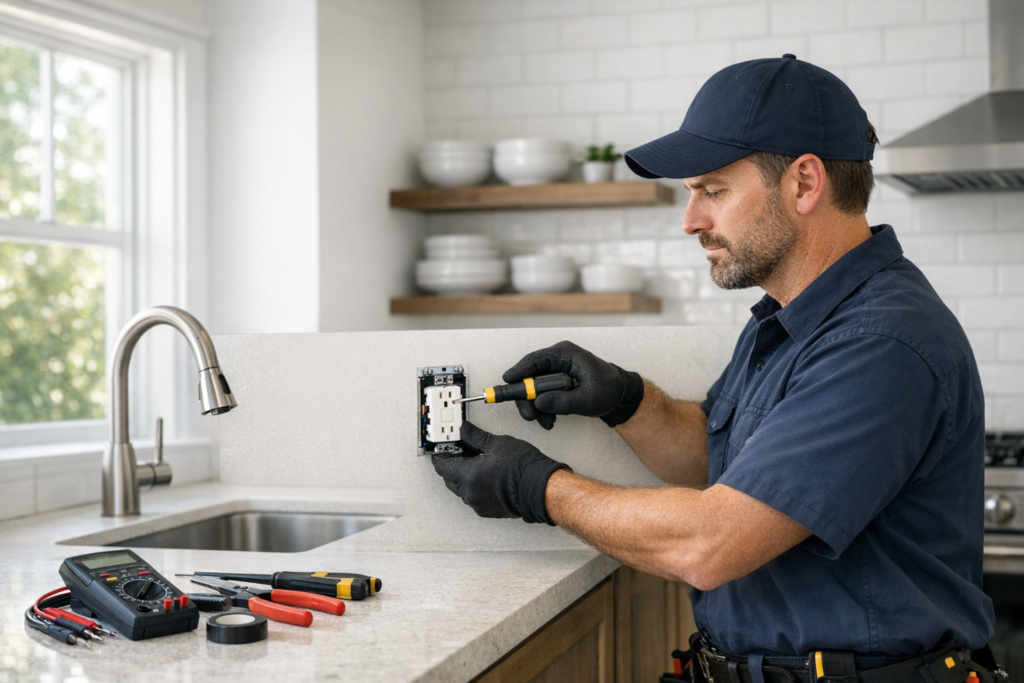
GFCI outlets help protect people from electrical shock by shutting off power when they detect that electricity may be taking an unsafe path, such as through water, a damaged appliance, or a person. A proper GFCI outlet installation is especially important in kitchens, bathrooms, garages, basements, laundry rooms, outdoor areas, workshops, and other locations where moisture or grounded surfaces increase shock risk.
For homeowners, property managers, and business owners, GFCI protection is one of the most practical electrical safety upgrades available. These devices do not prevent every electrical hazard, and they are not a replacement for safe wiring, proper grounding, or professional electrical maintenance. But when installed correctly, they add a critical layer of protection in the areas where shock hazards are most likely to occur.
What a GFCI Outlet Does
GFCI stands for ground fault circuit interrupter. A ground fault happens when electrical current leaves its intended path and flows somewhere it should not. This can occur because of water exposure, damaged insulation, a faulty appliance, worn cords, or deteriorated wiring.
A GFCI device constantly monitors the flow of electricity through the circuit. If it detects an imbalance between the current going out and the current returning, it quickly cuts power to reduce the risk of electric shock.
In everyday terms, a GFCI outlet is designed to recognize when electricity may be escaping the normal circuit path and stop the flow before a serious injury occurs. This matters most in areas where people may be barefoot, touching plumbing fixtures, standing on damp surfaces, or using electrical devices near water.
Why GFCI Protection Matters For Family Safety
Electricity naturally looks for a path to ground. Under normal conditions, that path is safely contained within the wiring and connected equipment. Problems begin when moisture, damaged wiring, or a faulty device allows current to move through an unintended path.
Wet skin, metal plumbing, concrete floors, and outdoor conditions can increase the risk of shock. That is why GFCI-protected receptacles are so common in bathrooms, kitchens, unfinished basements, garages, crawl spaces, and exterior outlets.
Families often use electricity in moisture-prone areas without thinking about it. Hair dryers, electric razors, countertop appliances, pressure washers, holiday lights, sump pumps, garage tools, and outdoor equipment can all create hazards if the circuit lacks proper protection.
Professional GFCI outlet installation helps reduce that risk by placing protection at the point where people interact with the electrical system. It is a relatively small upgrade that can make a meaningful difference in daily safety.
Where GFCI Outlets Are Commonly Needed
GFCI protection is commonly used in locations where moisture, grounded surfaces, or outdoor exposure increase the chance of a ground fault. Exact requirements can vary based on the age of the property, wiring conditions, current electrical code, and the specific installation, but many homes and commercial properties need GFCI protection in these areas:
- Kitchens and countertop receptacle locations
- Bathrooms and powder rooms
- Laundry areas and utility rooms
- Garages and workshops
- Unfinished basements
- Crawl spaces
- Outdoor receptacles, patios, decks, and porches
- Areas near sinks, wet bars, or service sinks
- Mechanical rooms and certain equipment areas
- Commercial kitchens, maintenance areas, and janitorial spaces
Because electrical codes change over time, older properties throughout New Hampshire, Massachusetts, Maine, and Vermont may not have GFCI protection in places where it is now expected. A licensed electrician can evaluate the existing wiring and determine the safest, most appropriate way to add protection.
GFCI Outlet Installation Versus GFCI Breaker Protection
GFCI protection can be provided in more than one way. The most familiar option is a GFCI receptacle with test and reset buttons on the face of the outlet. Another option is a GFCI circuit breaker installed in the electrical panel. Both can provide ground fault protection when properly selected and installed.
GFCI Receptacles
A GFCI receptacle protects the outlet where it is installed. Depending on how the circuit is wired, it may also protect additional downstream receptacles on the same circuit. This is why one GFCI outlet can sometimes cause several regular-looking outlets to lose power when it trips.
Correct wiring is essential. If a GFCI device is connected improperly, it may not protect the circuit as intended. This is one reason homeowners should avoid treating GFCI replacement as a simple cosmetic outlet swap.
GFCI Circuit Breakers
A GFCI breaker protects the entire circuit from the electrical panel. This can be useful for certain layouts, dedicated circuits, outdoor circuits, or areas where receptacle access is limited. In some cases, a breaker solution may be cleaner and more reliable than installing multiple GFCI receptacles.
The right choice depends on the circuit design, panel compatibility, existing wiring, and the type of load served by the circuit. A qualified electrician can determine which option makes the most sense.
Signs Your Home Or Building May Need GFCI Upgrades
Many people only think about GFCI outlets after one stops working. However, there are several signs that your property may need GFCI outlet installation, replacement, or professional inspection.
- Outlets near sinks or exterior areas do not have test and reset buttons
- Bathroom or kitchen outlets are older two-slot receptacles
- Outdoor outlets are not weather-resistant or properly covered
- A GFCI outlet will not reset after tripping
- The test button does not shut the outlet off
- Several outlets lose power after one device trips
- There are burn marks, buzzing sounds, looseness, or heat at the receptacle
- Appliances or tools trip the device repeatedly
- The property has older wiring that has not been inspected recently
Do not ignore heat, burning odors, sparks, or repeated tripping. These symptoms can point to wiring defects, moisture intrusion, overloaded circuits, damaged equipment, or improper installation. Shut off the circuit if it is safe to do so and contact a licensed electrician.
Why Older New England Homes Deserve Extra Attention
Many homes across New Hampshire, Massachusetts, Maine, and Vermont were built before modern electrical safety expectations became common. Older homes may have a mix of original wiring, past renovations, replaced outlets, ungrounded circuits, and additions that were completed over decades.
That does not automatically mean the system is unsafe, but it does mean GFCI protection should be evaluated carefully. In older and historic properties, an electrician may need to determine whether the receptacle box is properly grounded, whether the circuit wiring is suitable for the planned device, and whether additional corrections are needed.
New England weather also plays a role. Snow, ice, freezing rain, wind-driven moisture, spring thaw, and seasonal outdoor equipment use can add stress to exterior receptacles, garages, basements, and detached structures. Outdoor GFCI protection, proper covers, weather-resistant devices, and sound wiring methods are important for long-term safety and reliability.
Common GFCI Problems And What They Mean
A GFCI outlet that trips occasionally may simply be doing its job. For example, moisture in an outdoor cord connection or a faulty appliance can cause a ground fault. However, repeated tripping should not be dismissed as normal.
The Outlet Trips Immediately
If a GFCI trips as soon as it is reset, there may be a ground fault, wiring issue, or defective device on the circuit. Unplug everything connected to the protected outlets. If the device still will not reset, the circuit should be inspected.
The Outlet Will Not Reset
A GFCI may refuse to reset if there is no power feeding the device, the device has failed, the line and load connections are incorrect, or there is a fault downstream. Guessing can be unsafe because the issue may not be visible at the outlet itself.
Several Outlets Stop Working
This often happens when multiple receptacles are protected by one upstream GFCI. Check kitchens, bathrooms, garages, basements, and exterior outlets for a tripped device. If you cannot find it or it trips again, professional troubleshooting is recommended.
Outdoor GFCIs Trip During Wet Weather
Moisture intrusion is a common culprit. The issue may involve a damaged cover, worn gasket, cracked device, improper enclosure, aging wiring, or water entering an extension cord connection. Outdoor electrical components must be suitable for weather exposure and installed correctly.
Testing And Maintaining GFCI Outlets
GFCI outlets include test and reset buttons for a reason. Pressing the test button should shut off power to the receptacle. Pressing reset should restore power. If the test button does not work as expected, the device may not be providing protection.
Homeowners and facility teams should periodically test accessible GFCI devices and keep a simple record of problem areas. This is especially useful for rental properties, small businesses, commercial buildings, maintenance shops, and seasonal properties.
Basic maintenance includes keeping outlets dry, avoiding overloaded power strips, replacing damaged covers, using outdoor-rated equipment outside, and calling an electrician when a device trips repeatedly. GFCI devices can wear out over time, especially in damp, dusty, or high-use locations.
Why Professional Installation Is Important
Installing a GFCI outlet is not just a matter of matching wire colors. A safe installation requires confirming the circuit is de-energized, identifying line and load conductors, checking box conditions, evaluating grounding, selecting the correct device, and making secure connections.
Professional GFCI outlet installation can also uncover related issues that should be corrected, such as loose terminations, overcrowded boxes, damaged insulation, outdated receptacles, missing weather protection, or circuits that have been modified improperly.
For commercial properties, the stakes can be even higher. GFCI protection may affect employee safety, customer areas, equipment reliability, maintenance operations, and insurance-related inspections. A licensed electrical contractor can help ensure the work is appropriate for the building use and electrical system.
What To Expect During A GFCI Upgrade
A typical GFCI upgrade begins with a review of the areas where protection is needed. The electrician will inspect existing receptacles, identify the circuits involved, determine whether downstream protection is appropriate, and evaluate whether a receptacle or breaker solution is the best fit.
For older homes or buildings, the inspection may include checking for grounding limitations, worn device boxes, aluminum branch wiring concerns where applicable, or signs of past unpermitted alterations. If an outlet location is exposed to weather or moisture, the electrician will also consider device rating, cover type, and enclosure condition.
After installation, each GFCI device should be tested to confirm proper operation. The electrician should also explain which outlets are protected by each device, especially when one GFCI controls multiple downstream receptacles.
Cost Considerations For GFCI Outlet Installation
The cost of GFCI outlet installation depends on the number of devices, accessibility, wiring condition, whether downstream outlets are being protected, whether panel work is needed, and whether code corrections or weatherproofing are required.
A straightforward replacement in an accessible location is typically less involved than adding protection to an older circuit, troubleshooting repeated tripping, upgrading exterior receptacles, or installing a GFCI breaker. The lowest-cost option is not always the safest or most reliable if underlying wiring problems are ignored.
When comparing electrical estimates, ask whether the electrician will test the device, verify proper protection, evaluate related safety concerns, and use components appropriate for the location. Quality installation matters because GFCI protection is a life-safety feature, not just an outlet upgrade.
When To Call Electrical Constructors LLC
If your home, rental property, business, or construction project has missing, outdated, or unreliable GFCI protection, it is worth having the system reviewed by an experienced electrical contractor. Electrical Constructors LLC provides residential, commercial, industrial, and new construction electrical services throughout New Hampshire, Massachusetts, Maine, and Vermont.
Our team can evaluate existing receptacles, install new GFCI protection, troubleshoot nuisance tripping, replace damaged outlets, correct unsafe wiring conditions, upgrade panels, improve outdoor electrical safety, and help prepare properties for modern electrical demands.
GFCI outlets are small devices, but they play an important role in protecting people where electrical shock risks are most common. With proper installation, testing, and maintenance, they help make everyday spaces safer for families, tenants, employees, customers, and anyone who depends on your electrical system.