DIY electrical repairs are not worth the risk. Even a small wiring mistake can create shock hazards, electrical fires, damaged equipment, failed inspections, or hidden problems that do not show up until weeks or months later. Electrical repair safety depends on understanding how circuits, panels, grounding, bonding, load demand, and code requirements work together, which is why electrical repairs should be handled by a qualified licensed electrician.
Why Electrical Repair Safety Matters
Electricity is different from many other household or building repairs because the danger is not always visible. A loose connection may be hidden behind a device box. An overloaded circuit may work for a while before overheating. A damaged conductor may sit inside a wall until vibration, moisture, or additional load causes a failure.
For homeowners and business owners, the goal is not simply to get the lights back on or replace an outlet. The goal is to restore the electrical system safely, reliably, and in a way that supports the property’s long-term use.
Electrical Constructors LLC sees the importance of proper troubleshooting and safe workmanship throughout New Hampshire, Massachusetts, Maine, and Vermont, where many properties include older wiring, additions, renovated spaces, workshops, offices, and electrical systems that have been modified over decades.
What Makes DIY Electrical Repairs So Dangerous?
Most electrical hazards come from small details that are easy to overlook without training and field experience. A repair can appear successful because a switch works or an outlet provides power, but the installation may still be unsafe.
Shock and Electrocution Hazards
Electrical shock can occur when a person contacts an energized conductor, damaged device, improper connection, or incorrectly identified circuit. Turning off one breaker does not always guarantee that every conductor in a box is de-energized, especially in older buildings, multi-wire circuits, mislabeled panels, or spaces that have been renovated over time.
Licensed electricians use proper testing procedures and equipment to confirm conditions before working. Guessing is never a safe method.
Electrical Fire Risks
Electrical fires often start at points of resistance: loose terminals, poor splices, damaged insulation, overloaded wiring, undersized conductors, overheated devices, or improperly installed equipment. These issues may not trip a breaker immediately. Instead, heat can build gradually inside walls, ceilings, junction boxes, panels, or equipment enclosures.
A repair that looks neat from the outside can still be hazardous if the wrong materials, methods, or ratings are used.
Overloaded Circuits
Modern homes and businesses use far more electrical equipment than many older systems were designed to support. Space heaters, window air conditioners, computers, kitchen appliances, power tools, EV chargers, commercial equipment, and lighting loads can place significant demand on circuits.
Adding an outlet, replacing a breaker, or extending a circuit without understanding the existing load can create recurring tripping, overheating, nuisance failures, or long-term reliability issues.
Hidden Damage Behind Walls and Devices
One of the biggest DIY electrical repair safety concerns is hidden damage. Burned insulation, loose connections, moisture intrusion, rodent damage, nicked wiring, backstabbed receptacles, poor grounding, and deteriorated cable may not be obvious during a quick visual check.
An experienced electrician does more than replace the visible failed part. They look for the cause of the failure.
Common DIY Electrical Repairs That Can Go Wrong
Many homeowners and property managers attempt repairs because they seem simple at first. The problem is that electrical components are part of a larger system. Replacing one device without understanding the circuit can create a new hazard or leave the original problem unresolved.
Replacing Outlets and Switches
Outlet and switch replacement may seem straightforward, but errors are common. Wires can be placed on the wrong terminals, grounding may be missed, connections may be left loose, or devices may be installed in locations that require specific protection. If a receptacle shows discoloration, heat damage, buzzing, or intermittent power, replacing the device without diagnosing the circuit can be unsafe.
Repairing Breakers or Electrical Panels
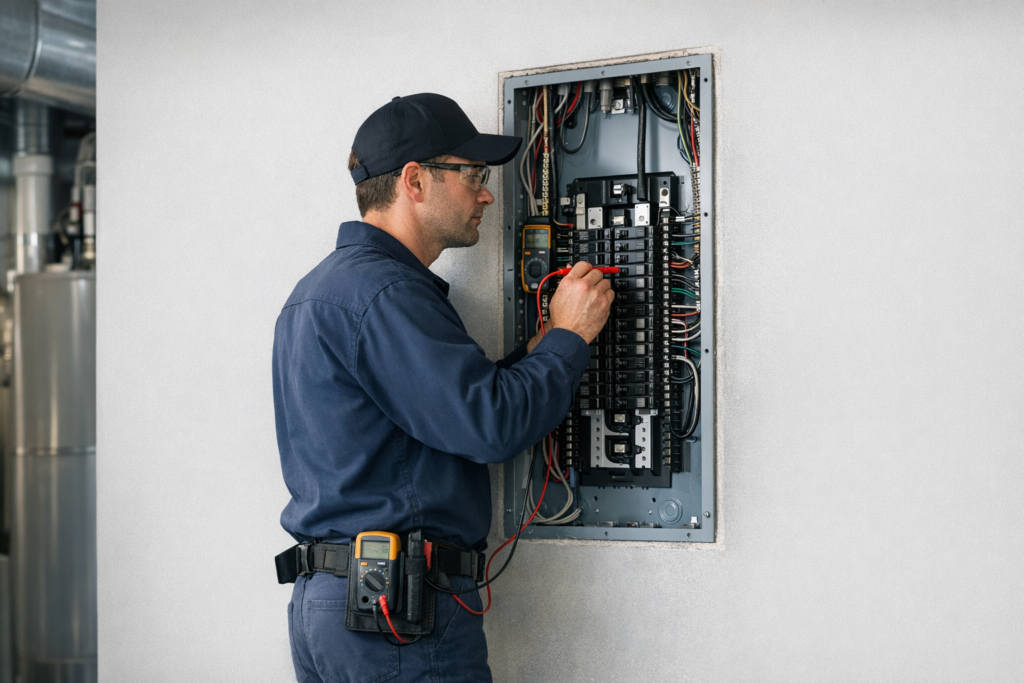
Electrical panels should never be treated as a DIY project. Panels contain energized components, service conductors, bus bars, grounding and bonding connections, neutral conductors, breakers, and equipment ratings that must be evaluated carefully.
Installing the wrong breaker, doubling conductors where not permitted, ignoring corrosion, or failing to identify heat damage can create serious hazards. Panel work requires training, proper tools, and knowledge of applicable electrical standards.
Fixing Flickering Lights
Flickering lights can be caused by a loose bulb, but they can also indicate a loose neutral, failing switch, overloaded circuit, poor splice, deteriorated wiring, or a service-related issue. If lights flicker across multiple rooms, dim when equipment starts, or change brightness unexpectedly, the system should be inspected by a licensed electrician.
Installing New Light Fixtures
Light fixture installation can involve more than matching wires by color. The electrical box must be properly rated and secured, the fixture must be compatible with the circuit, connections must be enclosed correctly, and ceiling fans or heavier fixtures require proper support. Older homes may also have wiring that does not match modern color conventions or insulation standards.
Troubleshooting Tripping Breakers
A breaker that trips repeatedly is doing its job by responding to a problem. Replacing it with a larger breaker is dangerous unless the entire circuit is designed and rated for that protection level. Repeated tripping may indicate overload, short circuit, ground fault, equipment failure, damaged wiring, or moisture intrusion.
Never oversize a breaker to stop nuisance tripping. That can allow wiring to overheat before the breaker responds.
Why Electrical Problems Require Proper Troubleshooting
Safe electrical repair begins with diagnosis. A failed outlet, dead circuit, warm switch, or tripped breaker is usually a symptom. The real issue may be upstream, downstream, inside the panel, inside a junction box, or connected to a specific appliance or piece of equipment.
Professional troubleshooting may involve checking voltage, continuity, grounding, polarity, load conditions, breaker operation, wiring condition, equipment ratings, and signs of overheating. In commercial settings, electricians may also evaluate dedicated circuits, lighting controls, emergency systems, equipment disconnects, motors, tenant improvements, and power quality concerns.
This diagnostic process helps prevent repeat failures and reduces the chance of replacing parts unnecessarily.
Electrical Codes Exist for Safety, Not Red Tape
Electrical code requirements are designed to reduce hazards from shock, fire, improper grounding, overloads, and unsafe installations. Codes also evolve as electrical systems, building methods, and technology change. A repair that seems reasonable to an untrained person may not meet current safety standards or may not be appropriate for the property.
Electrical work may need to comply with the National Electrical Code, manufacturer instructions, and applicable state or local requirements. Depending on the scope and jurisdiction, permits and inspections may also be involved. A licensed electrician understands how to complete repairs in a way that supports safety, reliability, and compliance.
Older New England Homes Create Additional Electrical Challenges
Many properties throughout New Hampshire, Massachusetts, Maine, and Vermont have electrical systems that were installed in different eras. Some homes have been expanded, remodeled, or partially rewired over time. Others include aging panels, limited circuits, ungrounded receptacles, deteriorated wiring insulation, outdated devices, or electrical work performed by previous owners.
Older homes can be especially challenging because the visible device does not always reveal what is happening inside the wall. A room may contain wiring from different periods, junction boxes may be hidden, circuits may be shared in unexpected ways, and panels may be mislabeled.
In these situations, electrical repair safety depends on careful inspection and experience. A licensed electrician can identify whether a simple repair is enough or whether the system needs a more complete upgrade to support modern electrical demand.
Commercial Electrical Repairs Carry Even Greater Responsibility
For businesses, property managers, facility managers, and commercial property owners, DIY electrical repairs can create risks beyond the immediate hazard. Improper work can disrupt operations, damage equipment, affect tenant spaces, create liability concerns, and lead to recurring maintenance issues.
Commercial electrical systems may involve higher loads, dedicated equipment circuits, lighting control systems, emergency lighting, exit signs, panels, subpanels, motor loads, HVAC equipment, data-related power needs, and tenant-specific requirements. Troubleshooting these systems requires the right expertise and a strong understanding of how the electrical system supports daily operations.
Professional electrical repair helps businesses reduce downtime, protect equipment, and maintain safer buildings for employees, tenants, and customers.
Signs You Should Call a Licensed Electrician
Some electrical issues require immediate professional attention. If you notice any of the following warning signs, stop using the affected circuit or equipment when safe to do so and contact a qualified electrician:
- Breakers that trip repeatedly
- Outlets or switches that feel warm or hot
- Burning smells, scorch marks, or discoloration
- Buzzing, crackling, or sizzling sounds
- Flickering or dimming lights across multiple areas
- Dead outlets with no obvious cause
- Loose outlets, damaged covers, or exposed wiring
- Sparks when plugging in or switching equipment
- Frequent blown fuses or overloaded circuits
- Water exposure near electrical equipment
- Outdated panels, damaged breakers, or visible corrosion
If there is smoke, active fire, or an immediate life safety concern, leave the area and contact emergency services.
Why Watching a Tutorial Is Not the Same as Training
Online videos can make electrical repairs appear simple because they usually show ideal conditions: a clearly identified circuit, modern wiring, a clean device box, and an uncomplicated repair. Real buildings are rarely that predictable.
A tutorial cannot verify your panel labeling, identify hidden wiring damage, confirm grounding continuity, calculate circuit load, evaluate breaker compatibility, or determine whether the repair is appropriate for your electrical system. It also cannot see site-specific risks such as moisture, old wiring methods, improper past repairs, or overloaded circuits.
Electrical work requires judgment. That judgment comes from training, field experience, safety practices, and an understanding of how the entire system functions.
The Real Cost of DIY Electrical Mistakes
DIY electrical repairs are often attempted to save money, but a mistake can cost far more than a professional repair. Improper work may damage appliances, lighting, electronics, HVAC equipment, machinery, or building wiring. It can also require opening walls, replacing damaged components, correcting code issues, or upgrading portions of the electrical system that were compromised by unsafe work.
There are also non-financial costs: lost time, frustration, safety concerns, business interruptions, and uncertainty about whether the repair is truly safe.
Hiring a licensed electrician provides a clearer path. The problem is diagnosed, the repair is completed with the proper materials and methods, and the system is evaluated for safety concerns that may not be obvious.
What a Professional Electrical Repair Should Include
A quality electrical repair is more than a quick replacement. A licensed electrician should take the time to understand the issue, inspect relevant components, and explain the recommended solution in practical language.
Depending on the situation, a professional repair may include:
- Verifying the affected circuit and safely de-energizing equipment
- Testing for voltage and identifying unsafe conditions
- Inspecting outlets, switches, fixtures, breakers, wiring, or panels
- Locating the source of tripping, flickering, overheating, or power loss
- Repairing damaged wiring or replacing failed devices
- Correcting loose connections, improper splices, or grounding issues
- Confirming equipment ratings and circuit compatibility
- Checking for signs of overload, corrosion, moisture, or heat damage
- Reviewing whether additional upgrades are recommended for safety or reliability
This approach helps ensure the repair addresses the cause, not just the symptom.
Electrical Repairs That Should Always Be Left to Professionals
Some electrical work is especially hazardous and should never be attempted without proper licensing, training, and equipment. This includes panel repairs, service upgrades, generator connections, EV charger installations, rewiring, circuit additions, surge protection installation, commercial troubleshooting, transfer equipment, and any repair involving damaged service equipment or unknown wiring conditions.
Repairs involving water damage, storm damage, fire damage, or melted components also require professional evaluation. Severe winter weather, snow, ice, and power outages are common concerns throughout New England, and electrical systems exposed to moisture or storm-related damage should be inspected before being returned to service.
How Preventive Maintenance Improves Electrical Safety
Electrical repair safety is not only about responding to problems. Preventive maintenance can help identify issues before they become emergencies. Homeowners and property managers should pay attention to changes in system performance and schedule inspections when buying a property, renovating, adding major equipment, or experiencing recurring electrical issues.
For commercial buildings, preventive maintenance may include panel inspections, lighting system checks, thermal concerns, equipment disconnect reviews, emergency lighting checks, surge protection evaluation, and documentation of recurring issues. Regular attention helps improve reliability and can reduce unexpected downtime.
Safer Choices for Homeowners and Businesses
You do not need to become an electrician to make smart decisions about your electrical system. The safest choice is to recognize warning signs, avoid temporary fixes, and call a professional before a small issue becomes a larger hazard.
Helpful steps include:
- Stop using outlets, switches, or equipment that show heat damage or unusual behavior
- Do not reset a breaker repeatedly without identifying the cause
- Keep electrical panels accessible and clearly labeled when possible
- Avoid extension cords as permanent wiring solutions
- Have older wiring evaluated before renovations or major equipment upgrades
- Schedule electrical inspections when purchasing or managing older properties
- Use licensed electricians for repairs, upgrades, and troubleshooting
Trust Electrical Repairs to Experienced Professionals
Electrical systems are too important to treat as trial-and-error projects. Proper repairs protect people, property, equipment, and long-term system reliability. Whether you are dealing with a tripping breaker at home, flickering lights in a rental property, damaged wiring in a commercial space, or an aging panel that needs attention, electrical repair safety should always come first.
Electrical Constructors LLC provides residential, commercial, industrial, and new construction electrical services throughout New Hampshire, Massachusetts, Maine, and Vermont. From troubleshooting and repairs to panel upgrades, service upgrades, lighting, generators, EV chargers, inspections, maintenance, rewiring, and code corrections, working with a qualified electrical contractor helps ensure your system is repaired safely and built to perform reliably.