Commercial electrical code compliance is not just a paperwork issue. It directly affects fire safety, employee protection, equipment reliability, insurance concerns, tenant satisfaction, and whether your building is prepared for future electrical demands. For business owners, property managers, contractors, and facility teams, staying compliant means understanding how your electrical system is installed, maintained, modified, and inspected over time.
Electrical codes exist to reduce hazards. They help ensure wiring, panels, grounding, lighting, equipment circuits, emergency systems, and protective devices are installed in a way that supports safe operation. Because commercial properties often change use, add equipment, renovate spaces, or support higher electrical loads over time, compliance is an ongoing responsibility rather than a one-time event.
Why Electrical Code Compliance Matters for Commercial Properties
A commercial building depends on its electrical system every day. Lighting, HVAC equipment, refrigeration, production equipment, computers, security systems, life safety systems, and point-of-sale systems all require dependable power. When electrical work is outdated, overloaded, damaged, or improperly modified, the risk extends beyond inconvenience.
Code-compliant electrical systems help reduce the likelihood of electrical fires, shock hazards, nuisance outages, equipment damage, and unsafe working conditions. They also support smoother inspections during renovations, tenant fit-outs, property sales, insurance reviews, and occupancy changes.
For businesses throughout New Hampshire, Massachusetts, Maine, and Vermont, many commercial properties include older buildings, mixed-use spaces, converted structures, or facilities that have grown in stages. These properties can perform well for years, but they often need professional evaluation before new loads are added or major changes are made.
What Commercial Electrical Code Compliance Generally Covers
Electrical codes address how systems are designed, installed, protected, labeled, and maintained. While specific requirements vary by jurisdiction and project type, most commercial compliance concerns involve several core areas.
Electrical Service and Panel Capacity
The electrical service must be appropriate for the building’s present and expected load. A business that adds commercial kitchen equipment, manufacturing machinery, EV chargers, computer servers, or larger HVAC units may exceed the capacity of an older service or panel. When capacity is inadequate, circuits can become overloaded, breakers may trip frequently, and equipment may not operate reliably.
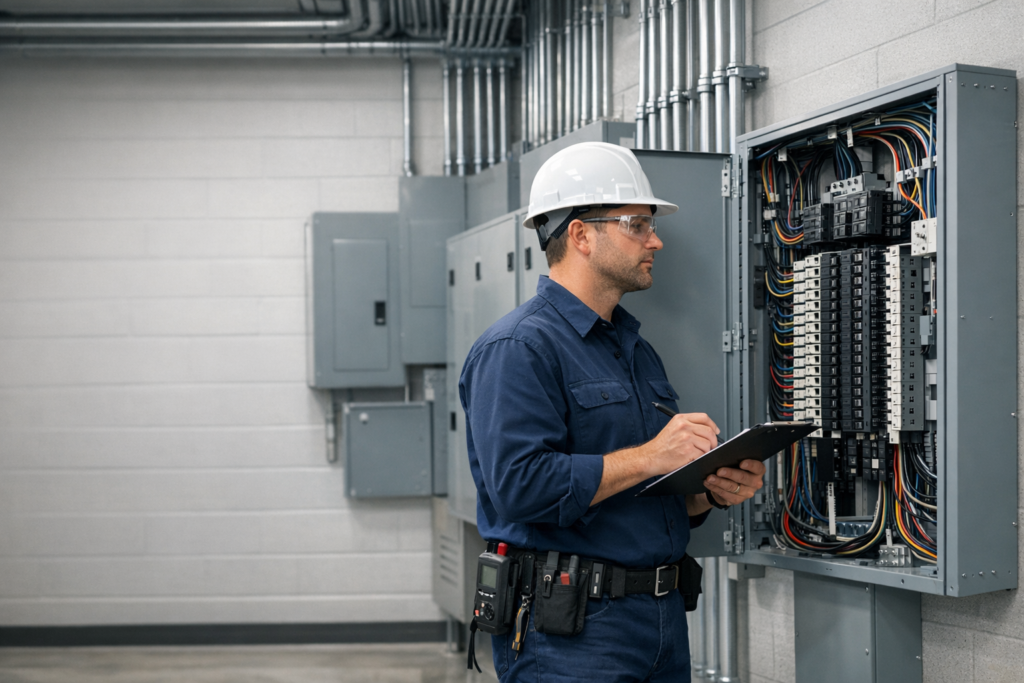
A licensed electrician can evaluate the service size, panel condition, circuit distribution, available capacity, and whether a service upgrade or subpanel is needed before new equipment is installed.
Wiring Methods and Circuit Protection
Commercial wiring must be installed using approved methods suitable for the environment. Offices, retail spaces, warehouses, restaurants, industrial facilities, and multi-tenant buildings all have different electrical demands. Proper conduit, cable protection, overcurrent protection, disconnects, grounding, and dedicated circuits help keep the system safe and serviceable.
Improper extensions, exposed wiring, missing covers, abandoned conductors, damaged conduit, and makeshift repairs are common red flags that should be corrected by a qualified electrician.
Grounding, Bonding, and Surge Protection
Grounding and bonding are critical safety components. They help stabilize electrical systems and provide a path for fault current so protective devices can operate properly. In commercial buildings, grounding problems may not always be obvious until sensitive equipment malfunctions, breakers trip unexpectedly, or inspections uncover deficiencies.
Surge protection is also becoming more important as businesses rely on electronics, automation, security systems, and networked equipment. Severe weather, utility issues, and internal switching events can all create damaging voltage spikes.
Lighting, Emergency Lighting, and Exit Signage
Commercial lighting must support safe visibility, energy efficiency, and code-related life safety needs. Emergency lighting and exit signs, where required, must operate when normal power is interrupted. These systems should be tested and maintained regularly because batteries, lamps, drivers, and connections can fail over time.
Lighting upgrades can also improve compliance and reduce energy costs. LED retrofits, occupancy sensors, exterior security lighting, and better lighting controls often provide safety and efficiency benefits when properly designed and installed.
Common Code Issues Found in Commercial Buildings
Many electrical code problems develop gradually. A building may start with a compliant installation, then years of repairs, tenant changes, equipment additions, and rushed modifications create hidden risks.
- Overloaded panels or circuits serving new equipment without proper load evaluation
- Unlabeled or incorrectly labeled breakers, panels, and disconnects
- Extension cords or power strips used as permanent wiring
- Missing panel covers, open knockouts, or exposed energized parts
- Damaged receptacles, loose switches, or cracked cover plates in work areas
- Improperly installed lighting, signs, machinery, or dedicated equipment circuits
- Outdated wiring that no longer supports current business operations
- Poor grounding, bonding defects, or missing equipment grounding conductors
- Nonfunctional emergency lighting or exit signs
- Unpermitted or undocumented electrical modifications
These conditions are not always obvious to building occupants. A breaker that trips repeatedly, warm electrical equipment, flickering lights, burning odors, buzzing panels, or visible damage should be treated as a warning sign. If there is smoke, sparking, a burning smell, or signs of overheating, stop using the affected equipment and contact a qualified electrician immediately.
When Business Owners Should Schedule an Electrical Code Review
A code review is especially valuable before making changes to the building or purchasing new equipment. Waiting until an inspector, insurer, tenant, or contractor raises concerns can disrupt operations and delay projects.
Business owners and property managers should consider a professional electrical inspection when:
- Planning a renovation, build-out, or change of occupancy
- Adding high-demand equipment, machinery, EV chargers, or commercial appliances
- Experiencing frequent breaker trips, flickering lights, or unexplained outages
- Buying, selling, or leasing a commercial property
- Preparing for insurance review or property risk assessment
- Upgrading lighting, controls, generators, panels, or electrical service
- Managing an older building with unknown electrical history
- Addressing repeated maintenance issues across multiple tenant spaces
In New England, severe winter weather and power outages can also expose weaknesses in electrical systems. Generator connections, transfer equipment, exterior wiring, service entrances, and weather-exposed equipment should be properly evaluated before the next storm season.
Compliance During Renovations, Tenant Improvements, and Expansions
Commercial spaces often evolve. A retail space becomes a restaurant. An office adds a server room. A warehouse installs production equipment. A property manager divides a space for multiple tenants. Each change can affect electrical load, circuit layout, lighting, receptacle placement, life safety systems, and equipment requirements.
One of the most common mistakes is assuming the existing electrical system can support a new business use without evaluation. Even if outlets and panels appear functional, the system may not have adequate capacity or proper circuiting for the new layout.
Early coordination with a licensed electrical contractor helps prevent expensive rework. Electrical planning should happen before walls are closed, equipment is ordered, or tenant deadlines become urgent. This allows the project team to address infrastructure, inspections, panel schedules, equipment connections, and future serviceability in a more organized way.
How Preventative Maintenance Supports Code Compliance
Commercial electrical code compliance is easier to maintain when electrical systems are inspected and serviced proactively. Preventative maintenance helps identify issues before they become failures, hazards, or inspection problems.
A practical maintenance plan may include panel inspections, breaker and disconnect evaluations, infrared scanning where appropriate, lighting system checks, emergency lighting testing, receptacle and switch inspections, generator maintenance coordination, surge protection review, and correction of damaged or obsolete components.
Good documentation also matters. Accurate panel labels, updated equipment information, inspection notes, and records of completed electrical work help owners, managers, electricians, and inspectors understand the building’s electrical history. This is especially helpful in multi-tenant properties and facilities with multiple phases of construction.
Cost Considerations for Electrical Code Corrections
The cost of code corrections depends on the condition of the existing system, the type of deficiency, access to wiring, the size of the building, required equipment, and the scope of work. Some corrections are relatively straightforward, such as replacing damaged devices, installing covers, updating labels, or repairing lighting. Others may involve panel upgrades, rewiring, service upgrades, dedicated equipment circuits, or coordination with other trades.
The most cost-effective approach is usually to identify issues early and prioritize them based on safety, operational impact, and project goals. A qualified electrician can help separate urgent hazards from planned improvements, allowing business owners to make informed decisions without guesswork.
It is also important to consider the cost of doing nothing. Electrical failures can interrupt operations, damage equipment, create safety risks, delay inspections, and complicate insurance or leasing matters. Proper electrical work is an investment in reliability and risk reduction.
Why Licensed Commercial Electricians Are Essential
Commercial electrical systems are more complex than typical residential systems. They may include larger services, three-phase power, specialized equipment, emergency systems, multiple panels, tenant metering, lighting controls, generators, surge protection, and building automation connections. Troubleshooting and modifying these systems requires training, experience, and an understanding of applicable electrical standards.
Business owners should not rely on temporary fixes, handyman repairs, or assumptions when safety and compliance are involved. A licensed commercial electrician can evaluate existing conditions, explain practical options, perform code-conscious installations, and help coordinate the work with other construction or maintenance needs.
Electrical Constructors LLC provides residential, commercial, industrial, and new construction electrical services across New Hampshire, Massachusetts, Maine, and Vermont. For business owners, contractors, developers, and property managers, working with an experienced electrical contractor helps ensure repairs, upgrades, inspections, and installations are completed with safety, reliability, and long-term performance in mind.
Key Takeaways for Business Owners
Commercial electrical code compliance protects people, property, equipment, and business continuity. It should be considered whenever a building is renovated, expanded, reconfigured, sold, leased, or equipped with new electrical loads.
The most important step is to be proactive. Schedule inspections before problems escalate, plan electrical upgrades before equipment is installed, maintain accurate documentation, and correct unsafe conditions promptly. With the right electrical partner, business owners can reduce risk, improve reliability, and keep their properties better prepared for daily operations and future growth.