Three phase electrical service is a common power solution for commercial buildings because it can deliver larger, steadier amounts of electricity than typical single-phase service. For businesses that rely on HVAC equipment, motors, commercial kitchens, elevators, manufacturing equipment, data systems, or other high-demand electrical loads, understanding how three-phase power works can help you make better decisions about safety, capacity, efficiency, and future expansion.
What Is Three Phase Electrical Service?
Three phase electrical service is an electrical power system that uses three alternating currents instead of one. Each phase reaches its peak at a different point in the electrical cycle, creating a more continuous and balanced flow of power. This makes three-phase power especially useful for commercial and industrial buildings with equipment that needs consistent, high-capacity electricity.
In practical terms, three-phase service allows a building to support larger electrical loads with greater efficiency than many single-phase systems. It is commonly used for commercial panels, switchgear, rooftop HVAC units, pumps, compressors, motors, elevators, large lighting systems, EV charging infrastructure, and other equipment found in business and multi-use properties.
Not every commercial space needs three-phase power, but many properties benefit from it once electrical demand grows beyond what a standard single-phase service can safely or efficiently support.
Single-Phase vs. Three-Phase Power
The simplest way to understand the difference is to think about power delivery. Single-phase power delivers electricity in one alternating wave. Three-phase power delivers electricity in three overlapping waves. Because those waves are staggered, three-phase systems provide smoother, more continuous energy to connected equipment.
Single-phase electrical service is common in homes and smaller buildings. It is typically adequate for general lighting, receptacles, standard appliances, small office equipment, and ordinary residential electrical loads. Three-phase service is more common in commercial, industrial, and larger mixed-use buildings because it can support heavier equipment and larger electrical systems.
Why the Difference Matters
Electrical equipment performs best when it receives the right type of power. Motors, compressors, and large mechanical systems often operate more efficiently and reliably on three-phase power. In many cases, three-phase equipment can start more smoothly, run with less vibration, and handle larger workloads than comparable single-phase equipment.
For a business owner or property manager, that can affect equipment performance, long-term reliability, electrical infrastructure planning, and the cost of upgrades. Choosing equipment before confirming available electrical service is a common mistake that can lead to delays, added costs, or redesign work.
Why Commercial Buildings Often Need Three-Phase Power
Commercial buildings typically have more complex electrical needs than residential properties. Even a small business can place significant demand on an electrical system if it uses dedicated HVAC equipment, refrigeration, kitchen equipment, production tools, or specialized technology.
Three phase electrical service may be needed when a building has:
- Large rooftop HVAC units or commercial air conditioning systems
- Elevators, lifts, pumps, compressors, or motor-driven equipment
- Commercial kitchen appliances, walk-in coolers, or refrigeration systems
- Manufacturing, fabrication, woodworking, or machine shop equipment
- High-intensity lighting or large-scale lighting control systems
- Multiple tenant spaces with growing electrical demand
- EV charging stations for customers, employees, tenants, or fleet vehicles
- High electrical loads from servers, technology rooms, or specialized equipment
Three-phase power is not only about having more electricity available. It is also about delivering that power in a way that supports the equipment a building depends on every day.
Common Commercial Applications for Three-Phase Electrical Systems
Three-phase systems are used across many types of commercial and industrial facilities. The specific design depends on the building size, utility service, electrical load, equipment requirements, and future plans for the property.
HVAC and Mechanical Equipment
Commercial heating, cooling, and ventilation systems frequently require three-phase power. Rooftop units, large condensers, pumps, and air handling equipment can draw substantial current, especially during startup. Three-phase service helps support these loads more effectively.
Motors, Pumps, and Compressors
Motor loads are one of the most common reasons a commercial building needs three-phase power. Three-phase motors are widely used because they are efficient, durable, and well suited for continuous operation.
Commercial Kitchens and Refrigeration
Restaurants, food service spaces, grocery operations, and institutional kitchens may need substantial electrical capacity for cooking equipment, exhaust systems, refrigeration, freezers, dishwashing equipment, and controls.
Manufacturing and Industrial Operations
Industrial spaces often require three-phase electrical service to operate machinery, production lines, welders, compressed air systems, and specialized equipment. In these environments, proper electrical design directly affects uptime and productivity.
EV Charging Infrastructure
As more businesses and property owners install electric vehicle charging stations, three-phase power may become an important part of planning. Commercial EV charging can place significant demand on electrical service, especially when multiple chargers are installed or when faster charging is desired.
Signs Your Building May Need a Three-Phase Upgrade
A building does not always need an immediate service upgrade simply because electrical demand increases. However, certain signs indicate that your existing system should be evaluated by a qualified commercial electrician.
Your property may need an electrical assessment if you notice:
- Frequent breaker trips when equipment starts or operates
- New equipment specifications that require three-phase power
- Limited panel capacity for tenant improvements or expansion
- Electrical rooms that are crowded, outdated, or poorly labeled
- Voltage problems, flickering lights, or inconsistent equipment performance
- Plans to add HVAC units, commercial kitchen equipment, EV chargers, or machinery
- Older electrical service that no longer matches the building’s use
- Concerns discovered during an electrical inspection or property evaluation
These issues do not automatically mean the building needs new service, but they do mean the electrical system should be reviewed before adding more load. Continuing to expand an undersized or outdated system can increase safety risks and reduce reliability.
What an Electrician Evaluates Before Recommending Three-Phase Service
A proper recommendation begins with understanding the building, the utility service, the equipment, and the owner’s long-term goals. Commercial electrical systems should not be upgraded based on guesswork.
An experienced electrician may evaluate:
- The existing electrical service size and available capacity
- Main distribution equipment, panels, breakers, feeders, and grounding
- Current connected loads and expected future loads
- Equipment nameplate requirements and manufacturer specifications
- Load calculations for existing and proposed electrical demand
- Utility service availability and coordination needs
- Code considerations related to the planned work
- Space in electrical rooms for panels, switchgear, transformers, or disconnects
- Condition of wiring, conduit, overcurrent protection, and labeling
This evaluation helps determine whether the building truly needs three-phase electrical service, whether existing service can be modified, or whether a more targeted solution is appropriate.
Benefits of Three-Phase Electrical Service for Businesses
When properly designed and installed, three-phase power can provide several advantages for commercial properties.
Greater Electrical Capacity
Three-phase systems can support larger loads, which is important for buildings with heavy equipment, multiple tenants, or plans for expansion. More available capacity can make it easier to add equipment without constantly redesigning the electrical system.
Improved Equipment Performance
Many commercial motors and mechanical systems are designed for three-phase power. When equipment receives the correct power supply, it can operate more reliably and efficiently.
Better Load Balance
A well-designed three-phase system distributes electrical loads across multiple phases. Proper load balancing helps reduce strain on equipment and can improve overall system stability.
Future Expansion Flexibility
Businesses change over time. A retail space may become a restaurant. A warehouse may add production equipment. A property manager may need to accommodate tenant improvements. Three-phase infrastructure can provide more flexibility for future electrical needs.
Support for Modern Building Technology
Commercial buildings increasingly rely on advanced lighting controls, EV charging, security systems, access controls, backup power, automation, and energy management systems. Electrical planning must account for these technologies before the building reaches its limit.
Important Safety and Code Considerations
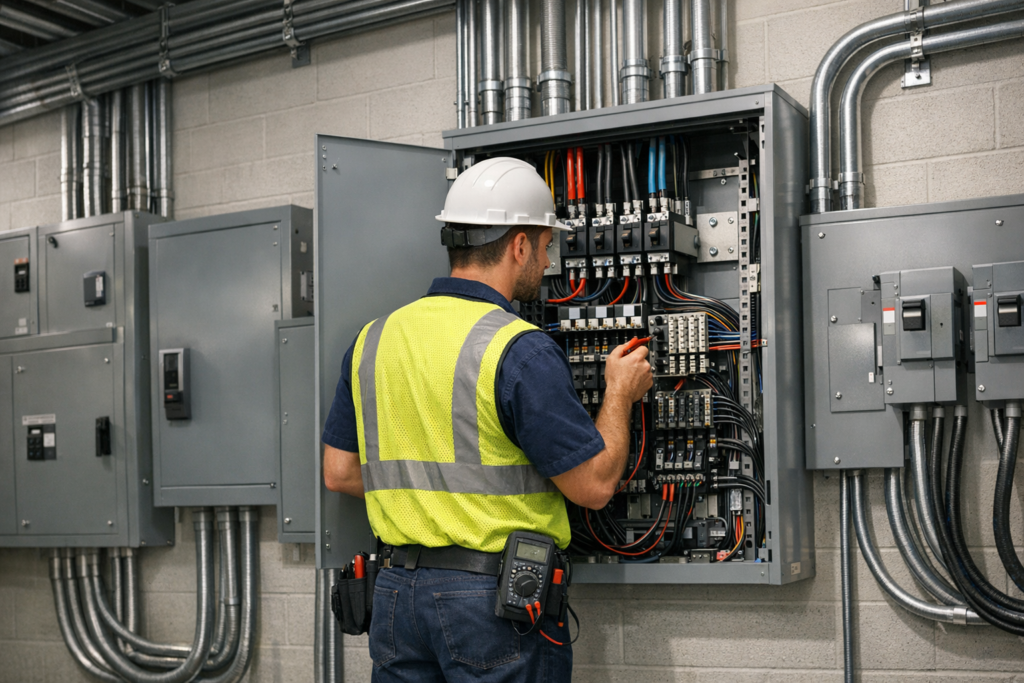
Three-phase electrical systems involve higher capacity equipment and should only be installed, repaired, or modified by qualified licensed electricians. Commercial electrical work often affects life safety systems, tenant operations, equipment reliability, and code compliance.
Never attempt to modify a commercial electrical service, panel, switchgear, disconnect, or feeder without proper qualifications. Mistakes can create shock hazards, arc flash hazards, fire risks, equipment damage, and serious liability concerns.
Electrical codes exist to protect people and property. While general code principles are widely recognized, specific requirements can vary based on the installation, building type, equipment, occupancy, and local authority having jurisdiction. A qualified electrical contractor can evaluate the project and coordinate the work appropriately.
For commercial buildings in New Hampshire, Massachusetts, Maine, and Vermont, it is also important to consider the realities of New England properties. Many buildings have older electrical infrastructure, additions completed over time, limited electrical room space, or systems that were designed before today’s equipment demands existed.
Three-Phase Power and Backup Generator Planning
Power outages are a serious concern for many businesses throughout New England. Snow, ice, high winds, and severe weather can interrupt utility power, and commercial properties often need a backup power strategy to protect operations.
If your building has three-phase service, generator planning must account for the type of loads that need backup power. Not every circuit needs to be connected to a generator, but critical systems should be identified clearly.
Common generator-supported loads may include:
- Emergency and egress lighting
- Refrigeration or freezer equipment
- IT systems and network equipment
- Sump pumps or essential mechanical equipment
- Security, access control, and fire alarm related infrastructure
- Selected HVAC or heating system components
- Business-critical production or process equipment
Generator sizing for three-phase systems requires careful load analysis. Starting currents, motor loads, phase balance, transfer equipment, and priority circuits all matter. Undersized or poorly planned generator systems may fail to support the equipment a business expects to operate during an outage.
Cost Factors for Installing or Upgrading Three-Phase Service
The cost of installing or upgrading three-phase electrical service depends on the building and the scope of work. There is no reliable one-size-fits-all price because commercial electrical service upgrades can vary significantly.
Major cost factors include:
- Existing utility service and whether three-phase power is available nearby
- Service size required for present and future loads
- Condition and capacity of existing panels, switchgear, and feeders
- Distance from utility equipment to the building’s electrical room
- Need for transformers, disconnects, metering equipment, or distribution changes
- Complexity of working in an occupied business or multi-tenant property
- Required shutdown planning and temporary power considerations
- Equipment lead times and project coordination requirements
- Code corrections or outdated wiring discovered during evaluation
The best approach is to begin with a site assessment and load review. This helps prevent overbuilding, underbuilding, and overlooking infrastructure issues that could affect the final project.
Common Mistakes to Avoid
Commercial electrical planning should be deliberate. Rushing decisions can create expensive problems later, especially when equipment has already been purchased or a tenant build-out is underway.
- Ordering equipment before confirming electrical requirements: Always verify voltage, phase, amperage, and installation needs before purchasing commercial equipment.
- Assuming panel space means capacity: Empty breaker spaces do not necessarily mean the electrical service can handle more load.
- Ignoring future expansion: A service upgrade should consider realistic future needs, not only the immediate project.
- Overlooking shutdown logistics: Commercial service work may require planned outages, tenant coordination, and after-hours scheduling.
- Neglecting labeling and documentation: Clear panel schedules and equipment identification make maintenance and troubleshooting safer and faster.
- Using residential assumptions for commercial work: Commercial electrical systems often have more complex load, code, and coordination requirements.
Preventative Maintenance for Three-Phase Electrical Systems
Three-phase systems should be maintained, not ignored until something fails. Preventative maintenance helps identify loose connections, overheating components, overloaded circuits, damaged equipment, nuisance tripping, and signs of wear before they disrupt operations.
Commercial maintenance may include visual inspections, panel and equipment evaluations, verifying labeling, checking for signs of overheating, reviewing load balance, inspecting disconnects, and evaluating equipment condition. The appropriate maintenance plan depends on the type of facility, the age of the system, and how critical the electrical loads are to daily operations.
Businesses with machinery, refrigeration, medical support equipment, server rooms, manufacturing processes, or high occupancy should be especially proactive. Electrical downtime can be far more expensive than planned maintenance.
When to Contact a Commercial Electrical Contractor
You should contact a commercial electrical contractor before adding major equipment, renovating tenant space, upgrading HVAC systems, installing EV chargers, expanding operations, or purchasing machinery that may require three-phase power. Early electrical planning helps avoid project delays and costly redesigns.
Electrical Constructors LLC provides residential, commercial, industrial, and new construction electrical services throughout New Hampshire, Massachusetts, Maine, and Vermont. For commercial buildings, the right electrical solution starts with a clear understanding of the property’s existing infrastructure, current loads, safety requirements, and future goals.
Whether your building needs troubleshooting, an electrical inspection, a service upgrade, panel work, generator installation, EV charging, preventative maintenance, or a complete electrical system installation, working with an experienced electrical contractor helps ensure the system is designed for safety, reliability, and long-term performance.
Key Takeaway
Three phase electrical service is an important power option for commercial buildings with larger or more complex electrical demands. It can improve capacity, support heavy equipment, provide smoother power delivery, and create room for future growth. The right decision depends on a careful evaluation of your building, equipment, utility service, and long-term needs.
If your commercial property is expanding, adding major equipment, or experiencing electrical limitations, a professional assessment is the safest and most reliable next step.