Smart home technology is only as dependable as the electrical work supporting it. Devices such as smart switches, thermostats, cameras, EV chargers, automated lighting, whole-home audio, and security systems all rely on safe wiring, adequate electrical capacity, proper grounding, code-conscious installation, and a stable power supply. A successful smart home electrical installation is not just about connecting devices to Wi-Fi. It starts with a well-planned electrical system that can handle modern loads reliably and safely.
For homeowners, builders, property managers, and commercial property owners throughout New Hampshire, Massachusetts, Maine, and Vermont, this matters even more because many New England properties have older wiring, aging panels, mixed renovations, and seasonal power challenges. Before investing in connected technology, it is important to understand what quality electrical work does behind the walls.
Smart Homes Depend on More Than Internet Connectivity
When people think about smart home performance, they often focus on apps, routers, voice assistants, and wireless networks. Those are important, but they are only part of the system. Every connected device still depends on physical electrical infrastructure.
A smart lighting system needs properly wired switches and fixtures. Smart thermostats need compatible low-voltage control wiring and reliable power. Security cameras may require hardwired power, low-voltage cabling, or dedicated circuits. EV chargers, generators, battery systems, and large appliances can add substantial demand to the electrical service.
If the electrical foundation is weak, smart technology can become frustrating or unsafe. Common symptoms of poor planning include flickering lights, nuisance breaker trips, overheated devices, intermittent power loss, overloaded circuits, and equipment that fails prematurely. Quality electrical work helps prevent those problems before they start.
What a Quality Smart Home Electrical Installation Should Include
A proper smart home electrical installation begins with evaluation and planning. The goal is to make sure the existing electrical system can support the devices being installed today while leaving room for future upgrades.
Important installation considerations include:
- Electrical panel capacity and available breaker space
- Condition of existing wiring, outlets, switches, and junction boxes
- Dedicated circuits for high-demand equipment
- Proper grounding and bonding
- Compatibility with smart switches, dimmers, controls, and automation systems
- Surge protection for sensitive electronics
- Load calculations for new appliances, EV chargers, or mechanical systems
- Safe routing of low-voltage and line-voltage wiring
- Code-conscious installation methods and proper workmanship
Smart devices may look simple from the user side, but the electrical conditions behind them must be correct. A licensed electrician can identify whether your home or building is prepared for the technology you want to install.
Electrical Panel Capacity Is the Starting Point
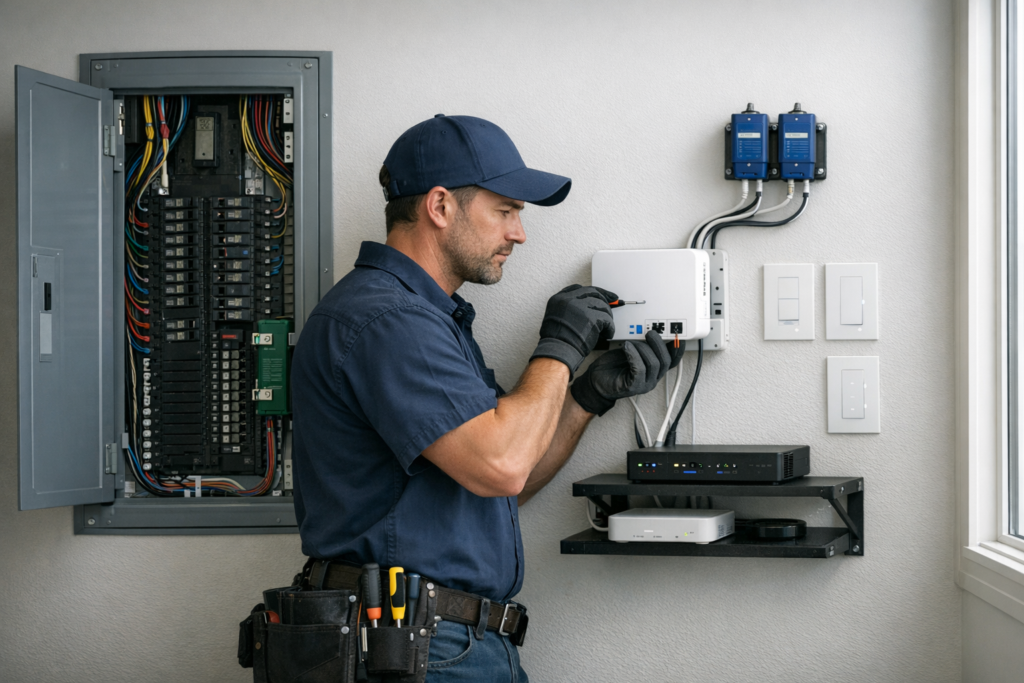
The electrical panel is the distribution center for the property. If the panel is outdated, full, damaged, or undersized, it can limit what smart technologies can be safely added.
Many older homes in New England were built long before today’s electrical demands. A home that once supported basic lighting, receptacles, and a few appliances may now be expected to power laptops, entertainment systems, HVAC equipment, heat pumps, EV chargers, smart appliances, security systems, and home automation devices.
Before adding significant smart home equipment, an electrician should evaluate whether the panel has enough safe capacity and physical space. In some cases, a panel upgrade or service upgrade may be recommended before installing larger connected systems such as EV chargers, electric heating equipment, hot tubs, standby generators, or advanced automation controls.
Signs Your Panel May Need Attention First
- Breakers trip frequently
- Lights dim when large appliances start
- The panel feels warm or shows signs of corrosion
- There are double-tapped breakers or crowded wiring
- The panel has no room for additional circuits
- The home still has very old electrical equipment
- Previous renovations were completed without clear documentation
These signs do not automatically mean the entire system must be replaced, but they do mean a professional evaluation is important before expanding connected technology.
Smart Switches and Dimmers Require Proper Wiring
Smart switches and dimmers are among the most popular smart home upgrades, but they are also one of the most common sources of installation problems. Many smart switches require a neutral conductor in the switch box. Some older switch loops were wired without one, especially in older homes.
Installing a smart switch without confirming wiring compatibility can lead to flickering lights, nonresponsive controls, buzzing fixtures, or unsafe modifications. A qualified electrician can determine whether the existing wiring supports the selected device or whether additional wiring is needed.
Fixture compatibility also matters. Not every LED bulb works properly with every dimmer. The wrong combination can cause flickering, poor dimming range, or shortened equipment life. Quality electrical installation includes selecting compatible components and wiring them correctly.
Dedicated Circuits Improve Reliability for Smart Technology
Some smart devices draw very little power. Others require dedicated electrical planning. A smart thermostat may have minimal electrical demand, while an EV charger, hardwired appliance, smart hot water system, or garage equipment can require a dedicated circuit properly sized for the load.
Dedicated circuits reduce the chances of overloads and help sensitive systems operate more reliably. They are especially important for equipment such as:
- EV charging stations
- Home office equipment
- Network racks and structured media panels
- Security and access control systems
- Standby generator controls
- Sump pumps and critical mechanical equipment
- High-end audio, video, and entertainment systems
- Smart appliances and specialty kitchen equipment
In commercial buildings, dedicated circuits may also be needed for conference room technology, access controls, surveillance systems, point-of-sale equipment, data closets, and automated lighting controls.
Surge Protection Helps Protect Connected Devices
Smart homes and connected commercial properties often contain thousands of dollars in sensitive electronics. A power surge can come from utility switching, lightning activity, generator transitions, equipment cycling, or faults within the electrical system.
Plug-in surge strips can provide limited protection for individual devices, but they are not a complete strategy. Whole-home or whole-building surge protection adds an important layer of defense at the electrical panel. This is especially valuable for properties with smart appliances, automation equipment, network gear, security systems, and charging equipment.
Surge protection cannot guarantee that no device will ever be damaged, but it can reduce the risk of costly failures and improve long-term system resilience. In areas of New Hampshire, Massachusetts, Maine, and Vermont where storms and winter outages are common, surge protection is a smart part of electrical planning.
Generators and Smart Home Systems Must Be Coordinated
Power outages are a real concern throughout New England, particularly during winter storms, heavy winds, snow, ice, and seasonal weather events. Many homeowners install standby generators or portable generator connections to keep essential systems running.
When smart technology is part of the home, generator planning becomes more important. Internet equipment, smart thermostats, garage door openers, refrigerators, sump pumps, heating systems, security systems, and lighting controls may all need reliable backup power.
A generator installation should account for the electrical loads that matter most. It should also include proper transfer equipment and safe wiring methods. Backfeeding a home through an improper connection is extremely dangerous and can put utility workers, occupants, and equipment at risk. Generator work should always be handled by qualified professionals.
Low-Voltage Wiring Still Requires Careful Planning
Smart technology often includes low-voltage systems such as data cabling, doorbells, cameras, speakers, access controls, alarm wiring, and control wiring. Although low-voltage wiring may not carry the same hazard level as standard household power wiring, it still needs to be installed thoughtfully.
Poor low-voltage installation can cause weak signals, service interruptions, future troubleshooting headaches, and messy equipment locations. Proper planning considers cable routing, separation from power wiring where appropriate, equipment accessibility, protection from damage, labeling, and expandability.
For new construction and major renovations, planning low-voltage pathways early can save time and money. It is much easier to install structured wiring before walls are closed than to retrofit cabling after finishes are complete.
New Construction Is the Best Time to Plan for Smart Technology
Builders, developers, architects, and homeowners should think about smart technology before electrical rough-in begins. Waiting until the end of a project can create placement limitations, change orders, and compromises.
During new construction, an electrician can help plan:
- Switch and control locations
- Lighting zones and dimming strategy
- Dedicated circuits for future equipment
- EV charger readiness
- Generator readiness
- Structured wiring locations
- Outdoor lighting and security camera power
- Smart appliance and mechanical equipment connections
- Panel capacity for future expansion
Good planning does not mean every smart device must be installed immediately. It means the electrical system is designed so future upgrades are easier, cleaner, and more cost-effective.
Older Homes Need Extra Attention Before Smart Upgrades
Many beautiful homes throughout New Hampshire, Massachusetts, Maine, and Vermont were built before modern electronics became part of everyday life. Some have been renovated multiple times over decades, resulting in a mix of old and new wiring methods.
Before adding smart technology to an older property, it is wise to inspect the electrical system for conditions that could affect safety or performance. These may include outdated wiring, ungrounded receptacles, insufficient circuits, overcrowded boxes, worn devices, questionable splices, or panels that no longer meet the needs of the home.
Smart devices should never be used as a shortcut around necessary electrical repairs. If wiring is damaged, undersized, or poorly modified, the first priority should be correcting the underlying issue.
Commercial Smart Building Technology Has Higher Demands
Smart technology is not limited to homes. Commercial properties increasingly use automated lighting, occupancy sensors, energy management systems, access control, surveillance, charging stations, building controls, and network-connected equipment.
For business owners, property managers, and facility managers, electrical reliability affects daily operations. A poorly planned installation can cause downtime, tenant complaints, security concerns, or maintenance problems. Commercial smart systems also need to be installed with attention to building use, future tenant needs, equipment accessibility, and maintenance procedures.
Electrical Constructors LLC works with residential and commercial electrical systems, which is important because smart technology often crosses categories. A property may need lighting controls, service upgrades, troubleshooting, data equipment power, exterior lighting, generator connections, and preventative maintenance as part of the same long-term electrical plan.
Common Mistakes to Avoid With Smart Electrical Upgrades
Smart home projects can become expensive when electrical details are overlooked. Avoiding common mistakes helps protect both the technology and the property.
- Installing devices without checking wiring compatibility: Smart switches, dimmers, and thermostats often have specific wiring requirements.
- Ignoring panel limitations: A full or outdated panel can restrict safe expansion.
- Overloading existing circuits: Adding new equipment to already busy circuits can cause nuisance trips and overheating risks.
- Skipping surge protection: Sensitive connected devices benefit from a layered protection strategy.
- Choosing products before planning the electrical work: Device selection should match the building’s wiring conditions and performance goals.
- Forgetting future upgrades: Planning for future EV charging, generators, outdoor living spaces, or home offices can reduce later disruption.
- Using unqualified installers for electrical work: Low-voltage and smart device installers may not be licensed to perform line-voltage electrical work.
The safest approach is to involve a licensed electrical contractor early, especially when the project affects wiring, panels, circuits, fixtures, or hardwired equipment.
Safety Should Always Come Before Convenience
Smart technology can make a property more convenient, efficient, and secure, but electrical safety must come first. Any work involving electrical panels, new circuits, hardwired devices, service equipment, or troubleshooting should be performed by qualified electricians.
Electrical hazards are not always visible. A device may appear to work while hidden wiring problems remain behind the wall. Poor connections can generate heat. Incorrectly sized wiring can create risk. Improper grounding can affect equipment performance and safety. Quality workmanship helps reduce these risks.
Homeowners and property managers should be cautious with do-it-yourself smart electrical installations, especially when the work goes beyond replacing a basic plug-in device. If the project requires opening electrical boxes, modifying wiring, adding circuits, or working near the panel, it is time to call a professional.
Energy Efficiency Starts With Electrical Design
Many smart home upgrades are marketed around convenience, but they can also support energy efficiency when installed correctly. Smart lighting controls, occupancy sensors, programmable thermostats, energy monitoring systems, and automated schedules can reduce unnecessary usage.
However, the most effective results come from matching the technology to the property. For example, lighting controls should be planned around how rooms are actually used. Exterior lighting should balance safety, visibility, and energy consumption. Smart thermostats should be compatible with the heating and cooling equipment. Commercial lighting controls should support both occupant comfort and operational needs.
Electrical installation quality directly affects how well these systems perform. Poorly placed controls, incompatible dimmers, or unreliable circuits can reduce the value of the upgrade.
When to Call an Electrician for Smart Home Electrical Installation
You should call a licensed electrician before installing smart technology if the project involves hardwired devices, new circuits, panel work, electrical troubleshooting, or equipment that affects safety and capacity.
Professional electrical support is especially important when:
- You are installing smart switches or dimmers in older wiring
- You need an EV charger or high-demand equipment
- You want to add cameras, lighting, or outlets outdoors
- You are planning a generator or backup power system
- You have frequent breaker trips or flickering lights
- You are renovating or building a new home
- You manage a commercial property with connected systems
- You are unsure whether your panel can support more equipment
An electrician can help determine what is safe, what is practical, and what should be upgraded before new technology is added.
Quality Electrical Work Makes Smart Technology More Reliable
A smart property depends on strong electrical fundamentals: adequate capacity, safe wiring, proper grounding, compatible controls, surge protection, and thoughtful planning. Without those elements, even the best devices can underperform.
Electrical Constructors LLC provides residential, commercial, industrial, and new construction electrical services throughout New Hampshire, Massachusetts, Maine, and Vermont. Whether you are upgrading a home, preparing a commercial property, planning new construction, adding EV charging, improving lighting, or installing backup power, the right electrical work helps your technology operate safely and dependably for years to come.
Smart home electrical installation should never be treated as an afterthought. When the electrical system is designed and installed correctly, connected technology becomes more reliable, easier to maintain, and better prepared for the future.