
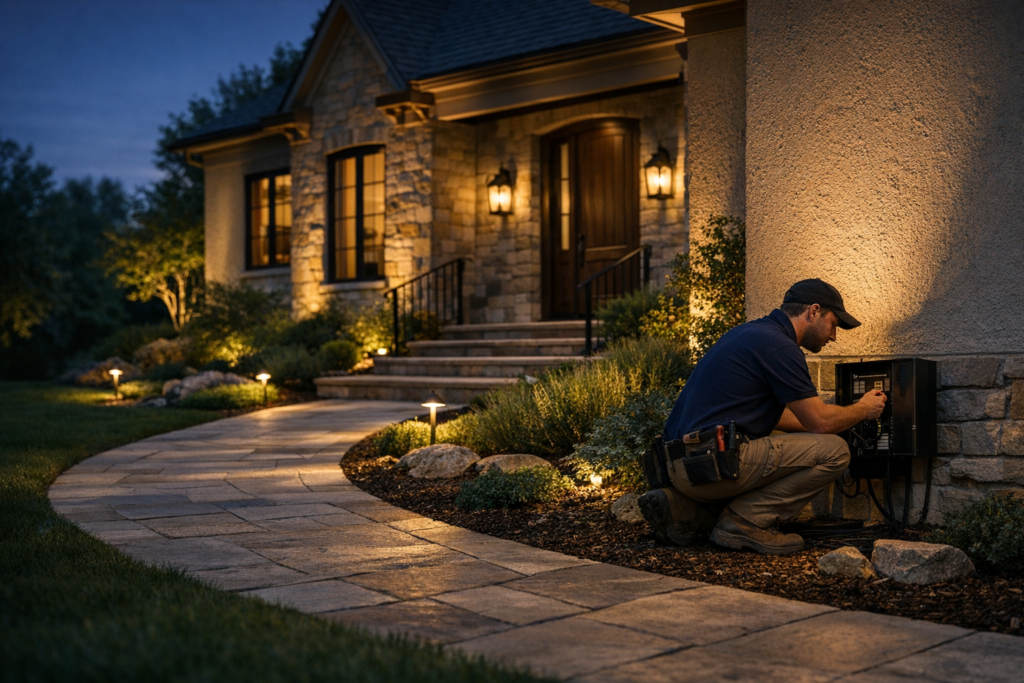
A thoughtful outdoor lighting installation can make your property safer, easier to navigate, and more attractive after dark. The best exterior lighting plans do more than place a few fixtures near the front door. They guide people safely, reduce dark areas around the property, highlight architectural features, and support practical everyday use for homeowners, businesses, property managers, and building owners.
Whether you are improving a home, commercial property, rental building, office, retail space, or new construction project, outdoor lighting should be planned with the same care as any other electrical improvement. Fixture placement, power source, controls, weather exposure, energy efficiency, and long-term maintenance all matter.
Why Exterior Lighting Matters More Than Many Property Owners Realize
Outdoor lighting is often treated as a cosmetic upgrade, but it has a direct impact on safety, security, usability, and property value. A poorly lit entryway can increase the risk of slips and falls. Dark parking areas can make employees and visitors feel uncomfortable. Unlit steps, uneven walkways, loading areas, and side entrances can create avoidable hazards.
In New Hampshire, Massachusetts, Maine, and Vermont, exterior lighting is especially useful during long winter nights, storms, snow removal, early sunsets, and power outage preparedness planning. A well-designed system helps people see where they are walking, identify obstacles, and access doors, driveways, garages, and business entrances more safely.
Good outdoor lighting also improves curb appeal. It can emphasize stonework, siding, architectural trim, signs, landscaping, decks, patios, and storefront features without making the property look overlit or harsh.
Start With Safety: The Most Important Areas To Light
The safest outdoor lighting plans begin by identifying how people actually move around the property. Before selecting fixture styles, look at entrances, walking paths, parking areas, stairs, gates, loading zones, and any location where visibility drops after sunset.
Entry Doors And Porches
Front doors, side entrances, garage entries, tenant entrances, and commercial access points should be easy to see and safely approach. Lighting near doors helps people find keys, read signage, identify visitors, and avoid tripping over thresholds, steps, or mats.
For homes, wall-mounted sconces, recessed porch lights, or ceiling-mounted fixtures can create a welcoming appearance. For commercial properties, entry lighting may need to support higher traffic, after-hours access, deliveries, and security camera visibility.
Walkways And Paths
Walkway lighting should define the route without creating glare. Low-profile path lights, bollard lights, step lights, and carefully positioned landscape fixtures can help people follow sidewalks, garden paths, and building approaches.
A common mistake is spacing path lights too far apart or using fixtures that shine directly into the eyes. The goal is balanced visibility along the walking surface, not bright spots surrounded by darkness.
Stairs, Steps, And Changes In Elevation
Steps are one of the most important places for exterior lighting. Even a single step can become a hazard when it is hard to see. Step lights, recessed fixtures, wall-mounted lights, and under-rail lighting can improve visibility while preserving the appearance of decks, porches, patios, and commercial entry areas.
In New England, snow, ice, and wet leaves can make stairs more dangerous. Lighting cannot replace proper maintenance, but it can help people recognize surface conditions before stepping.
Driveways, Parking Areas, And Garages
Driveway and parking lighting helps drivers, pedestrians, delivery workers, and tenants move safely around vehicles. For residential properties, garage-mounted fixtures, post lights, and motion-activated lights can improve visibility. For businesses and multi-unit properties, parking lot lighting should be planned for coverage, efficiency, maintenance access, and reduced glare toward neighboring properties.
Outdoor Lighting Ideas That Improve Curb Appeal
Attractive exterior lighting is not about making every surface bright. It is about choosing the right fixtures, brightness, direction, and color temperature for each part of the property. A professional outdoor lighting installation can create depth, warmth, and visual interest while still serving practical needs.
Architectural Uplighting
Uplighting can highlight stone walls, columns, gables, textured siding, trees, and other vertical features. When installed correctly, uplights add depth and dimension after dark. The key is restraint. Too many uplights can make a property look overly dramatic, while properly placed fixtures create a polished, balanced appearance.
Accent Lighting For Landscaping
Landscape lighting can showcase trees, planting beds, retaining walls, water features, and hardscaping. Fixtures should be positioned to avoid glare, reduce tripping hazards, and protect wiring from landscaping tools, snow removal equipment, and seasonal maintenance.
For properties in New Hampshire, Massachusetts, Maine, and Vermont, fixture durability matters. Outdoor lights are exposed to freeze-thaw cycles, snow accumulation, salt, moisture, and heavy rain. Choosing weather-appropriate fixtures and installation methods helps the system last longer.
Deck, Patio, And Outdoor Living Lighting
Deck and patio lighting makes outdoor spaces more usable in the evening. Options include stair lights, post cap lights, under-rail lighting, wall sconces, recessed soffit lights, and task lighting near outdoor kitchens or seating areas.
For comfort, avoid harsh fixtures that shine directly into seating areas. Layered, indirect lighting usually works best for outdoor living spaces because it improves visibility without overwhelming the atmosphere.
Commercial Facade And Sign Lighting
For businesses, exterior lighting can make a property look professional, occupied, and easy to find. Facade lighting, sign lighting, entrance lighting, and walkway lighting should work together. The design should support brand visibility while maintaining safe pedestrian access and dependable operation during evening business hours.
Security Lighting Without Harsh Glare
Security lighting should improve visibility without blasting neighboring properties, windows, or drivers with uncontrolled brightness. Brightness alone does not make a lighting system effective. Placement, direction, coverage, and control strategy are more important.
Motion-activated lights can be useful near garages, side yards, loading areas, dumpsters, storage buildings, rear entrances, and less frequently used access points. Dusk-to-dawn controls may be better for areas that need consistent overnight lighting, such as commercial entrances, parking lots, and multi-unit property walkways.
For security cameras, lighting should be planned so cameras can capture usable images without excessive glare, deep shadows, or fixtures shining directly into the lens. This is one reason it helps to have an electrician evaluate both the lighting layout and the electrical infrastructure before installation.
Choose The Right Type Of Outdoor Lighting System
Outdoor lighting systems generally fall into a few categories. The right choice depends on the property, purpose, brightness requirements, fixture locations, and existing electrical system.
Line-Voltage Exterior Lighting
Line-voltage lighting is commonly used for building-mounted fixtures, entry lights, floodlights, commercial exterior lighting, parking areas, and other applications that require dependable power. Because this work involves standard electrical wiring, weather-rated boxes, proper connections, grounding, and code-aware installation, it should be handled by a qualified electrician.
Low-Voltage Landscape Lighting
Low-voltage lighting is often used for pathways, landscape accents, garden beds, steps, and architectural highlights. These systems typically use a transformer to reduce voltage. While they may seem simple, proper transformer sizing, wiring layout, voltage drop planning, fixture placement, and weather protection still affect performance and reliability.
LED Outdoor Lighting
LED fixtures are widely used because they are energy efficient, long lasting, and available in many styles and brightness levels. For exterior lighting, pay attention to color temperature. Warm white lighting usually feels more inviting for homes, hospitality spaces, and entryways, while cooler lighting may be suitable for certain commercial, task, or security applications.
The best LED outdoor lights provide enough visibility without creating glare or an unnatural appearance. More lumens are not always better. The fixture design and beam direction matter just as much as brightness.
Lighting Controls That Make The System More Useful
Controls can make an outdoor lighting installation more convenient, efficient, and consistent. Instead of relying on people to remember switches, controls can help lighting operate when it is needed and turn off when it is not.
- Timers: Useful for predictable schedules, such as business closing hours or evening landscape lighting.
- Photocells: Turn lights on at dusk and off at dawn based on natural light levels.
- Motion sensors: Activate lights when movement is detected in targeted areas.
- Smart controls: Allow scheduling and adjustments for some lighting systems, depending on the equipment selected.
- Separate zones: Let you control entry lighting, landscape lighting, security lighting, and patio lighting independently.
Zoning is especially important for larger homes, commercial buildings, apartment properties, and mixed-use spaces. Not every exterior light needs to operate at the same time or for the same purpose.
Common Outdoor Lighting Mistakes To Avoid
Exterior lighting problems often come from poor planning, incorrect placement, or using products that are not appropriate for outdoor conditions. Avoiding these mistakes can save money and improve long-term performance.
- Using indoor-rated fixtures in damp or wet outdoor locations.
- Installing fixtures that create glare instead of useful visibility.
- Overlighting the property and increasing energy use unnecessarily.
- Leaving dark gaps between walkways, stairs, and entrances.
- Placing fixtures where snow removal equipment or landscaping tools can damage them.
- Ignoring voltage drop on long low-voltage lighting runs.
- Using poor-quality connectors that allow moisture intrusion.
- Failing to plan for service access, lamp replacement, or future expansion.
Safety note: Outdoor electrical work must be installed with proper weather protection, wiring methods, grounding, and overcurrent protection. If your project requires new wiring, circuit changes, exterior boxes, underground wiring, or panel work, hire a licensed electrician.
Cost Factors For Outdoor Lighting Installation
The cost of outdoor lighting installation depends on the size of the property, number of fixtures, fixture quality, wiring requirements, controls, trenching needs, accessibility, and whether the existing electrical system can support the new load. A simple fixture replacement is very different from a full exterior lighting design with multiple zones and new circuits.
Common factors that influence cost include:
- Number and type of fixtures being installed.
- Distance from the electrical panel or available power source.
- Need for new switches, timers, photocells, or smart controls.
- Underground wiring, conduit, or trenching requirements.
- Fixture durability, finish quality, and weather rating.
- Height and accessibility of mounting locations.
- Commercial lighting requirements, parking area coverage, or multi-building layouts.
- Repairs or upgrades needed before the new lighting can be safely installed.
The lowest-cost option is not always the best value. Outdoor fixtures and wiring are exposed to moisture, temperature swings, insects, snow, ice, and physical damage. A properly installed system is more likely to remain safe, attractive, and reliable over time.
When To Upgrade Existing Exterior Lighting
You may not need a completely new system. In many cases, an electrician can evaluate existing wiring, replace outdated fixtures, improve controls, add lighting zones, or correct unsafe conditions.
Consider an upgrade if you notice:
- Lights flickering, buzzing, or frequently burning out.
- Fixtures with corrosion, cracked lenses, or water intrusion.
- Dark walkways, steps, parking areas, or entry points.
- Outdated floodlights that create glare but poor coverage.
- Extension cords being used as a permanent outdoor lighting solution.
- Tripping breakers or unreliable exterior circuits.
- Lighting that no longer matches how the property is used.
Older homes and commercial buildings throughout New England may also have aging electrical systems that should be assessed before adding exterior loads. An inspection can identify whether the existing panel, circuits, wiring, and outdoor connections are suitable for the planned lighting improvements.
Residential And Commercial Lighting Require Different Planning
Residential outdoor lighting typically focuses on safety, curb appeal, outdoor living, driveway visibility, garage access, and landscape features. The design should complement the home and make daily routines easier.
Commercial outdoor lighting often requires broader planning. Business owners, facility managers, property managers, and developers may need to consider employee safety, customer access, parking areas, signage, loading zones, emergency access, maintenance costs, and energy use. Fixture durability and serviceability become especially important when lights operate for many hours each night.
For new construction and renovation projects, bringing an electrical contractor into the planning process early can help coordinate fixture locations, switching, underground pathways, panel capacity, conduit routes, and future expansion needs before walls are closed or hardscapes are finished.
How A Professional Electrician Plans A Better Lighting Layout
A professional electrician looks beyond fixture style. The planning process should consider how the lighting will function in real conditions, including weather, property layout, daily use, maintenance, and electrical capacity.
A thorough outdoor lighting plan may include:
- Reviewing entrances, walkways, stairs, driveways, parking areas, and dark zones.
- Evaluating the existing electrical panel, circuits, switches, and exterior wiring.
- Selecting fixtures rated for the intended outdoor location.
- Planning safe wiring routes and weather-resistant connections.
- Balancing brightness, color temperature, beam spread, and fixture spacing.
- Recommending controls that match the way the property is used.
- Considering winter conditions, snow storage areas, and maintenance access.
- Testing the finished system for performance, safety, and proper operation.
This level of planning helps prevent common problems such as nuisance tripping, uneven lighting, premature fixture failure, water-related issues, and lighting that looks good on paper but does not work well at night.
Plan Your Exterior Lighting With Safety, Beauty, And Reliability In Mind
The best outdoor lighting installation improves more than appearance. It helps people move safely, supports property security, makes outdoor spaces more usable, and creates a polished first impression after dark. With the right fixtures, controls, wiring methods, and layout, exterior lighting can be both practical and attractive.
Electrical Constructors LLC provides residential, commercial, industrial, and new construction electrical services throughout New Hampshire, Massachusetts, Maine, and Vermont. If you are planning new exterior lighting, upgrading outdated fixtures, or correcting unsafe outdoor electrical conditions, working with an experienced electrical contractor can help ensure the system is installed properly and built for long-term performance.