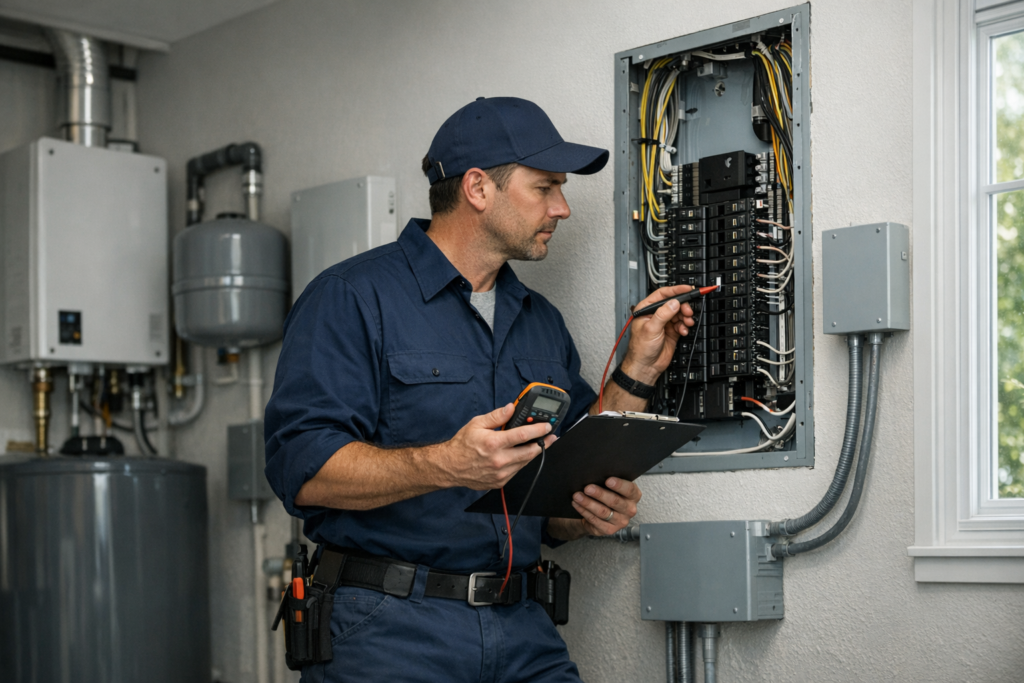
A residential electrical inspection is a detailed safety and performance review of a home’s electrical system. During the inspection, a qualified electrician evaluates the electrical panel, wiring, outlets, switches, grounding, circuits, visible connections, safety devices, and signs of wear, damage, improper installation, or overload. The goal is to identify hazards, code concerns, reliability issues, and upgrade needs before they become dangerous or expensive problems.
For homeowners throughout New Hampshire, Massachusetts, Maine, and Vermont, electrical inspections are especially valuable because many New England homes have older wiring, aging panels, past renovations, harsh winter demands, and increased electrical loads from modern appliances, heat pumps, generators, home offices, and EV chargers.
Why a Residential Electrical Inspection Matters
Your electrical system works quietly behind walls, ceilings, outlets, and panels. When something is wrong, the first obvious sign may be flickering lights, tripped breakers, burning odors, warm devices, damaged wiring, or an outage. A professional inspection helps uncover issues before they create shock hazards, fire risks, equipment damage, or unreliable power.
A residential electrical inspection can help homeowners:
- Identify outdated, damaged, or unsafe electrical components
- Confirm whether the electrical panel is properly sized for current usage
- Find overloaded circuits or improper wiring methods
- Locate loose connections, wear, corrosion, or heat damage
- Evaluate grounding, bonding, and basic electrical safety conditions
- Understand whether upgrades are needed before remodeling or adding equipment
- Prepare for the installation of generators, EV chargers, heat pumps, or additional circuits
- Gain peace of mind before buying, selling, or occupying a home
Inspections are not just for old homes. Even newer homes can have installation defects, undersized circuits, damaged devices, homeowner modifications, or hidden issues caused by moisture, pests, renovations, or previous improper repairs.
When Should You Schedule an Electrical Inspection?
You should schedule a residential electrical inspection any time you need a clear understanding of your home’s electrical safety, capacity, or condition. It is particularly important before purchasing a property, starting a major renovation, upgrading appliances, installing high-demand equipment, or addressing recurring electrical problems.
Common reasons to schedule an inspection include:
- Buying or selling a home
- Living in an older or historic property
- Planning a remodel, addition, finished basement, or garage conversion
- Adding an EV charger, generator, hot tub, heat pump, or large appliance
- Experiencing frequent breaker trips or blown fuses
- Noticing flickering lights, buzzing sounds, warm outlets, or burning smells
- Recovering from water damage, storm damage, or extended power outages
- Managing a rental property or preparing a home for occupancy
- Updating insurance documentation or responding to an insurer’s concern
In New England, inspections are also smart before winter. Cold weather increases electrical demand through heating equipment, lighting, generators, space heating, sump pumps, and backup systems. Snow, ice, wind, and outages can also reveal weaknesses in service equipment, exterior wiring, and standby power connections.
What Happens Before the Inspection Begins?
A professional electrician will typically begin by asking questions about the home and any electrical concerns you have noticed. This may include breaker trips, dimming lights, non-working outlets, recent renovations, suspected DIY wiring, appliance problems, or plans for upgrades.
Helpful information to provide includes:
- The age of the home, if known
- Recent electrical work or remodeling history
- Known problem areas or recurring electrical symptoms
- Plans for additions, EV charging, generators, or new equipment
- Any safety concerns, odors, sparks, or warm electrical devices
- Locations of panels, subpanels, disconnects, and electrical rooms
The electrician may also ask for access to basements, attics, garages, utility rooms, exterior service equipment, crawl spaces, and any areas where electrical problems have occurred. Clear access helps make the inspection more complete and efficient.
Electrical Panel and Service Equipment Review
The electrical panel is one of the most important parts of a residential electrical inspection. It distributes power throughout the home and protects circuits through breakers or fuses. A problem inside the panel can affect the safety and reliability of the entire electrical system.
During the panel review, an electrician may check:
- The condition and accessibility of the main electrical panel
- Whether breakers appear properly seated and labeled
- Signs of overheating, scorching, corrosion, moisture, or damage
- Loose conductors or improper terminations where visible and accessible
- Double-tapped or improperly connected conductors
- Panel capacity compared with the home’s electrical demand
- Service entrance equipment and visible exterior components
- Subpanels and disconnects, if present
An inspection may also reveal whether the home’s electrical service is becoming undersized for modern needs. Many older homes were not designed for today’s combination of central air, electric cooking, laundry equipment, sump pumps, heat pumps, workshops, EV chargers, and home electronics.
Branch Circuits, Wiring, and Visible Connections
After reviewing the panel, the electrician evaluates the circuits that carry power to outlets, switches, lights, appliances, and equipment. While finished walls limit what can be seen without opening surfaces, an experienced electrician can still identify many warning signs through accessible areas, device boxes, unfinished basements, attics, garages, and mechanical spaces.
The inspection may include checking for:
- Damaged, frayed, brittle, or exposed wiring
- Improperly supported or unprotected wiring in accessible areas
- Open junction boxes or missing covers
- Loose splices or unsafe connections
- Outdated wiring types that may require further evaluation
- Improper extensions or questionable homeowner modifications
- Circuits that appear overloaded or poorly distributed
Older homes in New Hampshire, Massachusetts, Maine, and Vermont often have a mix of original wiring, partial upgrades, and work completed during past renovations. A residential electrical inspection helps separate what is safe and serviceable from what needs correction or modernization.
Outlet, Switch, and Device Testing
Outlets and switches are the electrical components homeowners interact with every day. They can show signs of looseness, overheating, poor connections, improper grounding, or wear. During an inspection, the electrician may test representative devices throughout the home and investigate any devices that show visible or functional concerns.
Common items checked include:
- Loose outlets or switches
- Cracked, missing, or damaged cover plates
- Outlets that do not hold plugs securely
- Reversed polarity or grounding concerns where testing indicates a problem
- Non-functioning receptacles or switches
- Warm devices, buzzing sounds, or discoloration
- GFCI protection where typically expected, such as bathrooms, kitchens, garages, basements, laundry areas, and exterior locations
Important safety note: warm outlets, burning smells, sparks, or buzzing devices should never be ignored. Stop using the affected outlet or switch and contact a qualified electrician for evaluation.
Grounding, Bonding, and Shock Protection
Grounding and bonding are essential parts of electrical safety. They help provide a path for fault current and support the proper operation of protective devices. During a home electrical inspection, the electrician looks for visible grounding and bonding concerns and tests devices where appropriate.
The electrician may evaluate:
- Grounding at receptacles and panels where accessible
- Bonding connections for service equipment where visible
- GFCI devices and breakers in areas where shock protection is commonly required
- Evidence of ungrounded outlets or improper three-prong replacements
- Safety concerns associated with older wiring systems
Ungrounded wiring is common in some older homes. It does not automatically mean the entire system must be replaced immediately, but it does require careful evaluation. The right solution depends on the home’s wiring method, panel condition, circuit usage, safety needs, and future plans.
Lighting, Fixtures, and Ceiling Fans
Lighting issues often provide clues about deeper electrical problems. Flickering, dimming, buzzing, and premature bulb failure may be caused by loose connections, overloaded circuits, incompatible dimmers, aging fixtures, or poor wiring practices.
During the inspection, an electrician may assess:
- Interior and exterior lighting operation
- Fixture condition and secure mounting
- Ceiling fan wiring and support concerns where visible
- Dimmer compatibility with LED fixtures
- Signs of overheating around recessed lights or fixture boxes
- Outdoor lighting exposed to moisture, snow, and ice
Lighting upgrades are also a practical opportunity to improve energy efficiency. If the inspection finds outdated incandescent fixtures, failing exterior lights, or overloaded lighting circuits, the electrician can recommend safe, efficient options such as LED fixtures, properly rated outdoor lighting, occupancy sensors, and improved switching layouts.
Appliance, Dedicated Circuit, and Load Evaluation
Many larger appliances and systems require dedicated circuits or specific wiring arrangements to operate safely. During a residential electrical inspection, the electrician may review major equipment and determine whether existing circuits appear appropriate for the load.
This may include:
- Electric ranges, ovens, and cooktops
- Dryers and laundry equipment
- Dishwashers and disposals
- Sump pumps and well pumps
- Heating and cooling equipment
- Water heaters
- Garage and workshop circuits
- EV charger readiness
- Generator connections or transfer equipment
This part of the inspection is especially useful before installing new equipment. Adding a major electrical load without checking panel capacity, circuit sizing, and existing conditions can lead to nuisance tripping, overheating, code corrections, or the need to redo work later.
Attic, Basement, Garage, and Exterior Electrical Areas
Some of the most important inspection findings occur outside the main living areas. Basements, garages, attics, crawl spaces, and exterior walls often reveal past wiring changes, moisture exposure, rodent damage, improvised repairs, or incomplete work.
An electrician may inspect accessible areas for:
- Open junction boxes
- Improper extension cords used as permanent wiring
- Damaged cable in storage or work areas
- Moisture near electrical equipment
- Exterior receptacle and cover condition
- Weather exposure around outdoor electrical equipment
- Generator inlet or transfer switch concerns where present
- Detached garage or outbuilding wiring issues
Exterior electrical components in New England face demanding conditions. Freeze-thaw cycles, snow accumulation, ice, wind-driven rain, and seasonal temperature swings can affect covers, conduits, lighting, service equipment, and outdoor receptacles.
Common Problems Found During Residential Electrical Inspections
Every home is different, but certain issues appear frequently during residential electrical inspections. Some are minor corrections, while others require prompt professional repair.
Common findings include:
- Outdated electrical panels or insufficient service capacity
- Breakers that are mislabeled, damaged, or improperly used
- Loose outlets, switches, or wiring connections
- Open electrical boxes or missing cover plates
- Ungrounded or improperly wired receptacles
- Overloaded circuits or excessive reliance on power strips
- Improper DIY wiring from past repairs or renovations
- Moisture or corrosion near electrical equipment
- Damaged exterior outlets, lighting, or covers
- Older wiring that may need further evaluation or replacement
Not every issue means the electrical system is unsafe as a whole. A qualified electrician can prioritize findings, explain what needs immediate attention, and identify which upgrades can be planned over time.
What You Receive After the Inspection
After the inspection, the electrician should explain the findings in clear, practical terms. Homeowners should understand what was inspected, what concerns were found, which issues are safety-related, and what corrective work may be recommended.
A useful inspection summary may include:
- Observed electrical safety concerns
- Panel and service condition notes
- Device, wiring, or circuit issues found
- Recommended repairs or upgrades
- Items that may require further evaluation
- Prioritization of urgent, important, and optional improvements
The best inspection results are not just a list of defects. They should help you make informed decisions. For example, a home with an aging panel, limited capacity, and plans for an EV charger may benefit from a service upgrade, while a home with several loose outlets may only need targeted repairs.
How Long Does a Residential Electrical Inspection Take?
The time required depends on the home’s size, age, accessibility, number of panels, condition of the system, and the reason for the inspection. A small, straightforward home may take less time than a large older home with multiple additions, subpanels, outbuildings, or extensive electrical concerns.
Factors that can affect inspection time include:
- Whether the panel and electrical areas are easy to access
- The number of circuits and subpanels
- The age and complexity of the wiring system
- Whether troubleshooting is needed during the visit
- Whether the inspection is part of a planned upgrade or real estate transaction
To help the inspection go smoothly, clear belongings away from the electrical panel, make sure basement and attic access is available, note problem areas in advance, and avoid using damaged outlets or circuits until they are evaluated.
Residential Electrical Inspection vs. Home Inspection
A general home inspection and a residential electrical inspection are not the same. A home inspector typically performs a broad visual review of many building systems, including a limited look at electrical components. A licensed electrician provides a more detailed electrical evaluation focused on safety, system performance, wiring methods, electrical capacity, and repair recommendations.
If a home inspector notes electrical concerns, recommends further evaluation, or identifies an outdated panel, ungrounded outlets, double-tapped breakers, or unsafe wiring, the next step should be an inspection by a qualified electrician.
Can You Do an Electrical Inspection Yourself?
Homeowners can look for visible warning signs, but they should not remove panel covers, open electrical boxes, test live wiring, or attempt repairs without proper training. Electrical systems can remain energized even when parts appear off, and mistakes can cause shock, fire, or equipment damage.
You can safely watch for signs such as:
- Frequent breaker trips
- Lights that flicker or dim unexpectedly
- Outlets or switches that feel warm
- Buzzing, crackling, or sizzling sounds
- Burning odors near electrical devices
- Discolored outlets, switches, or panel areas
- Extension cords used as permanent wiring
- Damaged outdoor covers or exposed wiring
If you notice any of these conditions, schedule professional electrical service. Never ignore burning smells, sparking, heat, or repeated breaker trips. These can be signs of serious electrical hazards.
How an Inspection Helps Plan Repairs and Upgrades
A residential electrical inspection is often the first step toward a safer, more reliable, and more capable home electrical system. Once the current condition is understood, homeowners can plan repairs and upgrades in the right order.
Inspection findings may help determine whether you need:
- Electrical panel repairs or replacement
- A service upgrade for increased electrical capacity
- Dedicated circuits for appliances or equipment
- Outlet, switch, or fixture replacement
- GFCI or AFCI protection upgrades where appropriate
- Rewiring in specific areas or throughout the home
- Generator transfer equipment evaluation
- Surge protection improvements
- EV charger readiness planning
- Code corrections related to previous work
This planning approach helps avoid piecemeal repairs that do not address the real problem. It also helps homeowners budget intelligently and coordinate electrical work with remodeling, HVAC upgrades, kitchen renovations, or energy-efficiency improvements.
Preparing Your Home for an Electrical Inspection
A little preparation can make the inspection more productive. You do not need to understand your entire electrical system before the electrician arrives, but you can help by making key areas accessible and documenting symptoms.
Before the inspection:
- Clear at least a practical working area around the electrical panel
- Make sure basement, attic, garage, and utility room access is available
- Write down which breakers trip and when
- List outlets, lights, or switches that do not work properly
- Gather information about recent renovations or appliance changes
- Point out exterior electrical concerns, generator equipment, or planned upgrades
- Keep pets secured so the electrician can work safely
If you are buying a home, share any electrical concerns raised during the general home inspection. If you are planning upgrades, explain your long-term goals so the electrician can evaluate capacity and recommend practical next steps.
Why Work With a Qualified Electrical Contractor
Electrical inspections require more than a quick visual check. A qualified electrical contractor understands how residential systems are built, how electrical loads interact, where hidden risks often appear, and how to distinguish minor defects from serious hazards.
Electrical Constructors LLC provides residential electrical inspection, troubleshooting, repair, panel upgrade, service upgrade, generator, lighting, EV charger, and electrical system services for homeowners throughout New Hampshire, Massachusetts, Maine, and Vermont. Whether you live in an older New England home, are preparing for a renovation, or want confidence in your electrical system, a professional inspection gives you the information needed to move forward safely.
Key Takeaway
A residential electrical inspection gives homeowners a clear, professional assessment of electrical safety, condition, capacity, and reliability. The electrician checks the panel, wiring, outlets, switches, grounding, safety devices, lighting, large loads, and visible electrical components to identify hazards and recommend practical repairs or upgrades.
If your home has recurring electrical issues, aging equipment, planned upgrades, or unknown wiring history, scheduling an inspection is one of the most effective ways to protect your property and make informed electrical decisions.