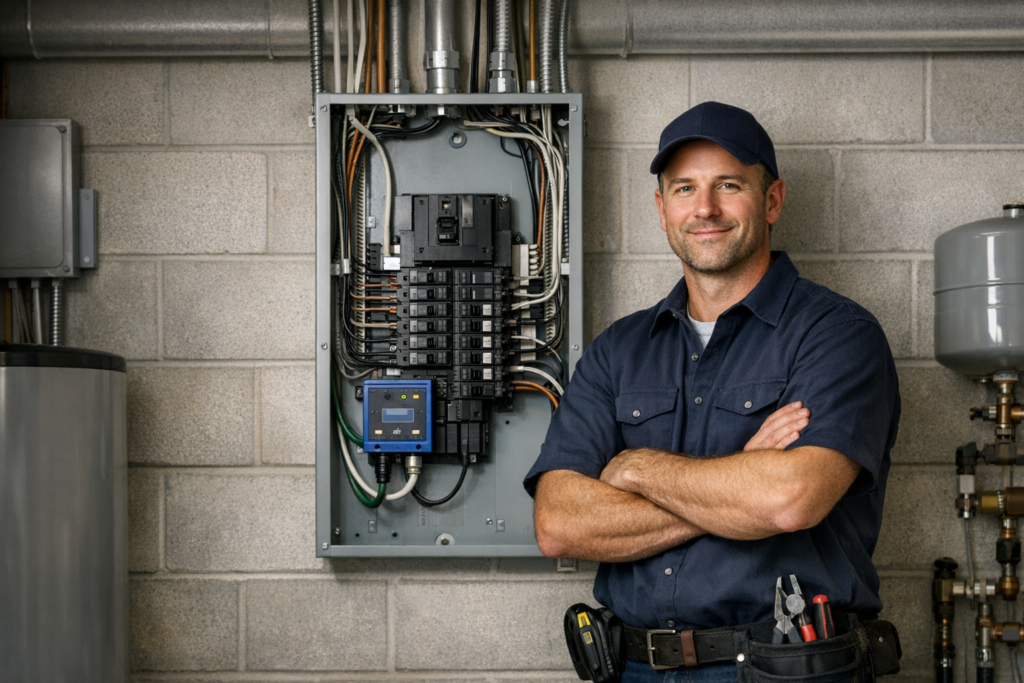
Whole home surge protection helps defend your electrical system, appliances, electronics, HVAC equipment, smart home devices, and business-critical equipment from sudden voltage spikes. Instead of relying only on plug-in power strips, a professionally installed surge protective device is connected at the electrical panel or service equipment to help reduce damaging surge energy before it spreads throughout the property.
For homes and commercial buildings throughout New Hampshire, Massachusetts, Maine, and Vermont, surge protection is especially worth considering because New England properties often face severe weather, utility interruptions, aging electrical infrastructure, standby generator installations, and growing dependence on sensitive electronics. While no surge protector can stop every possible electrical event, a properly designed surge protection strategy can significantly reduce risk and improve long-term electrical reliability.
What Is Whole Home Surge Protection?
Whole home surge protection uses a dedicated surge protective device, often called an SPD, to help limit excess voltage entering or moving through an electrical system. When voltage rises above a safe level, the device diverts or redirects surge energy away from connected circuits so it is less likely to damage the equipment inside the building.
Most people think of surge protection as a power strip behind a television or computer. Those plug-in devices can be useful, but they protect only the equipment plugged into them and only within their rated capacity. Whole home surge protection takes a broader approach by helping protect the electrical system at the panel level.
A professionally installed surge protective device can help protect:
- Kitchen appliances and laundry equipment
- Heating and cooling equipment
- Well pumps, sump pumps, and water treatment systems
- Computers, televisions, routers, and home office equipment
- Smart thermostats, security systems, and connected devices
- Lighting controls and dimmers
- Commercial point-of-sale systems and office equipment
- Building automation and low-voltage control systems
What Causes Electrical Surges?
An electrical surge is a short increase in voltage above the normal level supplied to a building. Some surges are dramatic, while others are small and repetitive. Both can be harmful. A single large surge may cause immediate equipment failure, but smaller surges can gradually weaken circuit boards, power supplies, motors, controls, and sensitive electronics over time.
Lightning and Storm Activity
Lightning is one of the most recognized causes of electrical surges. A direct lightning strike can be extremely destructive, but nearby strikes can also induce voltage on utility lines, communication lines, or electrical systems. In New England, thunderstorms, high winds, ice storms, and falling tree limbs can all contribute to power disturbances.
Utility Switching and Grid Disturbances
Surges can occur when utilities switch equipment, restore power after an outage, or respond to faults on the electrical grid. These events may happen without any visible storm activity. If lights flicker or electronics reset when power returns after an outage, the electrical system may have experienced a voltage fluctuation.
Large Motors and Internal Equipment
Not all surges come from outside the building. Air conditioners, refrigerators, pumps, compressors, elevators, and other motor-driven equipment can create internal voltage disturbances when they start or stop. In commercial and industrial settings, larger equipment can contribute to frequent electrical transients that affect sensitive controls and electronics.
Generators and Transfer Equipment
Standby and portable generator systems can improve power reliability, but they also introduce additional electrical equipment into the system. Proper generator installation, grounding, bonding, transfer equipment, and surge protection should be evaluated together to help protect the property during outages and power restoration.
How Whole Home Surge Protection Works
A whole home surge protective device monitors voltage on the electrical system. Under normal conditions, it remains passive. When voltage rises above the device threshold, it reacts extremely quickly and provides a path for excess surge energy to be diverted away from protected circuits.
The device is typically installed at the main electrical panel, service equipment, or another approved location depending on the electrical system design. For larger homes, multi-panel properties, outbuildings, commercial buildings, and facilities with sensitive equipment, more than one surge protective device may be appropriate.
The goal is not to absorb unlimited energy. The goal is to reduce the surge to a level that connected equipment is more likely to tolerate. This is why surge protection is best viewed as risk reduction, not a guarantee against all damage.
Panel-Level Protection Versus Plug-In Surge Strips
Panel-level surge protection and plug-in surge strips serve different purposes. A whole home device helps protect the electrical distribution system and hardwired equipment. Plug-in surge strips provide localized protection for specific electronics.
The strongest approach is often layered surge protection. This means installing a properly rated surge protective device at the panel and continuing to use quality point-of-use surge protectors for computers, entertainment systems, networking equipment, and other sensitive electronics.
Layered protection is especially important because many expensive systems are not plugged into a strip. Hardwired HVAC equipment, smart appliances, garage door openers, well pumps, boiler controls, electric vehicle charging equipment, and security systems may all be vulnerable if surge protection is limited to a few outlets.
Why Surge Protection Matters More in Modern Homes
Older homes had fewer electronics and simpler electrical loads. Modern homes rely on circuit boards, sensors, digital controls, Wi-Fi connected devices, battery chargers, LED drivers, and smart systems throughout the property. Many appliances that once used basic mechanical controls now contain sensitive electronics.
A voltage spike that might have gone unnoticed years ago can now damage:
- Refrigerator and range control boards
- Smart washer and dryer electronics
- Mini-split and central air conditioning controls
- Boiler and furnace control modules
- LED lighting drivers
- Network routers and home automation hubs
- Electric vehicle charger electronics
Replacing those components can be costly and inconvenient. In some cases, damage may not be obvious immediately. Equipment may continue operating but fail prematurely weeks or months later because the internal components were weakened.
Commercial Benefits of Surge Protection
For businesses, property managers, and facility managers, surge protection is not only about protecting devices. It is also about reducing downtime, avoiding nuisance failures, and protecting systems that keep operations running.
Commercial buildings often contain computers, phones, network equipment, security systems, refrigeration equipment, commercial HVAC controls, fire alarm components, access control systems, lighting controls, and specialized equipment. A surge-related failure can interrupt business operations, inconvenience tenants, or create maintenance emergencies.
In commercial settings, surge protection should be evaluated as part of a broader electrical reliability plan. The right approach may include service entrance protection, panelboard protection, dedicated protection for sensitive equipment, electrical inspections, grounding evaluations, and preventative maintenance.
Signs Your Property May Need Better Surge Protection
Many surge events are invisible, so a lack of obvious damage does not always mean a property is protected. However, certain warning signs may suggest that surge protection should be evaluated by a licensed electrician.
- Frequent power outages or voltage fluctuations
- Lights that flicker when large equipment starts
- Repeated failure of appliances, electronics, or control boards
- Tripped breakers after storms or power restoration
- Recent generator, HVAC, or EV charger installation
- Older electrical panels or aging wiring
- Commercial equipment that is sensitive to power quality
- High-value electronics or smart home systems throughout the property
If electrical issues are recurring, surge protection may be only part of the solution. Loose connections, overloaded circuits, deteriorated wiring, grounding problems, undersized panels, or faulty equipment can also cause symptoms that look like surge damage. A professional evaluation helps identify the real cause.
Important Safety and Code Considerations
Surge protective devices must be selected and installed correctly. The device rating, panel compatibility, conductor length, grounding and bonding conditions, breaker requirements, installation location, and electrical system configuration all affect performance.
Electrical panel work should always be performed by a qualified, licensed electrician. Installing a surge protective device involves working inside or near energized service equipment, where shock, arc flash, fire, and equipment damage risks are serious.
A licensed electrician can evaluate whether the existing electrical panel has sufficient capacity and an appropriate connection method for the surge protective device. If the panel is outdated, damaged, improperly labeled, overcrowded, or showing signs of overheating, those issues should be addressed before or during the installation.
It is also important to understand that surge protection does not correct electrical defects. A surge protective device is not a substitute for proper grounding, safe wiring, correctly sized circuits, functional breakers, or code-compliant electrical work.
What to Expect During Professional Installation
A professional whole home surge protection installation begins with an evaluation of the electrical service and panel. The electrician will look at the panel type, available breaker space, grounding and bonding arrangement, service size, existing loads, equipment condition, and any special systems that may need additional protection.
For many homes, installation can often be completed at the main panel with a properly selected surge protective device. Larger properties, multi-family buildings, commercial facilities, detached garages, workshops, generator systems, or buildings with subpanels may require a more detailed approach.
A typical professional installation may include:
- Reviewing the electrical panel and service equipment
- Selecting an appropriate surge protective device
- Installing the device according to manufacturer instructions
- Connecting the device using proper overcurrent protection when required
- Keeping conductors as short and direct as practical
- Confirming indicator lights or status features are functioning
- Reviewing any recommended point-of-use protection for sensitive equipment
After installation, the electrician should explain what the device indicators mean and how to recognize when replacement or service may be needed.
How Long Does a Surge Protector Last?
A surge protective device does not last forever. Each surge event can use part of the device capacity. A large event may reduce its effectiveness or require replacement, while smaller repeated surges can wear it down gradually.
Many modern devices include indicator lights or status windows that show whether protection is still active. Property owners should periodically check these indicators, especially after severe storms, utility outages, or generator operation. If the indicator shows the device is no longer protecting, a licensed electrician should inspect and replace it as needed.
For commercial properties and managed facilities, surge protection status should be included in routine electrical maintenance. This is a simple step that can prevent a false sense of security.
Cost Factors to Consider
The cost of whole home surge protection depends on the electrical system, device type, service size, panel condition, installation complexity, and whether additional electrical work is needed. A straightforward installation at a modern panel will usually be less involved than a project requiring panel repairs, service upgrades, subpanel protection, or grounding improvements.
Factors that can affect the final cost include:
- Residential versus commercial electrical service
- Main panel accessibility and available space
- Device rating and features
- Condition of the existing electrical panel
- Presence of generators, subpanels, or outbuildings
- Need for additional point-of-use surge protection
- Any required repairs or safety corrections discovered during inspection
Although surge protection is an added investment, it is often modest compared with the cost of replacing multiple appliances, electronic controls, computers, or building systems after a damaging electrical event.
Common Mistakes to Avoid
Surge protection is most effective when it is planned correctly. Property owners often run into problems when they rely on incomplete or poorly installed solutions.
- Relying only on plug-in strips: Power strips do not protect hardwired equipment or the entire electrical system.
- Using low-quality devices: Not all surge protectors offer the same level of performance, durability, or indication features.
- Ignoring grounding issues: Surge protection works best when the electrical system grounding and bonding are in proper condition.
- Forgetting about subpanels: Detached buildings, workshops, and larger properties may need additional protection.
- Never checking device status: A surge protective device may need replacement after absorbing surge events.
- Attempting DIY panel work: Electrical panel installation is not a safe do-it-yourself project.
Surge Protection and Older New England Properties
Many properties in New Hampshire, Massachusetts, Maine, and Vermont have electrical systems that were designed before today’s electronic loads became common. Older homes may have limited panel capacity, outdated wiring methods, insufficient grounding, older service equipment, or previous electrical modifications that should be reviewed before adding new protection.
In historic or older homes, surge protection is often considered alongside panel upgrades, service upgrades, rewiring, dedicated circuits, generator installation, or electrical safety inspections. The best solution depends on the condition of the existing system and the equipment the property owner wants to protect.
For property managers and commercial owners, older buildings may also have multiple panels, tenant spaces, mechanical equipment, and low-voltage systems that require a coordinated approach rather than a single device installed without evaluation.
Is Whole Home Surge Protection Worth It?
For many homeowners and businesses, whole home surge protection is worth considering because the value of connected equipment has increased significantly. Modern properties contain more electronic systems than ever, and even a brief surge can damage components that are expensive to diagnose and replace.
Surge protection is especially practical if your property has frequent storms, utility outages, a standby generator, expensive appliances, home office equipment, smart home devices, commercial electronics, or critical building systems. It is also a smart upgrade during electrical panel work because the electrician is already evaluating the service equipment.
The key is proper design and installation. A qualified electrician can determine whether your property needs a panel-mounted surge protective device, additional protection at subpanels, point-of-use devices for sensitive electronics, or other electrical improvements.
Protecting Your Electrical System for the Long Term
Whole home surge protection is one of the most practical ways to improve electrical resilience in modern homes and commercial buildings. It helps reduce the risk of damage from storms, utility disturbances, internal equipment surges, and power restoration events.
Electrical Constructors LLC provides experienced residential, commercial, industrial, and new construction electrical services throughout New Hampshire, Massachusetts, Maine, and Vermont. From surge protection and panel upgrades to generator systems, EV charger installation, inspections, troubleshooting, and preventative maintenance, our team helps property owners make informed decisions that support safety, reliability, and long-term performance.
If you are concerned about power surges, recurring equipment failures, storm-related electrical damage, or protection for a new electrical installation, having your system evaluated by a licensed electrician is the right next step.