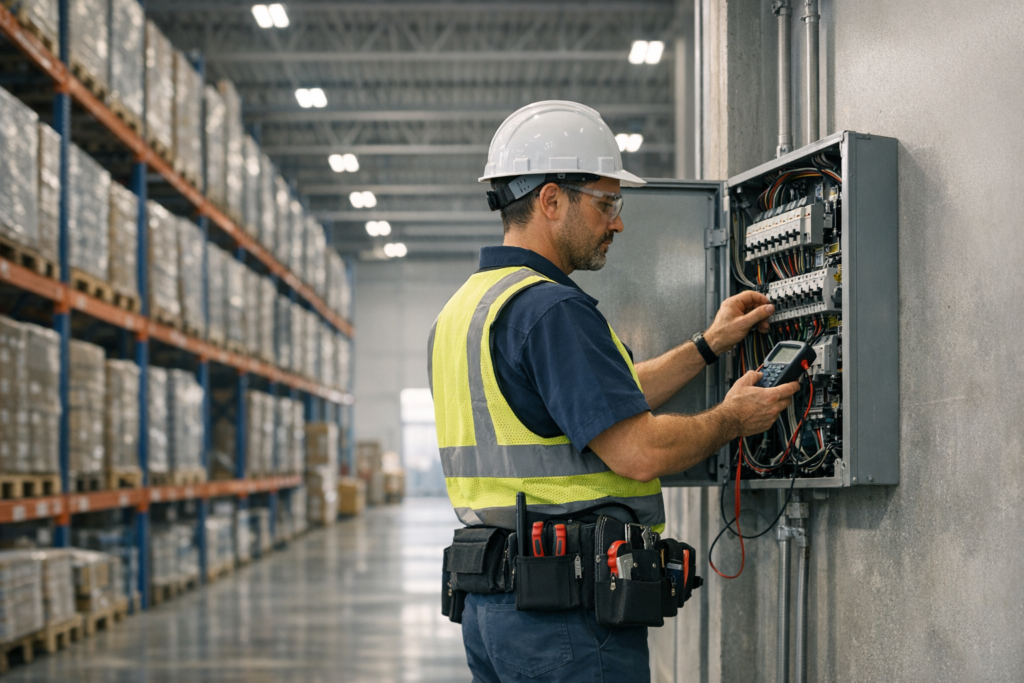
Warehouse facilities depend on safe, reliable electrical systems to keep lighting, equipment, loading areas, security systems, climate control, office spaces, and material handling operations running without interruption. The most common electrical challenges in warehouses usually involve overloaded circuits, poor lighting, aging panels, equipment-related power issues, inadequate maintenance, and systems that no longer match the facility’s operational demands. Professional warehouse electrical services help identify these risks before they lead to downtime, safety hazards, or costly emergency repairs.
Why Warehouse Electrical Systems Face Unique Demands
A warehouse is not a typical commercial building. Electrical loads can change throughout the day as forklifts charge, dock equipment operates, packing lines run, HVAC systems cycle, and lighting remains active across large open areas. Many facilities also expand operations over time without fully upgrading the electrical infrastructure that supports them.
This creates a common problem: the building may look functional on the surface, but the electrical system may be working harder than intended. Panels, feeders, branch circuits, lighting controls, transformers, outlets, and emergency systems all need to be evaluated as part of the larger facility operation.
In New Hampshire, Massachusetts, Maine, and Vermont, warehouses may also deal with New England-specific challenges such as severe winter weather, snow and ice exposure near loading docks, seasonal power demands, storm outages, and older commercial buildings that were not originally designed for modern warehouse equipment.
Insufficient or Outdated Warehouse Lighting
Lighting is one of the most visible electrical concerns in any warehouse. Poor lighting can slow productivity, increase picking errors, create safety risks, and make it harder for employees to identify hazards around aisles, docks, machinery, and pedestrian pathways.
Common warehouse lighting problems include:
- Dim or uneven lighting across storage aisles
- Outdated fluorescent or metal halide fixtures
- Frequent lamp or ballast failures
- Poor lighting near loading docks or overhead doors
- Dark corners around mezzanines, stairways, or maintenance areas
- Lack of occupancy sensors or lighting controls
- Fixtures that are difficult to access for maintenance
Modern LED lighting upgrades can improve visibility, reduce energy usage, lower maintenance needs, and provide more consistent illumination throughout the facility. In many warehouses, the right solution also includes layout planning, fixture placement, lighting controls, and consideration of racking height, aisle width, ceiling height, and task areas.
Overloaded Circuits and Inadequate Power Distribution
Warehouses often evolve faster than their electrical systems. A facility that once stored inventory may later add packaging stations, conveyor equipment, battery charging areas, refrigeration, IT equipment, security systems, or light manufacturing processes. Each addition increases electrical demand.
Signs of overloaded or inadequate power distribution may include:
- Breakers that trip repeatedly
- Warm panel covers, outlets, or disconnects
- Temporary extension cords used as permanent power
- Power strips installed in workstations that need dedicated circuits
- Equipment that shuts down when other loads start
- Uneven power availability throughout the building
- Frequent nuisance outages in specific areas
These symptoms should not be ignored. Repeated breaker trips are not just an inconvenience; they are a warning that the electrical system needs to be evaluated. A qualified electrician can determine whether the issue involves circuit overload, equipment failure, improper wiring, loose connections, panel limitations, or another underlying condition.
Aging Electrical Panels and Service Equipment
Many warehouse facilities operate in buildings that have been modified repeatedly over the years. Electrical panels may contain outdated breakers, unclear labeling, abandoned circuits, overcrowded wiring, or equipment that no longer supports current operations efficiently.
Panel issues are especially important in commercial and industrial settings because a problem at the distribution level can affect large sections of the building. A failing breaker, deteriorated connection, or overloaded panel can create downtime, damage equipment, or increase fire risk.
Professional warehouse electrical services often include inspection of main service equipment, distribution panels, subpanels, disconnects, grounding and bonding components, visible wiring conditions, and panel schedules. Clear labeling is also an important operational detail. When panels are accurately labeled, maintenance teams and electricians can respond faster during troubleshooting or emergency shutdowns.
Equipment Power Problems and Dedicated Circuits
Warehouse equipment is often more sensitive to electrical conditions than building owners realize. Conveyor systems, compressors, dock levelers, packaging equipment, lifts, data systems, refrigeration equipment, and battery chargers may require dedicated circuits, specific voltage, proper grounding, or separate disconnecting means.
Problems can occur when equipment is moved, added, or replaced without a full electrical review. Even if the equipment appears to run, the circuit may not be properly sized or configured for long-term reliable operation. Motors may experience hard starts, controls may malfunction, and sensitive electronics may be affected by voltage fluctuations or electrical noise.
Before installing new warehouse equipment, it is wise to have a licensed electrician review the manufacturer’s electrical requirements, available capacity, circuit routing, disconnect locations, and any impact on the facility’s overall electrical load.
Forklift Charging and Battery Charging Areas
Electric forklifts, pallet jacks, floor scrubbers, and other battery-powered equipment can create significant electrical demand. Charging stations are often added as operations expand, but they need to be installed with careful attention to power requirements, ventilation considerations, physical protection, clear working space, and safe cord management.
Common issues in charging areas include damaged cords, undersized circuits, poor charger placement, inadequate protection from vehicle impact, and outlets that were never intended for heavy charging loads. In busy warehouses, charging equipment should be installed in a way that supports safe workflow rather than creating trip hazards or congestion.
A well-designed charging area improves both safety and productivity. It also helps prevent makeshift electrical setups that can increase the risk of equipment damage or electrical hazards.
Emergency Lighting, Exit Signs, and Life Safety Systems
Warehouse facilities need dependable emergency lighting and exit signage so occupants can safely navigate the building during a power outage or emergency. Large open spaces, tall racks, interior offices, storage rooms, mezzanines, and loading areas can all create visibility challenges if normal lighting fails.
Common life safety electrical issues include exit signs with failed batteries, emergency lights that do not operate during testing, obstructed fixtures, damaged units near high-traffic areas, and poor coverage after layout changes. If racking, partitions, or work areas are reconfigured, emergency lighting should be reviewed to make sure the revised layout remains safe.
Because life safety systems are critical, inspection, repair, and replacement should be handled by qualified professionals familiar with commercial electrical requirements and applicable codes.
Power Quality Issues That Affect Equipment Reliability
Not every electrical problem causes an immediate outage. Some issues appear as equipment glitches, intermittent failures, shortened component life, or unexplained downtime. Power quality concerns can include voltage drops, loose connections, imbalance, harmonic distortion, transient surges, or inadequate grounding.
Power quality problems may be suspected when:
- Electronic equipment resets unexpectedly
- Motors run hot or fail prematurely
- Control systems behave inconsistently
- Lights flicker when large equipment starts
- Variable frequency drives or automation equipment experience nuisance faults
- Sensitive devices fail more often than expected
Diagnosing these issues requires more than replacing parts. An experienced commercial electrician can test, trace, and evaluate the system to identify the actual source of the problem. In some cases, the solution may involve dedicated circuits, surge protection, improved grounding, load balancing, equipment replacement, or distribution upgrades.
Surge Protection and Storm Preparedness
Warehouses rely on more electronic systems than ever before, including inventory management equipment, security cameras, access control systems, office networks, automation components, refrigeration controls, and smart building systems. These systems can be vulnerable to voltage spikes and storm-related electrical events.
New England weather makes surge protection and power reliability especially important. Severe storms, winter outages, utility disturbances, and equipment switching events can all affect electrical systems. Whole-building surge protection, properly installed point-of-use protection for sensitive equipment, and a maintenance plan can reduce the risk of damage.
Facilities with critical operations may also benefit from standby generator planning. Generator installation for a warehouse should be based on actual load priorities, not guesswork. Some facilities need backup power for life safety systems and basic operations, while others may require support for refrigeration, security systems, IT infrastructure, or essential production equipment.
Temporary Wiring and Extension Cord Misuse
One of the most common warning signs in warehouse environments is the use of temporary wiring for permanent needs. Extension cords, daisy-chained power strips, and improvised connections often appear when workstations are added faster than proper circuits are installed.
Temporary wiring creates several risks. Cords can be damaged by forklifts, pallet jacks, carts, or foot traffic. They may be overloaded, create trip hazards, or supply equipment that should be served by a dedicated branch circuit. In a warehouse, where movement and material handling are constant, exposed cords are especially vulnerable.
If a facility depends on extension cords to keep daily operations running, that is a strong indication that the electrical layout needs to be improved. Installing properly located outlets, drops, dedicated circuits, cord reels, or equipment connections can make the space safer and more efficient.
Electrical Challenges Around Loading Docks and Exterior Areas
Loading docks, exterior doors, yard areas, and building perimeters have electrical needs that are easy to overlook. These locations may include dock levelers, overhead doors, vehicle restraints, exterior lighting, security cameras, receptacles, heaters, signage, and access control equipment.
Because these areas are exposed to moisture, temperature swings, vehicle impact, and heavy use, electrical equipment must be appropriate for the environment and kept in good condition. Damaged conduit, broken covers, corroded boxes, loose fixtures, and exposed wiring should be repaired promptly.
In New Hampshire, Massachusetts, Maine, and Vermont, snow removal, ice buildup, freeze-thaw cycles, and winter darkness can add stress to exterior electrical systems. Regular inspection before harsh weather arrives can help prevent failures when the facility needs reliable lighting and access systems most.
Preventative Electrical Maintenance for Warehouses
Preventative maintenance is one of the best ways to reduce electrical downtime in warehouse facilities. Instead of waiting for a breaker to fail, lights to go out, or equipment to stop working, facility managers can schedule inspections and maintenance based on the building’s age, usage, equipment, and operating schedule.
A practical warehouse electrical maintenance plan may include:
- Visual inspection of panels, disconnects, and service equipment
- Verification that panel directories are accurate and legible
- Inspection of outlets, covers, cords, and visible wiring
- Testing of emergency lighting and exit signs
- Review of lighting performance and failed fixtures
- Evaluation of high-load equipment circuits
- Inspection of exterior electrical equipment and lighting
- Thermal imaging when appropriate to identify abnormal heat
- Review of surge protection and backup power needs
The right maintenance schedule depends on the facility. A high-traffic distribution center with long operating hours may need more frequent reviews than a lightly used storage warehouse. The important point is consistency. Electrical systems should not be ignored until they interrupt operations.
Warning Signs Your Warehouse Needs Electrical Service
Some electrical issues require prompt attention from a qualified electrician. Warehouse managers, property managers, and business owners should watch for conditions that indicate hidden electrical problems.
Call for professional service if you notice:
- Breakers tripping repeatedly
- Burning odors near panels, outlets, or equipment
- Buzzing, crackling, or sizzling sounds from electrical components
- Discolored outlets, switches, or panel areas
- Lights flickering across multiple areas
- Hot or vibrating electrical equipment
- Damaged conduit, cords, boxes, or covers
- Unexpected equipment shutdowns
- Water intrusion near electrical equipment
- Any visible sparking or arcing
Electrical hazards in a warehouse should never be handled casually. Employees should not open panels, repair wiring, or bypass protective devices unless they are properly qualified for that work. When in doubt, shut down affected equipment if it is safe to do so and contact a licensed electrician.
Planning Electrical Upgrades During Warehouse Expansion
Warehouse expansion is an ideal time to evaluate electrical capacity and layout. Whether a facility is adding rack storage, shipping stations, refrigerated areas, automation, office space, EV charging, security systems, or production equipment, electrical planning should happen early in the project.
Important questions include:
- Does the existing electrical service have enough capacity?
- Will new equipment require dedicated circuits or voltage changes?
- Are panels located conveniently for future maintenance?
- Will lighting still be effective after racking or layout changes?
- Are emergency lighting and exit routes affected?
- Is generator backup or surge protection needed?
- Can the system support future growth?
Early planning helps prevent expensive rework, project delays, and unsafe workarounds. It also gives contractors, developers, property managers, and facility teams a clearer understanding of the electrical infrastructure required to support long-term operations.
How Professional Warehouse Electrical Services Help Protect Operations
Professional warehouse electrical services go beyond basic repairs. A knowledgeable electrical contractor evaluates how the entire facility operates, identifies weak points, and recommends solutions that improve safety, reliability, efficiency, and future flexibility.
Services may include troubleshooting, electrical repairs, panel upgrades, service upgrades, lighting installation, generator installation, EV charger installation, surge protection, equipment wiring, electrical inspections, preventative maintenance, and code corrections. For commercial and industrial facilities, the goal is not just to restore power, but to support dependable operations with an electrical system that matches the building’s real-world use.
Electrical Constructors LLC provides residential, commercial, industrial, and new construction electrical services throughout New Hampshire, Massachusetts, Maine, and Vermont. For warehouse owners, facility managers, contractors, developers, and property managers, working with an experienced electrical contractor can help reduce downtime, improve safety, and keep critical building systems performing reliably.
Key Takeaway for Warehouse Owners and Facility Managers
Warehouse electrical problems often start small: a tripping breaker, a dim aisle, a damaged receptacle, a temporary cord, or equipment that occasionally shuts down. Left unresolved, these issues can become safety risks or costly operational disruptions.
The best approach is proactive. Regular inspections, thoughtful upgrades, proper circuit design, reliable lighting, surge protection, and preventative maintenance all help protect the facility. When electrical systems are designed and maintained for the way a warehouse actually operates, the result is a safer, more efficient, and more dependable building.