Overloaded electrical circuits can damage wiring, breakers, receptacles, switches, appliances, and even the electrical panel itself when too much demand is placed on a circuit for too long. A breaker that trips once may simply be doing its job. A circuit that trips repeatedly, feels warm, smells unusual, or struggles under everyday loads should be evaluated by a qualified electrician before a minor nuisance becomes a safety hazard.
What Happens When a Circuit Is Overloaded?
An electrical circuit is designed to carry a specific amount of current. When the connected devices draw more electricity than the circuit can safely handle, the circuit becomes overloaded. This commonly happens when high-demand appliances, space heaters, power tools, office equipment, kitchen devices, or entertainment systems are used on the same circuit at the same time.
The circuit breaker is intended to protect the wiring by shutting the circuit off when current exceeds a safe level. However, overloaded electrical circuits are still a serious concern because repeated overloads create heat, stress electrical components, and may indicate that the electrical system no longer matches how the property is being used.
In homes and commercial buildings throughout New Hampshire, Massachusetts, Maine, and Vermont, circuit overloads are especially common in older properties where the electrical system was not originally designed for today’s appliances, electronics, HVAC equipment, EV charging needs, and technology-heavy workspaces.
Why Electrical Overloads Are Dangerous
Electricity naturally produces heat as it moves through conductors. Electrical systems are designed so that heat stays within safe limits. When a circuit is overloaded, the conductors, connections, breakers, and devices may heat up beyond what they were intended to handle.
Over time, excess heat can weaken insulation, loosen connections, damage breaker mechanisms, and increase the risk of arcing. These problems may develop gradually, which is why an overloaded circuit should never be dismissed just because the power comes back on after resetting the breaker.
Important safety note: A repeatedly tripping breaker should not be replaced with a larger breaker unless a licensed electrician confirms the wiring is properly sized for that breaker. Installing an oversized breaker on undersized wiring can create a serious fire hazard.
Common Signs of Overloaded Electrical Circuits
Some overload symptoms are obvious, while others are easy to overlook. If you notice any of the following warning signs, the circuit should be evaluated:
- Breakers trip repeatedly or fuses blow frequently.
- Lights dim, flicker, or pulse when appliances turn on.
- Receptacles, switches, plugs, or cover plates feel warm to the touch.
- You notice buzzing, sizzling, crackling, or humming sounds from outlets or the panel.
- There is a burning smell, melted plastic odor, or visible discoloration near a device.
- Appliances run poorly, shut off unexpectedly, or struggle to start.
- Extension cords or power strips are being used as a long-term solution.
- A circuit only works reliably when certain devices are unplugged.
Warm devices, burning odors, scorch marks, or buzzing sounds should be treated seriously. Turn off the affected circuit if it is safe to do so and contact a licensed electrician for troubleshooting.
How Overloads Damage Wiring, Breakers, and Panels
Circuit overloads can affect multiple parts of an electrical system. The damage is not always visible from the outside, which is one reason professional diagnosis matters.
Wiring Insulation Can Deteriorate
Wires are protected by insulation rated for normal operating conditions. Excessive heat from an overloaded circuit can cause insulation to dry out, become brittle, crack, or lose its protective properties. Damaged insulation increases the chance of shorts, ground faults, and arcing.
Connections Can Loosen Over Time
Heat causes materials to expand and contract. When an overloaded circuit heats and cools repeatedly, terminal connections at receptacles, switches, junction boxes, and breakers may loosen. Loose connections create resistance, and resistance creates even more heat. This cycle can accelerate damage.
Circuit Breakers Can Wear Out
Breakers are safety devices, but they are not meant to be used like switches every day. Repeated tripping can weaken internal components over time. A breaker that no longer trips properly or trips too easily should be inspected by a qualified electrician.
Electrical Panels Can Become Stressed
When multiple circuits are heavily loaded, the electrical panel may be operating near its practical limit. This is especially common in buildings that have added new appliances, finished spaces, HVAC equipment, commercial machinery, EV chargers, or tenant improvements without evaluating the overall electrical capacity.
Why Older Homes and Buildings Are More Vulnerable
Many properties across New England were built before modern electrical demand became standard. Older homes may have fewer circuits, smaller service capacity, limited kitchen receptacle layouts, outdated panels, aging wiring, or previous modifications that were never designed for today’s electrical loads.
Commercial buildings can face similar challenges. A space that once supported basic lighting and office use may now need computers, printers, servers, refrigeration, production equipment, security systems, high-efficiency HVAC, and electric vehicle charging. When usage changes, the electrical system should be reviewed to ensure it can safely support the load.
Severe winter weather in New Hampshire, Massachusetts, Maine, and Vermont can also increase electrical demand. Portable heaters, heating system components, backup power equipment, dehumidifiers, sump pumps, and holiday lighting can all add load to circuits that may already be near capacity.
Common Causes of Circuit Overloads
Most overloads are caused by too many devices drawing power from one circuit or by equipment that requires more power than the circuit can safely provide. Common causes include:
- Using space heaters on circuits that already serve lights, outlets, or other appliances.
- Plugging multiple kitchen appliances into the same circuit at once.
- Relying on power strips to support office equipment, computers, monitors, printers, and chargers.
- Running power tools, compressors, or shop equipment on general-purpose circuits.
- Adding window air conditioners, dehumidifiers, or portable heating equipment without evaluating load.
- Installing high-demand equipment without a dedicated circuit where one is needed.
- Using extension cords as permanent wiring.
- Operating older appliances that may be drawing excessive current due to internal wear.
Sometimes the problem is not the number of devices, but a hidden defect such as a failing appliance, loose connection, damaged receptacle, or deteriorated wiring. Proper troubleshooting identifies the real cause rather than simply resetting the breaker over and over.
What Not to Do When a Breaker Keeps Tripping
When a breaker trips repeatedly, it is responding to a condition that needs attention. Avoid these common mistakes:
- Do not keep resetting the breaker without investigating the cause.
- Do not tape, block, or hold a breaker in the on position.
- Do not replace a breaker with a higher-rated breaker unless the circuit wiring is verified as appropriate.
- Do not run high-demand appliances through extension cords or multi-plug adapters.
- Do not ignore warm outlets, scorch marks, buzzing, or burning odors.
- Do not assume a new appliance is safe to use on any nearby outlet.
The safest next step is to reduce the load by unplugging devices on that circuit, then schedule professional electrical troubleshooting if the problem continues or if any warning signs are present.
How Electricians Diagnose an Overloaded Circuit
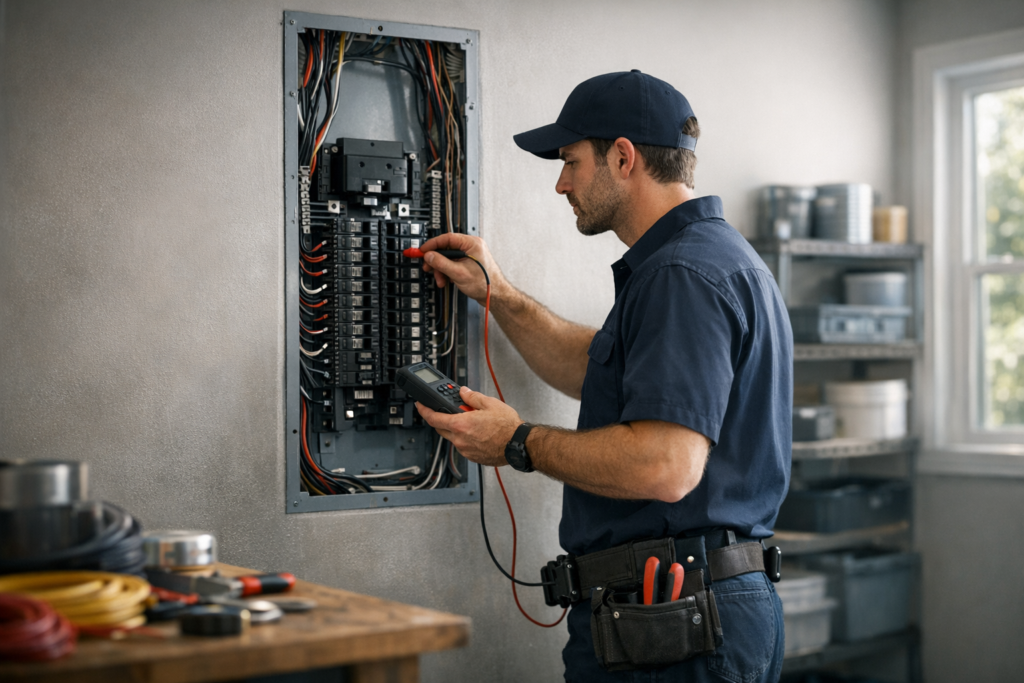
A licensed electrician does more than reset the breaker. Professional electrical troubleshooting may include reviewing the circuit layout, identifying what the circuit serves, measuring load, inspecting breaker and panel condition, checking receptacles and switches, and looking for signs of heat damage or loose connections.
In many cases, the solution may be straightforward, such as redistributing loads or adding a dedicated circuit for a specific appliance. In other situations, the property may need a panel upgrade, service upgrade, rewiring, equipment replacement, or code correction to support modern electrical use safely and reliably.
For commercial properties, the evaluation may also consider operational needs, tenant improvements, equipment schedules, lighting systems, standby power requirements, and future expansion plans. A well-designed solution should address the immediate overload while improving long-term reliability.
Practical Ways to Prevent Electrical Overloads
Preventing overloads starts with understanding which devices draw the most power and making sure the electrical system is designed for how the property is actually used.
- Use dedicated circuits for equipment that requires them, such as certain appliances, HVAC components, pumps, commercial equipment, and EV chargers.
- Avoid using multiple high-wattage devices on the same circuit at the same time.
- Replace damaged, loose, or worn receptacles and switches promptly.
- Have older panels and wiring inspected before major renovations or appliance upgrades.
- Install additional circuits instead of relying on extension cords and power strips.
- Schedule preventative maintenance for commercial electrical systems and high-use properties.
- Consider service capacity before adding EV charging, generators, heat pumps, workshops, additions, or tenant build-outs.
- Label electrical panels clearly so circuits can be identified quickly during troubleshooting.
Good electrical planning reduces nuisance trips, protects equipment, improves safety, and helps avoid costly emergency repairs.
When a Panel or Service Upgrade May Be Needed
If overloaded electrical circuits are happening frequently in different areas of a property, the issue may be larger than one circuit. A panel or service upgrade may be worth considering when the existing system cannot comfortably support current and future electrical demand.
Common reasons to evaluate an upgrade include adding central air conditioning, heat pumps, EV charging, a standby generator, a finished basement, an addition, commercial equipment, large appliances, or expanded office technology. Older panels may also have limited space for new circuits, signs of wear, or components that no longer meet the property’s needs.
An experienced electrical contractor can evaluate load requirements and recommend practical options. The goal is not simply to add capacity, but to create an electrical system that is safe, organized, serviceable, and reliable.
Residential and Commercial Considerations
In a home, an overloaded circuit often shows up in kitchens, bathrooms, garages, bedrooms, workshops, laundry areas, or rooms with portable heating and cooling equipment. Families may gradually add more devices until an older circuit can no longer keep up.
In a commercial property, overloads can interrupt operations, damage equipment, and create maintenance headaches. Restaurants, offices, retail spaces, multifamily buildings, warehouses, and facilities with specialized equipment should treat recurring breaker trips as an operational reliability issue as well as a safety concern.
Property managers and facility managers should also pay attention to tenant complaints about flickering lights, tripping breakers, warm outlets, or unreliable equipment. These reports can be early indicators of an electrical problem that should be documented and investigated.
When to Call a Licensed Electrician
You should call a licensed electrician if a breaker trips repeatedly, if the same circuit cannot handle normal use, or if you notice heat, odors, discoloration, buzzing, flickering, or damaged devices. You should also schedule an inspection before adding high-demand equipment or making renovations that will increase electrical load.
Electrical Constructors LLC provides residential, commercial, industrial, and new construction electrical services throughout New Hampshire, Massachusetts, Maine, and Vermont. From troubleshooting overloaded electrical circuits to panel upgrades, service upgrades, rewiring, electrical inspections, generator installation, EV charger installation, and preventative maintenance, our team helps property owners make informed, safety-focused decisions.
Overloads are often preventable when the electrical system is properly evaluated and maintained. If your electrical system is showing signs of strain, addressing the problem early can protect your wiring, equipment, property, and peace of mind.