
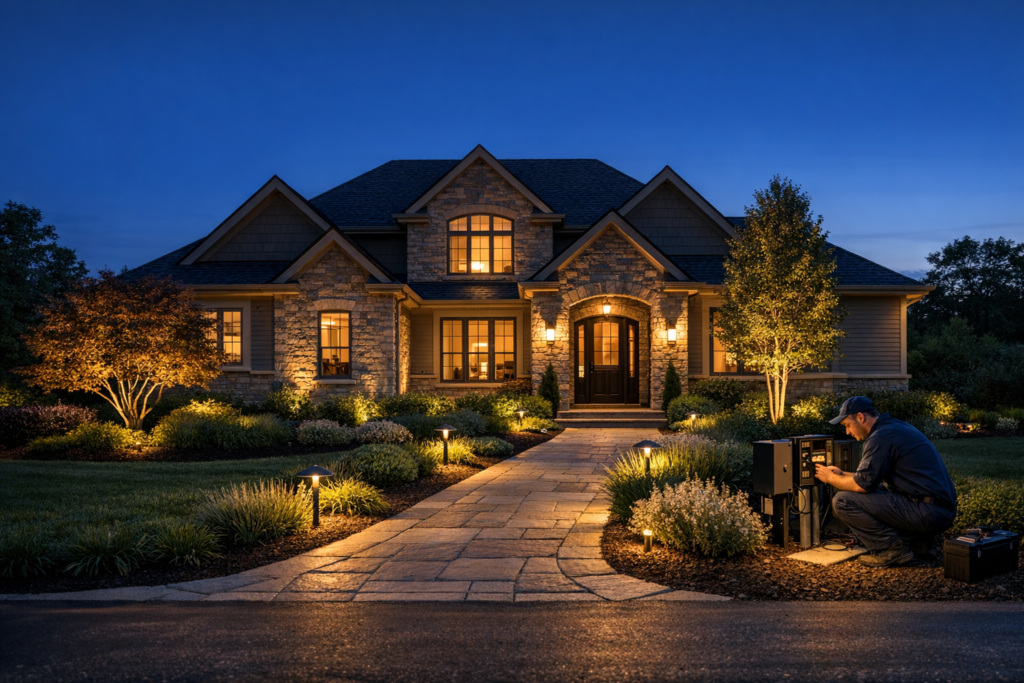
Thoughtful landscape lighting can make a home or commercial property look more polished, safer to navigate, and more inviting after sunset. The best results come from more than simply placing lights along a walkway. A quality landscape lighting installation uses proper fixture placement, durable electrical components, efficient LED technology, and a design that complements the property rather than overpowering it.
Why Landscape Lighting Has Become a Curb Appeal Priority
Exterior lighting is one of the most noticeable improvements a property owner can make because it changes how the property looks and functions at night. During the day, landscaping, architecture, walkways, and entryways create the first impression. After dark, lighting determines whether those same features remain visible, attractive, and safe.
For homeowners, the right outdoor lighting can highlight a front entry, frame a driveway, showcase mature trees, and make evening arrivals feel more welcoming. For business owners, property managers, and commercial property owners, exterior lighting can improve visibility, support pedestrian safety, and create a more professional appearance for customers, tenants, and visitors.
In New Hampshire, Massachusetts, Maine, and Vermont, landscape lighting also needs to withstand real New England conditions, including snow, ice, freeze-thaw cycles, heavy rain, and long winter nights. That makes professional planning and proper electrical installation especially important.
Trend 1: Layered Outdoor Lighting Instead of One-Size-Fits-All Fixtures
One of the strongest trends in landscape lighting is the move toward layered lighting. Instead of relying on a few bright fixtures, a layered design uses several types of lighting at lower, more comfortable levels.
A well-designed system may include:
- Path lights for walkways and garden paths
- Uplights to accent trees, stonework, or architectural features
- Downlights to create soft, natural-looking illumination from above
- Step and deck lights for safer elevation changes
- Wall wash or grazing lights to highlight texture on stone, brick, or siding
- Entry lighting to guide visitors toward doors and gathering areas
Layering creates depth and balance. It also helps avoid the common mistake of overlighting one area while leaving another area too dark. The goal is to guide the eye naturally and improve usability without creating glare.
Trend 2: Warm LED Lighting for a More Natural Look
LED fixtures have become the standard for modern outdoor lighting because they are energy efficient, long lasting, and available in many styles. The most appealing landscape lighting designs typically use warm color temperatures that create a comfortable, natural appearance.
Very cool or blue-white lighting can make a property look harsh, especially around historic homes, natural stone, wood siding, or traditional New England architecture. Warmer lighting tends to complement landscaping and building materials more effectively.
LED technology also gives property owners more control over energy use. When paired with timers, photocells, dimmers, or smart controls, LED landscape lighting can provide the right amount of illumination only when needed.
Trend 3: Architectural Accent Lighting That Highlights the Building
Landscape lighting is not limited to plants and pathways. Many of the best curb appeal improvements come from highlighting the structure itself. Architectural accent lighting can bring attention to columns, entryways, peaks, stone foundations, retaining walls, signage, or distinctive exterior materials.
Common techniques include:
- Uplighting: Placing fixtures low to illuminate vertical surfaces, trees, or architectural details
- Grazing: Positioning light close to textured surfaces to emphasize stone, brick, or wood grain
- Wall washing: Using broader, softer light to evenly illuminate a facade
- Silhouetting: Lighting a background surface to outline plants, sculptures, or landscape features
These techniques require careful placement. A fixture that looks good from one angle may produce glare from another. Professional landscape lighting installation accounts for sightlines from the driveway, street, windows, walkways, and neighboring properties.
Trend 4: Safer Walkways, Steps, Driveways, and Entrances
Curb appeal matters, but outdoor lighting should also make a property safer to use. Walkways, stairs, uneven surfaces, parking areas, and entrances are some of the most important areas to illuminate properly.
Safety-focused lighting does not need to look institutional. Modern fixtures can be discreet, attractive, and integrated into hardscaping or landscaping. Low-glare path lights, recessed step lights, bollard lights, and downlights can improve visibility while preserving the property’s appearance.
This is especially valuable during New England winters, when snowbanks, ice patches, shorter daylight hours, and early sunsets can make exterior navigation more difficult. A thoughtful lighting layout helps residents, employees, tenants, visitors, and delivery drivers move around the property with greater confidence.
Trend 5: Smart Controls and Automated Outdoor Lighting
Smart controls are increasingly popular for exterior lighting because they make the system easier to manage. Instead of relying on manual switches, property owners can use timers, astronomical controls, photocells, dimmers, or app-based controls depending on the system design.
Automation can help outdoor lighting turn on at dusk, adjust seasonally, shut off overnight, or create separate scenes for entertaining, security, or everyday use. For commercial properties, automated controls can support consistency across entrances, walkways, parking areas, and exterior common areas.
Electrical compatibility matters. Not every fixture, transformer, dimmer, or control device works well together. A licensed electrician can help ensure that the selected equipment is appropriate for the load, location, and intended use.
Trend 6: Low-Glare and Dark-Sky-Friendly Lighting
More property owners are paying attention to glare, light trespass, and unnecessary brightness. A well-designed landscape lighting system should illuminate the property without shining directly into windows, neighboring yards, roadways, or the eyes of pedestrians.
Downward-facing fixtures, shielded lights, proper beam angles, and careful aiming can make a major difference. In many cases, lower-output fixtures placed strategically produce a better result than brighter fixtures placed randomly.
Reducing glare also improves the appearance of the property. When fixtures are too bright, the eye focuses on the light source. When fixtures are properly placed and shielded, the eye focuses on the landscape, architecture, walkway, or entry feature being illuminated.
Trend 7: Integrated Lighting for Patios, Decks, and Outdoor Living Areas
Many homeowners are investing in outdoor living spaces, and lighting plays a major role in making those spaces usable after dark. Patios, decks, outdoor kitchens, pergolas, retaining walls, seating areas, and poolside spaces all benefit from lighting that is planned before or during construction.
Integrated lighting often looks cleaner than fixtures added after the fact. Examples include recessed step lights, under-cap retaining wall lights, deck post lights, hardscape lighting, and lighting built into outdoor structures.
For builders, general contractors, and developers, coordinating the electrical work early can help avoid visible wiring, difficult retrofits, and missed opportunities for controls or future expansion.
Trend 8: Durable Fixtures Built for New England Weather
Outdoor lighting fixtures are exposed to moisture, soil conditions, temperature swings, lawn equipment, snow removal, and ice. Selecting durable fixtures and electrical components is essential for long-term performance.
Important considerations include:
- Weather-rated and wet-location-rated equipment where required
- Corrosion-resistant fixture materials
- Proper wire type and installation methods for outdoor use
- Secure fixture mounting to reduce movement from frost, soil shift, or landscaping activity
- Appropriate transformers and electrical protection
- Serviceable layouts that allow future maintenance
Lower-quality components may look acceptable when first installed but often fail sooner in harsh outdoor conditions. A professional installer looks beyond appearance and considers how the system will perform through multiple seasons.
What a Professional Landscape Lighting Installation Should Include
A professional landscape lighting installation involves design, electrical planning, proper installation, testing, and adjustment. The process should account for how people approach and use the property, which features deserve attention, and how the system will be maintained over time.
Key elements include:
- Evaluating walkways, entrances, driveways, landscaping, and architectural features
- Choosing fixture types that match the lighting goal
- Planning transformer capacity and potential future expansion
- Minimizing voltage drop in low-voltage lighting systems
- Installing wiring and connections suitable for outdoor conditions
- Using safe, code-conscious installation practices
- Aiming and adjusting fixtures after dark to confirm the final effect
Nighttime adjustment is often overlooked. A lighting layout that seems correct during the day may need changes once the fixtures are energized. Proper aiming helps reduce glare, eliminate dark spots, and create a balanced appearance.
Common Landscape Lighting Mistakes to Avoid
Outdoor lighting problems are often the result of poor planning rather than poor intentions. Avoiding these common mistakes can improve both appearance and reliability.
- Using too many fixtures: More lights do not automatically create a better design. Strategic placement matters more than quantity.
- Choosing lights that are too bright: Excessive brightness can wash out landscaping, create glare, and make the property feel less comfortable.
- Ignoring voltage drop: Long wire runs in low-voltage systems can cause dim or inconsistent fixture performance if not properly designed.
- Placing fixtures in vulnerable areas: Lights installed where they can be hit by plows, shovels, mowers, or foot traffic may require frequent repairs.
- Using indoor-rated products outdoors: Outdoor electrical components must be suitable for moisture and exterior conditions.
- Skipping maintenance access: Fixtures, transformers, and controls should be installed where they can be safely serviced.
Because outdoor electrical work involves power, weather exposure, and long-term safety, property owners should avoid improvised wiring or temporary solutions that are not designed for permanent exterior use.
Residential and Commercial Applications
Landscape lighting installation can be tailored to many types of properties. The right design depends on how the space is used, what needs to be visible, and what impression the property should make after dark.
Homes and Residential Properties
For homes, outdoor lighting often focuses on curb appeal, entry visibility, driveway guidance, backyard living areas, and landscape accents. It can also complement other electrical upgrades, such as exterior receptacles, security lighting, generator readiness, or updated service capacity.
Commercial Properties and Managed Facilities
For commercial properties, lighting design often prioritizes entrances, sidewalks, signage, gathering areas, parking lot edges, tenant access, and building appearance. Property managers and facility managers should also consider maintenance access, fixture durability, control schedules, and consistency across the site.
New Construction and Renovation Projects
For builders, developers, architects, and general contractors, landscape lighting is easiest to integrate when it is considered early. Planning ahead can reduce unnecessary trenching, improve conduit placement, simplify control wiring, and produce a cleaner final installation.
Cost Factors Property Owners Should Understand
The cost of landscape lighting depends on the size of the property, number and quality of fixtures, wiring distances, transformer requirements, control options, trenching conditions, and the complexity of the design. A small front walkway lighting project is very different from a full-property system with architectural accents, hardscape lighting, smart controls, and multiple zones.
Important cost considerations include:
- Fixture quality and material durability
- Low-voltage versus line-voltage design requirements
- Distance from available power sources
- Soil, hardscape, and landscape conditions
- Control options such as timers, photocells, or smart systems
- Future expansion needs
- Serviceability and maintenance access
Choosing the lowest-cost option can lead to higher maintenance costs if fixtures fail early, wiring connections degrade, or the system is difficult to service. A well-planned system is an investment in appearance, safety, and long-term reliability.
Maintenance Tips for Long-Lasting Outdoor Lighting
Even a professionally installed system benefits from periodic maintenance. Seasonal changes, plant growth, mulch, soil movement, snow removal, and weather exposure can affect fixture performance.
Property owners should periodically check for:
- Fixtures blocked by shrubs, mulch, snow, or leaves
- Lights that have shifted out of position
- Damaged lenses, stakes, or housings
- Corrosion or moisture concerns
- Timers or controls that need seasonal adjustment
- Uneven brightness that may indicate a wiring or connection issue
If fixtures flicker, fail repeatedly, trip a breaker, or show signs of damage, the system should be inspected by a qualified electrician. Outdoor electrical issues should be addressed promptly because moisture and damaged wiring can create safety concerns.
When to Call a Licensed Electrician
Property owners should call a licensed electrician when installing new outdoor lighting circuits, adding exterior power sources, troubleshooting electrical issues, upgrading controls, integrating lighting with existing systems, or installing equipment in areas exposed to weather.
Professional installation is especially important when the project involves buried wiring, transformers, exterior receptacles, GFCI protection, service capacity questions, commercial property requirements, or coordination with other trades. Electrical work should be completed using safe methods and appropriate materials for the environment.
Electrical Constructors LLC provides residential, commercial, industrial, and new construction electrical services throughout New Hampshire, Massachusetts, Maine, and Vermont. For property owners looking to improve curb appeal, safety, and outdoor usability, a professionally planned landscape lighting installation can deliver a cleaner look and more reliable performance than a piecemeal approach.
Final Thoughts
The best landscape lighting trends all point in the same direction: lighting should be attractive, efficient, durable, safe, and thoughtfully placed. Warm LEDs, layered designs, smart controls, architectural accents, and low-glare fixtures can dramatically improve curb appeal when they are installed as part of a well-planned electrical system.
Whether the goal is to upgrade a home’s front entry, enhance a commercial property, support a new construction project, or make an outdoor living area more useful after dark, professional landscape lighting installation helps ensure the finished system looks good, functions properly, and stands up to New England conditions.