A smart electrical panel can be worth it if you want better energy visibility, automated load control, EV charger readiness, generator integration, or a more flexible way to manage modern electrical demands. It is not necessary for every property, but for homes and businesses adding high-demand equipment, backup power, solar, batteries, or advanced energy monitoring, it can provide meaningful long-term value.
What Is a Smart Electrical Panel?
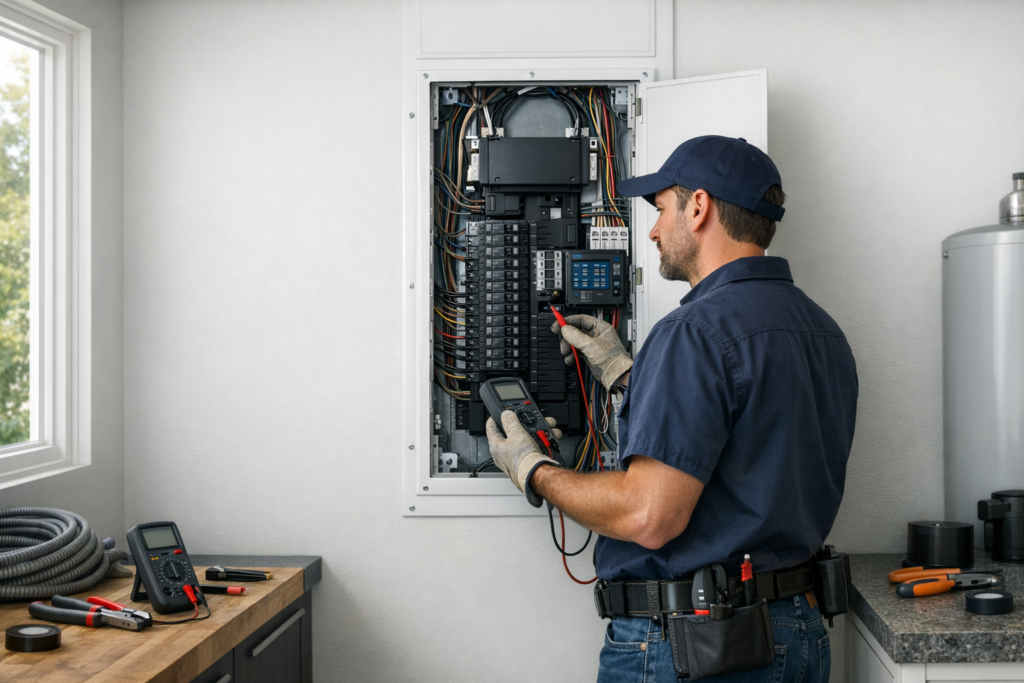
A smart electrical panel is an advanced electrical distribution panel that does more than route power through breakers. It uses built-in electronics, sensors, software, and communication features to monitor circuits, track energy usage, and in some systems, control selected loads from an app or management interface.
Traditional breaker panels are mostly passive. They distribute power and protect circuits when there is an overload or fault condition. A smart panel still performs essential electrical distribution and protection functions, but it also provides real-time information about how electricity is being used throughout the property.
Depending on the manufacturer and system design, a smart panel may allow you to:
- View energy usage by circuit
- Monitor large loads such as HVAC equipment, water heaters, EV chargers, ovens, and dryers
- Prioritize circuits during generator or battery backup operation
- Shed nonessential loads automatically to prevent overloads
- Track historical energy consumption
- Receive system alerts
- Support future electrification upgrades more efficiently
For homeowners and property owners in New Hampshire, Massachusetts, Maine, and Vermont, this type of visibility can be especially useful where older electrical systems, severe winter weather, generator preparedness, and rising electrical demand all influence upgrade decisions.
How a Smart Electrical Panel Works
A smart panel monitors electrical activity at the circuit level. Instead of seeing only one overall electric bill, you can often see which circuits use the most power and when that power is being used. This helps identify energy-heavy equipment, unusual usage patterns, and opportunities for better load management.
Some smart panels include controllable breakers or relay modules that allow certain circuits to be turned on or off automatically or remotely. Others focus primarily on energy monitoring and reporting. The exact capabilities depend on the product and how the electrical system is designed.
Energy Monitoring
Energy monitoring helps you understand where electricity is going. For example, you may discover that a heat pump, dehumidifier, electric water heater, pool equipment, commercial refrigeration system, or EV charger is using more power than expected.
This information can help with energy efficiency decisions, equipment scheduling, tenant usage review, or planning for future electrical upgrades.
Load Management
Load management is one of the strongest reasons to consider a smart electrical panel. Many modern properties are adding significant electrical loads, including EV chargers, heat pumps, induction ranges, battery storage systems, and standby generators. A smart panel can help prioritize which circuits remain powered when total demand must be limited.
For example, if a property has a backup generator with limited capacity, the smart panel may help keep critical circuits operating while temporarily disconnecting less important loads. This can improve reliability and reduce the risk of overloading backup power equipment.
Remote Access and Alerts
Many smart panels offer remote monitoring through a mobile app or web platform. This can be helpful for second homes, rental properties, commercial buildings, maintenance teams, and property managers who need better visibility into electrical usage without being physically onsite.
Remote features should never replace proper electrical maintenance or professional troubleshooting, but they can provide useful information when something changes unexpectedly.
Smart Electrical Panel vs. Standard Electrical Panel
A standard electrical panel is still the right choice for many homes and businesses. It provides reliable circuit protection and power distribution when properly installed, maintained, and sized. A smart panel adds monitoring and control features that may or may not be necessary depending on the property.
| Feature | Standard Panel | Smart Panel |
|---|---|---|
| Circuit protection | Yes | Yes |
| Energy usage visibility | Limited | Detailed circuit-level monitoring on many systems |
| Remote access | No | Available on many models |
| Automated load control | No | Available on certain systems |
| Generator and battery load planning | Manual or separate equipment | Often easier to manage with compatible systems |
| Upfront cost | Lower | Higher |
| Best fit | Basic panel replacement or simple service upgrade | Modern energy management, EV charging, generators, solar, batteries, or complex loads |
The key question is not whether smart panels are better in every situation. The better question is whether the added visibility and control solve real problems for your property.
When a Smart Electrical Panel Is Worth It
A smart electrical panel is most valuable when your electrical system needs more than a basic panel replacement. It can make sense when you are planning major upgrades, managing high electrical demand, or trying to improve long-term energy control.
You Are Installing an EV Charger
EV chargers can add a substantial load to a residential or commercial electrical system. Before installation, a licensed electrician should evaluate the existing service capacity, panel condition, load calculation, charger requirements, and available circuit space.
A smart panel may help manage EV charging more efficiently, especially if the electrical service is close to capacity. In some cases, load management can help avoid unnecessary service upgrades by controlling when the charger operates or by balancing it with other large loads. Whether this is appropriate depends on the property and equipment involved.
You Want Better Backup Power Control
Power outages are a real concern throughout New England, especially during winter storms, heavy snow, ice, wind events, and extended cold weather. For homes and businesses using generators or battery systems, smart load control can be especially helpful.
Instead of powering every circuit at once, a smart panel may allow priority circuits to remain energized while lower-priority loads are delayed or disconnected. This can help backup power systems operate more reliably and efficiently.
You Are Adding Solar or Battery Storage
Solar panels and battery storage systems change how power flows through a property. A smart electrical panel can provide better visibility into consumption, backup priorities, and stored energy usage. It may also make future system management easier when paired with compatible equipment.
Not every solar project requires a smart panel, but it can be a useful part of a broader energy strategy.
You Own or Manage Multiple Properties
Property managers, facility managers, landlords, and commercial building owners often benefit from better electrical visibility. A smart panel can help identify unusual usage, monitor critical loads, and support preventative maintenance planning.
For rental properties, mixed-use buildings, small commercial spaces, and seasonal properties, remote monitoring can provide a practical advantage when used as part of a professional maintenance plan.
Your Property Has Limited Electrical Capacity
Some older homes and buildings in New Hampshire, Massachusetts, Maine, and Vermont were not designed for today’s electrical demands. Electric heating equipment, heat pumps, EV chargers, larger appliances, home offices, workshops, commercial equipment, and backup power systems can all increase load requirements.
A smart panel does not magically increase service capacity. However, it can help manage existing capacity more intelligently in certain situations. A licensed electrician must determine whether load management is appropriate or whether a service upgrade is the safer, more reliable solution.
When a Smart Electrical Panel May Not Be Necessary
A smart electrical panel is not the right investment for every property. If your electrical needs are simple, your existing panel is in good condition, and you do not plan to add major electrical loads, a standard panel upgrade may provide everything you need.
A smart panel may not be worth the added cost if:
- You only need a straightforward panel replacement
- You do not need circuit-level energy monitoring
- You are not planning EV charging, generator integration, solar, or battery storage
- Your electrical usage is simple and predictable
- You prefer a lower-cost conventional panel solution
- Your internet reliability or technology preferences make remote features less useful
In many cases, the best electrical upgrade is the one that solves the actual problem without adding unnecessary complexity.
Important Safety and Code Considerations
Smart panels are still electrical service equipment. They must be selected, installed, grounded, bonded, and integrated correctly. This is not a do-it-yourself project.
Electrical panel work can be dangerous and should only be performed by qualified, licensed electricians. Improper installation can create shock hazards, fire risks, nuisance tripping, damaged equipment, poor grounding, overloaded circuits, and code compliance issues.
A professional evaluation should consider:
- Existing service size and available capacity
- Condition of the current panel and service equipment
- Grounding and bonding
- Load calculations
- Existing circuit layout
- Generator, solar, battery, or EV charger compatibility
- Overcurrent protection requirements
- Manufacturer installation instructions
- Applicable electrical code requirements
- Utility coordination when needed
Electrical codes and utility requirements vary, and local conditions matter. A licensed electrical contractor can evaluate the property and determine the safest, most appropriate path forward.
Cost Factors to Consider
The cost of a smart electrical panel depends on far more than the panel itself. The total project cost may include equipment, labor, permitting where required, service upgrades, rewiring, circuit relocation, utility coordination, and integration with other systems.
Major cost factors include:
- The type and brand of smart panel selected
- Number of circuits being monitored or controlled
- Whether the existing panel must be replaced or upgraded
- Existing service capacity
- Condition of wiring and grounding
- Generator, solar, battery, or EV charger integration
- Distance from related equipment
- Commercial versus residential system complexity
- Required electrical repairs or code corrections
A smart panel typically costs more than a conventional panel replacement. The practical question is whether it can reduce future upgrade complexity, prevent unnecessary electrical limitations, improve outage readiness, or support equipment you plan to add over the next several years.
Energy Efficiency Benefits and Limitations
A smart electrical panel can help you make better energy decisions, but it does not reduce electricity usage by itself. The savings come from what you do with the information.
For example, circuit-level monitoring may help you identify:
- Equipment running longer than expected
- High standby power usage
- Inefficient electric heating or cooling patterns
- Commercial equipment that is left on after hours
- Opportunities to shift EV charging to lower-demand periods
- Loads that should be serviced, replaced, or scheduled differently
For businesses, energy monitoring can support better operating decisions. For homeowners, it can make energy use more understandable and help prioritize upgrades such as lighting improvements, appliance replacement, HVAC changes, or improved load scheduling.
Smart Panels for Commercial Properties
Commercial properties often have more complex electrical needs than homes. Restaurants, offices, retail buildings, warehouses, multifamily properties, and light industrial spaces may have lighting systems, HVAC equipment, refrigeration, production equipment, server rooms, security systems, and life-safety-related electrical loads that require careful planning.
A smart electrical panel may help commercial property owners and facility managers improve visibility and manage selected loads. It can also support preventative maintenance by making unusual usage patterns easier to spot.
However, commercial electrical systems require careful coordination. Panel schedules, load calculations, equipment ratings, tenant needs, emergency systems, and applicable code requirements must all be reviewed by a qualified electrical contractor before selecting any smart panel solution.
Questions to Ask Before Upgrading
Before deciding whether a smart panel is worth it, ask practical questions about your property, your electrical demand, and your long-term plans.
- Is my current panel outdated, overloaded, damaged, or short on circuit space?
- Am I planning to install an EV charger, generator, solar, or battery storage?
- Do I need circuit-level energy monitoring, or is whole-property usage enough?
- Would automatic load control solve a real capacity or backup power issue?
- Will remote monitoring help me manage this property more effectively?
- Is my electrical service large enough for planned upgrades?
- Are there existing wiring, grounding, or code correction issues?
- Do I want the lowest upfront cost or the most flexible long-term electrical system?
The answers to these questions help determine whether a smart panel is a practical investment or an unnecessary upgrade.
Common Mistakes to Avoid
Smart panel projects work best when they are planned as part of the entire electrical system, not treated as a simple equipment swap.
Common mistakes include:
- Choosing a smart panel before completing a professional load evaluation
- Assuming smart load management eliminates the need for a service upgrade in every case
- Installing equipment that is not compatible with planned generators, EV chargers, solar, or batteries
- Ignoring older wiring, grounding, or panel condition issues
- Focusing on app features instead of electrical capacity and safety
- Overlooking future expansion needs
- Hiring unqualified installers for panel replacement or service equipment work
The most reliable results come from matching the technology to the property’s real electrical requirements.
How to Decide What Is Right for Your Property
The best way to decide is to start with a professional electrical assessment. A licensed electrician can inspect the existing panel, evaluate service capacity, review planned upgrades, identify safety concerns, and explain whether a smart electrical panel provides measurable value for your situation.
For some properties, the recommendation may be a conventional panel upgrade, service upgrade, or targeted circuit installation. For others, a smart panel may be an excellent fit, especially when planning for EV charging, backup power, solar, batteries, or more advanced energy management.
Electrical Constructors LLC provides residential, commercial, industrial, and new construction electrical services throughout New Hampshire, Massachusetts, Maine, and Vermont. Whether you are upgrading an older home, planning a commercial buildout, preparing for winter outages, adding EV charging, or modernizing an electrical system, an experienced electrical contractor can help you make a safe, practical, and future-ready decision.
Final Verdict: Are Smart Panels Worth It?
A smart electrical panel is worth it when the added monitoring, control, and load management features support your real electrical needs. It is especially useful for properties with EV chargers, generators, solar, batteries, high-demand equipment, or complex energy usage.
If you only need basic circuit protection and have no major electrical upgrades planned, a standard panel may be the better value. But if you want a more flexible electrical system that can adapt to modern power demands, a smart panel is worth considering as part of a professionally designed upgrade.