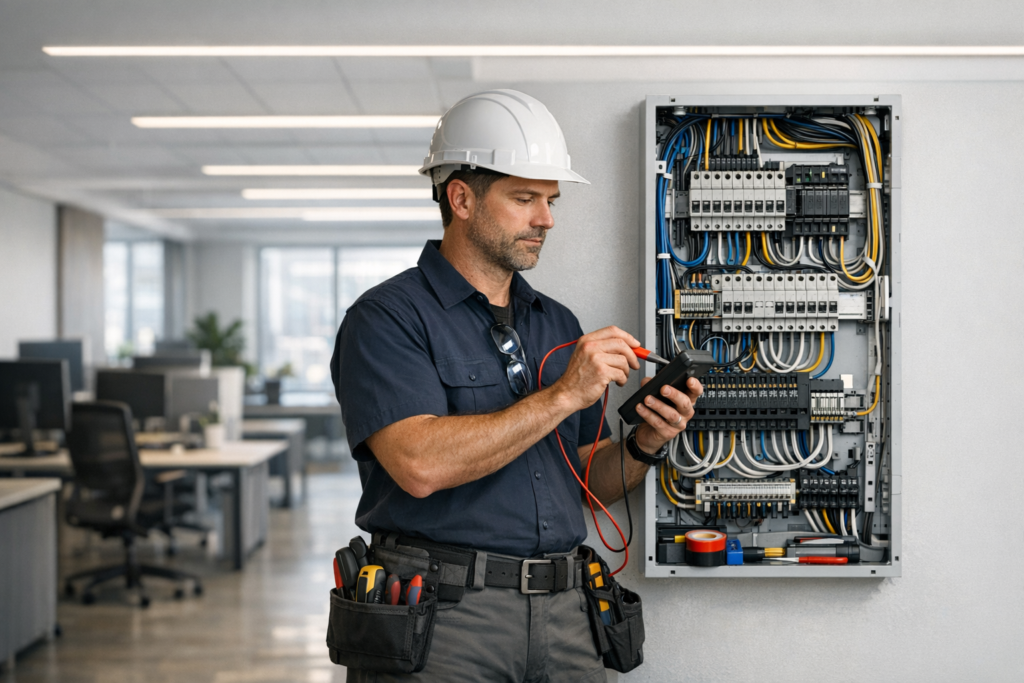
Office electrical upgrades can improve productivity by giving employees reliable power, better lighting, safer work areas, fewer disruptions, and electrical capacity for today’s technology. In many offices, slow charging, tripped breakers, poor lighting, overloaded outlets, and outdated panels are not just inconveniences; they interrupt workflow, reduce comfort, and create avoidable safety concerns.
Why Electrical Systems Affect Office Productivity
A productive office depends on more than furniture, software, and staffing. The electrical system supports nearly every part of the workday, from computers and printers to lighting, conference room displays, HVAC controls, security systems, breakroom equipment, and network infrastructure.
When an office electrical system is undersized, aging, poorly planned, or frequently modified without a long-term strategy, the result is often a workplace filled with extension cords, power strips, flickering lights, nuisance breaker trips, warm receptacles, and inconsistent equipment performance. These issues can slow employees down and increase the likelihood of downtime.
For businesses throughout New Hampshire, Massachusetts, Maine, and Vermont, electrical reliability is especially important during seasonal weather changes, winter storms, and periods of increased heating, lighting, or backup power demand. A well-planned electrical upgrade helps create a safer, more comfortable, and more dependable office environment.
Signs Your Office May Need Electrical Upgrades
Not every electrical problem is obvious. Some offices operate for years with systems that technically function but no longer support the way the business actually uses the space. Common warning signs include:
- Breakers that trip when printers, copiers, space heaters, or kitchen equipment are used
- Employees relying on extension cords or daisy-chained power strips
- Flickering, dim, buzzing, or uneven lighting
- Outlets that are loose, damaged, discolored, warm, or insufficient in number
- Conference rooms without enough power or charging access
- Older electrical panels with limited room for expansion
- Frequent equipment resets, power interruptions, or unexplained electrical issues
- Outdated lighting that causes glare, eye strain, or inconsistent brightness
- Limited capacity for new technology, workstations, appliances, or EV charging
If these problems are common in your office, it may be time to have a qualified commercial electrician evaluate the electrical system and recommend practical improvements.
Electrical Panel and Service Upgrades
The electrical panel is the distribution point for power throughout the office. If the panel is full, outdated, damaged, poorly labeled, or frequently overloaded, it can limit what the business is able to do safely and efficiently.
An electrical panel upgrade or service upgrade may be appropriate when an office adds new workstations, specialized equipment, commercial kitchen appliances, HVAC equipment, lighting controls, server equipment, EV chargers, or tenant improvements. The goal is not only to add more circuits, but to make sure the system is properly sized, organized, and capable of supporting daily operations.
A properly planned upgrade can reduce nuisance outages, improve load distribution, provide room for future expansion, and make maintenance easier. For property managers and building owners, updated panels also make it easier to support tenant changes, renovations, and evolving electrical needs.
Dedicated Circuits for Office Equipment
Many productivity problems begin when too much equipment shares the same circuit. Copiers, printers, computers, monitors, breakroom appliances, servers, network equipment, and charging stations can place significant demand on an office electrical system.
Dedicated circuits help isolate critical or higher-demand equipment so it is not competing with unrelated loads. This can help reduce tripped breakers, voltage-related issues, and equipment interruptions.
Equipment That Often Benefits From Dedicated Circuits
- Large printers and copiers
- Server racks and network equipment
- Conference room audiovisual systems
- Breakroom refrigerators, microwaves, and coffee equipment
- Point-of-sale systems in customer-facing offices
- Specialized medical, laboratory, or production equipment
- Charging stations and shared workstation hubs
Dedicated circuits should always be installed by a licensed electrician. Proper circuit design depends on the equipment load, wiring method, panel capacity, grounding, overcurrent protection, and applicable code requirements.
Better Outlet Placement and Power Access
One of the most practical office electrical upgrades is improving outlet placement. When outlets are too far from desks, conference tables, reception counters, or shared work areas, employees often compensate with unsafe or cluttered solutions.
Modern offices need convenient access to power for laptops, monitors, docking stations, phones, chargers, printers, collaboration tools, and mobile devices. Adding properly installed receptacles can improve workflow and reduce trip hazards caused by cords stretched across floors.
In open offices, floor boxes, wall outlets, furniture-integrated power systems, and strategically located circuits can make the workspace more flexible. In private offices and conference rooms, well-planned outlet locations help support clean layouts, better cable management, and easier technology use.
Extension cords should not be used as a permanent power solution. If employees rely on them daily, the office likely needs additional receptacles or a revised electrical layout.
Lighting Upgrades That Improve Focus and Comfort
Office lighting has a direct effect on productivity, comfort, and employee well-being. Poor lighting can cause eye strain, headaches, glare, fatigue, and reduced concentration. In commercial spaces, outdated fluorescent fixtures may also consume more energy and require frequent maintenance.
LED lighting upgrades are one of the most effective ways to improve the working environment. Properly selected LED fixtures can provide more consistent light output, better color quality, reduced maintenance, and lower energy use compared with many older lighting systems.
Lighting Improvements Worth Considering
- Replacing outdated fluorescent fixtures with high-quality LED fixtures
- Improving task lighting at desks, workstations, and reception areas
- Reducing glare on screens and conference displays
- Balancing light levels in open offices, hallways, and meeting rooms
- Installing dimmers or lighting controls where appropriate
- Using occupancy sensors in restrooms, storage rooms, and low-traffic areas
- Upgrading exterior and parking area lighting for safety and visibility
The best office lighting upgrades are designed around how each space is used. A conference room, accounting area, reception area, warehouse office, and private office may all require different lighting strategies.
Lighting Controls and Energy Efficiency
Lighting controls can reduce wasted energy and make the office easier to manage. Occupancy sensors, vacancy sensors, dimmers, daylight-responsive controls, timers, and lighting zones allow businesses to use light where and when it is needed.
For commercial properties in New England, energy efficiency is often a long-term operating priority. Upgrading lighting and controls may help reduce utility costs while improving comfort and visibility. In multi-tenant buildings, improved lighting controls can also support more customized use of individual spaces.
Energy-efficient upgrades work best when the electrical contractor evaluates fixture type, control strategy, switching layout, panel capacity, and the way employees actually use the office throughout the day.
Power Quality and Surge Protection
Office technology is sensitive to poor power quality. Computers, servers, network switches, communication systems, security equipment, and audiovisual systems can all be affected by voltage fluctuations, surges, improper grounding, or overloaded circuits.
Whole-building surge protection and properly designed branch circuits can help protect valuable office equipment from damaging power events. This is especially important in areas that experience severe weather, utility interruptions, or generator use.
Surge protection does not replace good electrical design, but it is an important layer of protection for modern offices. Businesses that depend on computers, data systems, phone systems, or specialized equipment should consider both surge protection and backup power planning as part of a broader reliability strategy.
Backup Power and Generator Readiness
Power outages can bring office operations to a stop. In New Hampshire, Massachusetts, Maine, and Vermont, winter storms, ice, wind, and heavy snow can interrupt utility power and affect business continuity.
A standby generator or properly planned backup power system can help keep essential office functions operating during an outage. Depending on the business, this may include network equipment, security systems, lighting, refrigeration, heating controls, communications, sump pumps, or critical workstations.
Generator installation requires careful planning. The electrical load must be evaluated, the transfer equipment must be properly selected, and the system must be installed safely by qualified professionals. Businesses should decide which loads are truly essential so the generator system is sized appropriately.
EV Charger Installation for Employees and Visitors
As electric vehicles become more common, commercial EV charger installation is becoming a valuable office upgrade. Workplace charging can support employees, visitors, tenants, fleet vehicles, and customer-facing businesses.
Before installing EV chargers, an electrician should evaluate available electrical capacity, panel space, service size, parking layout, charging speed requirements, and future expansion plans. In some buildings, a service upgrade or load management strategy may be needed to support EV charging without overloading the electrical system.
For property owners and developers, planning ahead for EV infrastructure can help avoid costly retrofits later. Even if only a few chargers are installed initially, conduit pathways, panel capacity, and electrical room planning can make future expansion easier.
Electrical Safety Upgrades for a More Reliable Workplace
Productivity depends on a safe workplace. Electrical hazards can disrupt operations, damage equipment, and put employees at risk. Safety-focused office electrical upgrades may include replacing damaged receptacles, correcting overloaded circuits, improving grounding, updating panels, correcting improper wiring, and addressing code-related deficiencies identified during an inspection.
Commercial spaces may also need attention to emergency lighting, exit lighting, exterior lighting, equipment disconnects, and electrical rooms. These systems should be inspected and maintained so they remain ready when needed.
Business owners and property managers should never ignore burning smells, sparking, buzzing panels, warm outlets, frequently tripped breakers, or discolored receptacles. These conditions should be evaluated promptly by a licensed electrician.
Electrical Inspections and Preventative Maintenance
An electrical inspection can identify issues before they become expensive disruptions. Preventative maintenance is especially valuable in offices with older wiring, frequent tenant changes, renovations, high equipment loads, or critical operations.
During a commercial electrical evaluation, an electrician may review panel condition, breaker labeling, visible wiring, receptacles, lighting systems, grounding, load distribution, equipment connections, and signs of overheating or wear. The goal is to find practical improvements that increase safety and reliability.
Preventative maintenance also helps property managers plan budgets more effectively. Instead of reacting to sudden failures, they can prioritize needed upgrades based on risk, operating needs, and future growth.
Planning Electrical Upgrades During Office Renovations
The best time to complete office electrical upgrades is often during a renovation, build-out, tenant improvement, or layout change. Walls, ceilings, furniture systems, lighting plans, conference room technology, and workstation layouts all affect the electrical design.
Electrical planning should happen early in the project. Waiting until the final stages can lead to change orders, delays, exposed conduit where concealed wiring was preferred, insufficient outlets, or lighting that does not match the finished space.
General contractors, architects, engineers, developers, and business owners benefit from involving an experienced electrical contractor before construction begins. Early coordination helps align the electrical system with the floor plan, equipment needs, code considerations, and long-term use of the building.
Common Mistakes to Avoid
Office electrical projects become more expensive and disruptive when they are treated as short-term fixes instead of long-term infrastructure improvements. Common mistakes include:
- Adding equipment without checking available electrical capacity
- Using extension cords or power strips as permanent wiring substitutes
- Installing lighting without considering glare, color quality, or task needs
- Ignoring panel limitations during office expansions
- Failing to plan for future technology, EV charging, or backup power
- Overlooking older wiring in historic or aging New England buildings
- Delaying repairs after breakers trip repeatedly or outlets show damage
- Choosing the lowest-cost solution without considering reliability or safety
A thoughtful upgrade plan helps prevent these issues and gives the office a safer, cleaner, and more functional electrical foundation.
How to Prioritize Office Electrical Upgrades
The right starting point depends on the condition of the building, the age of the electrical system, current business needs, and future plans. A practical prioritization process usually begins with safety and reliability before moving to comfort, convenience, and efficiency.
High-Priority Upgrades
- Repairing damaged wiring, outlets, switches, or panels
- Correcting overloaded circuits and recurring breaker trips
- Addressing signs of overheating, arcing, or unsafe electrical conditions
- Improving emergency lighting, exit lighting, or critical power reliability
Productivity-Focused Upgrades
- Adding outlets where employees need reliable power access
- Installing dedicated circuits for essential equipment
- Improving office lighting quality and reducing glare
- Upgrading conference rooms, workstations, and shared spaces
Long-Term Planning Upgrades
- Panel or service upgrades for future capacity
- Backup generator systems
- EV charger infrastructure
- Lighting controls and energy efficiency improvements
- Electrical planning for renovations or tenant build-outs
This approach helps businesses invest in upgrades that solve immediate problems while supporting long-term growth.
Work With an Experienced Commercial Electrician
Office electrical upgrades should be designed and installed by qualified professionals who understand commercial electrical systems, safety requirements, equipment loads, lighting design, and long-term reliability. The right contractor will evaluate the existing system, listen to how the office operates, and recommend upgrades that match the building, budget, and business goals.
Electrical Constructors LLC provides residential, commercial, industrial, and new construction electrical services throughout New Hampshire, Massachusetts, Maine, and Vermont. For offices, commercial buildings, property managers, developers, and contractors, the company can help with electrical troubleshooting, panel upgrades, lighting installation, dedicated circuits, generator installation, EV charger installation, inspections, maintenance, code corrections, and complete electrical system installations.
When planned correctly, office electrical upgrades do more than add power. They support safer work areas, better focus, fewer interruptions, improved energy performance, and a more productive workplace.