
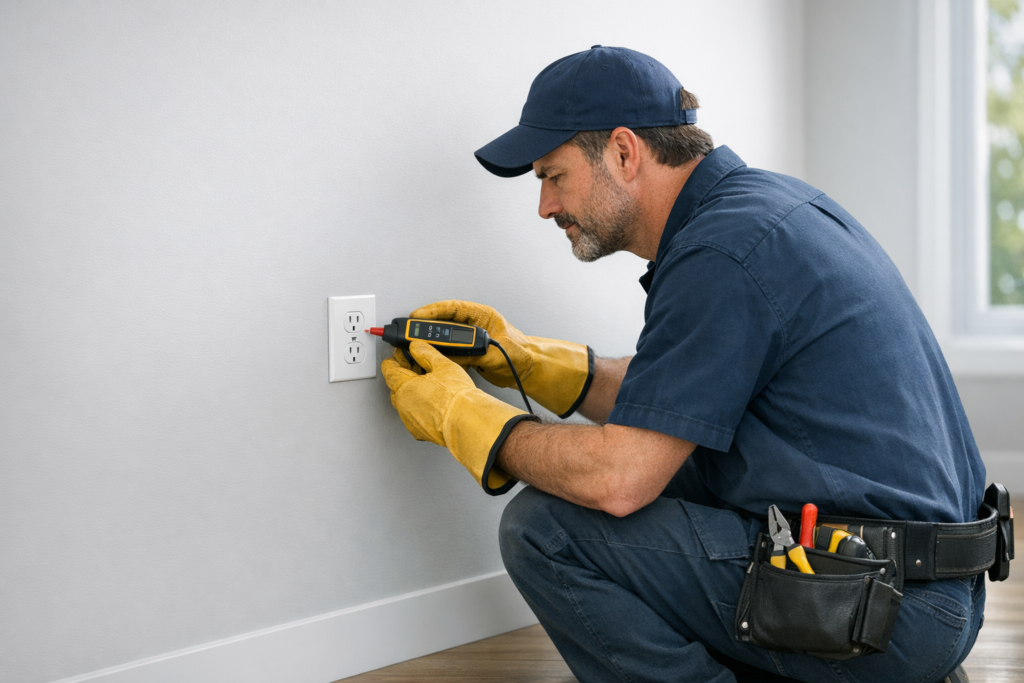
A buzzing electrical outlet should never be treated as a normal household sound. While some electrical devices can make a slight operating hum, a noise coming directly from an outlet may point to loose wiring, excessive load, a failing receptacle, arcing, or another condition that can create heat and increase fire risk. If the sound is new, getting louder, accompanied by warmth, a burning odor, flickering lights, or tripped breakers, stop using the outlet and have it inspected by a qualified electrician.
What a Buzzing Outlet Usually Means
An outlet should be quiet during normal use. When you hear buzzing, humming, crackling, sizzling, or vibration at the receptacle, the electrical connection may not be as secure or stable as it should be. Electricity depends on tight, continuous contact through approved conductors, terminals, and devices. When that contact is loose, damaged, overloaded, or interrupted, the system may produce sound, heat, or visible warning signs.
The noise may come from the outlet itself, the plugged-in device, the wiring connections behind the outlet, or the circuit serving that area. Because the problem is often hidden inside the wall box, guessing is not safe. A licensed electrician can test the circuit, inspect the receptacle, identify the source of the noise, and determine whether repair or replacement is needed.
Common Causes of a Buzzing Electrical Outlet
Several issues can cause an outlet to buzz. Some are relatively simple to repair, while others indicate a serious electrical hazard. The important point is that the sound is a symptom, not the root cause.
Loose Wiring Connections
Loose terminal screws, worn connections, or damaged conductors can create resistance. Resistance generates heat, and heat can damage insulation, loosen connections further, and increase the risk of arcing. This is one of the most common reasons an outlet makes noise and one of the most important to address quickly.
Overloaded Circuit or Outlet
Plugging too many devices into one outlet or relying heavily on power strips can overload a circuit. High-demand appliances, portable heaters, window air conditioners, office equipment, and kitchen appliances can draw more current than the circuit is designed to handle. Buzzing may occur when the electrical load is stressing the outlet, wiring, or breaker.
Arcing Inside the Outlet Box
Electrical arcing happens when current jumps across a gap rather than flowing through a tight connection. Arcing can create a buzzing, popping, crackling, or sizzling sound and may produce extreme heat. If you hear these sounds, see sparks, smell burning plastic, or notice discoloration at the outlet, stop using it immediately.
Worn or Damaged Receptacle
Outlets wear out over time. If plugs feel loose, fall out easily, or do not fit snugly, the internal contacts may no longer hold firmly. Poor contact can create heat and noise. Older receptacles in New England homes, especially in properties with aging electrical systems, should be evaluated carefully rather than repeatedly reused.
Faulty Plugged-In Device
Sometimes the outlet is not the source of the sound. A charger, power supply, dimmer-controlled lamp, appliance, or electronic device may hum while operating. However, if the buzzing continues after unplugging the device, or if the outlet feels warm or smells unusual, the problem likely needs professional attention.
Incorrect Device or Wiring Installation
Improperly installed outlets, poor splices, mismatched components, or past do-it-yourself repairs can create unsafe conditions. Electrical work must be completed with the right devices, proper connections, suitable box fill, grounding, and attention to applicable code requirements. Shortcuts behind a wall plate can remain hidden until noise, heat, or failure appears.
Warning Signs That Require Immediate Attention
Some outlet noises are more urgent than others. If any of the following are present, do not continue using the outlet:
- Buzzing, crackling, sizzling, or popping from the outlet
- Warm or hot outlet cover plate
- Burning smell, melted plastic odor, or smoke
- Discoloration, scorch marks, or melted areas around the receptacle
- Sparks when plugging in or unplugging a device
- Flickering lights on the same circuit
- Breaker trips repeatedly after using the outlet
- Plugs fit loosely or fall out
- GFCI or AFCI device trips frequently
Safety warning: If you smell burning, see smoke, or suspect active overheating, turn off power to the affected circuit if it is safe to do so and contact a licensed electrician promptly. If there is visible fire or immediate danger, leave the area and call emergency services.
What to Do When You Hear Buzzing From an Outlet
The safest response is to reduce electrical demand and avoid disturbing the wiring until the outlet can be evaluated. Follow these steps if you notice a buzzing electrical outlet:
- Unplug devices from the outlet. Do this carefully and only if there is no smoke, severe heat, sparking, or visible damage.
- Stop using the outlet. Do not plug in another device to test it.
- Check for heat or odor without touching exposed parts. A warm cover plate, burning smell, or discoloration is a serious warning sign.
- Turn off the circuit breaker if conditions appear unsafe. If you cannot identify the correct breaker or the panel is unsafe to access, wait for a professional.
- Call a qualified electrician. Buzzing often requires testing and inspection inside the outlet box, which should not be handled as a casual repair.
Avoid covering the outlet, ignoring the sound, or using an extension cord as a workaround. These steps do not solve the underlying problem and can make the hazard worse.
Why Ignoring Outlet Noise Can Be Dangerous
A buzzing outlet may seem minor, especially if everything still appears to work. The risk is that electrical problems often get worse gradually. A loose connection can heat and cool repeatedly, expanding and contracting metal parts until the connection deteriorates further. Damaged insulation, scorched terminals, and overheated wiring may develop behind the wall before any visible signs appear.
Ignoring the sound can lead to:
- Greater risk of electrical fire
- Damage to appliances, electronics, and connected equipment
- Repeated breaker trips or nuisance outages
- Failure of outlets, switches, or wiring devices
- Hidden damage inside walls or junction boxes
- Higher repair costs if the issue spreads beyond one outlet
Electrical systems are designed with layers of protection, including breakers, grounding, GFCI protection in appropriate areas, and in some systems arc-fault protection. However, these protections are not a reason to ignore warning signs. They are part of a safer system, not a substitute for proper repairs.
Is a Humming Outlet Ever Normal?
A standard wall outlet should not hum by itself. Some connected equipment can make a low operating noise, such as transformers, chargers, dimmers, fluorescent ballasts, or certain electronic power supplies. The key difference is whether the sound is coming from the device or from the outlet and wiring.
If the noise stops when the device is unplugged, the connected equipment may be the source. If the noise remains, returns with different devices, or is accompanied by heat, odor, discoloration, flickering, or tripping breakers, the outlet should be inspected. When in doubt, treat outlet noise as a safety concern.
Special Considerations for Older New England Properties
Many homes and commercial buildings throughout New Hampshire, Massachusetts, Maine, and Vermont have electrical systems that were installed decades ago and later modified over time. Older properties may have outdated panels, worn receptacles, limited circuit capacity, ungrounded outlets, aging insulation, or previous renovations that were not completed to modern standards.
Severe winter weather also places added demand on electrical systems. Portable heaters, dehumidifiers, sump pumps, heat tapes, generator connections, holiday lighting, and backup power equipment can all increase load at certain times of year. If an outlet buzzes during seasonal use, it may be a sign that the circuit is overloaded or not suited for the equipment being used.
Historic and older buildings require careful troubleshooting. The goal is not just to replace a noisy receptacle but to understand why it failed and whether the surrounding wiring, grounding, circuit protection, or panel capacity also needs attention.
How an Electrician Troubleshoots a Buzzing Outlet
A qualified electrician does more than replace the visible device. Proper troubleshooting looks at the entire circuit and the conditions that caused the sound. Depending on the situation, the inspection may include:
- Shutting off power and removing the receptacle for visual inspection
- Checking for loose terminals, damaged conductors, overheating, or arcing marks
- Testing voltage and verifying proper polarity
- Evaluating grounding and bonding conditions where applicable
- Checking whether the circuit is overloaded
- Inspecting nearby outlets, switches, and junction points on the same circuit
- Reviewing breaker performance and panel conditions
- Determining whether GFCI or AFCI protection is present where needed
Sometimes the repair is as straightforward as replacing a worn receptacle and correcting the connections. In other cases, the electrician may find damaged wiring, an overloaded circuit, improper splices, or a panel issue that requires additional corrective work. A thorough diagnosis helps prevent repeat problems.
Residential and Commercial Outlet Noise Concerns
In a home, a buzzing outlet may affect a bedroom, kitchen, living area, garage, basement, or exterior receptacle. In a business, the concern can be larger because one circuit may serve computers, networking equipment, point-of-sale systems, refrigeration, production equipment, office electronics, or lighting controls. Even a small outlet problem can disrupt operations if it damages equipment or causes downtime.
Commercial properties should take outlet noise especially seriously in tenant spaces, offices, retail environments, maintenance areas, and older buildings with changing electrical demands. Property managers and facility managers should document the location of the noise, what was plugged in, whether breakers tripped, and whether any heat or odor was present. This information helps the electrician troubleshoot efficiently.
Repair Options for a Buzzing Outlet
The correct repair depends on the source of the problem. Common solutions may include:
- Replacing a worn or damaged receptacle
- Correcting loose or improper wiring connections
- Repairing damaged conductors in the outlet box
- Replacing an overheated device or wall plate
- Adding a properly rated dedicated circuit for high-demand equipment
- Correcting unsafe extension cord or power strip reliance
- Evaluating the electrical panel if multiple circuits show symptoms
- Upgrading outdated wiring when conditions require it
It is important not to assume that a new outlet alone solves the problem. If the circuit is overloaded, the wiring is damaged, or the panel has underlying issues, simply replacing the receptacle may leave the hazard unresolved.
How to Prevent Outlet Problems
Preventative maintenance can reduce the risk of buzzing outlets and other electrical hazards. Homeowners, business owners, and property managers should pay attention to how outlets perform, especially in older buildings or high-use areas.
Recommended practices include:
- Do not overload outlets with multiple high-demand devices
- Avoid long-term use of extension cords as permanent wiring
- Replace outlets that feel loose, damaged, or unreliable
- Have frequently tripping breakers evaluated rather than repeatedly reset
- Schedule electrical inspections before major renovations or tenant fit-outs
- Install dedicated circuits for equipment with significant electrical demand
- Use qualified electricians for repairs, upgrades, and troubleshooting
- Plan electrical improvements before adding EV chargers, generators, workshop equipment, or large appliances
For commercial and multi-unit properties, periodic electrical maintenance can help identify loose connections, aging devices, overloaded circuits, and panel concerns before failures occur. Preventative work is often less disruptive than emergency repairs.
When to Call Electrical Constructors LLC
If you have a buzzing electrical outlet, do not wait for the sound to become worse. Electrical Constructors LLC provides residential, commercial, industrial, and new construction electrical services throughout New Hampshire, Massachusetts, Maine, and Vermont. Our team can inspect the outlet, troubleshoot the circuit, repair unsafe wiring conditions, replace damaged devices, and recommend upgrades when your electrical system needs additional capacity or improved reliability.
Whether the issue is in a home, office, rental property, retail space, construction project, or commercial facility, prompt professional service helps protect people, property, and equipment. A quiet outlet is what you should expect. If yours is buzzing, humming, crackling, or showing signs of heat, it is time to have it checked by a qualified electrician.