
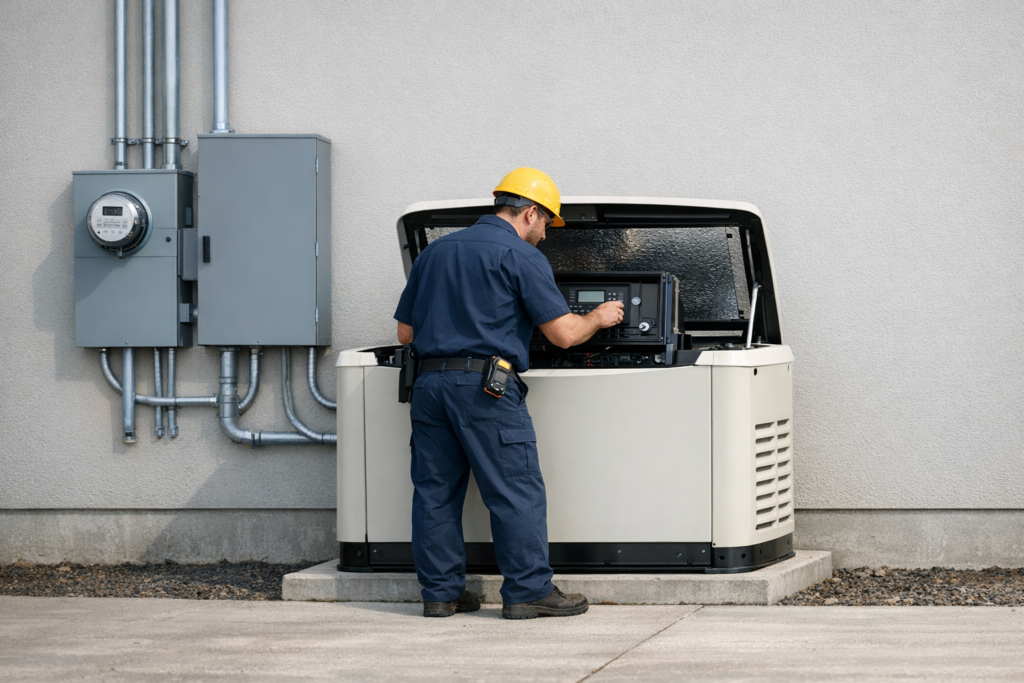
A commercial backup generator can help a small business stay open, protect equipment, maintain security, and reduce costly downtime when utility power fails. The right system is not simply a generator placed outside the building. It requires careful planning around electrical load, essential circuits, transfer equipment, fuel source, installation location, code considerations, and long-term maintenance.
For businesses throughout New Hampshire, Massachusetts, Maine, and Vermont, backup power planning is especially important because severe winter weather, ice, wind, and seasonal storms can create extended outages. Whether you operate an office, retail space, restaurant, medical office, warehouse, multi-tenant property, or small manufacturing facility, the goal is the same: keep critical operations powered safely and reliably until utility service is restored.
Why Small Businesses Need a Backup Power Plan
A power outage affects more than lights. It can interrupt payment systems, internet service, phone systems, refrigeration, heating equipment, sump pumps, access control, security cameras, fire alarm support equipment, production tools, and customer-facing operations.
For some businesses, even a short outage can mean lost revenue. For others, the bigger risk is damage to inventory, safety systems, data, or building infrastructure. A planned commercial backup generator system helps reduce those risks by automatically or manually supplying power to selected electrical loads during an outage.
Common reasons small businesses invest in emergency power include:
- Keeping point-of-sale systems, phones, computers, and internet equipment operating
- Maintaining refrigeration, freezers, or temperature-sensitive storage
- Supporting heating, ventilation, and critical mechanical systems during winter outages
- Keeping security lighting, access control, cameras, and alarm systems active
- Reducing business interruption and customer inconvenience
- Protecting tenants, employees, and visitors in commercial properties
- Supporting critical equipment in professional offices, shops, and light industrial spaces
Start With Critical Loads, Not Generator Size
One of the most common mistakes in backup power planning is starting with a generator size before identifying what actually needs to run. A properly designed system begins with a load assessment.
A licensed electrician evaluates the equipment and circuits that matter most during an outage. This may include lighting, IT equipment, refrigeration, heating system components, well pumps, sump pumps, air compressors, selected receptacles, security systems, or specialized business equipment.
Not every circuit needs generator power. In many small businesses, a well-planned partial backup system is more practical and cost-effective than trying to power the entire building. The best approach depends on the business, the building, and the consequences of downtime.
Essential Loads
Essential loads are the circuits your business needs to function safely and maintain critical operations. These usually include security systems, network equipment, emergency lighting support, refrigeration, selected workstations, heating controls, and other systems that cannot be offline for long.
Optional Loads
Optional loads may improve comfort or convenience but are not always required during an outage. Examples may include general office receptacles, non-critical lighting zones, some HVAC equipment, or equipment that can be temporarily shut down.
High-Demand Loads
Large motors, electric heat, commercial kitchen equipment, air conditioning units, compressors, and production machinery can significantly affect generator sizing. These loads may require special planning because startup current can be much higher than normal running current.
Automatic Standby Generators Versus Portable Generators
Small businesses often compare permanent standby generators with portable generator setups. Both can provide backup power, but they are very different in safety, capacity, convenience, and reliability.
A permanent commercial backup generator is installed outside the building and connected to the electrical system through approved transfer equipment. Many systems start automatically when utility power fails and shut down after utility power returns. This is usually the preferred option for businesses that need dependable backup power without relying on staff to set up equipment during a storm.
Portable generators may be suitable for limited temporary needs, but they require manual setup, fuel handling, weather protection, and properly installed transfer equipment. A portable generator should never be connected to a building electrical system without an approved transfer switch or interlock equipment installed by a qualified electrician. Improper connections can create serious shock, fire, and utility backfeed hazards.
For most commercial properties, a permanently installed standby generator provides better reliability, safer operation, cleaner integration, and stronger long-term value.
The Role of the Transfer Switch
The transfer switch is one of the most important parts of a generator system. It separates utility power from generator power and directs electricity to the selected circuits or service equipment.
Without proper transfer equipment, a generator can backfeed electricity into utility lines or energize parts of the electrical system unexpectedly. This creates dangerous conditions for utility workers, electricians, employees, and the building itself.
There are two general approaches:
- Manual transfer equipment: A person must start the generator and switch selected circuits or loads to generator power.
- Automatic transfer equipment: The system detects utility power loss, starts the generator, transfers power, and returns to utility power when service is restored.
Automatic transfer is often the better choice for businesses that operate outside normal hours, manage temperature-sensitive inventory, or cannot depend on someone being available during an outage.
Choosing the Right Fuel Source
Fuel availability is a practical part of generator planning. Common standby generator fuel options include natural gas, propane, and diesel. The right choice depends on the property, local availability, runtime needs, generator size, storage considerations, and maintenance expectations.
Natural gas can be convenient where service is available because it avoids onsite fuel storage. Propane is common in many New England properties, especially where natural gas service is not available. Diesel may be used for certain larger commercial applications where output, runtime, or operational requirements make sense.
Each fuel type has advantages and limitations. A qualified electrical contractor works alongside the appropriate fuel professionals and equipment providers to help ensure the generator, transfer equipment, fuel supply, and installation requirements are properly coordinated.
Generator Placement and Site Planning
Generator location affects safety, performance, service access, noise, airflow, and code compliance. A commercial backup generator must be placed where exhaust can discharge safely, airflow is adequate, maintenance access is available, and the equipment is protected from avoidable damage.
In New England, placement also needs to account for snow accumulation, ice, roof runoff, drifting, plowing activity, and storm debris. A generator that is blocked by snow or installed where exhaust can be restricted may not operate safely when it is needed most.
Important site planning considerations include:
- Safe clearance from doors, windows, vents, and air intakes
- Service access for electricians and generator maintenance technicians
- Protection from vehicle impact in parking or loading areas
- Drainage, snow removal, and roofline conditions
- Noise considerations for employees, customers, tenants, and neighboring properties
- Routing for electrical conduits and fuel supply connections
- Stable mounting surface and manufacturer installation requirements
Electrical Panel and Service Considerations
Backup power planning often reveals limitations in the existing electrical system. Older commercial panels, crowded electrical rooms, outdated breakers, insufficient capacity, poor labeling, or previous modifications can complicate generator installation.
Before installing a commercial backup generator, an electrician should review the service equipment, distribution panels, grounding and bonding conditions, circuit labeling, available physical space, and overall system condition. In some cases, panel upgrades, service changes, new subpanels, or circuit reorganization may be recommended before or during the generator project.
This is especially important in older buildings throughout New Hampshire, Massachusetts, Maine, and Vermont, where electrical systems may have been expanded over decades as business needs changed. A generator installation is an opportunity to improve organization, reliability, and safety instead of simply adding equipment to an already stressed system.
What Size Generator Does a Small Business Need?
The correct generator size depends on the electrical loads that must run during an outage, the starting requirements of motors and equipment, voltage and phase requirements, and whether the system will support selected circuits or the entire facility.
A generator that is too small may overload, trip offline, or fail to start important equipment. A generator that is significantly oversized can increase installation cost, fuel consumption, and maintenance needs without providing a meaningful benefit.
Professional sizing typically considers:
- Running wattage or amperage of critical equipment
- Startup current for motors, compressors, pumps, and HVAC equipment
- Single-phase or three-phase service requirements
- Voltage requirements for business equipment
- Future expansion plans
- Whether loads will be staged or started all at once
- Manufacturer requirements for sensitive electronics or specialized equipment
For a small office, the priority may be computers, networking equipment, lights, and heating controls. For a restaurant or market, refrigeration and food storage may be the most important loads. For a property manager, life safety support systems, access control, sump pumps, common area lighting, and heating equipment may take priority.
Planning for Sensitive Electronics and Business Equipment
Many modern businesses depend on electronics that are sensitive to voltage fluctuations, surges, and abrupt shutdowns. Servers, networking equipment, point-of-sale systems, security equipment, medical office technology, and control systems may need additional protection beyond generator power.
A complete backup power plan may include surge protection, battery backup units for short-term ride-through, dedicated circuits, equipment grounding review, and organized panel labeling. Generator power can keep systems running during an extended outage, while supplemental protection can help reduce damage during switching events, utility disturbances, and power restoration.
Businesses should also have an orderly shutdown plan for equipment that should not be abruptly disconnected if generator capacity becomes limited.
Installation Should Be Handled by Qualified Electrical Professionals
A commercial generator installation involves utility coordination, service equipment, transfer switches, grounding and bonding, load calculations, fuel coordination, and safety requirements. This is not work for unqualified personnel.
A licensed electrical contractor can evaluate the building, design a safe connection method, install the transfer equipment, coordinate required inspections when applicable, and verify that the system operates as intended. For commercial properties, proper documentation and clear circuit labeling are also important for future maintenance and emergency response.
Safety warning: Never connect a generator directly to a panel, receptacle, or building wiring using improvised cords or unapproved methods. Unsafe generator connections can cause electrocution, fire, equipment damage, carbon monoxide hazards, and dangerous utility backfeed.
Maintenance Keeps Backup Power Reliable
A generator is only valuable if it works when the power goes out. Routine maintenance should be part of the plan from the beginning.
Maintenance needs vary by equipment type and manufacturer, but generally include periodic exercising, battery checks, oil and filter service, coolant checks where applicable, fuel system review, visual inspection, load testing recommendations, and verification that transfer equipment operates properly.
Businesses should keep maintenance records and assign responsibility for monitoring the system. After a major outage, it is also wise to have the system inspected for error codes, fuel issues, battery condition, and any signs of overheating or abnormal operation.
Common Backup Power Planning Mistakes
Small businesses can avoid many generator problems by planning carefully before installation. Common mistakes include:
- Buying a generator before completing a professional load assessment
- Trying to power the entire building when only critical loads are necessary
- Overlooking motor startup requirements
- Failing to plan for snow, ice, drainage, and service access
- Using improper temporary connections instead of approved transfer equipment
- Ignoring fuel availability and expected runtime
- Forgetting about maintenance after installation
- Assuming older panels can support new equipment without evaluation
- Leaving circuits poorly labeled, making emergency operation more difficult
A thoughtful plan reduces surprises, improves safety, and helps the generator system match real business needs.
Cost Factors to Expect
The cost of a commercial backup generator project depends on more than the generator itself. Key cost factors include generator capacity, transfer switch type, fuel source, electrical service configuration, distance from the electrical room, trenching or conduit routing, concrete pad or mounting requirements, panel modifications, and site conditions.
Automatic systems generally cost more than manual systems, but they provide greater convenience and reliability for businesses that cannot afford downtime. Similarly, whole-building backup typically costs more than selected-circuit backup, but it may be justified for certain operations.
The best way to control cost is to define clear priorities. A professional assessment can separate must-have loads from convenience loads and identify the most practical system design.
How to Prepare Before Meeting With an Electrical Contractor
Before requesting a generator assessment, gather basic information about your business operations and outage priorities. This helps the contractor understand what matters most and design a system around real-world needs.
Helpful preparation includes:
- Listing the equipment that must operate during an outage
- Identifying any temperature-sensitive inventory or critical processes
- Noting your normal business hours and whether after-hours backup is important
- Gathering information about existing panels and service equipment if available
- Thinking about future growth, added equipment, or tenant changes
- Identifying past outage issues at the property
- Considering how long the business needs to operate without utility power
This information helps turn a generator estimate into a practical backup power strategy.
Dependable Backup Power Starts With a Practical Plan
A commercial backup generator is an investment in safety, continuity, and resilience. The most reliable systems are designed around the specific needs of the building and business, not guesswork or one-size-fits-all equipment.
Electrical Constructors LLC helps homeowners, businesses, contractors, developers, and property managers throughout New Hampshire, Massachusetts, Maine, and Vermont plan and install dependable electrical systems, including generator connections, service upgrades, panel work, troubleshooting, inspections, and preventative maintenance.
If your business cannot afford to be caught off guard by the next outage, now is the time to evaluate your electrical system, identify critical loads, and plan a backup power solution that is safe, reliable, and built for long-term performance.