Property manager electrical safety starts with a proactive plan: know the condition of each electrical system, respond quickly to warning signs, schedule qualified inspections, and keep accurate maintenance records. Whether you oversee apartments, condominiums, offices, retail spaces, industrial buildings, or mixed-use properties, electrical reliability directly affects tenant safety, code compliance, operating costs, and liability exposure.
Electrical issues are not always obvious. A building may appear to operate normally while overloaded circuits, aging panels, loose terminations, damaged wiring, poor grounding, or outdated equipment create hidden risk. For property managers throughout New Hampshire, Massachusetts, Maine, and Vermont, older buildings, severe winter weather, seasonal power demands, and generator preparedness make electrical safety even more important.
Why Electrical Safety Matters for Property Managers
Property managers are often the first line of defense when electrical problems appear. Tenants, maintenance staff, contractors, and vendors may report flickering lights, tripped breakers, burning odors, warm outlets, or equipment failures. How quickly those concerns are evaluated can determine whether a minor repair becomes a major outage, fire hazard, or emergency service call.
A strong electrical safety program helps property managers:
- Reduce the risk of electrical fires, shocks, and equipment damage.
- Improve tenant confidence and comfort.
- Protect expensive building systems such as HVAC, refrigeration, elevators, pumps, and security equipment.
- Plan electrical upgrades before failures occur.
- Document maintenance activity for owners, insurers, and future contractors.
- Support long-term reliability and predictable operating costs.
Electrical systems should not be treated as a “fix it when it fails” asset. Preventative maintenance is almost always less disruptive than emergency troubleshooting after tenants lose power or equipment shuts down.
Know the Electrical System in Each Property
One of the most practical steps in property manager electrical safety is developing a clear understanding of what electrical equipment exists at each building. Many properties have been renovated, expanded, reconfigured, or repurposed over time. Panels may not be clearly labeled, circuits may serve unexpected areas, and older equipment may no longer meet the building’s actual electrical demand.
At minimum, property managers should know:
- The location of main electrical service equipment.
- The location of electrical panels, subpanels, meters, disconnects, and transformer areas.
- Which panels serve tenant spaces, common areas, mechanical systems, exterior lighting, parking areas, and life safety equipment.
- Whether the property has backup power, surge protection, EV charging, or specialty equipment.
- Which electrical areas require restricted access.
- Whether panel directories are accurate and readable.
Accurate labeling is more than a convenience. In an outage or emergency, clear circuit identification helps qualified electricians troubleshoot faster and helps maintenance teams avoid shutting off the wrong equipment.
Schedule Routine Electrical Inspections
Routine electrical inspections help identify hazards before they disrupt tenants or damage property. The right inspection schedule depends on building age, use, electrical load, equipment condition, and past maintenance history. A high-demand commercial facility may need more frequent review than a small residential property with a straightforward electrical system.
A professional inspection may include evaluation of:
- Electrical panels and breakers.
- Service equipment and disconnects.
- Visible wiring, conduit, boxes, and terminations.
- Grounding and bonding conditions where accessible.
- GFCI and AFCI protection where applicable.
- Emergency lighting, exit lighting, and exterior lighting.
- Signs of overheating, corrosion, moisture intrusion, or physical damage.
- Evidence of overloaded circuits or improper modifications.
Inspections are especially important when acquiring a new property, preparing for renovations, responding to repeated electrical complaints, changing tenant use, or before adding major loads such as commercial kitchen equipment, EV chargers, HVAC equipment, machinery, or backup generators.
Take Warning Signs Seriously
Electrical problems often provide early warning signs before a complete failure occurs. Property managers should train staff and encourage tenants to report concerns immediately rather than ignoring inconvenient symptoms.
Common warning signs include:
- Breakers that trip repeatedly.
- Lights that flicker, dim, buzz, or fail prematurely.
- Outlets or switches that feel warm to the touch.
- Burning, smoky, or fishy odors near electrical devices.
- Discolored outlets, switch plates, panels, or cords.
- Sparking when plugging in equipment.
- Crackling sounds from panels, outlets, or light fixtures.
- Dead outlets or intermittent power in part of a building.
- Extension cords being used as permanent wiring.
Any burning odor, visible arcing, smoke, shock incident, or overheated electrical equipment should be treated as an urgent safety concern. Do not open panels, remove covers, or attempt electrical repairs without a qualified electrician.
Keep Electrical Panels Accessible and Protected
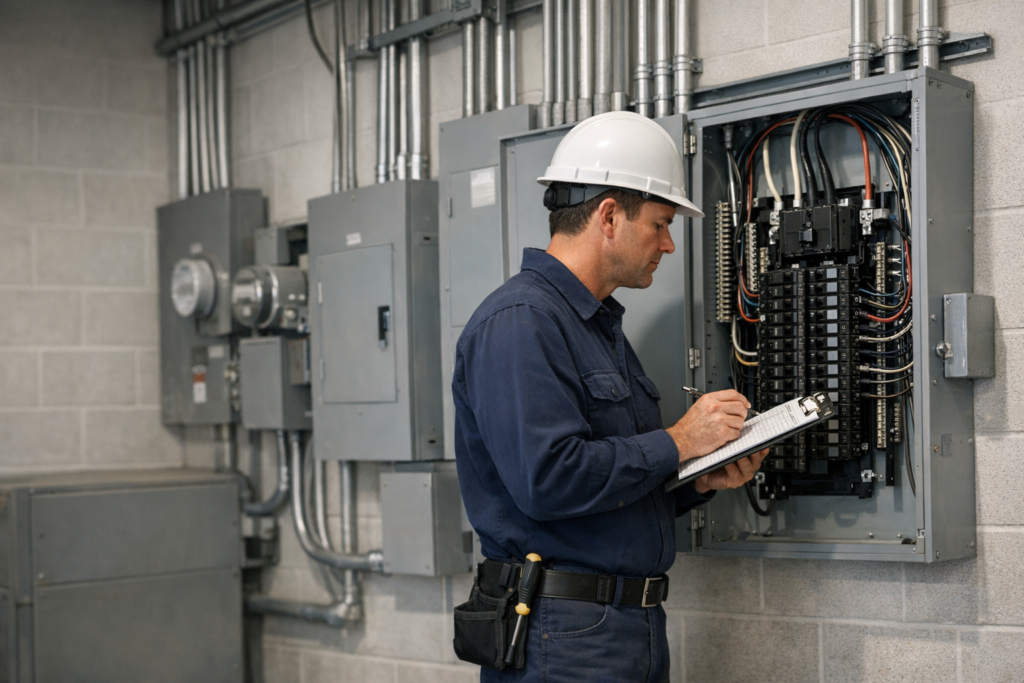
Electrical panels and service equipment must remain accessible for maintenance, troubleshooting, and emergency response. In managed properties, electrical rooms often become storage areas, which can create safety hazards and delay service during an outage.
Property managers should make sure electrical areas are:
- Kept clear of stored items, cleaning supplies, furniture, boxes, and combustible materials.
- Locked or restricted when appropriate.
- Dry, clean, and protected from leaks or water intrusion.
- Well lit enough for safe inspection and service.
- Clearly labeled so maintenance staff and electricians can locate equipment quickly.
Moisture is a major concern in New England properties, especially during snow melt, heavy rain, basement seepage, and freeze-thaw cycles. If water is entering an electrical room, affecting a panel, or dripping near electrical equipment, the condition should be addressed immediately by the appropriate professionals.
Do Not Ignore Aging Electrical Infrastructure
Many properties in New Hampshire, Massachusetts, Maine, and Vermont were built before today’s electrical demands existed. Older homes and commercial buildings may now support computers, servers, high-efficiency heating systems, heat pumps, commercial appliances, security systems, EV chargers, tenant electronics, and modern lighting controls.
Aging electrical systems do not automatically mean a property is unsafe, but they do require careful evaluation. Warning signs that an upgrade may be needed include:
- Insufficient panel capacity for current tenant needs.
- Frequent breaker trips or overloaded circuits.
- Outdated or damaged panels and disconnects.
- Limited dedicated circuits for appliances or equipment.
- Older wiring that has deteriorated or been modified improperly.
- Tenants relying heavily on power strips or extension cords.
- Planned additions of EV charging, generators, HVAC upgrades, or tenant buildouts.
Service upgrades, panel upgrades, rewiring, and dedicated circuit installations should be planned before demand exceeds what the system can safely support. A licensed electrical contractor can evaluate available capacity and recommend practical options based on the property’s current and future needs.
Use Preventative Maintenance to Reduce Emergency Calls
Preventative electrical maintenance helps property managers avoid costly disruptions. It is especially valuable for commercial properties, apartment buildings, industrial spaces, and facilities where downtime affects tenants, customers, inventory, or business operations.
A practical maintenance plan may include:
- Visual inspection of panels, disconnects, and electrical rooms.
- Testing emergency and exit lighting.
- Checking exterior lighting and parking lot lighting.
- Reviewing tenant complaints for repeated electrical symptoms.
- Confirming panel directories remain accurate after repairs or renovations.
- Inspecting GFCI-protected locations such as kitchens, bathrooms, garages, basements, utility areas, and exterior outlets.
- Evaluating surge protection and sensitive equipment protection.
- Reviewing generator condition and transfer equipment where installed.
Preventative maintenance also creates useful documentation. When ownership changes, tenant spaces are improved, or insurance questions arise, records of inspections and repairs can help show that electrical systems have been actively managed.
Manage Tenant Improvements and Buildouts Carefully
Tenant turnover and interior renovations are common sources of electrical problems. A new tenant may need more receptacles, brighter lighting, dedicated equipment circuits, different layouts, upgraded data infrastructure, or added HVAC capacity. If those changes are made without proper electrical planning, the building can end up with overloaded circuits, poor labeling, inaccessible junction boxes, or unsafe modifications.
Before approving tenant improvements, property managers should consider:
- Whether the existing electrical service can support the proposed use.
- Whether new equipment needs dedicated circuits.
- How lighting changes will affect energy use and occupant comfort.
- Whether panels have available capacity and physical space.
- Whether shutdowns will affect other tenants or common building systems.
- Whether work should be coordinated with general contractors, engineers, architects, or facility staff.
Electrical work performed during buildouts should be completed by qualified professionals and documented clearly. This protects the building owner and makes future service easier.
Pay Attention to Lighting Safety and Reliability
Lighting is both a safety issue and an operating cost issue. Poor lighting increases the risk of trips, falls, security concerns, tenant complaints, and code-related problems. In commercial and multifamily properties, common areas, stairwells, entrances, parking areas, loading areas, and exterior walkways should be regularly evaluated.
Property managers should monitor:
- Burned-out or flickering fixtures.
- Emergency and exit lighting operation.
- Exterior fixtures affected by snow, ice, water, or impact damage.
- Lighting controls, timers, photocells, and occupancy sensors.
- Dark areas in parking lots, hallways, entrances, and service areas.
LED lighting upgrades can improve visibility, reduce maintenance frequency, and lower energy use when designed properly. However, fixture selection, controls, color temperature, and placement matter. A poorly planned lighting upgrade may create glare, uneven coverage, or tenant dissatisfaction.
Prepare for Power Outages and Severe Weather
New England weather can be hard on electrical systems. Snow, ice, wind, heavy rain, power outages, fallen branches, and freezing temperatures can all affect managed properties. Outage planning is especially important for buildings with life safety systems, sump pumps, security systems, refrigeration, heat, communications equipment, or medically vulnerable tenants.
Property managers should have a clear plan for:
- Who tenants or staff should contact during an electrical outage.
- Which building systems are critical and must be restored first.
- Whether the property has backup power or needs a generator evaluation.
- How portable generator use is restricted or managed for safety.
- Where electrical service equipment and disconnects are located.
- How to document storm-related electrical damage.
Generator installation can be an excellent investment for certain properties, but it must be properly sized, safely connected, and integrated with appropriate transfer equipment. Improper generator connections can create severe hazards for occupants, electricians, utility workers, and equipment.
Control Extension Cord and Power Strip Risks
Extension cords and power strips are common in offices, rental units, maintenance areas, and commercial spaces. They are also frequently misused. Temporary cords should not replace permanent wiring, and power strips should not be used to compensate for too few outlets or overloaded circuits.
Property managers should watch for:
- Extension cords running through doorways, under rugs, or across walkways.
- Cords that are damaged, pinched, frayed, or warm.
- Multiple power strips connected together.
- Space heaters or high-load appliances plugged into inadequate devices.
- Temporary wiring left in place long term.
If tenants consistently rely on temporary cords, the better long-term solution may be adding properly installed receptacles or dedicated circuits where the power is actually needed.
Protect Sensitive Equipment with Surge Protection
Modern properties rely on electronics. Security systems, fire alarm equipment, access control, network equipment, HVAC controls, appliances, office equipment, and tenant electronics can all be affected by voltage fluctuations and surges.
Surge protection can help reduce risk from certain electrical surges, especially when used as part of a broader electrical protection strategy. Property managers should consider surge protection when properties contain:
- Electronic access and security systems.
- Commercial refrigeration or food service equipment.
- Office technology and networking equipment.
- HVAC controls and building automation systems.
- EV charging equipment.
- Generator and transfer equipment.
No surge device can protect against every possible event, but properly selected and installed surge protection can support equipment reliability and reduce exposure to preventable damage.
Plan for EV Charging Before Demand Grows
EV charging is becoming a more common request at residential communities, workplaces, retail properties, and commercial facilities. For property managers, the biggest mistake is treating EV charger installation as a simple device upgrade rather than an electrical infrastructure decision.
Before installing EV chargers, evaluate:
- Available electrical capacity.
- Panel and service limitations.
- Parking layout and conduit routing.
- Tenant, employee, resident, or customer charging needs.
- Future expansion potential.
- Load management options.
- Maintenance and access considerations.
Good planning can reduce unnecessary rework. Even if a property starts with only one or two chargers, it is wise to consider what demand may look like in the future.
Document Electrical Work and Service History
Accurate documentation is one of the most overlooked parts of property manager electrical safety. When records are incomplete, future troubleshooting takes longer and electrical decisions become less reliable.
Keep organized records of:
- Electrical inspections.
- Panel schedules and labeling updates.
- Service upgrades and panel replacements.
- Generator installation and maintenance.
- EV charger installation.
- Lighting upgrades and control changes.
- Tenant improvement electrical work.
- Emergency repairs and recurring issues.
Documentation helps owners budget for capital improvements, helps electricians diagnose recurring issues, and helps property managers communicate clearly with tenants, contractors, and insurance representatives.
Know What Maintenance Staff Should and Should Not Do
Maintenance teams are essential to property operations, but electrical work has serious limits. Staff may be able to identify symptoms, reset certain equipment when appropriate, replace lamps in approved fixtures, or report unsafe conditions. They should not perform work that requires electrical licensing, specialized testing, safe work procedures, or exposure to energized components.
As a general safety practice, maintenance staff should not:
- Open electrical panels to inspect internal components.
- Replace breakers or modify wiring.
- Bypass safety devices.
- Install new circuits or outlets.
- Repair damaged wiring.
- Attempt to diagnose burning odors, arcing, or overheating equipment internally.
Clear boundaries protect staff, tenants, and building ownership. When an issue involves wiring, panels, breakers, service equipment, repeated trips, heat, smoke, or shocks, call a qualified electrician.
Common Electrical Mistakes Property Managers Should Avoid
Many electrical risks develop gradually through small decisions made over time. Avoiding these common mistakes can significantly improve safety and reliability:
- Waiting for failure before calling an electrician. Repeated symptoms usually indicate an underlying issue.
- Allowing electrical rooms to become storage areas. Access matters during emergencies and service calls.
- Approving tenant changes without electrical review. New equipment may exceed available capacity.
- Relying on temporary cords as permanent solutions. Additional outlets or circuits may be needed.
- Ignoring inaccurate panel labels. Poor labeling slows troubleshooting and increases confusion.
- Overlooking exterior electrical equipment. Weather, snow removal, landscaping, and vehicle impact can damage outdoor systems.
- Skipping generator maintenance. Backup power is only useful when it is ready to operate safely.
When to Call a Licensed Electrical Contractor
Property managers should contact a licensed electrical contractor whenever there is a safety concern, recurring electrical issue, planned upgrade, tenant buildout, or uncertainty about system capacity. Electrical repairs and installations are not the place for guesswork.
Call an electrician for:
- Frequent breaker trips or unexplained outages.
- Warm outlets, burning smells, smoke, or arcing.
- Panel upgrades or service upgrades.
- Electrical inspections before renovations or acquisitions.
- Generator installation or troubleshooting.
- EV charger installation.
- Commercial lighting upgrades.
- Code corrections and unsafe wiring conditions.
- Electrical work related to tenant improvements.
Electrical Constructors LLC provides residential, commercial, industrial, and new construction electrical services for property owners and managers throughout New Hampshire, Massachusetts, Maine, and Vermont. From troubleshooting and inspections to panel upgrades, lighting, generators, EV charging, and preventative maintenance, working with an experienced electrical contractor helps keep properties safer and more dependable.
A Practical Electrical Safety Checklist for Property Managers
Use this checklist as a starting point for improving electrical safety across managed properties:
- Keep electrical panels and service equipment accessible.
- Make sure panel directories are accurate and readable.
- Respond quickly to flickering lights, breaker trips, burning odors, warm outlets, and shock reports.
- Schedule periodic electrical inspections based on property age, use, and system condition.
- Document all electrical repairs, upgrades, inspections, and contractor recommendations.
- Review electrical capacity before tenant buildouts or major equipment changes.
- Maintain exterior, emergency, and common-area lighting.
- Evaluate backup power needs before severe weather season.
- Discourage improper extension cord and power strip use.
- Plan ahead for EV charging, surge protection, and energy-efficient lighting upgrades.
A proactive approach to property manager electrical safety reduces risk, improves reliability, and helps protect the long-term value of the property. The most effective strategy is simple: inspect regularly, document clearly, address warning signs early, and rely on qualified electricians for electrical work that affects occupant safety and building performance.