
A burning electrical smell should be treated as a warning sign, not a nuisance. That hot plastic, smoky, fishy, or scorched odor can indicate overheated wiring, a failing outlet, an overloaded circuit, damaged insulation, or a problem inside an electrical panel or device. If the smell is strong, recurring, or accompanied by smoke, sparks, heat, flickering lights, or a tripping breaker, stop using the affected equipment and contact a qualified electrician immediately.
What a Burning Electrical Smell Usually Means
Electrical systems are designed to carry current safely without producing noticeable heat or odor. When you smell something burning near an outlet, switch, light fixture, appliance, breaker panel, ceiling area, or commercial equipment, it often means electrical components are getting hotter than they should.
The odor may come from melting plastic, overheated wire insulation, scorched dust inside a device, arcing connections, failing motors, or components inside a panel or piece of equipment. In some cases, the smell appears before visible smoke or before a breaker trips, which is why it should never be ignored.
Common descriptions of electrical burning odors
- Hot plastic or melting insulation
- Fishy odor near an outlet, switch, or lighting fixture
- Smoky or scorched smell from a panel or appliance
- Chemical smell from a charger, power strip, or electronic device
- Burnt dust smell from equipment that recently turned on
A brief dusty smell from a heater or appliance that has not run in months may not always indicate a wiring problem. However, an odor that persists, grows stronger, returns repeatedly, or is localized near wiring, outlets, switches, fixtures, or the service panel requires professional attention.
What To Do Immediately If You Smell Burning Electricity
If you notice a burning electrical smell, your first priority is safety. Do not continue using the suspected circuit, appliance, or device while trying to see if the smell goes away.
- Stop using the affected device or area. Unplug small appliances or electronics only if it is safe to do so and the plug or outlet is not hot, smoking, or sparking.
- Turn off power if you can identify the circuit safely. If the smell appears to come from a specific outlet, room, appliance circuit, or light fixture, shut off the related breaker. If the panel itself smells burnt or feels hot, do not touch it repeatedly or attempt repairs.
- Look for warning signs from a safe distance. Check for smoke, discoloration, buzzing, flickering lights, tripped breakers, melted plastic, or unusual heat around outlets, switches, cords, and panels.
- Leave the area if there is smoke, active sparking, or visible fire. Call emergency services if there is any immediate fire risk.
- Call a licensed electrician. A burning odor can come from hidden wiring, loose connections, overheated breakers, or equipment failure that requires testing and repair.
Do not spray water into an electrical panel, remove panel covers, cut into walls, or disassemble outlets and switches unless you are qualified to do so. Electrical fire hazards can worsen quickly when disturbed incorrectly.
Where Burning Electrical Smells Commonly Start
Finding the source of the odor can be difficult because smells travel through walls, ceilings, ductwork, and open rooms. Still, certain areas deserve immediate attention.
Outlets and switches
A burning smell near an outlet or light switch may indicate loose wiring, worn contacts, damaged insulation, overloaded receptacles, backstabbed connections, or arcing inside the device box. Warm outlets, buzzing switches, discoloration, or a plug that fits loosely are all warning signs.
Electrical panels and breakers
A burnt odor near the electrical panel can be especially serious. Possible causes include a failing breaker, loose termination, overheated bus connection, overloaded circuit, corrosion, moisture intrusion, or improper previous work. Breakers that trip repeatedly should not be reset over and over without identifying the cause.
Lighting fixtures
Ceiling lights, recessed fixtures, bathroom fans, under-cabinet lighting, and exterior lights can produce an electrical burning odor when wiring, sockets, transformers, drivers, dimmers, or insulation clearances are compromised. The issue may be above the ceiling where it is not visible from inside the room.
Appliances, motors, and HVAC equipment
Large appliances and motor-driven equipment can produce burning odors from failing internal components, damaged cords, overloaded circuits, or overheating motors. In commercial settings, exhaust fans, rooftop equipment, refrigeration units, and production equipment should be evaluated quickly because downtime and fire risk can escalate.
Power strips, extension cords, and chargers
Cheap, damaged, or overloaded power strips and extension cords are common sources of overheating. Extension cords should not be used as permanent wiring, run under rugs, pinched behind furniture, or used to power high-demand appliances.
Why This Smell Should Never Be Ignored
A burning electrical smell often means heat is already being generated somewhere it should not be. Heat damages insulation, loosens connections, weakens components, and increases the chance of arcing. Arcing can create extremely high temperatures at a very small point, which may ignite nearby material before a homeowner or business owner sees visible flames.
Ignoring the smell can also lead to more expensive repairs. A minor loose connection may damage an outlet today, but if left unresolved it can affect wiring, breakers, connected equipment, or portions of the electrical system. For businesses, unresolved electrical odors may also create operational interruptions, equipment damage, tenant complaints, and safety concerns for employees or customers.
Common Causes in New England Homes and Buildings
Homes and commercial buildings throughout New Hampshire, Massachusetts, Maine, and Vermont often face electrical conditions that make burning odors especially important to investigate. Many properties in New England have older wiring, additions from different decades, aging panels, and changing electrical demands that were not part of the original design.
Severe winter weather can add stress to electrical systems. Space heaters, dehumidifiers, sump pumps, heat tape, electric baseboard heat, holiday lighting, and backup power equipment may all increase seasonal load. Snow, ice, wind, and moisture can also affect exterior wiring, service equipment, outdoor receptacles, lighting, and generator connections.
Older and historic homes deserve particular attention. Previous repairs, obsolete wiring methods, undersized circuits, or outdated panels may not be obvious until a circuit starts overheating under modern electrical demand. A licensed electrician can evaluate whether the issue is isolated or part of a larger system concern.
When You Should Call an Electrician
You should call a licensed electrician any time a burning electrical smell is strong, unexplained, recurring, or located near electrical equipment. The need becomes more urgent when the odor is accompanied by visible smoke, scorch marks, melted plastic, a warm breaker, flickering lights, buzzing sounds, or repeated breaker trips.
It is also wise to schedule an inspection if you recently added high-demand equipment, installed new appliances, renovated part of the property, experienced storm damage, or purchased an older home or building. A burning odor can be the first sign that the electrical system is not handling the load safely.
How a Professional Electrician Diagnoses the Problem
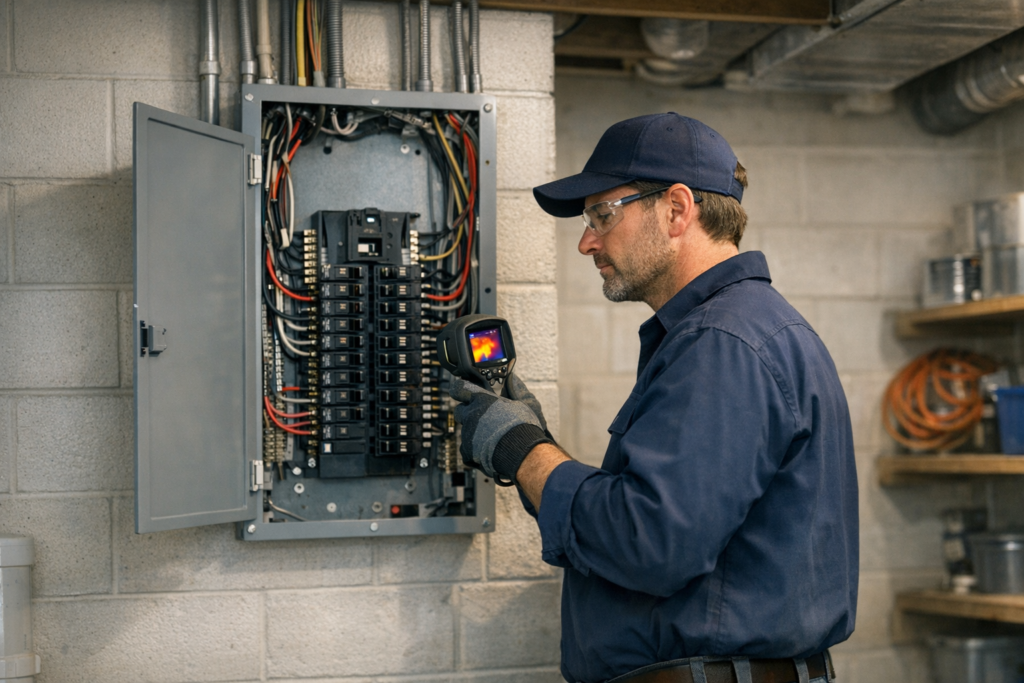
A proper diagnosis involves more than smelling around the room and replacing a device. An electrician may inspect the panel, test circuits, check connections, evaluate the load on the circuit, examine outlets and switches, look for heat damage, and verify whether the problem is isolated or systemic.
Depending on the situation, troubleshooting may include checking for loose terminations, damaged wiring, overloaded circuits, failing breakers, incorrect device ratings, faulty fixtures, damaged cords, or improper prior installations. Commercial properties may require additional coordination around equipment shutdowns, tenant areas, emergency lighting, dedicated circuits, and business continuity.
The goal is not only to remove the odor. The goal is to correct the unsafe condition that caused the smell in the first place.
How To Reduce the Risk of Electrical Burning Odors
Preventative maintenance can greatly reduce the likelihood of overheating electrical components. Homeowners, property managers, and business owners should pay attention to early warning signs and schedule electrical evaluations before small problems become urgent.
- Replace damaged cords, loose outlets, cracked cover plates, and worn switches.
- Avoid overloading outlets, power strips, and extension cords.
- Have repeated breaker trips professionally diagnosed.
- Use properly rated circuits for appliances, tools, HVAC equipment, EV chargers, and commercial equipment.
- Schedule inspections for older homes, rental properties, commercial spaces, and buildings with frequent electrical issues.
- Keep electrical panels accessible, dry, and free from stored materials.
- Install surge protection where appropriate to help protect sensitive equipment.
- Plan panel upgrades or service upgrades when electrical demand outgrows the existing system.
Electrical systems age, and electrical usage changes. A home or business that was adequate years ago may now support larger appliances, more electronics, EV charging, standby generator equipment, expanded lighting, and heavier everyday demand. Proactive improvements improve safety, reliability, and long-term performance.
Electrical Constructors LLC Can Help Identify and Correct the Hazard
Electrical Constructors LLC provides residential, commercial, industrial, and new construction electrical services throughout New Hampshire, Massachusetts, Maine, and Vermont. If you are dealing with a burning electrical smell, our team can troubleshoot the source, inspect affected circuits, repair unsafe wiring, replace damaged devices, evaluate panels, and recommend practical solutions that fit the condition of your property.
Whether the issue involves an outlet in an older home, a panel concern at a commercial property, a lighting problem in a rental unit, or an equipment circuit in a business facility, prompt professional evaluation is the safest next step. Electrical odors are not something to monitor casually. They are a sign that the system needs attention.
Frequently Asked Questions About Burning Electrical Smells
Is a burning electrical smell always an emergency?
Not every odor means there is an active fire, but it should always be treated seriously. If there is smoke, sparking, visible flame, a hot panel, or a strong odor that worsens, leave the area and call emergency services. If the smell is localized or recurring without visible fire, shut off the affected circuit if safe and contact a licensed electrician.
Why does my outlet smell like fish or hot plastic?
A fishy or plastic-like odor near an outlet can come from overheating electrical components, damaged insulation, or arcing inside the outlet box. Stop using the outlet and have it inspected before plugging anything back in.
Can a circuit breaker trip before there is a fire?
A breaker is designed to help protect a circuit from certain overloads and faults, but it does not identify every unsafe condition in advance. Loose connections, damaged devices, and localized overheating can still create hazards. A tripping breaker should be investigated, not repeatedly reset.
What if the smell only happens when I turn on a light or appliance?
If the odor appears only when a specific light, appliance, fan, heater, or machine runs, stop using that equipment until it is checked. The issue may be inside the device, the circuit, the switch, the fixture, or the panel feeding it.
Should I replace the outlet myself if it smells burnt?
Replacing the outlet without diagnosing the cause may leave the real hazard in place. Burn marks and odors can indicate damaged wiring, loose connections, improper circuit loading, or heat damage inside the box. A qualified electrician should inspect the circuit and make the correct repair.