
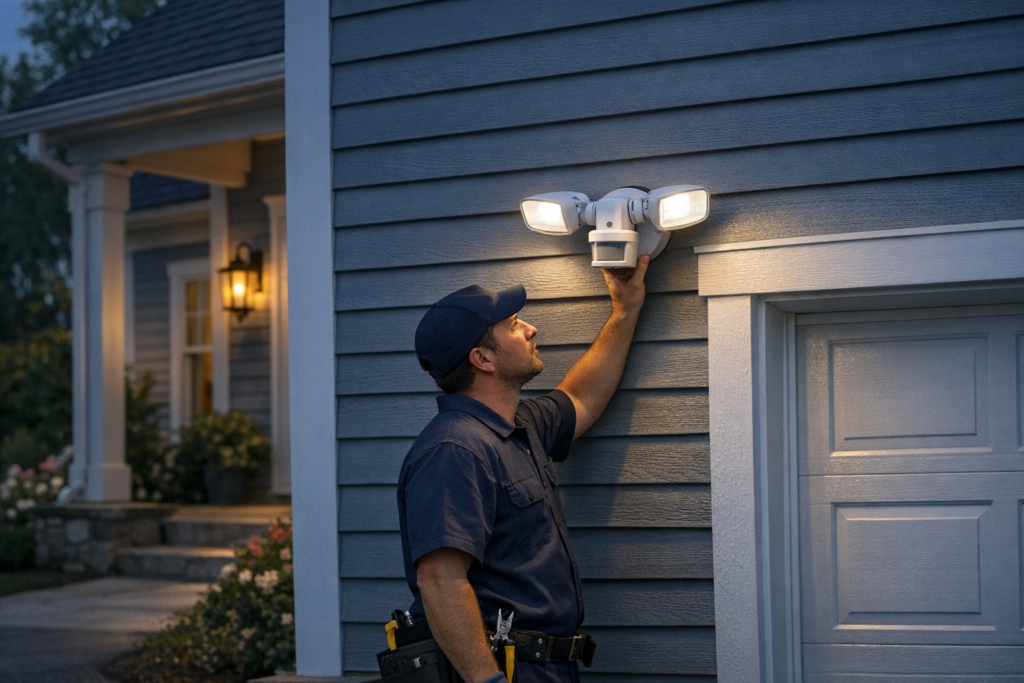
Motion sensor security lighting helps protect homes and businesses by automatically illuminating dark areas when movement is detected. A well-designed system can discourage unwanted activity, improve visibility, reduce trip hazards, and lower energy use compared with lights that stay on all night.
For property owners throughout New Hampshire, Massachusetts, Maine, and Vermont, exterior lighting is more than a convenience. Long winter nights, snow-covered walkways, rural driveways, commercial loading areas, and older properties with limited exterior lighting can all create safety and security concerns. Properly installed motion-activated lighting provides dependable coverage exactly when and where it is needed.
How Motion Sensor Security Lighting Works
Motion sensor security lighting combines a light fixture with a sensor that detects movement within a defined area. When the sensor identifies motion, it activates the fixture for a programmed length of time. Once movement stops, the light turns off automatically.
Most modern systems use one of several sensing technologies:
- Passive infrared sensors: These detect changes in heat from people, vehicles, and animals moving through the monitored area.
- Microwave sensors: These emit signals and detect changes caused by movement, often covering a broader area.
- Dual-technology sensors: These combine multiple detection methods to reduce false activations and improve reliability.
- Smart lighting controls: Some systems connect to apps, timers, cameras, or automation platforms for added control.
The best option depends on the property layout, mounting location, lighting objective, exposure to weather, and how much control the owner wants over the system.
Key Benefits For Homes And Businesses
Motion sensor security lighting offers practical advantages for residential, commercial, and multifamily properties. When installed correctly, it supports security, safety, energy efficiency, and everyday convenience.
Improved Security Around Vulnerable Areas
Dark exterior areas can make it easier for unwanted activity to go unnoticed. Motion-activated lights help remove that advantage by immediately illuminating driveways, entry doors, garages, side yards, alleys, parking areas, loading docks, dumpsters, and storage areas.
Security lighting is most effective when it is planned around actual risk points rather than installed randomly. A licensed electrician can evaluate where people approach the property, where shadows form, and which areas need clear visibility without creating glare for neighbors, drivers, or security cameras.
Safer Walkways, Entrances, And Parking Areas
Exterior darkness increases the risk of slips, trips, and falls. This is especially important in New England, where snow, ice, wet leaves, and uneven surfaces can make entrances and walkways hazardous.
Motion sensor lights can improve visibility near:
- Front and rear entrances
- Garage doors and driveways
- Decks, patios, and stairs
- Commercial sidewalks and ramps
- Parking lots and pedestrian paths
- Service doors and utility areas
For businesses and property managers, better exterior lighting can also help employees, tenants, customers, vendors, and maintenance crews move around the property more confidently after dark.
Better Energy Efficiency
One of the biggest advantages of motion sensor security lighting is that fixtures only operate when needed. Instead of leaving exterior lights on from sunset to sunrise, motion sensors limit run time while still providing light during activity.
Pairing motion sensors with LED fixtures improves efficiency even further. LED security lights use less energy than older incandescent, halogen, or high-intensity exterior fixtures and typically provide excellent brightness, long service life, and lower maintenance demands.
Added Convenience For Daily Use
Automatic lighting is helpful when carrying groceries, walking to a detached garage, taking out trash, unlocking a business entrance, or arriving home after dark. The light turns on without searching for a switch or leaving a fixture running unnecessarily.
For commercial properties, motion-activated lighting can also make after-hours access safer for delivery drivers, cleaning crews, managers, and emergency service personnel.
Support For Cameras And Security Systems
Security cameras perform better when the area is properly lit. A camera may have night vision, but strategically placed exterior lighting can improve image clarity, reduce shadows, and make recorded footage more useful.
However, brighter is not always better. Poorly aimed fixtures can create glare, wash out camera images, or leave deep shadows behind objects. An experienced electrician can help coordinate light placement with camera angles and building features.
Where Motion Sensor Lights Are Most Effective
Motion sensor security lighting works best when fixtures are placed with a clear purpose. The goal is to illuminate activity zones, not simply flood the property with light.
Common high-value locations include:
- Driveways: Helps detect vehicles, improve visibility, and light the path to the home or building.
- Entry doors: Makes locks, steps, thresholds, and visitors easier to see.
- Garages and outbuildings: Improves safety around detached structures and storage areas.
- Side yards: Covers areas that are often hidden from street view.
- Decks and patios: Adds visibility for outdoor living spaces and rear access points.
- Commercial service areas: Improves lighting at loading zones, dumpsters, utility entrances, and employee access doors.
- Parking areas: Helps customers, tenants, staff, and visitors navigate after dark.
For larger commercial or multifamily properties, a lighting layout may require multiple fixtures, separate sensor zones, timers, photocells, or lighting controls to avoid blind spots and nuisance activations.
Choosing The Right Fixture And Sensor
The right motion sensor security lighting system depends on more than brightness. Fixture type, mounting height, beam spread, weather rating, sensor range, wiring condition, and control options all affect performance.
Brightness And Beam Pattern
A common mistake is choosing the brightest fixture available without considering where the light will go. Excessive brightness can cause glare, disturb neighbors, and make it harder to see beyond the lit area. In many cases, a well-aimed moderate-output LED fixture provides better security than an overly bright floodlight.
Beam pattern matters as well. Narrow beams may be useful for targeted areas, while wider beams can cover driveways, yards, or commercial entrances. The goal is even illumination with minimal dark pockets.
Sensor Range And Detection Angle
Sensor range should match the space being monitored. A sensor that reaches too far may activate every time a car passes the property. A sensor with too little range may not turn on until someone is already at the door.
Detection angle is also important. Some fixtures monitor a narrow area, while others cover a wide field. Proper aiming reduces false alarms from tree movement, passing traffic, animals, or nearby pedestrian activity.
Weather Resistance
Exterior fixtures in New England must withstand rain, snow, ice, wind, temperature swings, and freeze-thaw conditions. Outdoor-rated fixtures, proper mounting, secure electrical connections, and weather-appropriate boxes and covers are essential for long-term reliability.
Improper installation can allow moisture into electrical components, leading to nuisance tripping, corrosion, fixture failure, or unsafe conditions. Exterior electrical work should always be completed with appropriate materials and methods for wet or damp locations.
Control Features
Many motion lights allow adjustment of sensitivity, time delay, dusk-to-dawn settings, and manual override. More advanced systems may integrate with smart controls or security platforms.
Simple controls are often best for residential properties, while commercial buildings may benefit from more advanced zoning, scheduling, or occupancy-based controls. A qualified electrician can recommend options that fit the property without overcomplicating the system.
Residential Applications
For homeowners, motion sensor security lighting can make a meaningful difference in everyday safety and peace of mind. It is especially useful for older homes that may have limited exterior lighting or outdated wiring serving outdoor fixtures.
Common residential applications include front entrances, back doors, garage areas, basement walkouts, sheds, barns, long driveways, and dark side yards. Homes in wooded or rural settings may also benefit from targeted lighting around detached structures and parking areas.
Before adding fixtures, it is important to evaluate the existing circuit capacity, switch locations, wiring condition, fixture boxes, and grounding. Older homes throughout New Hampshire, Massachusetts, Maine, and Vermont may need electrical updates before new exterior lighting can be safely installed.
Commercial And Property Management Applications
Commercial properties often need a more intentional lighting strategy. Motion sensor security lighting can support employee safety, customer access, property protection, and operational efficiency.
Useful applications include:
- Office building entrances and rear doors
- Retail storefronts and delivery areas
- Warehouses and loading docks
- Apartment and condominium common areas
- Maintenance yards and storage areas
- Parking lots and private drive lanes
- Mechanical and utility equipment areas
For businesses, lighting design should balance security, visibility, energy use, and the experience of tenants, customers, and neighboring properties. Fixtures must be located and aimed carefully to avoid glare, dark gaps, and unnecessary light spill.
Common Mistakes To Avoid
Motion-activated exterior lighting is effective when installed correctly, but mistakes can reduce performance or create frustration.
- Installing fixtures too low: Low-mounted lights may have limited coverage and can be easier to tamper with.
- Aiming sensors at roads or sidewalks: This often causes frequent false activation.
- Using excessive brightness: Too much light can create glare and harsh shadows.
- Ignoring weather exposure: Indoor-rated fixtures or improper boxes should not be used outdoors.
- Overlooking existing wiring issues: Aging wiring, loose connections, or overloaded circuits can create reliability and safety problems.
- Creating blind spots: One fixture may not properly cover multiple entrances or large exterior areas.
- Skipping adjustment after installation: Sensitivity, direction, and time settings often need fine-tuning after real-world use.
A professional installation helps avoid these problems by matching the fixture, sensor, wiring, and placement to the actual conditions on the property.
Why Professional Installation Matters
Installing motion sensor security lighting may seem simple, but exterior electrical work involves safety, weatherproofing, wiring integrity, circuit protection, and proper fixture support. A licensed electrician can verify that the installation is safe, reliable, and appropriate for the building.
Professional installation is especially important when:
- New wiring must be installed
- The existing fixture box is damaged or not rated for the application
- The property has older wiring or an outdated electrical panel
- Multiple fixtures or sensor zones are needed
- The lighting must coordinate with cameras, signage, or parking areas
- The fixture will be exposed to harsh weather
- The building is commercial, multifamily, or part of a managed property
Safe installation also helps prevent common issues such as flickering lights, nuisance breaker trips, moisture intrusion, loose fixtures, and unreliable sensor operation.
Maintenance Tips For Reliable Performance
Once installed, motion sensor security lighting should be checked periodically to keep it working properly. Routine maintenance is simple but important, especially after storms or seasonal changes.
- Clean sensor lenses so dirt, pollen, snow, or cobwebs do not affect detection.
- Confirm fixtures are still aimed correctly after wind, ice, or building maintenance.
- Test sensitivity and time-delay settings at night.
- Trim branches or vegetation that may repeatedly trigger the sensor.
- Inspect for cracked lenses, damaged housings, or signs of moisture.
- Replace failing lamps or aging fixtures before they stop working completely.
- Have an electrician evaluate recurring flickering, breaker trips, or inconsistent operation.
For commercial properties, exterior lighting should be part of a broader preventative maintenance plan. Regular inspections can help identify electrical issues before they become safety concerns or business disruptions.
Cost Considerations
The cost of motion sensor security lighting depends on the type of fixture, number of lights, wiring requirements, mounting locations, control features, and condition of the existing electrical system. Replacing an existing exterior fixture is usually simpler than installing new wiring to a previously unlit area.
Factors that can affect project cost include:
- Whether new circuits or wiring are required
- Fixture quality and weather rating
- Mounting height and access conditions
- Number of sensor zones
- Integration with cameras or smart controls
- Condition of existing boxes, switches, and wiring
- Residential versus commercial installation requirements
Although low-cost fixtures may be tempting, reliability matters. A durable, properly installed LED security light generally provides better long-term value than a cheaper fixture that fails early, leaks, or requires frequent adjustment.
When To Upgrade Existing Exterior Lighting
It may be time to upgrade if exterior lights are dim, unreliable, poorly placed, damaged, or expensive to operate. Older fixtures may not provide the coverage needed for modern security expectations, and some may be connected to aging wiring that should be inspected before replacement.
Consider upgrading if you notice:
- Dark areas near entrances or parking spaces
- Fixtures that flicker or fail repeatedly
- Lights that stay on all night unnecessarily
- Water inside fixture lenses or housings
- Loose, corroded, or damaged exterior boxes
- Security camera footage that is too dark or washed out
- Frequent nuisance activation from poor sensor placement
An electrical inspection can determine whether the issue is the fixture, sensor, wiring, control, or circuit. That evaluation helps property owners make informed decisions instead of repeatedly replacing lights without solving the underlying problem.
Work With An Experienced Electrical Contractor
Motion sensor security lighting is a practical upgrade for homes, businesses, and managed properties, but the results depend on proper design and installation. The right system should improve safety, provide reliable coverage, conserve energy, and withstand New England weather.
Electrical Constructors LLC provides residential, commercial, industrial, and new construction electrical services throughout New Hampshire, Massachusetts, Maine, and Vermont. Whether you need new exterior security lighting, troubleshooting for existing fixtures, electrical repairs, lighting upgrades, or a broader safety inspection, working with an experienced electrical contractor helps ensure the job is completed safely and correctly.