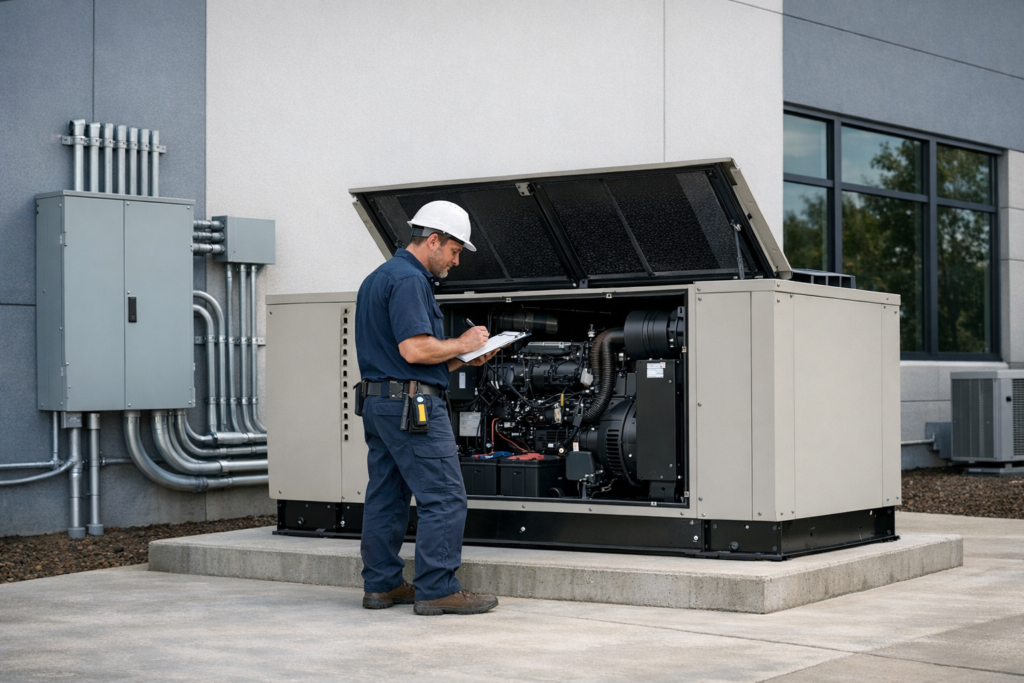
A commercial backup generator should be selected based on the electrical loads your business must keep running, the type of facility you operate, available fuel source, transfer switch requirements, installation conditions, maintenance needs, and long-term reliability expectations. For businesses in New Hampshire, Massachusetts, Maine, and Vermont, where winter storms, ice, wind, and utility outages can disrupt operations, the right generator system can protect revenue, equipment, inventory, safety systems, and customer confidence.
Why Backup Power Matters for Businesses in New England
Power outages are more than an inconvenience for commercial properties. A short interruption can shut down point-of-sale systems, refrigeration, security equipment, production machinery, medical devices, communications, sump pumps, heating systems, or server equipment. In colder climates, loss of power can also create frozen pipe risks, unsafe indoor conditions, and operational delays that extend well beyond the outage itself.
A properly designed commercial backup generator gives your business a controlled way to keep critical systems energized when utility power fails. The goal is not always to power every circuit in the building. In many cases, the smarter approach is to identify the loads that truly matter and design a dependable emergency or standby power system around those priorities.
Electrical Constructors LLC helps businesses, property managers, contractors, and commercial property owners evaluate generator options with a practical focus on safety, code-conscious installation, load requirements, and long-term performance.
Start by Identifying What Must Stay Powered
The first step in choosing a commercial backup generator is deciding what your business cannot afford to lose during an outage. This is called load prioritization, and it has a major impact on generator size, cost, fuel consumption, transfer equipment, and installation complexity.
Critical loads may include:
- Life safety and emergency lighting systems
- Fire alarm and security systems
- Heating equipment, boilers, furnaces, or controls
- Refrigeration, freezers, or temperature-controlled storage
- Computers, servers, and communications equipment
- Point-of-sale systems and payment processing equipment
- Production equipment or machinery
- Sump pumps, well pumps, and wastewater systems
- Access control, gates, overhead doors, and elevators where applicable
- Selected lighting and receptacle circuits for staff and customers
Some businesses need whole-building backup power. Others only need selected critical circuits. A restaurant, medical office, retail store, warehouse, multifamily property, office building, and manufacturing facility will each have different priorities. The best generator plan starts with how the building is actually used.
Understand Generator Sizing Before You Buy
Generator sizing is one of the most important parts of the process. A generator that is too small may overload, shut down, or fail to start large equipment. A generator that is much larger than necessary can cost more to install, consume more fuel, and operate less efficiently under light loads.
Commercial generator sizing should account for both running watts and starting demand. Motors, compressors, pumps, refrigeration equipment, HVAC systems, and some machinery can require significantly more power at startup than they use once running. This starting surge must be considered during load calculations.
A qualified electrician evaluates factors such as:
- The total connected load
- Which loads will run at the same time
- Motor starting requirements
- Voltage and phase requirements
- Existing electrical service size
- Panel capacity and distribution layout
- Whether loads will be managed automatically
- Future expansion plans
For many businesses, a professional load assessment is the difference between a dependable system and a costly mistake. Nameplate ratings alone do not always tell the full story, especially in buildings with mixed equipment, tenant spaces, older panels, or evolving electrical needs.
Decide Between Full-Building and Essential-Load Backup
A full-building commercial backup generator is designed to restore power to most or all of the facility. This approach is common when downtime is unacceptable, equipment is sensitive, or operations must continue with minimal interruption.
Essential-load backup powers only selected systems. This can be a cost-effective option for businesses that need to keep core functions running but do not need every light, receptacle, office, or piece of equipment energized during an outage.
Full-Building Backup
Full-building backup can offer simplicity for staff because the facility operates more normally during an outage. However, it typically requires a larger generator, more fuel capacity, and careful coordination with the existing service equipment.
Essential-Load Backup
Essential-load backup can reduce equipment cost and fuel usage, but it requires thoughtful planning. Critical circuits may need to be separated into a dedicated panel, and staff should understand which systems will and will not operate during generator power.
There is no single best choice for every facility. The right answer depends on your risk tolerance, budget, electrical infrastructure, and operational priorities.
Choose the Right Fuel Source
Commercial standby generators commonly run on natural gas, propane, or diesel. Each fuel type has advantages and limitations. The best choice depends on availability, runtime needs, site conditions, maintenance expectations, and the type of business being served.
Natural Gas Generators
Natural gas can be convenient where service is available because it does not require an on-site fuel tank in the same way propane or diesel does. However, capacity and pressure must be confirmed. Not every gas service is adequate for a large generator, especially when other equipment is also using gas.
Propane Generators
Propane is common in areas without natural gas service, including many rural and semi-rural parts of New Hampshire, Maine, and Vermont. Propane storage allows businesses to maintain an on-site fuel supply, but tank sizing, placement, accessibility, and refill planning are important considerations.
Diesel Generators
Diesel generators are often used for larger commercial, industrial, and mission-critical applications. They can provide strong performance for heavy loads, but they require fuel storage, routine fuel quality management, and maintenance planning.
Fuel selection should never be an afterthought. During extended outages, generator runtime depends on fuel availability, consumption rate, and the ability to safely refuel or maintain supply.
Do Not Overlook the Transfer Switch
The transfer switch is the device that safely transfers electrical load between utility power and generator power. It is one of the most important components in any commercial generator system.
An automatic transfer switch senses utility power loss, starts the generator, transfers the selected loads, and returns the building to utility power when service is restored. A manual transfer switch requires a person to operate the transfer process.
For most businesses, an automatic transfer switch provides the strongest continuity because power restoration does not depend on someone being on-site during a storm, overnight outage, weekend closure, or holiday. This is especially valuable for properties with refrigeration, security systems, pumps, remote operations, or tenant responsibilities.
Safety warning: A generator must never be connected in a way that can backfeed utility lines or energize circuits improperly. Transfer equipment must be properly selected and installed by qualified professionals.
Consider Single-Phase and Three-Phase Power Needs
Commercial buildings may have single-phase or three-phase electrical service. The generator must match the facility requirements and the equipment it will serve. Three-phase power is commonly found in commercial and industrial settings with larger HVAC units, machinery, pumps, compressors, and other motor-driven equipment.
Choosing the wrong generator configuration can create serious compatibility problems. For example, a business with three-phase equipment must ensure the backup power system is designed to support those loads correctly. This is another reason a professional electrical evaluation should happen before equipment is purchased.
Evaluate Site Conditions Before Selecting Equipment
The physical installation location affects generator selection, cost, maintenance access, noise, ventilation, fuel routing, and electrical routing. A generator needs a stable location, proper clearances, service access, and a layout that supports safe operation.
Important site considerations include:
- Distance from electrical service equipment
- Distance from doors, windows, vents, and air intakes
- Generator pad placement and drainage
- Snow accumulation and drifting during winter
- Protection from vehicle impact where needed
- Noise considerations for tenants, neighbors, or customers
- Fuel line or tank placement
- Maintenance access around the unit
- Exposure to coastal, rural, or severe weather conditions
In New England, snow and ice deserve special attention. A generator that is technically adequate but poorly located can become difficult to service or vulnerable to blocked airflow after a winter storm. Placement should support reliable operation in the conditions your property actually experiences.
Plan for Maintenance From the Beginning
A commercial backup generator is not a set-it-and-forget-it piece of equipment. Like any mechanical and electrical system, it needs routine maintenance to remain dependable.
Maintenance can include visual inspections, battery checks, oil and filter service, coolant checks where applicable, belt and hose inspections, load testing, exercising the generator, reviewing fault codes, checking transfer switch operation, and confirming that the surrounding area remains clear.
Many generator failures are not caused by the generator being too old. They happen because batteries fail, fuel quality declines, controls are ignored, airflow is blocked, or routine service is skipped. Preventative maintenance is especially important for businesses that rely on backup power for revenue protection, safety, refrigeration, tenant comfort, or critical operations.
Think About Electrical Code and Utility Coordination
Commercial generator installation must be handled with careful attention to electrical safety, manufacturer instructions, applicable codes, utility requirements, and local approval processes where required. Requirements can vary by location and property type, so assumptions are risky.
A qualified electrical contractor can help coordinate the installation from the electrical side, including generator connection methods, transfer equipment, grounding and bonding considerations, conductor sizing, load calculations, panel work, labeling, and safe integration with the existing electrical system.
For businesses, this coordination is particularly important because electrical downtime may need to be scheduled, tenants may need notice, and essential operations may need temporary planning during installation.
Common Mistakes Businesses Should Avoid
Generator projects become more expensive and frustrating when early decisions are made without a complete electrical review. Avoiding common mistakes can protect your budget and improve long-term reliability.
- Buying equipment before completing load calculations. The generator may not match the building needs.
- Assuming whole-building backup is always necessary. Essential-load systems may be more practical for some businesses.
- Ignoring motor starting loads. HVAC, pumps, compressors, and refrigeration equipment can strain an undersized generator.
- Forgetting about fuel availability. Runtime depends on fuel source, storage, delivery, and consumption.
- Choosing a poor installation location. Clearance, snow, noise, and service access matter.
- Overlooking maintenance. A neglected generator may fail when it is needed most.
- Using unqualified installation methods. Improper generator connections create serious safety hazards.
The most reliable systems are planned as complete electrical systems, not just equipment purchases.
Cost Factors That Influence a Commercial Generator Project
The cost of a commercial backup generator project depends on more than the generator itself. Businesses should budget for the full scope of work, not just the equipment price.
Cost factors may include:
- Generator size and fuel type
- Automatic or manual transfer equipment
- Electrical service configuration
- Distance between generator and electrical equipment
- Fuel piping or tank requirements
- Concrete pad or mounting needs
- Load management controls
- Panel modifications or critical-load panel installation
- Site access and trenching where needed
- Testing, startup, and maintenance planning
A lower upfront price is not always the best value. If the system is undersized, difficult to maintain, poorly located, or unable to support future business needs, the long-term cost can be higher. The best investment is a system designed for dependable operation, practical maintenance, and safe integration with your facility.
Questions to Ask Before Installing a Commercial Backup Generator
Before moving forward, business owners and property managers should ask clear questions that help define the project scope.
- Which systems must remain powered during an outage?
- Do we need full-building backup or selected critical circuits?
- What is the building service voltage and phase?
- Are there large motors, compressors, pumps, or HVAC loads?
- Which fuel source is available and practical for our site?
- How long do we need to operate during an extended outage?
- Where can the generator be installed safely and accessibly?
- Will an automatic transfer switch be needed?
- How will routine maintenance be handled?
- Are future tenant, equipment, or expansion needs expected?
These questions help create a generator plan that fits the business instead of forcing the business to adapt to the wrong system.
When to Involve an Electrical Contractor
Businesses should involve an electrical contractor early, ideally before purchasing a generator. Early planning allows the contractor to evaluate existing electrical equipment, calculate loads, identify installation challenges, review transfer switch options, and help avoid compatibility problems.
An experienced contractor can also help determine whether the existing panels, service equipment, and distribution layout can support the desired backup strategy. In older commercial buildings and mixed-use properties throughout New Hampshire, Massachusetts, Maine, and Vermont, this step is especially important because electrical systems may have been modified over many years.
Electrical Constructors LLC provides commercial electrical expertise for generator planning, installation support, electrical upgrades, troubleshooting, inspections, and preventative maintenance. A well-planned generator system should protect your operation today while supporting the way your business may grow in the future.
Final Thoughts on Selecting the Right System
The right commercial backup generator is the one that matches your actual electrical loads, outage risk, fuel availability, building infrastructure, and operational priorities. Sizing, transfer equipment, installation location, maintenance access, and professional electrical integration all matter.
For businesses in New England, backup power is not just about convenience. It is about protecting people, property, equipment, inventory, productivity, and continuity when weather or utility issues interrupt normal service. By working with a qualified electrical contractor and planning the system carefully, your business can make a smart investment in safer, more reliable power.