Modern electrical improvements can make a property safer, more functional, and more attractive to buyers. In many cases, electrical upgrades increase home value because they solve practical problems buyers care about: reliable power, updated panels, safer wiring, better lighting, EV charging readiness, backup power options, and room for future technology.
For homeowners, business owners, property managers, builders, and real estate professionals, electrical upgrades are not just cosmetic improvements. They affect how well a property supports daily life, modern appliances, climate control, security systems, computers, equipment, and long-term maintenance needs. In New Hampshire, Massachusetts, Maine, and Vermont, where many properties include older homes, historic buildings, seasonal power demands, and winter outage concerns, a well-planned electrical system can be a meaningful selling point.
Why Modern Electrical Systems Matter To Property Value
Buyers and tenants increasingly expect properties to support today’s electrical loads. A dated electrical system may not prevent a sale by itself, but it can raise concerns during showings, inspections, mortgage review, insurance evaluation, or renovation planning.
A modern electrical system helps communicate that the property has been maintained responsibly. It can reduce buyer uncertainty, support future improvements, and make the home or commercial space feel more move-in ready.
Electrical work may increase value in several ways:
- Improving safety and addressing outdated or damaged components
- Increasing electrical capacity for appliances, HVAC systems, workshops, offices, and technology
- Reducing nuisance breaker trips and overloaded circuits
- Supporting modern lighting, smart controls, EV chargers, generators, and surge protection
- Improving buyer confidence during inspection and negotiation
- Reducing the likelihood of expensive electrical surprises after purchase
The strongest return usually comes from upgrades that solve real limitations, correct safety concerns, or prepare the property for features buyers already want.
Electrical Panel Upgrades Are One Of The Most Valuable Improvements
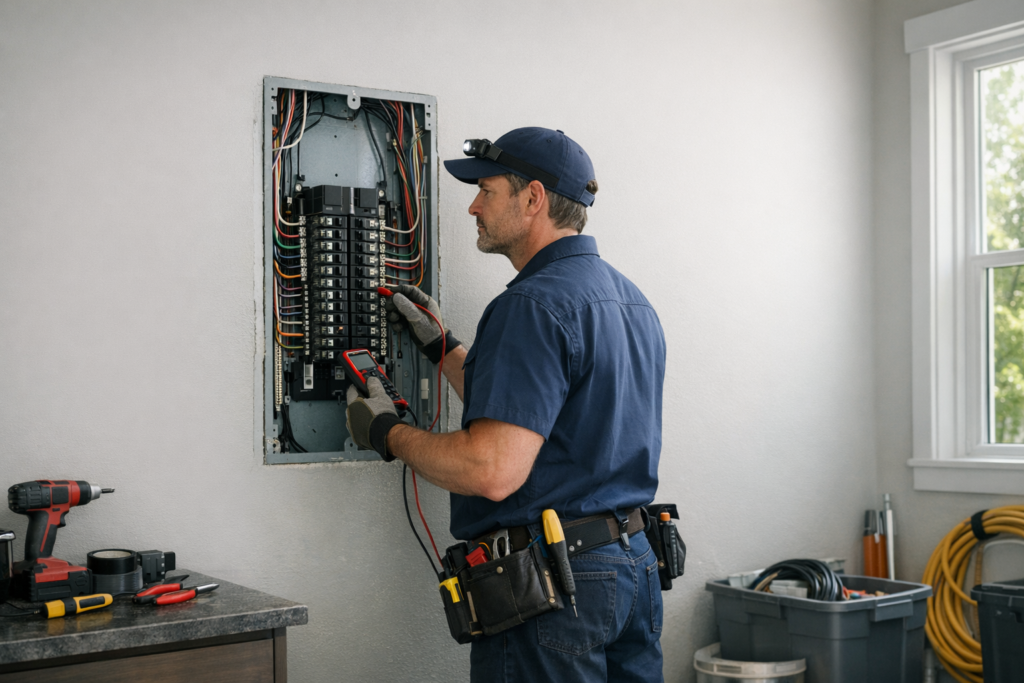
The electrical panel is the control center of the property’s electrical system. If it is outdated, undersized, damaged, poorly labeled, or full with no room for expansion, it can limit everything from remodeling plans to EV charger installation.
A panel upgrade can improve property value by increasing capacity, improving reliability, and making the system easier to service. It can also help support dedicated circuits for high-demand equipment such as electric ranges, dryers, heat pumps, hot tubs, workshop tools, commercial equipment, and vehicle chargers.
Signs A Panel Upgrade May Add Value
- Breakers trip frequently under normal use
- The panel is full and cannot support additional circuits
- The property still uses an older fuse box
- There are signs of corrosion, overheating, or physical damage
- Large appliances or HVAC equipment are being added
- The owner is planning a renovation, addition, or conversion
- An EV charger, standby generator, or major equipment upgrade is being considered
A qualified electrician can evaluate whether the existing panel can safely support the property’s load or whether an upgrade is appropriate. Not every property needs a larger panel, but many older New England homes and commercial spaces benefit from updated distribution equipment.
Service Upgrades Help Properties Meet Modern Power Demands
A service upgrade increases the electrical capacity coming into a property when the existing service is no longer adequate for current or planned electrical loads. This is different from simply replacing a panel, although the two projects are often related.
Service upgrades are especially important when a property is transitioning from older, lower-demand usage to modern electrical living. Today’s buildings may need to support heat pumps, electric water heating, EV charging, larger kitchens, home offices, server equipment, security systems, and more sophisticated lighting or controls.
For commercial properties, adequate service capacity can affect tenant flexibility, equipment planning, build-out potential, and long-term usability. A property with limited electrical capacity may be less attractive to businesses that rely on technology, refrigeration, manufacturing equipment, medical equipment, or specialized systems.
Updated Wiring Can Improve Safety And Buyer Confidence
Wiring condition has a direct effect on property confidence. Older wiring, damaged insulation, improper splices, overloaded circuits, and ungrounded outlets can all raise red flags during an inspection. In older homes and buildings throughout New Hampshire, Massachusetts, Maine, and Vermont, wiring may have been modified over decades by multiple owners, tenants, or contractors.
Rewiring or targeted wiring repairs can be one of the most important electrical improvements when existing wiring is unsafe, unreliable, or not appropriate for the property’s current use. Even when a full rewire is not necessary, correcting problem circuits can make a major difference.
Common Wiring Improvements That Support Value
- Replacing damaged or deteriorated wiring
- Adding grounded outlets where appropriate
- Installing dedicated circuits for appliances and equipment
- Correcting unsafe junctions or open splices
- Improving wiring for kitchens, bathrooms, laundry areas, garages, offices, and workshops
- Removing abandoned or confusing wiring where appropriate
- Improving labeling and accessibility for future maintenance
Because wiring is hidden behind walls and ceilings, electrical inspections and troubleshooting are important before making assumptions. A licensed electrician can identify concerns and recommend practical corrections based on safety, priority, and budget.
EV Charger Readiness Is Becoming A Strong Selling Point
Electric vehicle ownership continues to influence what buyers look for in residential and commercial properties. An EV charger installation, or even an electrical system prepared for a future charger, can make a property more appealing to buyers who already own an electric vehicle or expect to purchase one.
For homes, EV charging can be especially valuable when the garage, driveway, or parking area is convenient and the electrical system has sufficient capacity. For multifamily, commercial, and office properties, EV charger readiness may support tenant satisfaction and long-term competitiveness.
EV charger installation is not just a matter of mounting equipment. It may require load evaluation, dedicated circuits, panel space, service capacity review, proper placement, and safe installation. Planning it correctly helps avoid nuisance trips, overheating risks, and expensive rework later.
Generator Installation Adds Value Through Reliability
Backup power is a practical upgrade in New England, where winter storms, heavy snow, ice, wind, and downed lines can cause outages. A properly installed generator system can protect comfort, safety, business continuity, refrigeration, sump pumps, heating equipment, communications, and essential circuits.
Generator installation can increase perceived property value because it addresses a real concern: what happens when the grid goes down? For homeowners, that may mean keeping heat, lights, well pumps, refrigerators, and medical equipment operating. For businesses, it may mean reducing downtime and protecting critical operations.
The most valuable generator installations are designed around actual power needs. A licensed electrician can help determine which loads are essential, whether the transfer equipment is appropriate, and how the system should be integrated safely.
Lighting Upgrades Improve Appearance, Efficiency, And Usability
Lighting is one of the most visible electrical upgrades. It affects how a property looks, feels, functions, and shows to buyers. Poor lighting can make a home feel dated, a retail space feel uninviting, or a commercial building feel inefficient.
Modern LED lighting, recessed lighting, task lighting, exterior lighting, emergency lighting, and lighting controls can improve both aesthetics and performance. In residential spaces, lighting upgrades can make kitchens, bathrooms, basements, garages, and outdoor areas more appealing. In commercial settings, quality lighting can support productivity, safety, customer experience, and energy efficiency.
Lighting Improvements Buyers Notice
- Bright, well-planned kitchen and bathroom lighting
- Clean recessed lighting in living spaces, offices, and finished basements
- Exterior security and pathway lighting
- Energy-efficient LED fixtures
- Dimmers and lighting controls where appropriate
- Improved lighting in garages, storage rooms, stairways, and mechanical areas
Lighting upgrades are most effective when they are designed for the space rather than simply adding more fixtures. Placement, color temperature, switching, dimming compatibility, and fixture quality all matter.
Surge Protection Helps Protect Modern Electronics
Today’s properties rely on sensitive electronics, appliances, controls, computers, networking equipment, HVAC components, and smart devices. Power surges can damage these systems, and New England storms can increase the risk of electrical disturbances.
Whole-property surge protection can be a smart upgrade for homeowners and businesses that want to protect valuable equipment. It does not eliminate every electrical risk, but it adds an important layer of protection when installed as part of a properly grounded and maintained electrical system.
For commercial properties, surge protection may help reduce equipment damage, downtime, and service interruptions. For residential properties, it can protect everyday technology and major appliances that are expensive to replace.
Electrical Inspections And Code Corrections Can Protect A Sale
Some of the most valuable electrical upgrades are not the most visible. Electrical inspections, troubleshooting, and code corrections help identify issues before they become negotiation problems, safety concerns, or emergency repairs.
When a property is being prepared for sale, lease, renovation, or occupancy change, an electrical inspection can uncover concerns such as overloaded circuits, improper wiring methods, outdated devices, missing protection, damaged equipment, or unsafe modifications. Correcting these issues in advance can reduce uncertainty and make the transaction process smoother.
Electrical codes and requirements can vary depending on the project scope, property type, and jurisdiction. A licensed electrician can evaluate the work, explain practical options, and perform corrections in a safe and code-conscious manner.
Commercial Electrical Upgrades Can Improve Tenant Appeal
For commercial properties, electrical upgrades often affect usability as much as value. Tenants need reliable power for technology, lighting, HVAC, communications, security, specialized equipment, and daily operations. A dated electrical system can limit who can occupy the space and how easily it can be adapted.
Commercial electrical improvements may include panel upgrades, service upgrades, dedicated circuits, lighting retrofits, emergency lighting, equipment wiring, preventative maintenance, generator systems, surge protection, and build-out wiring for new tenants.
Property managers and commercial owners should think beyond immediate repairs. A planned electrical upgrade can reduce service calls, improve tenant satisfaction, and support future leasing flexibility.
Which Electrical Upgrades Usually Offer The Best Return?
The best upgrades depend on the property’s condition, age, market, and intended use. However, electrical improvements that remove objections or add modern functionality often provide the strongest value.
High-impact upgrades commonly include:
- Electrical panel upgrades when capacity, safety, or expansion is limited
- Service upgrades for properties with growing power demands
- Wiring repairs or rewiring where outdated or unsafe wiring is present
- Dedicated circuits for kitchens, laundry rooms, HVAC equipment, workshops, and offices
- EV charger installation or EV-ready electrical infrastructure
- Generator installation for backup power reliability
- LED lighting upgrades and improved lighting controls
- Whole-property surge protection
- Electrical inspections and corrections before selling or remodeling
Cosmetic upgrades may make a property look better, but electrical upgrades increase home value most effectively when they improve safety, reliability, capacity, energy performance, or buyer confidence.
Cost Considerations Before Planning Electrical Improvements
Electrical upgrade costs vary based on the property’s age, accessibility, panel condition, service capacity, wiring condition, equipment requirements, permitting considerations, and the complexity of the installation. A simple fixture replacement is very different from a service upgrade, generator installation, or rewiring project.
Before budgeting, property owners should consider:
- Whether the existing electrical system can support the planned upgrade
- Whether walls, ceilings, basements, attics, or exterior areas are accessible
- Whether the work is being coordinated with remodeling or new construction
- Whether additional circuits, grounding improvements, or equipment changes are needed
- Whether utility coordination or inspections may be involved
- Whether future needs should be addressed now to avoid rework later
The lowest initial price is not always the best value. Proper installation, safe workmanship, load planning, labeling, and long-term reliability are what protect the investment.
Common Mistakes To Avoid
Electrical upgrades should be planned carefully. Shortcuts can reduce value, create safety concerns, or make future work more expensive.
- Adding equipment without evaluating load capacity: High-demand appliances, EV chargers, and HVAC equipment should be reviewed before installation.
- Ignoring outdated wiring: A new fixture or device does not solve hidden wiring problems.
- Choosing temporary fixes over proper repairs: Frequent breaker trips and flickering lights should be diagnosed, not ignored.
- Overlooking future needs: Renovations, additions, EV charging, generators, and home offices may require capacity planning.
- Using unqualified labor: Electrical work can create fire, shock, and equipment hazards when performed incorrectly.
- Waiting until inspection: Addressing electrical concerns before listing or leasing can reduce last-minute stress.
Safety warning: Electrical panels, service equipment, wiring, generators, and EV charger circuits should be handled by qualified electricians. Property owners should not attempt hazardous electrical work themselves.
How To Decide Which Upgrade Makes Sense First
The smartest approach is to begin with the condition and capacity of the existing electrical system. Before selecting visible upgrades, such as lighting or smart devices, it is important to know whether the panel, wiring, grounding, and circuits are safe and capable.
A practical upgrade plan often follows this order:
- Inspect the existing electrical system and identify safety concerns
- Correct damaged, outdated, or unsafe wiring and equipment
- Evaluate panel and service capacity
- Add dedicated circuits where needed
- Plan for high-demand upgrades such as EV chargers, generators, HVAC systems, or additions
- Improve lighting, controls, surge protection, and convenience features
- Label circuits and document completed improvements for future owners or maintenance teams
This sequence helps ensure that money is spent on improvements that support the entire property rather than isolated upgrades that may need to be reworked later.
Modern Electrical Upgrades Are An Investment In Safety And Marketability
Electrical upgrades increase home value when they make a property safer, more reliable, easier to use, and better prepared for modern electrical demands. Buyers may not understand every technical detail, but they recognize the value of a solid electrical panel, reliable wiring, efficient lighting, EV charging options, backup power, and fewer inspection concerns.
For commercial properties, modern electrical systems also support tenant needs, operational reliability, and long-term flexibility. For homeowners throughout New Hampshire, Massachusetts, Maine, and Vermont, the right electrical improvements can reduce safety concerns, improve comfort, and prepare the property for the way people live and work today.
Electrical Constructors LLC provides experienced residential, commercial, industrial, and new construction electrical services, including panel upgrades, service upgrades, troubleshooting, rewiring, lighting, generators, EV chargers, surge protection, inspections, preventative maintenance, and complete electrical installations. A professional evaluation can help identify which upgrades will provide the greatest practical value for your property.