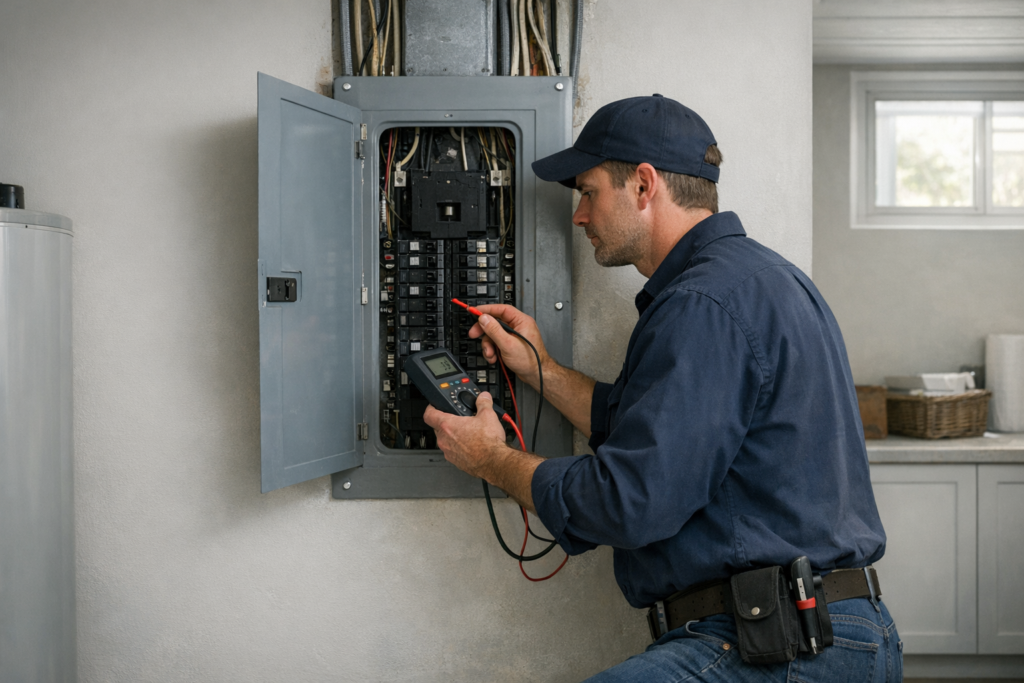
An outdated electrical panel can quietly limit your home’s safety, reliability, and ability to support modern appliances, heating and cooling equipment, EV chargers, standby generators, lighting upgrades, and everyday electronics. If your breakers trip often, your lights flicker, your panel feels warm, or your home still has an older fuse box, it is time to have a licensed electrician evaluate whether your electrical service is still appropriate for how your home is used today.
Why Your Electrical Panel Matters
Your electrical panel is the central distribution point for power throughout your home. Electricity comes into the home through the service equipment, passes through the panel, and is distributed to branch circuits that supply outlets, lighting, appliances, HVAC equipment, and other loads.
When the panel is properly sized, correctly installed, and in good condition, it helps protect your home by allowing circuit breakers to interrupt power during overloads or faults. When the panel is aging, damaged, overcrowded, or no longer adequate for the electrical demand placed on it, the system may become less dependable and potentially unsafe.
Many homes throughout New Hampshire, Massachusetts, Maine, and Vermont were built before today’s electrical demands existed. Older New England homes may have been wired long before central air conditioning, home offices, high-capacity kitchen appliances, hot tubs, sump pumps, EV chargers, and generator transfer equipment became common. Even if the system still works, that does not always mean it is properly equipped for current usage.
Common Signs of an Outdated Electrical Panel
Some electrical panel problems are obvious. Others are subtle and develop over time. If you notice any of the following conditions, schedule a professional evaluation before the issue becomes more serious.
Breakers Trip Frequently
A circuit breaker that trips once in a while may simply be doing its job. For example, plugging several high-demand devices into the same circuit can cause an overload. However, frequent breaker trips are not something to ignore.
Recurring trips may indicate overloaded circuits, a failing breaker, damaged wiring, an appliance issue, or a panel that no longer has enough capacity for the home’s electrical demand. Repeatedly resetting a tripping breaker without finding the cause can create unnecessary risk.
Lights Flicker or Dim When Appliances Start
It is not unusual for lights to slightly fluctuate when a large motor starts, but noticeable dimming, flickering, or pulsing lights may point to voltage drop, loose connections, overloaded circuits, or aging electrical equipment.
This is especially important if dimming happens when a refrigerator, microwave, well pump, furnace, air conditioner, or other high-demand appliance turns on. A licensed electrician can determine whether the issue is isolated to a circuit or related to the panel, service, or utility connection.
The Panel Feels Warm, Smells Hot, or Makes Noise
A warm panel, burning odor, crackling sound, buzzing, or visible sparking requires immediate attention. These symptoms can indicate loose connections, overheating components, arcing, or other hazardous conditions.
Do not remove the panel cover or attempt to investigate energized components yourself. Turn off affected loads if it is safe to do so and contact a qualified electrician promptly.
You Still Have a Fuse Box
Fuse boxes were common in older homes and can still function when properly maintained, but they are often a sign that the electrical system is dated. Many fuse-based systems were designed for much lower electrical demand than modern households require.
Common concerns include limited circuit capacity, repeated blown fuses, lack of room for dedicated circuits, and improper fuse sizing from past DIY repairs. Replacing fuses with oversized fuses is especially dangerous because it can allow wiring to carry more current than it was designed to handle.
The Panel Is Rusted, Corroded, or Moisture Damaged
Rust or corrosion inside or around an electrical panel should never be dismissed as cosmetic. Moisture and electricity are a dangerous combination. Corrosion can affect breaker performance, bus bars, terminals, and connections inside the panel.
Moisture problems may come from basement humidity, foundation leaks, improper exterior service sealing, condensation, or water intrusion around service equipment. In New England homes, snow, ice, freeze-thaw cycles, and storm-related water exposure can also contribute to electrical equipment deterioration.
The Panel Is Overcrowded or Has Improper Additions
An overcrowded panel may have limited space for additional circuits or may show evidence of nonstandard modifications. Warning signs can include unlabeled breakers, doubled-up conductors where not designed for them, messy wiring, abandoned circuits, missing knockouts, or evidence of repeated add-ons.
Some panels can safely support approved tandem breakers in specific positions, while others cannot. The only reliable way to determine whether a panel is properly configured is through inspection by a qualified electrician.
Your Home Relies Heavily on Extension Cords or Power Strips
Extension cords and power strips are often used because a home does not have enough outlets where they are needed. While temporary use may be acceptable for small loads, relying on them as a long-term solution can indicate that your electrical system does not match your lifestyle.
A home with too few circuits or outlets may benefit from added branch circuits, dedicated appliance circuits, panel improvements, or a larger service depending on the existing system.
Age Alone Does Not Tell the Whole Story
An older electrical panel is not automatically unsafe simply because of its age. Some older panels remain in acceptable condition when properly installed, lightly loaded, and well maintained. However, age becomes a concern when combined with physical deterioration, obsolete equipment, inadequate capacity, recurring problems, or signs of improper previous work.
A professional inspection looks beyond the panel’s age and considers the condition of the equipment, breaker operation, visible wiring practices, grounding and bonding, circuit demand, labeling, available capacity, and whether the system appears suitable for the home’s actual use.
If your home’s electrical system has not been evaluated in many years, an inspection can provide clarity. This is especially valuable before renovations, buying or selling a property, finishing a basement, installing an EV charger, adding a generator, upgrading HVAC equipment, or converting spaces for home office or workshop use.
Modern Electrical Demands Can Outgrow Older Panels
The average household uses electricity differently today than it did decades ago. Even well-maintained older panels may not have enough capacity or circuit space for modern living.
Common upgrades that may require panel or service evaluation include:
- Electric vehicle charger installation
- Standby or portable generator connection equipment
- Heat pump or central air conditioning systems
- Electric ranges, dryers, or water heaters
- Finished basements, additions, or accessory living spaces
- Home offices, workshops, or media rooms
- Hot tubs, pools, saunas, or outdoor living areas
- Kitchen remodels with additional appliance circuits
- Whole-home surge protection
Installing new equipment without confirming panel capacity can lead to nuisance tripping, overloaded circuits, or a system that cannot support future needs. A licensed electrician can perform a load evaluation and recommend whether the existing panel can be modified safely or whether an electrical panel upgrade is the better long-term solution.
Safety Concerns You Should Never Ignore
Electrical problems can worsen quickly when heat, loose connections, damaged insulation, moisture, or overloaded conductors are involved. Homeowners should be especially cautious with symptoms that suggest active overheating or arcing.
Call a licensed electrician as soon as possible if you notice:
- Burn marks around breakers, outlets, or the panel
- A burning plastic or fishy odor near electrical equipment
- Breakers that will not reset or trip immediately
- Visible rust, water stains, or moisture near the panel
- Buzzing, popping, or crackling sounds
- Lights that flicker throughout the home
- Shock or tingling when touching appliances or switches
- Warm outlets, switches, cords, or panel surfaces
Do not remove the dead front cover of an electrical panel unless you are qualified to do so. Energized service equipment can remain dangerous even when individual breakers are turned off.
What an Electrician Checks During a Panel Evaluation
A panel evaluation is more than a quick visual glance. An experienced electrician looks for conditions that affect safety, performance, capacity, and long-term reliability.
Depending on the situation, the evaluation may include:
- Panel age, manufacturer, condition, and available circuit space
- Evidence of overheating, arcing, rust, or water intrusion
- Breaker condition and compatibility with the panel
- Proper labeling and circuit identification
- Signs of overloaded, damaged, or improperly terminated conductors
- Grounding and bonding concerns visible at the service equipment
- Service size and whether it aligns with the home’s electrical demand
- Capacity for planned additions such as EV charging or generator equipment
- General workmanship and evidence of unpermitted or DIY modifications
The goal is not to replace equipment unnecessarily. The goal is to determine whether the existing system is safe, reliable, and appropriate for the way the property is used now and how it may be used in the future.
Panel Upgrade vs. Repair: How the Right Solution Is Determined
Not every issue requires full replacement. In some cases, a licensed electrician may be able to correct a specific problem by replacing a faulty breaker, tightening approved connections, improving labeling, correcting improper wiring, or adding a dedicated circuit where capacity is available.
A panel upgrade may be recommended when the existing equipment is deteriorated, obsolete, unsafe, full, undersized, poorly configured, or unable to support needed electrical loads. A service upgrade may also be considered when the entire electrical service, not just the panel, lacks sufficient capacity.
The right recommendation depends on several factors:
- The condition of the existing panel and service equipment
- The home’s current and anticipated electrical demand
- Available breaker spaces and panel limitations
- Whether replacement parts are appropriate and available
- Visible safety concerns or code-related deficiencies
- Planned renovations, appliances, generators, or EV chargers
- Utility coordination and local requirements where applicable
A reputable electrical contractor should explain the findings clearly and help you understand whether repair, replacement, or a larger service upgrade is the most practical option.
Cost Factors That Influence Electrical Panel Replacement
The cost to replace an outdated electrical panel can vary significantly because no two homes are exactly alike. A simple panel replacement in a clean, accessible location is very different from a project that requires service upgrades, grounding improvements, utility coordination, relocation, or repairs to aging wiring.
Common factors that influence cost include:
- Panel size and amperage
- Condition of existing service entrance equipment
- Accessibility of the panel and working space
- Need for new breakers, surge protection, or dedicated circuits
- Grounding and bonding updates
- Existing wiring condition
- Generator or EV charging readiness
- Local inspection and utility requirements when applicable
While it is tempting to shop by price alone, electrical panel work directly affects safety and long-term performance. The lowest estimate may not include the same scope, materials, corrections, or coordination. Ask what is included, what conditions could change the scope, and how the contractor will handle any issues discovered during the project.
Why New England Homes Often Need Extra Attention
Homes throughout New Hampshire, Massachusetts, Maine, and Vermont often face a combination of older building stock and demanding weather. Many properties have been renovated in phases over decades, which can leave electrical systems with a mix of old and newer wiring, added circuits, and equipment that may not have been evaluated as a complete system.
Severe winter weather also places extra stress on electrical systems. Homeowners may rely more heavily on heating equipment, sump pumps, generators, dehumidifiers, lighting, and home office electronics during storms and outages. If your panel is already near capacity or showing signs of wear, seasonal demand can make underlying issues more noticeable.
Generator preparedness is another common consideration in New England. A standby generator or properly configured portable generator connection should be integrated safely with the home’s electrical system. That often starts with confirming that the panel and service equipment are suitable for the installation.
How to Reduce Risk While You Plan an Upgrade
If you suspect your panel is outdated but are waiting for a professional evaluation, there are practical steps you can take to reduce risk.
- Avoid using extension cords as permanent wiring.
- Do not ignore breakers that trip repeatedly.
- Do not replace breakers with larger breakers to stop tripping.
- Keep the area around the electrical panel clear and accessible.
- Watch for moisture, rust, heat, odors, or unusual sounds.
- Use space heaters and high-demand appliances carefully and according to manufacturer instructions.
- Schedule an inspection before adding major new electrical equipment.
Most importantly, do not attempt to repair or modify the panel yourself. Electrical panel work should be performed by qualified professionals who understand safe work practices, proper materials, load considerations, and applicable electrical standards.
When to Schedule a Professional Electrical Panel Inspection
You should schedule an inspection if your home has an outdated electrical panel, if you are experiencing recurring electrical problems, or if you are planning upgrades that will increase electrical demand. A proactive inspection is often less stressful and more cost-effective than waiting until a failure, outage, or safety concern forces urgent repairs.
Electrical Constructors LLC provides residential and commercial electrical services throughout New Hampshire, Massachusetts, Maine, and Vermont, including electrical inspections, troubleshooting, panel upgrades, service upgrades, rewiring, generator installation, EV charger installation, surge protection, and code corrections.
If your panel is aging, overloaded, damaged, or simply no longer keeping up with your home, an experienced electrician can help you understand your options and plan a safer, more reliable electrical system for the future.