
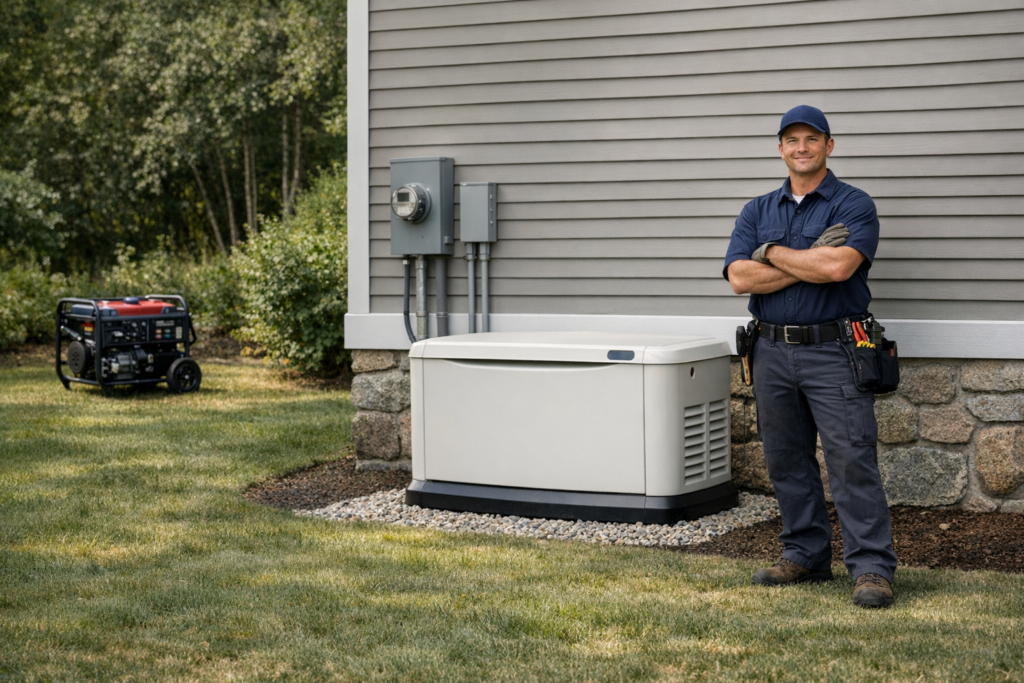
Choosing between a standby generator and a portable generator comes down to how much power you need, how quickly you want backup power to start, how often outages affect your property, and how much convenience and long-term reliability matter. In most cases, standby generators are better for automatic, whole-home or business-critical backup power, while portable generators are better for temporary, limited power during occasional outages.
Quick Comparison: Standby Generator vs Portable Generator
The simplest way to compare a standby generator vs portable generator is to look at how each system operates during an outage. A standby generator is permanently installed, wired into the electrical system, and designed to start automatically when utility power fails. A portable generator is a movable unit that must be set up, fueled, started, and connected manually.
| Feature | Standby Generator | Portable Generator |
|---|---|---|
| Operation | Starts automatically during an outage | Requires manual setup and startup |
| Power Capacity | Can support essential circuits, larger loads, or an entire property depending on design | Usually supports select appliances, tools, or limited circuits |
| Fuel Source | Commonly connected to propane or natural gas where available | Often gasoline, propane, or dual-fuel models |
| Connection | Professionally installed with a transfer switch | Should use a properly installed transfer switch or generator inlet for building circuits |
| Best For | Homes, businesses, critical systems, frequent outages, automatic backup power | Occasional outages, small loads, temporary use, jobsite needs |
| Convenience | High | Moderate to low, depending on setup |
| Initial Cost | Higher | Lower |
| Long-Term Reliability | Excellent when sized, installed, and maintained correctly | Depends heavily on fuel storage, maintenance, and safe operation |
What Is a Standby Generator?
A standby generator is a permanently installed backup power system that monitors utility power and turns on automatically when an outage occurs. It is installed outside the building, connected to a fuel source, and integrated with the electrical system through an automatic transfer switch.
When utility power fails, the transfer switch safely separates the building from the utility grid and allows the generator to supply power to selected circuits or the entire electrical system, depending on the generator size and installation design. When utility power returns, the system transfers the load back to the utility and shuts the generator down after a cool-down cycle.
For homeowners and businesses in New Hampshire, Massachusetts, Maine, and Vermont, standby generators are especially valuable during winter storms, heavy snow, ice events, and extended outages that can affect heating systems, refrigeration, lighting, sump pumps, security systems, internet equipment, and business operations.
What Is a Portable Generator?
A portable generator is a movable power source typically used for temporary backup power. It can run selected equipment such as refrigerators, lights, small appliances, sump pumps, tools, or certain heating-related loads, depending on the generator’s output and the equipment being powered.
Portable generators are not automatic. Someone must move the unit outdoors, add fuel, start it, manage extension cords or connect it to a properly installed generator inlet, and monitor its operation. They can be useful for occasional outages, seasonal property needs, construction work, and situations where only limited power is necessary.
However, portable generators require careful planning and safe operation. They must never be used inside a home, garage, basement, shed, enclosed porch, or near openings where exhaust can enter the building. Carbon monoxide from generator exhaust can be deadly.
Key Differences That Matter When Choosing Backup Power
The right generator is not always the largest or most expensive option. The best choice depends on the loads you need to support, how much manual involvement you are comfortable with, and how much risk an outage creates for your home or business.
Automatic Operation vs Manual Setup
A standby generator provides the greatest convenience because it starts automatically. This matters when outages occur while you are asleep, away from home, traveling, or managing a commercial property where downtime creates immediate problems.
A portable generator only helps if someone is present, fuel is available, the unit starts properly, and connections are safe. For a homeowner who is comfortable with manual setup and only needs limited backup power a few times a year, that may be acceptable. For a business, property manager, or household with critical systems, automatic operation is often worth the investment.
Power Capacity and Load Management
Standby generators can be designed to power only essential circuits or to support a larger portion of the property. A properly planned system may account for heating equipment, well pumps, sump pumps, refrigeration, lighting, kitchen circuits, medical equipment, communications, security systems, or commercial equipment.
Portable generators typically have a lower output and require more selective use. Running too many appliances at once can overload the generator, damage equipment, or create unsafe conditions. Even if a portable unit can start a load, it may struggle with equipment that has high startup demand, such as pumps, compressors, or certain motors.
Fuel Availability
Standby generators are commonly connected to propane or natural gas where available. This reduces the need to manually refuel during a storm, although fuel supply and capacity still need to be considered during system design.
Portable generators often rely on gasoline or portable propane tanks. Gasoline storage can be inconvenient, and fuel availability may become a problem during widespread outages. Fuel also needs to be stored safely and maintained properly over time.
Installation Requirements
A standby generator requires professional electrical installation, correct placement, proper transfer equipment, suitable wiring, load calculation, fuel coordination, and code-conscious planning. It becomes part of the building’s electrical infrastructure.
A portable generator may seem simpler, but safe connection still matters. If you want a portable generator to power selected circuits in a panel, a licensed electrician should install an approved transfer switch or generator inlet. Improper connections can create dangerous backfeed into utility lines, putting utility workers, neighbors, and occupants at risk.
Safety Considerations for Both Generator Types
Generator safety should never be treated as an afterthought. Backup power equipment produces electricity, heat, exhaust, and mechanical hazards. A safe installation starts with proper sizing, correct transfer equipment, safe placement, and a clear plan for operation.
- Never run a portable generator indoors. Keep it outdoors and away from windows, doors, vents, and other openings.
- Do not connect a generator directly to a panel without proper transfer equipment.
- Use cords rated for the load and outdoor conditions when operating portable equipment.
- Keep generators dry and protected according to manufacturer instructions.
- Allow hot equipment to cool before refueling.
- Schedule maintenance before storm season, not after the first outage.
- Make sure carbon monoxide alarms are installed and working in occupied buildings.
For permanent or panel-connected generator systems, work with a qualified electrical contractor. Generator wiring is not a place to improvise.
Cost Considerations: Initial Price vs Long-Term Value
Portable generators usually cost less upfront because the equipment is smaller, installation is simpler, and many units are sold as standalone products. However, the lowest initial cost does not always mean the best long-term value.
A portable generator may also require accessories, heavy-duty cords, a generator inlet, a manual transfer switch, safe fuel storage, routine maintenance, and manual labor during every outage. It may not support all the systems you expect, especially larger electrical loads.
A standby generator has a higher initial investment because it involves equipment, electrical installation, transfer switching, site preparation, and fuel connection planning. In return, it offers automatic performance, stronger capacity options, greater convenience, and better support for critical systems.
For homeowners, the value may come from protecting heat, refrigeration, sump pumps, and comfort during severe New England weather. For businesses and property managers, value may come from reducing downtime, protecting equipment, maintaining security systems, and keeping essential operations running.
When a Standby Generator Is the Better Choice
A standby generator is usually the better choice when outages are more than a minor inconvenience. It is well suited for properties where power loss can create safety issues, property damage, business interruption, or serious disruption.
- You want automatic backup power without manual setup.
- Your property has frequent or extended outages.
- You need to keep heating, refrigeration, pumps, security, or communications operating.
- You own or manage a commercial building where downtime affects operations.
- You have a well pump, sump pump, medical equipment, or other essential electrical loads.
- You travel often or need backup power to work when no one is on site.
- You want a long-term backup power solution integrated into the building.
Standby systems can also be designed with load management, which helps prioritize important circuits and avoid oversizing the generator unnecessarily.
When a Portable Generator May Be Enough
A portable generator may be the right fit when your backup power needs are limited and you are comfortable with hands-on operation. Many homeowners use portable generators successfully for short outages when only a few loads need power.
- You only need to power a refrigerator, a few lights, device chargers, or a sump pump.
- Outages in your area are infrequent and usually short.
- You are comfortable moving, fueling, starting, and monitoring the generator.
- You have a safe outdoor operating location.
- You are willing to store and maintain fuel properly.
- You do not need automatic power when you are away.
Portable generators can be practical, but they require discipline. The unit must be maintained, fuel must be available, and the connection method must be safe every time it is used.
Important Questions to Ask Before Choosing a Generator
Before making a decision, think beyond the generator itself. Backup power planning is really about deciding which systems must continue operating when the utility fails.
- Do you need power automatically, or is manual setup acceptable?
- Which circuits or equipment are truly essential?
- Do you need to support heating equipment, well pumps, sump pumps, or refrigeration?
- How long do outages typically last at your property?
- Will someone always be available to operate a portable generator safely?
- Is fuel readily available during winter storms or regional outages?
- Do you need backup power for a home, business, rental property, facility, or construction site?
- Would outage-related damage or downtime cost more than a properly installed backup system?
A licensed electrician can help identify the electrical loads that matter most, evaluate panel capacity, review transfer switch options, and recommend a safe approach for your property.
Common Mistakes to Avoid
Many generator problems come from poor planning rather than the generator itself. Avoid these common mistakes when comparing backup power options.
- Buying by wattage alone: Startup loads, load sequencing, and the type of equipment being powered matter as much as the number on the box.
- Skipping transfer equipment: Connecting a generator improperly can create dangerous backfeed and serious shock hazards.
- Underestimating winter needs: In New England, heating-related loads, sump pumps, and well pumps may be more important than comfort appliances.
- Ignoring maintenance: Generators need periodic inspection, exercise, oil changes, battery checks, and fuel system attention according to manufacturer guidance.
- Placing equipment poorly: Both standby and portable generators need safe clearance, ventilation, and access for service.
- Assuming portable means simple: Portable generators still require a safe operating plan, proper cords or connections, and carbon monoxide awareness.
Residential vs Commercial Generator Needs
Residential generator planning often focuses on comfort, safety, and property protection. Critical residential loads may include heating systems, refrigerators, freezers, sump pumps, well pumps, lighting, garage doors, internet equipment, and essential outlets.
Commercial generator planning can be more complex. A business may need to support life-safety systems, network equipment, security systems, refrigeration, point-of-sale systems, mechanical equipment, lighting, access control, or production-related loads. Property managers and facility managers also need to think about tenant expectations, liability concerns, maintenance access, and operational continuity.
For commercial and industrial settings, generator selection should be coordinated carefully with the electrical system, building use, load profile, and maintenance plan. The goal is not just to install a generator, but to design a dependable backup power strategy.
Which Generator Is Right for You?
If you want automatic backup power, need to protect essential systems, or cannot afford to be without electricity during an outage, a standby generator is usually the stronger choice. If you only need limited temporary power, can operate equipment safely, and want a lower initial investment, a portable generator may be sufficient.
The best answer depends on your building, electrical loads, outage history, fuel options, and expectations for convenience. For many homeowners and businesses throughout New Hampshire, Massachusetts, Maine, and Vermont, the decision becomes clearer after a professional evaluation of the electrical panel, essential circuits, and realistic outage risks.
Electrical Constructors LLC provides residential, commercial, industrial, and new construction electrical services, including generator installation, electrical panel upgrades, service upgrades, inspections, troubleshooting, and preventative maintenance. If you are weighing standby generator vs portable generator options, working with an experienced electrical contractor helps ensure your backup power system is safe, properly sized, and dependable when you need it most.