Retail electrical upgrades can directly improve how customers see, move through, and feel inside a store while also helping business owners reduce downtime, improve safety, and support modern equipment. From brighter, better-balanced lighting to reliable checkout power, EV-ready parking areas, security systems, and backup power planning, the right electrical improvements make a retail space more comfortable, dependable, and easier to operate.
Why Electrical Systems Matter To The Retail Experience
Customers may not think about electrical systems when they walk into a store, but they immediately notice the results. Poor lighting can make merchandise look dull. Limited receptacles can lead to cluttered extension cords. Flickering lights, tripped breakers, or slow point-of-sale equipment can create frustration. Inconsistent exterior lighting can also affect how safe and inviting a storefront feels.
For retailers, electrical performance affects more than appearance. It supports daily operations, employee productivity, inventory systems, security equipment, refrigeration, HVAC controls, signage, payment systems, and emergency lighting. A retail space with an outdated or overloaded electrical system may struggle to keep up with today’s technology and customer expectations.
Well-planned retail electrical upgrades help correct these issues before they turn into business interruptions, safety concerns, or expensive emergency repairs.
Lighting Upgrades That Make Products And Spaces Look Better
Lighting is one of the most visible and valuable electrical improvements a retail store can make. The right lighting helps customers read labels, compare colors, navigate aisles, and feel comfortable spending time in the space.
Common retail lighting upgrades include:
- LED lighting retrofits to improve brightness, reduce energy use, and lower maintenance needs.
- Accent lighting to highlight featured products, displays, service counters, and seasonal merchandise.
- Track lighting or adjustable fixtures for stores that frequently change layouts.
- Task lighting for checkouts, fitting rooms, workstations, and employee areas.
- Exterior lighting for entrances, walkways, parking areas, loading zones, and signage.
- Lighting controls such as dimmers, timers, occupancy sensors, and daylight-responsive controls where appropriate.
Good retail lighting is not simply about making a store brighter. It is about creating the right balance of visibility, comfort, efficiency, and product presentation. A licensed electrician can help evaluate fixture placement, circuit capacity, control options, and compatibility with existing wiring before upgrades begin.
Power Distribution For Registers, Displays, And Modern Retail Technology
Retail businesses rely on more electrical equipment than ever. Point-of-sale systems, barcode scanners, security cameras, digital displays, Wi-Fi equipment, refrigeration, self-checkout stations, office equipment, and inventory systems all need dependable power.
When a store does not have enough properly located receptacles or dedicated circuits, employees may compensate with extension cords, overloaded power strips, or equipment placed in inconvenient locations. These temporary fixes can create tripping hazards, nuisance breaker trips, and avoidable fire risks.
Useful retail electrical upgrades may include adding receptacles, relocating outlets for new layouts, installing dedicated circuits for specific equipment, updating branch circuits, improving back-office power, or upgrading panels when the electrical demand has outgrown the existing service.
A professional assessment should include load evaluation, equipment requirements, future expansion plans, and the practical needs of the sales floor. This helps ensure that new power distribution supports both current operations and future merchandising changes.
Electrical Panel And Service Upgrades For Growing Stores
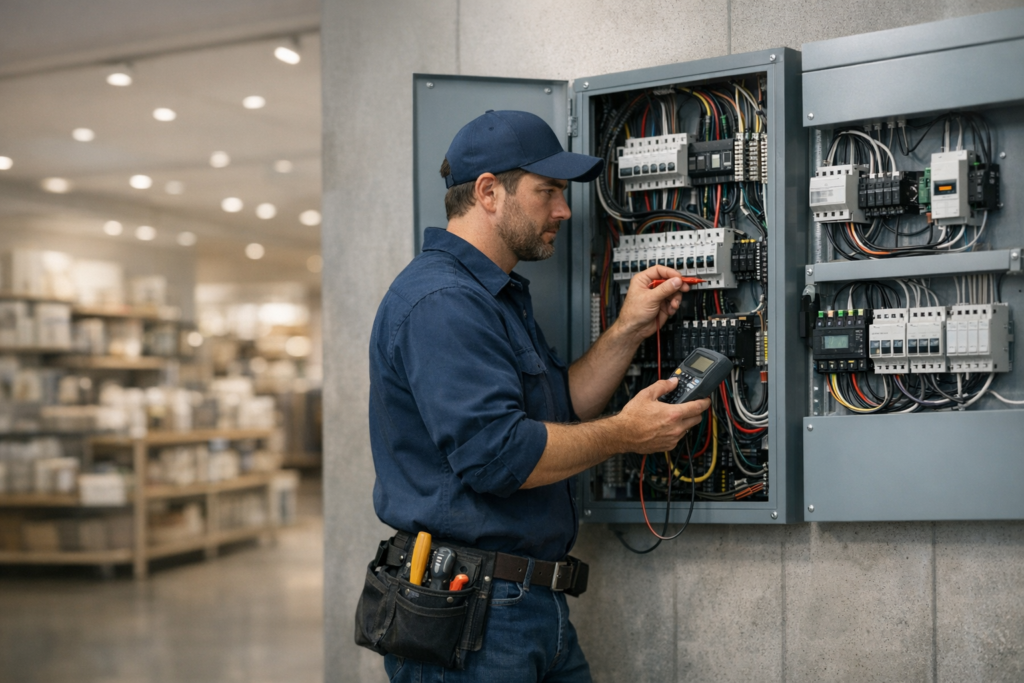
An electrical panel is the distribution point for power throughout the store. If the panel is outdated, crowded, damaged, improperly labeled, or too small for current demand, it can limit future improvements and increase the likelihood of operational problems.
Commercial retail spaces may need panel upgrades or service upgrades when adding major loads such as new HVAC equipment, commercial refrigeration, kitchen equipment, exterior signs, EV chargers, larger lighting systems, or expanded checkout technology.
Warning signs that a panel should be evaluated include frequent breaker trips, buzzing sounds, warm panel surfaces, visible corrosion, burning odors, flickering lights, or circuits that no longer meet the needs of the business. These symptoms should not be ignored. A qualified electrician should inspect the system and determine whether repair, replacement, or a larger upgrade is appropriate.
Safety Improvements Customers May Never Notice But Always Benefit From
Some of the most important retail electrical upgrades are not obvious to customers, but they protect people, property, and business continuity. Retail spaces should be evaluated for safe wiring methods, properly functioning breakers, grounding and bonding concerns, damaged devices, overloaded circuits, outdated equipment, and code correction needs.
Important safety-related upgrades may include:
- Repairing damaged outlets, switches, wiring, and fixtures.
- Correcting overloaded or improperly extended circuits.
- Improving emergency and exit lighting where required and appropriate.
- Installing surge protection to help protect sensitive electronics.
- Replacing unsafe temporary wiring with permanent electrical solutions.
- Updating exterior lighting to improve visibility around entrances and parking areas.
- Performing electrical inspections before renovations, tenant changes, or equipment additions.
Electrical safety issues should always be handled by licensed professionals. Commercial electrical systems are complex, and improper repairs can create serious hazards for customers, employees, and property owners.
Energy-Efficient Electrical Upgrades That Help Control Operating Costs
Energy efficiency matters in retail because lights, signs, refrigeration, HVAC systems, registers, and security systems often run for long hours. Electrical upgrades that reduce unnecessary energy use can improve day-to-day operating performance without sacrificing customer comfort.
LED lighting is often one of the most practical improvements because it can reduce energy demand, improve consistency, and decrease the amount of time spent replacing lamps. Lighting controls can also help by turning lights down or off in storage rooms, offices, restrooms, and other areas that are not occupied continuously.
Electrical contractors can also help identify inefficient equipment connections, outdated controls, poorly located switches, and opportunities to simplify operation for employees. Small improvements, when properly designed, can add up across a busy retail environment.
Backup Power And Surge Protection For New England Retail Stores
Retailers in New Hampshire, Massachusetts, Maine, and Vermont understand that weather can affect business operations. Winter storms, high winds, ice, and extended outages can interrupt sales, disable security systems, affect refrigeration, and create customer safety concerns.
Backup power planning may include standby generator installation, generator-ready transfer equipment, selected emergency circuits, or power planning for critical systems. Not every store needs whole-building backup power, but many benefit from identifying which loads matter most during an outage.
Surge protection is another important consideration. Sensitive retail electronics, payment terminals, networking equipment, refrigeration controls, and security systems can be vulnerable to voltage disturbances. Properly installed surge protection helps reduce risk, especially when combined with good grounding, quality equipment, and regular maintenance.
Exterior Electrical Improvements That Influence First Impressions
The customer experience begins before someone opens the front door. Exterior lighting, signage power, parking area visibility, entrance lighting, and weather-resistant electrical equipment all affect how professional and safe a store feels.
Exterior retail electrical upgrades may include replacing outdated wall packs, improving walkway lighting, powering illuminated signs, repairing damaged exterior outlets, installing lighting controls, or preparing parking areas for future EV charging. In New England, exterior electrical equipment must also stand up to moisture, snow, ice, freeze-thaw cycles, and seasonal maintenance activity.
Proper installation matters. Outdoor electrical equipment should be selected and installed for the environment, protected from physical damage where necessary, and inspected periodically for corrosion, failed seals, cracked covers, or loose fixtures.
Planning Electrical Work Without Disrupting Store Operations
Retail businesses cannot always shut down for electrical improvements. A well-organized contractor should help plan the work around store hours, customer traffic, deliveries, tenant requirements, and critical business systems.
Effective planning often includes:
- Inspecting the existing system before finalizing the upgrade scope.
- Identifying critical circuits that must remain operational.
- Scheduling disruptive work outside peak business hours when possible.
- Coordinating with general contractors, property managers, or facility teams.
- Phasing large projects to reduce downtime.
- Labeling panels and circuits clearly after work is completed.
- Confirming that completed installations are safe, neat, and ready for daily use.
Permit and inspection requirements can vary depending on the location, project type, and scope of work. A qualified electrical contractor can help clarify what is needed and complete the installation properly.
When A Retail Store Should Prioritize Electrical Upgrades
Some electrical upgrades are planned as part of a remodel, expansion, or tenant fit-out. Others become urgent because the existing system is no longer safe or reliable. Store owners, property managers, and facility managers should schedule an electrical evaluation when they notice recurring issues or before adding new electrical loads.
It may be time to consider retail electrical upgrades if your store has:
- Frequent breaker trips or flickering lights.
- Not enough outlets for registers, displays, or office equipment.
- Extension cords or power strips being used as permanent solutions.
- Outdated fluorescent lighting or uneven aisle lighting.
- Plans for new signage, refrigeration, HVAC equipment, or digital displays.
- An aging electrical panel or poorly labeled circuits.
- Exterior lighting that leaves entrances, walkways, or parking areas too dark.
- Recent or planned renovations, layout changes, or tenant improvements.
Addressing these issues early can help avoid emergency service calls, failed equipment, customer inconvenience, and preventable downtime.
What To Ask Before Hiring A Retail Electrical Contractor
Retail electrical work requires more than basic wiring knowledge. The contractor should understand commercial electrical systems, customer-facing environments, scheduling constraints, safety requirements, and the importance of neat, code-conscious installations.
Before hiring an electrician for a retail project, ask about experience with commercial spaces, service upgrades, lighting design support, troubleshooting, generator systems, surge protection, preventative maintenance, and phased work in occupied buildings. It is also helpful to discuss how the contractor will protect merchandise, maintain safe work areas, coordinate shutdowns, and communicate with store teams.
The best electrical solution is not always the biggest or most expensive option. It is the right upgrade for the building, the business, the equipment, and the long-term plan for the space.
Build A Better Store From The Electrical System Up
Customer experience depends on more than merchandise and layout. A comfortable, well-lit, reliable, and safe retail environment starts with an electrical system designed to support how the store actually operates.
Electrical Constructors LLC provides residential, commercial, industrial, and new construction electrical services throughout New Hampshire, Massachusetts, Maine, and Vermont. For retailers, property managers, contractors, developers, and commercial property owners, professional electrical planning can help improve safety, reduce disruptions, support modern technology, and create a better experience for every customer who walks through the door.