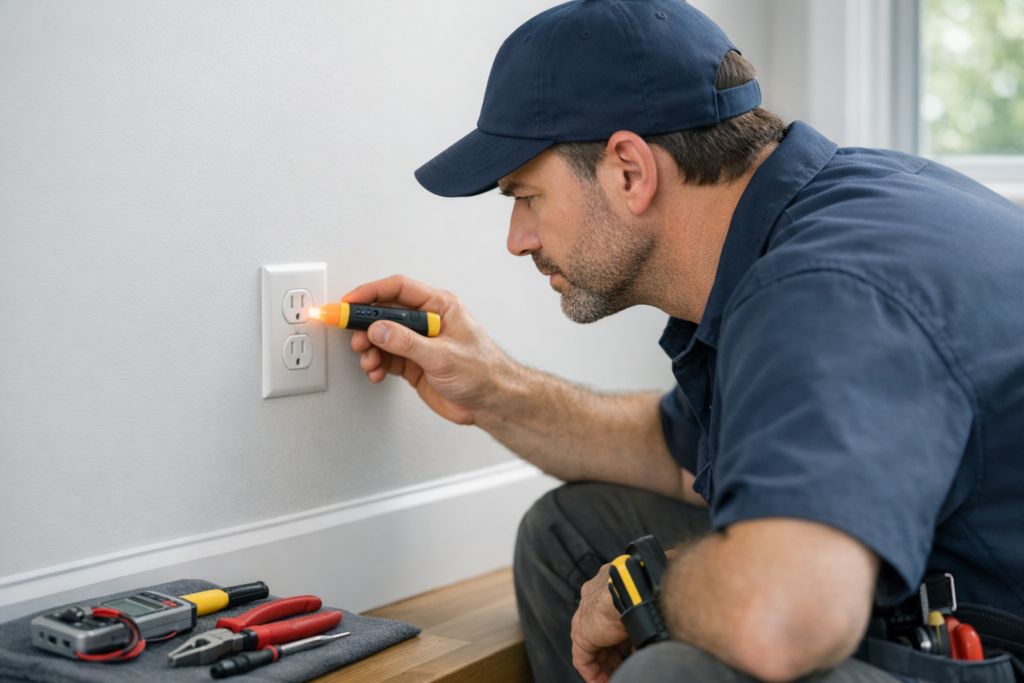
A warm electrical outlet should never be ignored. While some plugs and chargers may produce a small amount of heat during normal use, the outlet itself should not feel noticeably warm, hot, discolored, buzzing, or smell like burning plastic. Heat at a receptacle can point to an overloaded circuit, loose wiring connection, worn outlet, failing device, or another electrical problem that needs professional attention before it becomes a fire hazard.
If you noticed warmth around an outlet in your home, office, rental property, or commercial building, the safest next step is to stop using that outlet and have it evaluated by a qualified electrician. Electrical heat is often a symptom of resistance, and resistance inside a wiring system can worsen over time.
Is a Warm Electrical Outlet Dangerous?
A warm electrical outlet can be dangerous because heat may indicate that electrical current is not flowing through the circuit properly. When wiring connections loosen, outlets wear out, or too much load is placed on a circuit, electrical resistance can create heat behind the wall where it is not visible.
The risk is not always obvious from the outside. An outlet may feel only slightly warm at first, yet the wiring, terminal screws, or internal contacts behind the cover plate may be heating more than the face of the device suggests.
You should treat an outlet as unsafe if you notice any of the following:
- The outlet or cover plate feels warm or hot to the touch.
- There is a burning smell, smoky odor, or melted plastic smell.
- The outlet is discolored, scorched, cracked, or warped.
- Plugs fit loosely, fall out, or wiggle in the receptacle.
- You hear buzzing, sizzling, popping, or crackling.
- Lights flicker when something is plugged into the outlet.
- A breaker trips repeatedly when the outlet is used.
- The outlet is used for a space heater, window air conditioner, microwave, or other high-demand appliance.
Do not continue using an outlet that feels hot, smells burned, sparks, or shows discoloration. Unplug connected devices if it is safe to do so and call a licensed electrician.
Common Reasons an Outlet Feels Warm
The cause of a warm outlet is not always the same. A qualified electrician will look at the outlet, wiring method, circuit load, breaker behavior, and connected equipment before determining the repair. These are some of the most common causes.
Overloaded Circuit
An overloaded circuit occurs when too many devices draw power from the same circuit at the same time. This is common in older homes and commercial spaces where modern electrical needs have outgrown the original wiring layout.
Examples include plugging multiple electronics into power strips, using space heaters during cold New England winters, running portable air conditioners, or adding office equipment to a circuit that was not designed for that much load. If the circuit is overloaded, the outlet, wiring, or breaker may heat up before the breaker trips.
Loose Wiring Connections
Loose electrical connections are one of the most important reasons to take a warm outlet seriously. A wire that is not firmly connected to the receptacle can create resistance. That resistance creates heat, and heat can damage insulation, outlet components, and nearby materials.
Loose connections may develop from age, vibration, repeated plugging and unplugging, poor installation, or normal expansion and contraction over time. Because the problem is often hidden behind the wall plate, it should be inspected by someone who knows how to safely de-energize and test the circuit.
Worn or Damaged Receptacle
Outlets do wear out. If a plug no longer fits tightly, the internal contacts may not hold the plug blades securely. A loose connection between the plug and the receptacle can cause arcing, heat, and intermittent operation.
Replacing a worn outlet may sound simple, but the electrician should also check the wiring condition, box fill, grounding, circuit load, and any heat damage behind the device. The visible receptacle may only be part of the problem.
High-Demand Appliances
Some appliances draw more current than typical electronics. Space heaters, toaster ovens, microwaves, air conditioners, dehumidifiers, sump pumps, and certain commercial equipment can place significant demand on an outlet and circuit.
If an outlet becomes warm only when a specific appliance is used, that appliance may require a dedicated circuit or a different electrical solution. In commercial and multi-unit properties, repeated nuisance tripping or warm receptacles can also point to equipment loads that were added without updating the electrical system.
Faulty Plugs, Cords, or Power Strips
Sometimes the issue begins with the device plugged into the outlet rather than the outlet itself. Damaged cords, undersized extension cords, loose plug blades, or overloaded power strips can produce heat at the connection point.
Extension cords should not be used as permanent wiring, and power strips should never be used to increase the safe capacity of a circuit. If a cord, plug, or power strip feels warm, smells hot, or shows damage, stop using it.
Back-Wired or Poorly Installed Devices
Some older or lower-quality installations may use installation methods that become less reliable over time, especially when devices are heavily loaded. An electrician can inspect whether the receptacle connections are secure, properly terminated, and appropriate for the circuit.
The goal is not just to replace the outlet, but to correct the reason it heated in the first place.
What to Do If You Find a Warm Electrical Outlet
If you discover a warm electrical outlet, take a cautious approach. You do not need to panic, but you should not keep using it as if nothing is wrong.
- Unplug devices from the outlet if it is safe. Do not touch a plug or outlet that is smoking, sparking, visibly melted, or extremely hot.
- Stop using the outlet. Avoid plugging the same device into the outlet again until the cause is identified.
- Check for obvious warning signs. Look for discoloration, scorch marks, loose plugs, buzzing, odors, or a warm wall plate.
- Avoid extension cord workarounds. Moving the same high-load appliance to a power strip or extension cord can create a different hazard.
- Do not repeatedly reset a tripped breaker. A breaker that keeps tripping is doing its job by responding to an unsafe condition.
- Call a licensed electrician. Warm outlets should be inspected before the issue worsens or spreads to other circuit components.
If there are flames, active smoke, or an immediate fire concern, leave the area and contact emergency services.
When a Warm Outlet Requires Immediate Electrical Service
Some situations should be handled urgently. Contact a qualified electrician as soon as possible if the outlet feels hot, produces an odor, sparks, causes breaker trips, or shows any visual damage. These symptoms can indicate overheating inside the box, damaged wiring insulation, loose conductors, or arcing.
You should also schedule an inspection if more than one outlet on the same circuit feels warm. Multiple warm outlets may indicate excessive circuit load, shared neutral issues, aging wiring, or another circuit-level concern that cannot be solved by replacing one receptacle.
For property managers, landlords, business owners, and facility managers, warm outlets should be documented and addressed promptly. Waiting can increase downtime, tenant complaints, equipment risk, and liability concerns.
How an Electrician Diagnoses a Warm Outlet
A professional electrician does more than look at the front of the outlet. The diagnosis typically involves checking the outlet, connected load, wiring condition, circuit protection, and surrounding devices on the same circuit.
Depending on the situation, an electrician may:
- De-energize the circuit and remove the outlet for inspection.
- Check for loose, damaged, or overheated conductors.
- Inspect the receptacle terminals and internal contacts.
- Verify whether the outlet is properly grounded.
- Evaluate the circuit load and connected equipment.
- Check the breaker for proper operation and signs of heat damage.
- Look for damage in nearby outlets, switches, junction boxes, or wiring runs.
- Recommend a dedicated circuit for high-demand equipment when appropriate.
The correct repair may involve replacing the receptacle, correcting wiring connections, repairing damaged conductors, reducing circuit load, installing a dedicated circuit, upgrading an electrical panel, or addressing broader electrical system issues.
Warm Outlets in Older New England Homes and Buildings
Warm outlets are especially concerning in older homes and buildings throughout New Hampshire, Massachusetts, Maine, and Vermont. Many properties in New England were built before today’s electrical demands existed. Over the years, kitchens gained more appliances, home offices added computers and printers, garages added tools and EV chargers, and winter weather increased reliance on space heaters, generators, and heating-related equipment.
Historic and aging properties can also contain layers of past electrical work. Some may have older wiring methods, undersized circuits for modern use, limited panel capacity, or outlets that have been replaced without a full evaluation of the circuit. These conditions do not automatically mean a system is unsafe, but they do make professional troubleshooting more important when warning signs appear.
Commercial buildings have their own challenges. Retail spaces, offices, restaurants, workshops, and multi-tenant properties often change layouts and equipment over time. When electrical usage changes faster than the electrical infrastructure, outlets and circuits can become overloaded or stressed.
Can You Replace a Warm Outlet Yourself?
Replacing an outlet without understanding why it became warm can leave the underlying problem unresolved. The visible receptacle may be damaged, but the real issue may be a loose upstream connection, overloaded circuit, damaged insulation, improper wiring, or a breaker and panel concern.
Electrical outlet repair also requires safe testing and verification. Turning off the wrong breaker, assuming a wire is de-energized, or miswiring a receptacle can create shock hazards, fire hazards, and equipment damage. For safety, warm outlet troubleshooting should be handled by a qualified electrician.
A properly completed repair should restore a secure connection, reduce heat risk, and confirm that the circuit is appropriate for the load it serves.
How to Help Prevent Outlet Overheating
Not every electrical issue is preventable, but good habits and routine electrical maintenance can reduce the risk of overheated outlets.
- Avoid plugging high-demand appliances into overloaded power strips.
- Do not use extension cords as permanent power sources.
- Replace outlets that no longer hold plugs tightly.
- Pay attention to burning smells, discoloration, buzzing, and flickering lights.
- Use dedicated circuits for appliances and equipment that require them.
- Have older electrical systems inspected before major renovations or equipment upgrades.
- Schedule preventative maintenance for commercial panels, outlets, and branch circuits.
- Ask an electrician to evaluate panel capacity before adding EV chargers, generators, large appliances, or new tenant equipment.
Electrical systems should be maintained with the same seriousness as heating, plumbing, roofing, and life safety systems. Small warning signs often provide the best opportunity to fix a problem before it becomes more expensive or dangerous.
Electrical Constructors LLC Can Help Identify and Repair the Problem
Electrical Constructors LLC provides residential, commercial, industrial, and new construction electrical services throughout New Hampshire, Massachusetts, Maine, and Vermont. If you have a warm electrical outlet, recurring breaker trips, flickering lights, loose receptacles, or other electrical warning signs, our team can inspect the issue and recommend the right repair.
We assist homeowners, business owners, property managers, contractors, developers, and facility managers with troubleshooting, electrical repairs, panel upgrades, service upgrades, rewiring, electrical inspections, lighting, generators, EV chargers, surge protection, preventative maintenance, and code corrections.
A warm outlet is not something to guess about. Have it professionally evaluated so you know whether the issue is isolated to one receptacle or part of a larger electrical concern.
The Bottom Line
A warm electrical outlet is a warning sign that deserves attention. It may be caused by a loose connection, overloaded circuit, worn receptacle, damaged cord, or high-demand appliance, but the only safe way to know is through proper electrical inspection and troubleshooting.
If an outlet feels warm, hot, smells burned, sparks, or trips a breaker, stop using it and contact a licensed electrician. Addressing the problem early helps protect your property, equipment, and the people who rely on your electrical system every day.