
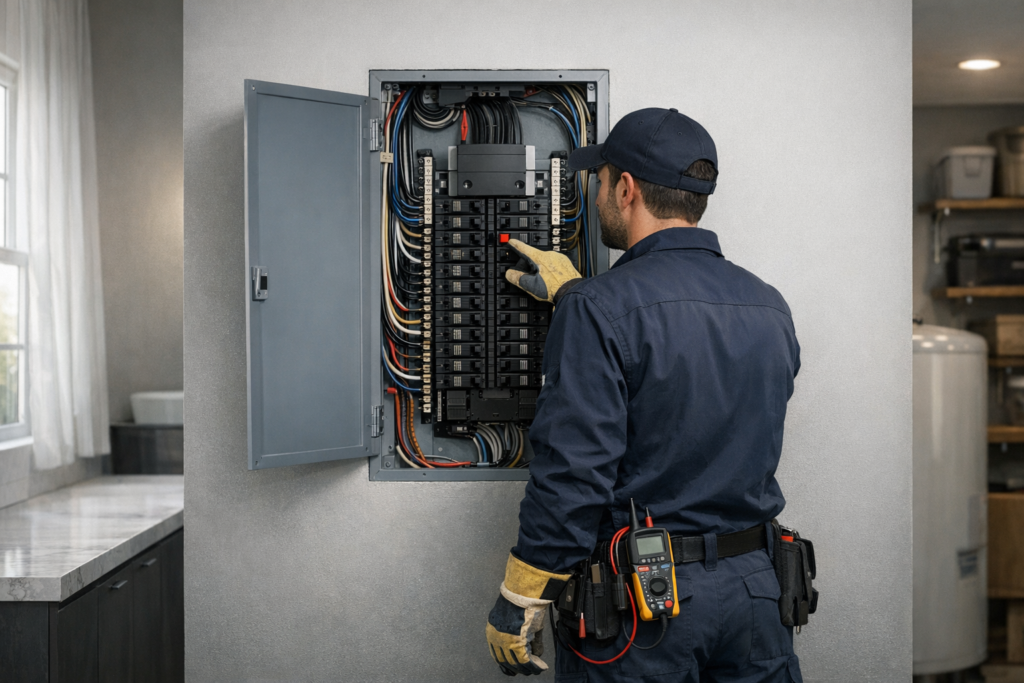
For homeowners, business owners, property managers, and contractors throughout New Hampshire, Massachusetts, Maine, and Vermont, repeated breaker trips can point to anything from too many devices on one circuit to deeper wiring problems, equipment faults, moisture intrusion, or an electrical panel that no longer fits the demands of the property.
This guide explains why breakers trip, what you can safely check, what you should avoid, and when it is time to call a licensed electrician for professional electrical troubleshooting.
What It Means When a Circuit Breaker Trips
A circuit breaker is a safety device inside an electrical panel. Its job is to shut off power when the circuit is drawing too much current or when it detects certain types of electrical faults. Instead of allowing wiring to overheat or equipment to continue operating under unsafe conditions, the breaker opens the circuit and stops the flow of electricity.
In simple terms, a tripped breaker usually means one of three things is happening:
- The circuit is overloaded because too many electrical loads are connected at once.
- There is a short circuit caused by an unintended connection between conductors.
- There is a ground fault where current is leaking to a grounded surface or path.
Sometimes the issue is with the breaker itself, but a breaker should not be assumed to be defective until the circuit has been properly evaluated. Replacing a breaker without finding the real cause can leave a hazard in place.
Common Reasons a Circuit Breaker Keeps Tripping
If your circuit breaker keeps tripping, the cause is usually related to the load on the circuit, the condition of the wiring, the equipment being used, or the breaker protecting that circuit. Here are the most common possibilities.
1. The Circuit Is Overloaded
An overloaded circuit is one of the most common reasons breakers trip. This happens when the devices connected to a circuit demand more current than the circuit can safely carry. The breaker trips to prevent the wiring from overheating.
Common overload situations include:
- Space heaters sharing a circuit with other appliances
- Microwaves, toaster ovens, and coffee makers running at the same time
- Window air conditioners connected to heavily used outlets
- Power strips loaded with electronics and chargers
- Commercial office circuits supporting too many computers, printers, or workstations
- Temporary jobsite equipment connected to circuits not designed for that load
Overloads are especially common in older homes and buildings throughout New England, where electrical systems may have been designed before today’s appliance, HVAC, entertainment, office, and charging demands existed.
2. A Short Circuit Is Present
A short circuit occurs when electrical current takes an unintended low-resistance path, often because a hot conductor contacts a neutral conductor or another conductive surface. Short circuits can create heat, arcing, sparks, and fire hazards.
Signs that may point to a short circuit include:
- A breaker trips immediately after being reset
- Burning smells near an outlet, switch, appliance, or panel
- Discolored outlets or switch plates
- Buzzing, crackling, or popping sounds
- Visible damage to cords, plugs, or wiring
- Lights flickering sharply when equipment turns on
If you suspect a short circuit, do not continue resetting the breaker. Turn the circuit off and have it inspected by a qualified electrician.
3. A Ground Fault Is Occurring
A ground fault happens when electrical current escapes its intended path and travels through a grounded surface, metal component, equipment frame, or potentially a person. Ground faults are especially concerning in damp or wet locations.
Areas where ground faults are more likely include:
- Kitchens
- Bathrooms
- Basements
- Garages
- Laundry areas
- Outdoor outlets
- Commercial kitchens or wash-down areas
- Exterior lighting and signage circuits
In New Hampshire, Massachusetts, Maine, and Vermont, snow, ice, freeze-thaw cycles, and storm-driven moisture can also contribute to outdoor electrical problems. Damaged weatherproof covers, aging exterior receptacles, underground wiring issues, and water intrusion can all cause breaker trips.
4. An Appliance or Piece of Equipment Is Faulty
Sometimes the problem is not the building wiring but the device plugged into the circuit. Appliances and equipment can trip breakers when motors fail, heating elements degrade, internal wiring loosens, or components draw excessive current.
Potential culprits include:
- Refrigerators and freezers
- Dishwashers
- Microwaves
- Garbage disposals
- Washers and dryers
- Sump pumps
- Furnaces and boilers
- Portable heaters
- Power tools and compressors
- Commercial kitchen equipment
If the breaker only trips when a specific appliance or machine runs, the equipment should be evaluated before the breaker is blamed.
5. The Breaker Is Worn, Damaged, or Improperly Sized
Circuit breakers can wear out, especially after years of service or repeated trips. A weak breaker may trip under normal load. However, breaker replacement is not a guesswork repair. The breaker must match the panel, the circuit wiring, and the application.
Installing a larger breaker to stop nuisance tripping is dangerous if the wire is not rated for the increased current. The breaker protects the wiring. Oversizing it can allow the wire to overheat before the breaker reacts.
6. The Electrical Panel Is Outdated or Overloaded
If multiple breakers trip, lights dim frequently, or the panel is full and heavily loaded, the issue may involve the overall electrical service or panel capacity. Many older homes and commercial properties were not designed for modern electrical loads such as EV chargers, heat pumps, hot tubs, large appliances, server equipment, or expanded tenant spaces.
A panel upgrade or service upgrade may be appropriate when the existing system cannot safely support current or planned electrical demands. This is especially important during renovations, additions, commercial build-outs, and new equipment installations.
7. Loose Connections or Aging Wiring
Loose terminations, damaged conductors, aging insulation, and deteriorated wiring can all lead to intermittent breaker trips. These issues may be hidden inside outlets, switches, junction boxes, light fixtures, equipment disconnects, or the electrical panel.
Older and historic properties across New England often have a mix of original wiring, past renovations, and added circuits. When electrical work has been modified over many decades, professional troubleshooting is often needed to identify what is actually happening behind the walls.
8. AFCI or GFCI Breakers Are Detecting a Fault
Some breakers provide added protection beyond standard overload and short-circuit protection. Ground-fault circuit interrupter breakers and arc-fault circuit interrupter breakers are designed to detect specific hazards and shut off power quickly.
When these breakers trip repeatedly, the cause could be a true ground fault, arcing condition, moisture problem, damaged cord, incompatible device, wiring issue, or a problem with connected equipment. These devices should not be bypassed. They are installed to reduce serious electrical risks.
What You Can Safely Check Before Calling an Electrician
There are a few basic checks you can perform safely if you are comfortable doing so. Do not remove panel covers, open electrical boxes, handle exposed wiring, or attempt repairs beyond your experience.
Step 1: Identify What Lost Power
Make note of which rooms, outlets, lights, appliances, or equipment shut off when the breaker trips. This helps determine what the circuit serves and whether a specific device may be causing the problem.
Step 2: Unplug Devices on the Circuit
Unplug appliances, electronics, tools, heaters, and other equipment connected to the affected circuit. If the breaker resets and stays on with everything unplugged, one of the devices may be faulty or the circuit may have been overloaded.
Step 3: Reset the Breaker Correctly One Time
To reset most breakers, move the handle fully to the off position first, then back to the on position. If it trips again immediately, leave it off. Repeatedly forcing a breaker to reset can increase risk if a fault exists.
Step 4: Plug Devices Back In One at a Time
If the breaker holds, plug devices back in one at a time. If the breaker trips when a specific appliance or piece of equipment is connected or turned on, that device may need repair or replacement.
Step 5: Look for Obvious Warning Signs
Without touching wiring or opening equipment, look for signs such as scorching, melted plugs, damaged cords, warm outlets, buzzing sounds, moisture near electrical components, or a burning smell. If you notice any of these, stop using the circuit and call a licensed electrician.
What Not to Do When a Breaker Keeps Tripping
A tripping breaker can be frustrating, especially when it shuts down a kitchen appliance, home office, heating system, production area, or tenant space. However, unsafe shortcuts can turn a repairable issue into a serious hazard.
Do not:
- Keep resetting a breaker that trips repeatedly
- Tape or hold a breaker in the on position
- Replace a breaker with a larger one to prevent tripping
- Ignore burning odors, buzzing, heat, or discoloration
- Use extension cords as a permanent solution
- Overload power strips or plug strips into other strips
- Remove panel covers if you are not qualified
- Bypass GFCI or AFCI protection
- Assume the breaker is the problem without testing the circuit
Breakers trip for a reason. The safest fix starts with finding that reason accurately.
When a Tripping Breaker Is an Emergency
Some breaker problems require immediate attention. Turn off the affected circuit if it is safe to do so and contact a qualified electrician promptly if you notice any of the following:
- Smoke or a burning smell
- Sparks from an outlet, switch, panel, or equipment
- A breaker that will not reset and trips instantly
- A hot electrical panel, outlet, switch, or cord
- Buzzing or crackling sounds from electrical components
- Water near outlets, wiring, panels, or equipment
- Repeated trips affecting heating, refrigeration, sump pumps, or critical business systems
- Visible fire, heat damage, or melted insulation
If there is active fire, smoke, or immediate danger, leave the area and contact emergency services.
How Electricians Troubleshoot a Circuit Breaker That Keeps Tripping
Professional electrical troubleshooting is a structured process. A licensed electrician does not simply swap parts and hope the problem goes away. The goal is to identify the cause, correct it safely, and verify that the circuit is operating properly.
Depending on the situation, troubleshooting may include:
- Inspecting the electrical panel and breaker condition
- Measuring load on the circuit
- Testing voltage and continuity
- Checking for ground faults or short circuits
- Inspecting outlets, switches, junction boxes, and fixtures
- Evaluating connected appliances or equipment
- Checking for loose connections or heat damage
- Reviewing circuit capacity compared with actual usage
- Confirming proper breaker type and compatibility
- Identifying whether a dedicated circuit is needed
For commercial and industrial properties, troubleshooting may also involve equipment disconnects, motor loads, lighting contactors, control circuits, tenant panels, emergency systems, and preventive maintenance records.
Common Fixes for a Circuit Breaker That Keeps Tripping
The correct repair depends on the cause. A tripping breaker is a symptom, not a diagnosis. Common solutions include:
Reducing the Load on the Circuit
If the problem is overload, the simplest fix may be moving devices to another circuit or changing how appliances are used. In a business setting, this may require reorganizing equipment loads or adding circuits for workstations or machinery.
Installing a Dedicated Circuit
Some appliances and equipment should not share power with general outlets. Dedicated circuits are commonly used for major appliances, HVAC equipment, sump pumps, microwaves, EV chargers, commercial equipment, and other significant loads.
Repairing Damaged Wiring or Connections
If loose, damaged, or deteriorated wiring is found, the repair may involve replacing conductors, correcting terminations, repairing junction boxes, replacing outlets or switches, or removing unsafe wiring modifications.
Replacing a Faulty Breaker
If testing confirms the breaker is defective, it can be replaced with the correct type and rating for the panel and circuit. This should be done by a qualified electrician because panels contain energized components and require proper compatibility.
Correcting Moisture-Related Electrical Problems
Outdoor outlets, exterior lighting, garages, basements, and damp utility spaces can develop issues from moisture. Repairs may include replacing damaged weather-resistant components, correcting covers, repairing wiring, or addressing water intrusion around electrical equipment.
Upgrading the Electrical Panel or Service
If the electrical system is undersized for the property’s needs, a panel upgrade or service upgrade may provide safer capacity and better long-term reliability. This is often considered when adding EV charging, generators, heat pumps, additions, workshops, commercial equipment, or new tenant spaces.
Residential Breaker Trips: What Homeowners Should Know
In homes, breaker trips often happen in kitchens, bathrooms, garages, basements, laundry rooms, bedrooms, and outdoor areas. These spaces tend to have either heavy appliance use, moisture exposure, or modern electronics that place more demand on older circuits.
Homeowners should pay attention to patterns. A breaker that trips only when the microwave and toaster oven run together may indicate overload. A breaker that trips when rain or snow hits an exterior outlet may point to moisture. A breaker that trips immediately with nothing plugged in may indicate a wiring fault.
If you are planning renovations, adding large appliances, installing an EV charger, finishing a basement, upgrading lighting, or adding a generator, it is wise to have the electrical system evaluated before problems appear. Preventive planning is safer and usually less disruptive than emergency repairs.
Commercial Breaker Trips: What Businesses and Property Managers Should Know
For commercial properties, repeated breaker trips can disrupt operations, damage equipment, inconvenience tenants, and create safety concerns. Office buildings, restaurants, retail spaces, warehouses, industrial facilities, and multi-tenant properties all have different electrical load profiles.
Common commercial causes include:
- Additional equipment added without circuit evaluation
- Office layouts changed without adding adequate power
- Kitchen or refrigeration equipment drawing high current
- Motors, compressors, or pumps starting under load
- Lighting systems with aging components
- Tenant improvements tied into existing circuits
- Loose connections from vibration or heavy use
- Outdoor signage or lighting affected by weather
Businesses should not treat recurring breaker trips as routine maintenance. They should be documented, investigated, and corrected before they cause downtime or create a safety issue.
Why New England Properties Often Experience Breaker Problems
Electrical systems in New Hampshire, Massachusetts, Maine, and Vermont face several regional challenges. Many properties are older, and even well-maintained buildings may have electrical infrastructure that has been expanded over time. Additions, renovations, workshops, finished basements, rental units, and commercial build-outs can all increase demand on systems that were originally designed for much lighter loads.
Seasonal conditions also matter. Winter heating equipment, portable heaters, holiday lighting, snow-melt systems, sump pumps, generators, and storm-related outages can all change how electrical systems are used. Exterior electrical components must also withstand cold, moisture, ice, and repeated seasonal movement.
A licensed electrician familiar with residential and commercial electrical systems in New England can help identify whether a tripping breaker is an isolated issue or a sign that the electrical system needs upgrades for safety and reliability.
Can You Fix a Tripping Breaker Yourself?
You can safely reduce loads, unplug devices, reset a breaker once, and observe whether a specific appliance causes the problem. You should not perform wiring repairs, replace breakers, open panels, or troubleshoot energized components unless you are qualified to do so.
Electrical work can be hazardous, and the source of a tripping breaker is not always obvious. Problems hidden inside walls, panels, outlets, and equipment can remain dangerous even when the power appears to be off. Hiring a licensed electrician helps ensure the problem is diagnosed correctly and repaired safely.
How to Prevent Circuit Breakers From Tripping
Not every breaker trip can be prevented, but good electrical planning and maintenance can reduce the likelihood of recurring problems.
Helpful prevention steps include:
- Avoid using high-wattage appliances on the same circuit at the same time
- Do not rely on extension cords for permanent power
- Replace damaged cords, plugs, outlets, and switches promptly
- Keep outdoor receptacle covers in good condition
- Have older panels and wiring inspected before renovations
- Add dedicated circuits for large appliances and equipment
- Schedule electrical inspections for commercial and rental properties
- Plan panel capacity before installing EV chargers, generators, or HVAC upgrades
- Use preventive maintenance for commercial electrical systems
- Address flickering lights, buzzing, heat, or odors early
Electrical systems are easier to maintain when problems are caught early. A small repair today can often prevent a larger interruption later.
Frequently Asked Questions About Tripping Circuit Breakers
Why does my breaker keep tripping with nothing plugged in?
If a breaker trips with nothing plugged in, there may be a wiring fault, damaged outlet, moisture issue, faulty breaker, or a hardwired load still connected to the circuit. Leave the breaker off and have the circuit evaluated by a licensed electrician.
Is it safe to keep resetting a tripped breaker?
No. Resetting a breaker once after reducing the load is reasonable. If the breaker trips again, do not keep resetting it. Repeated trips indicate an issue that needs to be identified and corrected.
Can a bad breaker cause nuisance tripping?
Yes, a worn or damaged breaker can trip when it should not. However, the circuit should be tested first to rule out overloads, short circuits, ground faults, and equipment problems.
Why does my breaker trip when I use an appliance?
The appliance may be drawing too much current, the circuit may already be overloaded, or the appliance may have an internal fault. If the same appliance repeatedly trips the breaker, stop using it until the appliance and circuit are checked.
Why does my breaker trip during storms or wet weather?
Storm-related breaker trips may be caused by moisture entering outdoor outlets, lighting, wiring, equipment, or damaged covers. Exterior electrical problems should be inspected because moisture and electricity create serious safety concerns.
Will a panel upgrade stop breakers from tripping?
A panel upgrade can help if the existing electrical system is undersized or overloaded, but it will not fix a short circuit, ground fault, faulty appliance, or damaged wiring. Proper troubleshooting should come first.
Should I replace a breaker myself?
Breaker replacement should be handled by a qualified electrician. The replacement must be compatible with the panel and correctly rated for the circuit. Electrical panels contain hazardous energized components.
When to Call Electrical Constructors LLC
If your circuit breaker keeps tripping, Electrical Constructors LLC can help determine whether the issue is an overloaded circuit, faulty equipment, damaged wiring, moisture problem, aging panel, or another electrical concern. Our team provides residential, commercial, industrial, and new construction electrical services throughout New Hampshire, Massachusetts, Maine, and Vermont.
Professional troubleshooting is the safest way to protect your property, avoid repeated disruptions, and make informed decisions about repairs, dedicated circuits, panel upgrades, service upgrades, generator readiness, EV charger installations, lighting improvements, and long-term electrical reliability.
A tripping breaker is not just an annoyance. It is a signal from your electrical system. The right response is to identify the cause, correct it safely, and make sure the circuit is ready to support the way your home or business actually uses power.