
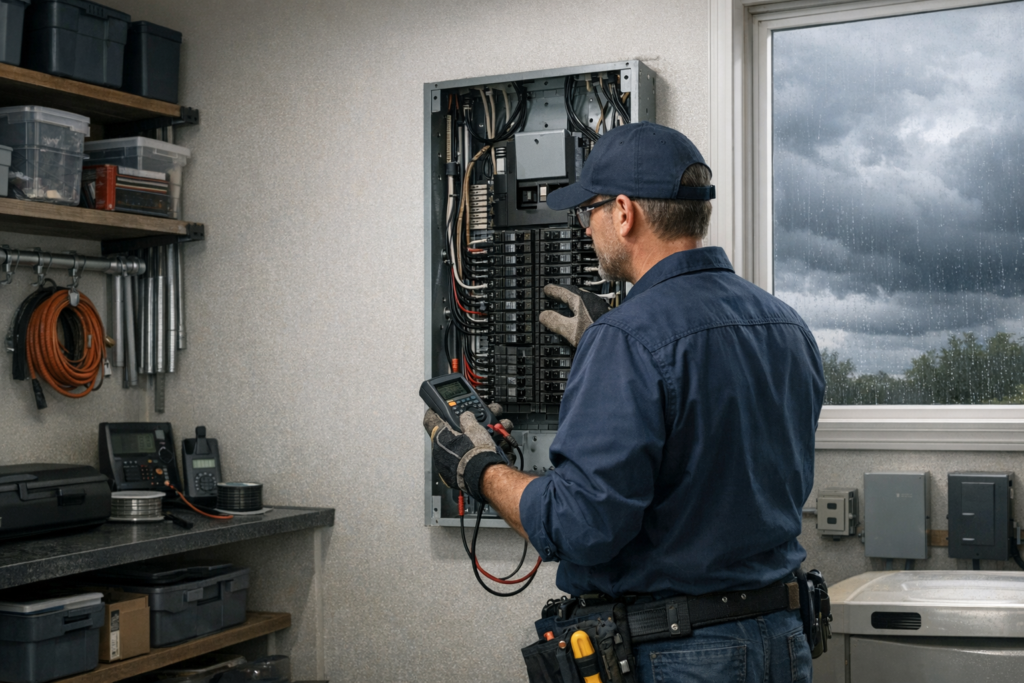
The best hurricane electrical preparation starts before the forecast turns urgent. Homeowners should inspect critical electrical systems, protect sensitive equipment, plan for outages, and have any unsafe or outdated wiring evaluated by a licensed electrician. In New Hampshire, Massachusetts, Maine, and Vermont, hurricanes and tropical storms may arrive less often than winter storms, but when they do, heavy rain, wind, flooding, and extended power outages can create serious electrical hazards.
Why Electrical Preparation Matters Before Hurricane Season
Hurricane season can put unusual stress on a home electrical system. High winds may damage overhead service lines. Heavy rain can drive water into basements, garages, crawl spaces, outdoor receptacles, meter areas, and exterior lighting. Repeated outages and utility restoration events can also create voltage fluctuations that affect electronics, appliances, HVAC equipment, well pumps, sump pumps, and home office systems.
Good storm preparation is about more than keeping the lights on. It helps reduce fire risks, protect expensive equipment, preserve essential circuits, and keep your family safer if power is interrupted for hours or days. For older New England homes, hurricane electrical preparation is especially important because aging panels, ungrounded wiring, overloaded circuits, and deteriorated exterior components may not handle severe weather conditions well.
Start With a Professional Electrical Safety Inspection
A pre-season electrical inspection is one of the most effective ways to identify hidden problems before a storm exposes them. An experienced electrician can evaluate the condition of your electrical panel, service entrance, grounding and bonding components, exterior wiring, basement circuits, generator connections, and high-demand equipment.
Homeowners should strongly consider an inspection if the house has frequent breaker trips, flickering lights, warm outlets, outdated wiring, visible corrosion, buzzing sounds, or a panel that has not been evaluated in many years. These symptoms can indicate loose connections, overloaded circuits, deteriorated devices, or other issues that should be corrected before severe weather arrives.
For homes in coastal, wooded, rural, or outage-prone areas throughout New Hampshire, Massachusetts, Maine, and Vermont, an inspection can also help determine whether your current electrical system is ready for backup power, surge protection, EV charging, sump pump operation, and other modern demands during storm season.
Check Your Electrical Panel Before Severe Weather
Your electrical panel is the distribution point for power in your home. If it is outdated, damaged, overloaded, or poorly labeled, storm response becomes more difficult and potentially more dangerous.
Before hurricane season, check whether your panel directory is accurate and easy to read. You should know which breakers control essential areas such as the refrigerator, heating system, well pump, sump pump, garage door opener, kitchen circuits, internet equipment, and medical devices if applicable. Clear labeling helps you shut off affected circuits quickly if water intrusion, equipment failure, or electrical damage occurs.
Do not remove the panel cover or touch internal components. Instead, look for visible warning signs around the panel, including:
- Rust, moisture stains, or corrosion near the panel
- Breakers that feel loose or will not stay reset
- Heat, burning smells, or discoloration
- Crackling, buzzing, or popping sounds
- Missing breaker blanks or open gaps
- Evidence of water dripping near electrical equipment
If you see signs of water, heat, smoke, or electrical arcing, do not touch the panel. Stay away from the equipment and contact a licensed electrician or the utility provider as appropriate.
Protect Electronics With Whole-Home Surge Protection
Power surges can occur during utility switching, lightning activity, downed lines, and power restoration after an outage. While plug-in surge strips can help protect individual electronics, they are not a complete solution for an entire home.
Whole-home surge protection is installed at or near the electrical panel and helps reduce the impact of voltage spikes entering the home electrical system. It can provide an added layer of protection for appliances, HVAC equipment, smart home devices, computers, televisions, security systems, and EV charging equipment.
Surge protection is especially valuable for homes with expensive electronics or equipment that remains connected during storms. It does not replace safe storm practices, and it cannot protect against every possible electrical event, but it is an important part of a well-rounded hurricane electrical preparation plan.
Plan Backup Power Before the Storm Is on the Radar
A backup generator can make an extended outage far more manageable, but generator planning should happen well before hurricane season. Waiting until a storm is approaching often leads to rushed decisions, unsafe setups, unavailable equipment, and improper connections.
There are two common residential backup power approaches: portable generators and permanently installed standby generators. Both can be useful when installed and operated correctly, but both require careful planning.
Portable Generator Safety
Portable generators should never be connected directly to a home through a standard outlet, extension cord backfeed, or improvised connection. This can energize wiring in unsafe ways and create serious hazards for occupants, electricians, and utility workers.
A safer portable generator setup typically uses properly installed transfer equipment or an interlock system where appropriate. This allows selected circuits to be powered while separating the generator from utility power. A licensed electrician can help determine the right setup for your home and your intended loads.
Portable generators must also be operated outdoors, away from windows, doors, vents, garages, and enclosed spaces due to carbon monoxide risk. Electrical safety and carbon monoxide safety go hand in hand during outage planning.
Standby Generator Readiness
A standby generator can automatically provide power to selected circuits or an entire home, depending on system design. Before hurricane season, homeowners should confirm that the generator has been maintained, tested, and inspected according to the manufacturer’s recommendations.
Important considerations include fuel supply, automatic transfer switch operation, battery condition, load capacity, clearance around the generator, and whether the system still matches the home’s electrical needs. If your home has added a heat pump, EV charger, finished basement, well equipment, or other major electrical loads since the generator was installed, the system may need reevaluation.
Prioritize Essential Circuits for an Outage
Not every circuit needs backup power. In many homes, the most practical approach is to prioritize the loads that protect safety, comfort, food, water, and property.
Common essential circuits include:
- Refrigerator and freezer circuits
- Sump pump and sewage ejector circuits
- Well pump equipment
- Selected lighting circuits
- Heating system controls or boiler circuits
- Medical equipment circuits, where applicable
- Internet and communication equipment
- Garage door opener circuits
An electrician can help calculate realistic loads so your generator or backup system is not undersized or overloaded. This is particularly important for homes with electric heat, central air conditioning, heat pumps, electric water heaters, or EV chargers, which can draw significant power.
Inspect Outdoor Electrical Components
Outdoor electrical equipment is directly exposed to wind-driven rain, snow, ice, temperature swings, and physical damage. Before hurricane season, walk around the exterior of your home and visually inspect electrical components from a safe distance.
Look at outdoor receptacles, lighting fixtures, conduit, landscape lighting, pool equipment, detached garage wiring, and the area around the meter. Covers should be intact, devices should not be cracked or loose, and wiring should not be exposed. If you see damaged conduit, missing covers, open boxes, or signs of water intrusion, schedule electrical repairs before severe weather arrives.
Pay close attention to tree branches near overhead service lines. Homeowners should not attempt to trim trees touching or near utility lines. Contact the appropriate utility or qualified professionals for safe handling.
Prepare for Basement and Flooding Risks
Heavy rain can quickly turn an electrical issue into a life safety concern. Basements are particularly vulnerable because they often contain panels, subpanels, sump pumps, heating equipment, laundry circuits, freezers, and stored appliances.
Before the season, confirm that sump pumps are operational and that any battery backup systems are charged and maintained. If your sump pump circuit is unreliable, frequently trips, or shares power with too many other loads, an electrician can evaluate whether improvements are needed.
Never step into standing water if electrical outlets, cords, appliances, or panels may be energized. If flooding reaches electrical equipment, stay out of the area and contact qualified help. Electrical equipment that has been submerged or exposed to significant water may need replacement or professional evaluation before it can be safely reenergized.
Unplug, Elevate, and Protect Sensitive Equipment
When a major storm is expected, unplug nonessential electronics before conditions deteriorate. This can help reduce the risk of damage from surges and power fluctuations. Focus on computers, televisions, gaming systems, printers, chargers, small appliances, and entertainment equipment.
In basements, garages, and lower-level rooms, keep extension cords, power strips, battery chargers, and electronics off the floor where water may collect. Extension cords should only be used temporarily and should never substitute for permanent wiring.
If you work from home, prepare a shutdown plan for computers, network equipment, and data storage devices. A properly sized uninterruptible power supply can provide short-term power long enough to save work and shut equipment down safely, but it is not a substitute for a generator during a prolonged outage.
Review GFCI Protection in Wet and Damp Areas
Ground-fault circuit interrupter protection is an important safety feature in areas where electricity and moisture may be present. GFCI devices are commonly used in kitchens, bathrooms, basements, garages, exterior areas, laundry spaces, and other locations where shock risk is higher.
Before storm season, test accessible GFCI receptacles using the built-in test and reset buttons. If a device will not test, will not reset, trips repeatedly, or appears damaged, have it evaluated by a licensed electrician. Repeated tripping should not be ignored; it may indicate moisture intrusion, equipment failure, wiring issues, or a ground fault.
For older homes, an electrician can assess whether existing protection is appropriate for current safety expectations and the home’s actual use.
Do Not Ignore Small Electrical Problems Before a Storm
Minor electrical symptoms often become more serious during severe weather. A loose exterior receptacle, flickering basement light, corroded disconnect, or breaker that occasionally trips may seem manageable during normal conditions, but storm-related moisture and power instability can increase risk.
Schedule repairs before hurricane season if you notice:
- Lights that dim or flicker without an obvious cause
- Breakers that trip more than once
- Outlets that are loose, cracked, discolored, or warm
- Outdoor fixtures that collect water
- Extension cords being used as permanent wiring
- Burning smells from switches, outlets, or equipment
- Frequent issues with sump pump or well pump circuits
Electrical troubleshooting is safest and most effective when performed before an emergency. Once a storm arrives, access may be limited, parts may be harder to obtain, and damage may spread.
Create a Storm Electrical Safety Checklist
A simple checklist can help you act quickly when severe weather is forecast. Keep it with your emergency supplies and review it with everyone in the household.
- Confirm the electrical panel directory is accurate.
- Test sump pumps and battery backup equipment.
- Charge phones, flashlights, power banks, and essential devices.
- Unplug nonessential electronics before the storm.
- Move cords and electronics away from areas that may flood.
- Check that generator fuel and maintenance are ready if applicable.
- Review safe generator placement and operation.
- Keep electrical equipment away from standing water.
- Know how to shut off affected circuits if it is safe to do so.
- Save contact information for your electrician and utility provider.
This type of preparation helps reduce confusion when the weather changes quickly.
What to Do If the Power Goes Out
During an outage, turn off or unplug sensitive electronics and large appliances where practical. This can help protect equipment when power is restored. Leave one light switched on so you know when utility power returns.
If you use a generator, follow the manufacturer’s operating instructions and use only a properly installed connection method. Keep the generator outdoors and away from openings into the home. Do not overload the generator, and do not run cords through wet areas where they can be damaged or create shock hazards.
If you smell burning, hear buzzing near electrical equipment, see sparks, or notice water near energized components, keep your distance and seek professional assistance. Storm conditions are not the time to experiment with electrical repairs.
What to Check After the Storm Passes
After severe weather, inspect your property carefully before resetting breakers or using affected equipment. Look for downed wires, damaged service equipment, water intrusion, damaged outdoor receptacles, and unusual odors. Treat all downed wires as energized and stay far away.
If a breaker trips after the storm, do not repeatedly reset it. A breaker that trips is responding to a problem. Repeated resets can worsen damage or increase fire risk. Have the circuit inspected if the cause is not obvious and safely correctable.
Electrical equipment exposed to flooding, heavy moisture, physical damage, or overheating should be professionally evaluated before reuse. This is especially important for panels, breakers, disconnects, outlets, switches, appliances, HVAC equipment, generators, and EV charging equipment.
When to Call a Licensed Electrician
Homeowners can handle basic preparation tasks such as charging devices, visually inspecting accessible equipment, unplugging electronics, and organizing emergency supplies. However, electrical repairs, panel work, generator connections, service upgrades, surge protection installation, transfer switch installation, and troubleshooting should be handled by a qualified electrician.
Call a licensed electrician before hurricane season if your home has an older panel, frequent tripping breakers, outdated wiring, no whole-home surge protection, unreliable sump pump power, unsafe generator connections, damaged exterior electrical equipment, or plans for a new standby generator.
Electrical Constructors LLC provides residential and commercial electrical services for customers throughout New Hampshire, Massachusetts, Maine, and Vermont. Whether you need a storm-readiness inspection, generator installation, electrical panel upgrade, surge protection, troubleshooting, or repairs after severe weather, working with an experienced electrical contractor helps protect your property and improve long-term reliability.
Final Thoughts on Hurricane Electrical Preparation
Hurricane electrical preparation is most effective when it is done early, carefully, and with safety in mind. Inspect critical systems, protect electronics, plan backup power correctly, keep water away from electrical equipment, and correct known issues before the first major storm warning.
Severe weather is unpredictable, but your electrical readiness does not have to be. A properly maintained electrical system can help your home handle outages, storms, and seasonal demands with greater safety and confidence.