
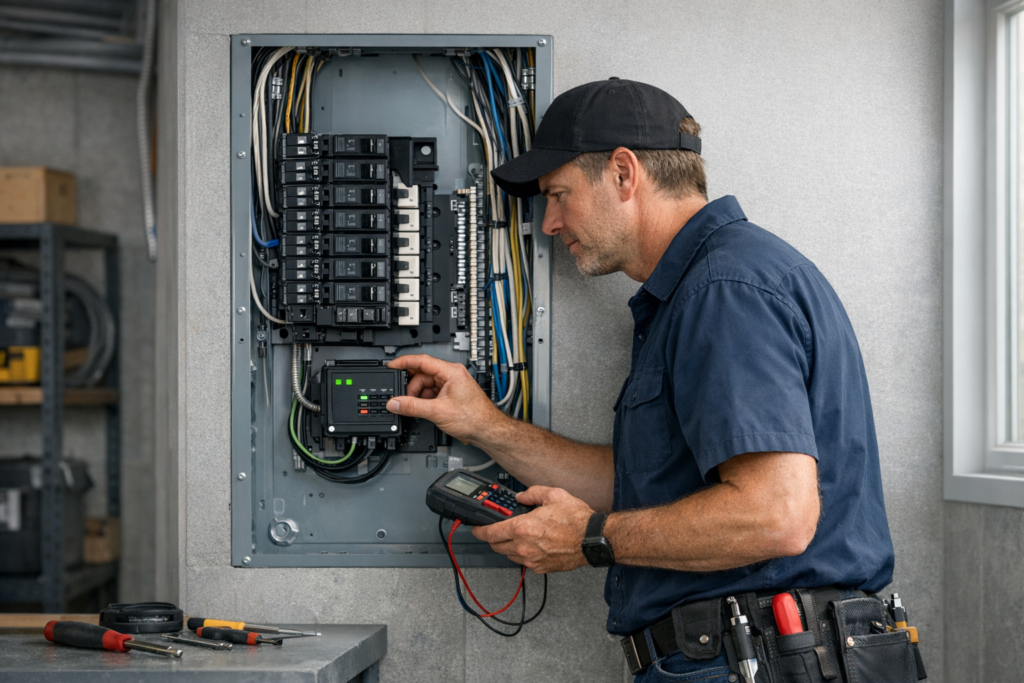
A whole home surge protector helps protect your electrical system, appliances, electronics, and hardwired equipment from damaging voltage spikes before they spread throughout your property. For homeowners and businesses in New Hampshire, Massachusetts, Maine, and Vermont, where severe weather, utility fluctuations, generators, and aging electrical infrastructure can all contribute to surge events, installing surge protection at the electrical panel is a practical way to improve safety, reliability, and long-term equipment protection.
What a Whole-Home Surge Protector Does
A whole-house surge protection device is installed at or near the main electrical panel. Its job is to monitor incoming voltage and divert excess electrical energy safely away from sensitive equipment when a surge occurs.
Many people think of power surges as dramatic events caused by lightning, but most damaging surges are smaller and more frequent. They may come from utility grid switching, equipment cycling on and off, generator use, downed lines, or large motors starting inside a home or commercial building. These smaller surges may not cause immediate failure, but they can gradually weaken circuit boards, controls, and electronic components.
Modern properties use more sensitive electronics than ever before. HVAC controls, smart appliances, well pumps, security systems, networking equipment, LED lighting drivers, EV chargers, office equipment, and entertainment systems all rely on electronic components that can be vulnerable to voltage spikes.
Why Surge Protection Matters More Than It Used To
Older homes were built when electrical loads were simpler. A typical household may have had basic lighting, kitchen appliances, and a few plug-in devices. Today, even a modest home may contain thousands of dollars in electronics and computerized equipment connected to the electrical system every day.
Commercial properties face similar risks. Point-of-sale systems, routers, servers, access control systems, refrigeration equipment, fire alarm components, production controls, LED lighting systems, and building automation equipment all depend on stable power. Even a brief surge can interrupt operations or shorten equipment life.
Across New England, properties also face seasonal stress. Winter storms, ice, high winds, utility interruptions, and generator operation can all create conditions where surge protection becomes especially valuable. A whole home surge protector cannot prevent every electrical issue, but it can reduce the risk of widespread surge-related damage.
Key Benefits of Installing a Whole Home Surge Protector
Panel-mounted surge protection provides broad protection that plug-in power strips alone cannot match. It supports the entire electrical system rather than protecting only one outlet or one device.
It Helps Protect Expensive Appliances
Modern appliances often contain electronic control boards that are more sensitive than older mechanical components. Refrigerators, ranges, dishwashers, washers, dryers, heat pumps, boilers, and mini-split systems may all rely on digital controls.
A surge may not destroy an appliance instantly. Instead, repeated voltage spikes can weaken internal components over time. Whole-house surge protection helps reduce that cumulative damage by limiting excess voltage before it reaches appliance circuits.
It Adds Protection for Hardwired Equipment
Plug-in surge strips only protect devices plugged into them. They do not protect hardwired systems such as HVAC equipment, well pumps, garage door openers, electric vehicle charging equipment, lighting controls, smoke detection equipment, or wired security systems.
A whole home surge protector installed at the panel provides a first layer of protection for circuits throughout the building, including equipment that cannot be plugged into a power strip.
It Helps Reduce Unexpected Repair Costs
Electrical surges can cause failures that are difficult to diagnose. A damaged circuit board in a furnace, air conditioner, refrigerator, or commercial control system can result in service calls, downtime, replacement parts, and inconvenience.
Surge protection is not a guarantee that no equipment will ever fail, but it is a preventative measure that can help reduce the likelihood of surge-related damage and extend the usable life of connected equipment.
It Provides Better Protection Than Power Strips Alone
Quality plug-in surge protectors still have a place, especially for computers, televisions, and office electronics. However, they are best used as a second layer of protection, not the only defense.
A panel surge protector addresses voltage spikes at the service entrance or distribution point. Plug-in devices then provide localized protection for specific electronics. This layered approach is often the most practical way to protect sensitive equipment.
It Supports Generator and Storm Preparedness
Many homes and businesses in New Hampshire, Massachusetts, Maine, and Vermont rely on standby or portable generator systems during outages. When power is interrupted and restored, electrical systems can experience fluctuations.
Surge protection is an important part of a broader storm-preparedness plan. It works alongside properly installed generator transfer equipment, grounding and bonding, electrical inspections, and safe load management to improve electrical resilience during severe weather.
Common Causes of Power Surges
Power surges can originate outside or inside the building. Understanding the causes helps explain why whole-house protection is useful even when lightning is not present.
- Utility grid switching: Changes in the utility distribution system can create voltage fluctuations.
- Storm damage: Wind, ice, fallen branches, and damaged utility lines can affect power quality.
- Lightning activity: A nearby lightning strike can introduce a powerful surge into electrical, cable, or communication lines.
- Large equipment cycling: HVAC systems, pumps, compressors, and motors can create internal voltage disturbances.
- Generator operation: Improperly installed or poorly maintained generator systems can contribute to unstable power conditions.
- Aging electrical systems: Loose connections, outdated panels, and deteriorated wiring can increase electrical reliability concerns.
Not every voltage spike is obvious. Lights may not flicker, breakers may not trip, and equipment may continue to operate. The damage can still accumulate quietly inside sensitive electronics.
Whole-Home Surge Protection for Older New England Homes
Many properties throughout New Hampshire, Massachusetts, Maine, and Vermont were built long before today’s electrical demands. Older and historic homes may have undergone multiple renovations, service changes, additions, or partial wiring updates over the years.
Before installing a whole home surge protector, a licensed electrician should evaluate the electrical panel, grounding and bonding, available breaker space, service condition, and overall system safety. Surge protection works best when the electrical system is properly maintained and installed according to applicable standards.
If a panel is outdated, overcrowded, damaged, or undersized for the property’s current electrical needs, the electrician may recommend addressing those concerns before or during surge protection installation. In some cases, a panel upgrade or service upgrade may be the more appropriate first step.
Residential and Commercial Applications
Surge protection is valuable for both homes and businesses, but the equipment selection and installation approach may differ based on the property type, electrical service size, equipment sensitivity, and operational needs.
For Homeowners
Residential surge protection can help protect everyday essentials, including kitchen appliances, HVAC equipment, home offices, entertainment systems, smart home devices, EV charging equipment, and security systems. It is especially worth considering after installing a new electrical panel, generator, heat pump system, or EV charger.
For Businesses and Property Managers
Commercial surge protection helps reduce risk to revenue-producing and mission-critical equipment. Retail businesses, offices, multifamily properties, light industrial facilities, restaurants, professional buildings, and managed properties may all benefit from protecting electrical infrastructure against preventable surge damage.
For commercial facilities, surge protection may also be part of a larger preventative maintenance plan that includes electrical inspections, infrared evaluations when appropriate, panel maintenance, load assessments, emergency lighting checks, and equipment testing.
What to Know Before Installation
A whole-house surge protection device should be selected and installed by a qualified electrician. The right product depends on the electrical service, panel type, grounding system, available space, property use, and the level of protection needed.
During installation planning, an electrician may review:
- The condition and capacity of the electrical panel
- Grounding and bonding quality
- Whether the property has overhead or underground utility service
- Generator or transfer switch equipment
- Sensitive loads such as HVAC controls, servers, pumps, or EV chargers
- Any history of flickering lights, nuisance equipment failures, or storm-related issues
Safety warning: Surge protection devices are installed in or near energized electrical equipment. Homeowners and unqualified personnel should not attempt panel work. Improper installation can create shock, fire, and equipment hazards.
Does a Whole-Home Surge Protector Stop Lightning Damage?
A whole home surge protector can help reduce damage from many voltage spikes, including some surge energy associated with nearby lightning activity, but it cannot make a property lightning-proof.
Direct lightning strikes are extremely powerful and may overwhelm standard electrical protection. Properties with elevated lightning exposure, sensitive electronics, or specialized equipment may need additional protective measures, such as a coordinated surge protection strategy and evaluation of other incoming lines, including cable, data, and communication pathways.
For most homes and businesses, whole-house surge protection remains a smart first layer of defense against common surge events.
Signs Your Property May Benefit From Surge Protection
Surge protection is often beneficial even before problems appear. However, certain conditions make it especially worth discussing with a licensed electrician.
- You have experienced repeated appliance or circuit board failures.
- Your lights flicker when large equipment starts.
- You operate a standby or portable generator.
- Your home or business has expensive HVAC, refrigeration, server, or control equipment.
- You recently installed or plan to install an EV charger.
- Your property has older wiring or an aging electrical panel.
- You live in an area prone to winter storms, outages, wind, or utility interruptions.
- You want better protection for smart home systems, home offices, or commercial electronics.
These issues do not always mean a surge protector alone will solve the problem. Flickering lights, repeated equipment failures, or breaker issues can also indicate loose connections, overloaded circuits, panel problems, or other electrical concerns that should be professionally diagnosed.
Surge Protection Works Best With a Healthy Electrical System
A surge protector is an important protective device, but it should not be viewed as a substitute for proper electrical maintenance. The safest and most reliable electrical systems combine good design, quality installation, properly sized equipment, grounding and bonding, and routine inspection.
For homeowners, that may mean having the panel evaluated before major upgrades such as heat pumps, EV charging, kitchen renovations, or generator installation. For commercial properties, it may mean scheduling periodic electrical maintenance to identify loose terminations, heat damage, overloaded circuits, or aging components before they cause downtime.
Surge protection is most effective when it is part of a complete electrical safety strategy.
Frequently Asked Questions
How long does a whole-home surge protector last?
The service life depends on the device, installation conditions, and how many surge events it absorbs. Some units include indicator lights that show whether protection is active. A licensed electrician can inspect the device during routine electrical service or panel maintenance.
Do I still need plug-in surge protectors?
Yes, they can still be useful. A whole-home unit provides primary protection at the panel, while quality plug-in surge protectors add point-of-use protection for computers, televisions, network equipment, and other sensitive devices.
Can surge protection be added to any electrical panel?
Many panels can accommodate surge protection, but not all panels are in suitable condition or have the necessary space. An electrician should inspect the panel and determine the safest installation method.
Is surge protection worth it for a newer home?
Yes. Newer homes often contain more sensitive electronics than older homes, including smart appliances, electronic HVAC controls, LED lighting systems, and home automation equipment. Surge protection can help preserve those investments.
Can a surge protector fix flickering lights?
No. Flickering lights may indicate voltage fluctuations, loose connections, overloaded circuits, utility issues, or equipment startup loads. Surge protection may be recommended after troubleshooting, but the underlying cause should be identified first.
Professional Installation Helps Ensure Proper Protection
Installing a whole home surge protector is a practical upgrade for protecting appliances, electronics, hardwired systems, and sensitive equipment from damaging voltage spikes. It is especially valuable in New England properties exposed to winter storms, outages, generator use, aging wiring, and increasing electrical demand.
Electrical Constructors LLC provides residential and commercial electrical services throughout New Hampshire, Massachusetts, Maine, and Vermont, including surge protection, panel upgrades, service upgrades, troubleshooting, generator installation, EV charger installation, inspections, and preventative maintenance. If you want to improve electrical protection and long-term reliability, a professional evaluation is the best place to start.