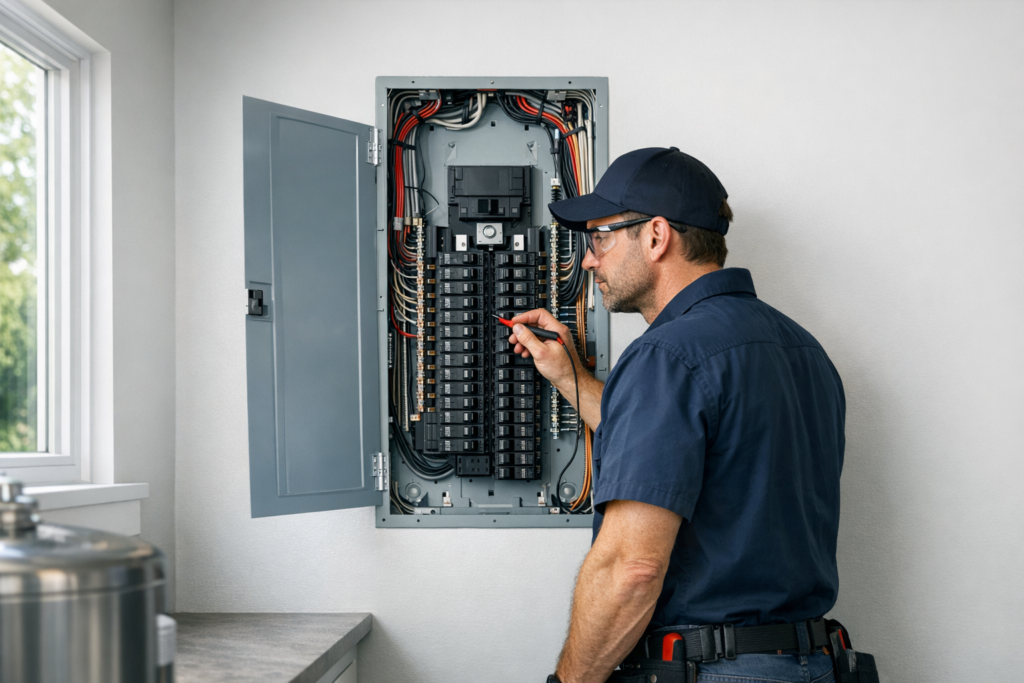
An electrical panel upgrade is often needed when your current panel can no longer safely or reliably support the power demands of your home or business. Frequent breaker trips, flickering lights, outdated fuse boxes, warm panel surfaces, planned renovations, new high-demand appliances, EV chargers, generators, and visible signs of corrosion or damage are all reasons to have your electrical service evaluated by a licensed electrician.
What an Electrical Panel Does
Your electrical panel is the distribution center for your property’s electrical system. Power enters the building through the electrical service, passes through the main panel, and is divided into individual branch circuits that feed outlets, lighting, appliances, HVAC equipment, and other electrical loads.
Inside the panel, circuit breakers are designed to protect wiring from overloads and certain fault conditions by shutting off power when a circuit draws more current than it should. When the panel is properly sized, properly installed, and in good condition, it helps provide safe, dependable power throughout the building.
When a panel is outdated, damaged, overcrowded, or undersized, it can become a major limitation. In many older homes and commercial properties throughout New Hampshire, Massachusetts, Maine, and Vermont, electrical systems were installed before today’s power needs became common. Modern kitchens, heat pumps, central air conditioning, home offices, server equipment, EV charging, standby generators, and commercial equipment can place demands on electrical systems that older panels were never designed to handle.
Clear Signs You May Need an Electrical Panel Upgrade
Some electrical panel problems are obvious. Others show up gradually as your power needs change. If you notice any of the following signs, it is time to schedule a professional evaluation.
Breakers Trip Frequently
A breaker that trips occasionally may be doing its job. A breaker that trips repeatedly is a warning sign. Frequent tripping may indicate an overloaded circuit, faulty appliance, wiring issue, loose connection, or a panel that no longer has enough capacity for the electrical demand.
Resetting a breaker over and over does not solve the underlying problem. If a circuit trips repeatedly, especially when using normal household or business equipment, a licensed electrician should identify the cause before the issue becomes more serious.
Lights Flicker, Dim, or Pulse
Lights that flicker when a refrigerator, microwave, printer, HVAC system, or other equipment starts may point to voltage fluctuation, loose wiring, overloaded circuits, or inadequate service capacity. Occasional minor dimming can happen with certain large loads, but frequent or noticeable flickering should not be ignored.
In commercial settings, flickering lights can also affect productivity, customer experience, equipment performance, and tenant confidence. Diagnosing the cause often requires more than simply replacing a light fixture.
Your Panel Feels Warm or Smells Burnt
A warm electrical panel, burning odor, buzzing sound, scorch mark, or melted breaker is a serious safety concern. These symptoms may indicate overheating, arcing, loose connections, or failing equipment. Do not remove the panel cover or attempt to investigate internal wiring yourself.
If you notice burning smells or visible heat damage, contact a qualified electrician promptly. If there is smoke, active sparking, or an immediate fire concern, leave the area and contact emergency services.
You Still Have a Fuse Box
Fuse boxes can still be found in some older homes and buildings across New England. While a properly maintained fuse system may have functioned for many years, fuses are not ideal for today’s electrical usage. They can be inconvenient, limited in capacity, and vulnerable to unsafe modifications when the wrong fuse size is installed.
Replacing a fuse box with a modern circuit breaker panel can improve convenience, expand capacity, and make it easier to maintain a safer electrical system that supports current needs.
Your Panel Is Rusted, Corroded, or Physically Damaged
Moisture and electricity are a dangerous combination. Corrosion inside or around an electrical panel can compromise connections, damage breakers, and increase the risk of overheating or failure. This is especially important in basements, garages, utility rooms, coastal environments, and older properties where moisture control may be limited.
Any sign of water staining, rust, corrosion, missing covers, broken breakers, or damaged panel components should be evaluated by a licensed electrician.
You Are Running Out of Breaker Space
If your panel has no room for additional circuits, that does not automatically mean it can safely support more load. Adding tandem breakers or subpanels without a proper load evaluation can create problems if the overall electrical service is already near capacity.
A professional electrician can determine whether the existing panel has safe expansion options or whether an electrical panel upgrade is the better long-term solution.
Major Projects That Often Require a Panel Evaluation
Even if your current panel seems to be working, major renovations and equipment additions should start with an electrical capacity review. The right time to discover a panel limitation is before walls are opened, equipment is delivered, or inspections are scheduled.
Kitchen Remodels and Additions
Modern kitchens often require multiple dedicated circuits for appliances, countertop receptacles, lighting, ventilation, dishwashers, disposals, microwaves, wall ovens, induction ranges, and other equipment. Older panels may not have enough capacity or space to support a redesigned kitchen safely.
EV Charger Installation
Electric vehicle chargers can add a significant continuous electrical load. Before installing an EV charger, an electrician should evaluate service size, panel capacity, existing loads, wiring route, charger specifications, and the best installation method. In some cases, a panel upgrade or service upgrade may be necessary.
Heat Pumps, Central Air, and HVAC Equipment
Many New England property owners are investing in heat pumps and high-efficiency HVAC systems to improve comfort and reduce fuel dependence. These upgrades can be excellent long-term improvements, but they may require new circuits or additional electrical capacity.
Generator Installation
New Hampshire, Massachusetts, Maine, and Vermont all experience winter storms, snow, ice, high winds, and extended outage risks. A standby generator or manual transfer setup must be coordinated carefully with the existing electrical panel. Depending on the system design, a panel upgrade, transfer switch, interlock equipment, or service modifications may be required.
Basement Finishing, Home Offices, and Workshops
Finished basements, remote work areas, hobby shops, and garages often add lighting, receptacles, heating, cooling, computers, tools, and specialized equipment. These projects may look simple at first, but the added electrical load can expose the limitations of an older panel.
Commercial Tenant Improvements
For business owners, property managers, and commercial property owners, panel capacity becomes especially important during tenant fit-outs, equipment changes, lighting upgrades, office expansions, restaurant buildouts, and production area modifications. Electrical planning helps avoid downtime, failed inspections, and expensive rework.
Electrical Panel Upgrade vs. Service Upgrade
An electrical panel upgrade and an electrical service upgrade are related, but they are not always the same thing. A panel upgrade usually refers to replacing the breaker panel itself. A service upgrade may involve increasing the amount of power supplied to the property, which can include changes to the meter, service entrance conductors, grounding and bonding components, utility coordination, and the main panel.
For example, replacing an outdated or damaged panel with a new panel of similar capacity may solve certain safety or reliability issues. However, if the property needs more available power, the project may require a broader service upgrade.
A licensed electrician can perform a load calculation, review existing equipment, evaluate future needs, and determine whether a panel replacement alone is sufficient or whether a larger service upgrade is appropriate.
Why Older Panels Can Become a Problem
Older electrical panels may have served reliably for decades, but time, wear, changing codes, and greater electrical demand can create issues. An older panel may not have enough breaker spaces, may lack modern safety features, or may have components that are difficult to service.
Common concerns with aging panels include loose connections, worn breakers, corrosion, inadequate labeling, overcrowded wiring, improper modifications, double-tapped breakers where not listed for that use, missing knockouts, and outdated equipment that no longer meets the needs of the property.
Historic and older homes throughout New England can also have layers of electrical work completed over many years. A panel may appear functional while hiding outdated wiring methods, ungrounded circuits, abandoned wiring, or previous work that should be corrected during an upgrade.
Safety Issues You Should Never Ignore
Electrical panels should only be inspected internally and serviced by qualified professionals. Even when the main breaker is turned off, parts of the electrical service equipment may remain energized. This is not a safe project for untrained homeowners, tenants, or maintenance staff.
Call a licensed electrician if you notice:
- Burning odor near the electrical panel
- Buzzing, crackling, or sizzling sounds
- Breakers that will not reset or trip immediately
- Scorch marks, discoloration, or melted plastic
- Rust, corrosion, or signs of water intrusion
- Lights dimming significantly when equipment starts
- Warm panel covers or warm breakers
- Improperly labeled, overcrowded, or visibly damaged panels
These symptoms do not always mean a full electrical panel upgrade is required, but they do mean the system needs professional attention.
What Happens During a Professional Panel Evaluation
A proper panel evaluation is more than a quick look at the breaker layout. An experienced electrician will assess the panel, connected loads, wiring condition, grounding and bonding, service capacity, equipment age, and the owner’s future plans.
A thorough evaluation may include:
- Reviewing the existing service size and panel rating
- Checking whether breaker spaces are available and properly used
- Looking for heat damage, corrosion, loose components, or physical defects
- Identifying overloaded or improperly configured circuits
- Evaluating major appliances, HVAC equipment, generators, and EV charging needs
- Reviewing panel labeling and circuit organization
- Discussing planned renovations, additions, or equipment upgrades
- Determining whether repairs, a subpanel, a panel replacement, or a service upgrade is most appropriate
This process helps ensure the recommendation is based on the actual condition and electrical demand of the property, not guesswork.
Cost Factors That Affect an Electrical Panel Upgrade
The cost of an electrical panel upgrade varies because every property is different. A straightforward panel replacement in an accessible location is very different from a full service upgrade involving utility coordination, meter work, grounding improvements, exterior service equipment, or relocation of the panel.
Common factors that affect cost include:
- The size and rating of the new panel
- Whether the electrical service capacity must be increased
- Condition of existing wiring, grounding, and bonding
- Accessibility of the panel and service equipment
- Number of circuits that must be reworked or corrected
- Need for surge protection or other safety upgrades
- Local inspection, permitting, and utility coordination requirements
- Residential, commercial, or mixed-use property requirements
The lowest price is not always the best value. A properly planned upgrade should improve safety, support current loads, allow for future needs, and be completed in a way that meets applicable electrical standards.
How a Panel Upgrade Improves Reliability and Future Readiness
A new electrical panel can do more than solve an immediate problem. It can make the entire electrical system easier to manage, maintain, and expand. For homeowners, that may mean reliable power for modern appliances, EV charging, heat pumps, generators, and finished living space. For businesses, it can mean fewer nuisance trips, better equipment support, improved tenant flexibility, and reduced disruption.
Benefits may include:
- Improved electrical capacity for modern power demands
- More organized and clearly labeled circuits
- Reduced risk from worn or damaged obsolete equipment
- Better support for renovations and equipment additions
- Improved compatibility with generator and EV charger installations
- Opportunity to correct outdated or unsafe wiring conditions
- Greater confidence in the safety and reliability of the electrical system
For many property owners, an electrical panel upgrade is not just a repair. It is an investment in safer, more dependable power for years to come.
Residential and Commercial Considerations
Residential and commercial electrical panels serve the same basic purpose, but the planning process can be very different. Homes are often evaluated around kitchens, laundry equipment, HVAC systems, EV charging, generators, and living space expansion. Commercial properties may require more detailed attention to tenant equipment, emergency systems, lighting loads, three-phase power needs, production equipment, and downtime planning.
For property managers and business owners, scheduling can be just as important as technical planning. Panel work may require temporary power interruption, coordination with occupants, and careful sequencing to minimize disruption. An experienced electrical contractor can help plan the work so the upgrade is completed safely and efficiently.
Common Mistakes to Avoid
Panel work is not the place for shortcuts. Mistakes can create safety hazards, inspection issues, nuisance outages, and expensive future corrections.
- Ignoring repeated breaker trips: A breaker that trips often is signaling a problem that should be diagnosed.
- Adding circuits without evaluating load: Available breaker spaces do not always mean available electrical capacity.
- Using extension cords as a permanent solution: This can overload circuits and create fire hazards.
- Covering up outdated wiring during renovations: Electrical issues are easier to correct before walls and finishes are completed.
- Hiring unqualified help: Panel replacement and service work should be performed by licensed professionals.
- Failing to plan for future needs: EV chargers, generators, additions, and HVAC changes should be considered before selecting a new panel.
When to Call Electrical Constructors LLC
If your panel is outdated, damaged, overloaded, or limiting your renovation plans, Electrical Constructors LLC can evaluate your electrical system and recommend the right solution. The team serves homeowners, businesses, contractors, developers, and property managers throughout New Hampshire, Massachusetts, Maine, and Vermont.
Whether you need troubleshooting, panel replacement, a service upgrade, generator preparation, EV charger installation, code corrections, or a complete electrical system installation, working with an experienced electrical contractor helps ensure the system is safe, reliable, and appropriate for the way your property is used.
An electrical panel upgrade should be based on accurate evaluation, careful planning, and professional installation. If you are seeing warning signs or planning a project that will increase electrical demand, schedule an inspection before the problem becomes urgent.