If your lights briefly dim or flicker when an air conditioner, refrigerator, microwave, well pump, furnace blower, compressor, or other large appliance turns on, the most common reason is a temporary voltage drop caused by the appliance motor starting. A short, minor flicker may be normal in some electrical systems. However, repeated flickering, lights that dim dramatically, buzzing sounds, burning odors, warm switches, or flickering across multiple rooms can point to a wiring, circuit, panel, or service issue that should be evaluated by a licensed electrician.
The Short Answer: Why Lights Flicker With Appliances
Large appliances often draw a higher amount of electricity for a split second when they start. This is called startup current or inrush current. During that moment, the available voltage on the circuit may dip slightly, causing nearby lights to flicker or dim.
That does not always mean something is dangerously wrong. The concern is the severity, frequency, location, and pattern of the flicker. A quick, barely noticeable dimming when a central air conditioner starts is different from lights repeatedly pulsing, dimming by half, or flickering throughout the building every time equipment runs.
In homes and commercial buildings throughout New Hampshire, Massachusetts, Maine, and Vermont, lights flicker with appliances for several common reasons:
- Normal motor startup current from HVAC equipment, refrigerators, pumps, or compressors
- Shared circuits serving both lighting and high-demand appliances
- Loose electrical connections or aging wiring
- Overloaded circuits or undersized electrical service
- Older electrical panels that can no longer support modern loads
- Problems with the appliance motor or internal components
- Voltage issues from the utility supply
How Appliance Startup Current Affects Your Lights
Many large appliances use motors, heating elements, compressors, or transformers. When those components start, they need more power than they use while running normally. This short demand spike can momentarily lower voltage on the circuit.
Lights are sensitive to voltage changes. Incandescent bulbs may dim, LEDs may flicker, and some older fluorescent fixtures may flutter or hesitate. LED lighting can make the issue more noticeable because some LED drivers react quickly to small voltage fluctuations.
Common appliances and equipment that can cause temporary flickering include:
- Central air conditioning systems and heat pumps
- Refrigerators and freezers
- Electric dryers and ranges
- Microwaves
- Well pumps and sump pumps
- Furnace blowers and boiler controls
- Commercial refrigeration equipment
- Compressors, motors, and shop equipment
- Elevators or larger mechanical equipment in commercial buildings
The bigger the appliance load compared with the capacity of the circuit or service, the more noticeable the flicker may be.
When Flickering Lights Are Normal and When They Are Not
A brief flicker does not automatically mean your electrical system is unsafe. Still, flickering lights should not be ignored when the problem is persistent, worsening, or affecting large areas of the property.
| What You Notice | What It May Mean |
|---|---|
| A quick, slight dim when a large appliance starts | Often a normal voltage dip, especially with motor-driven equipment |
| Lights flicker only on one circuit | Possible overloaded branch circuit, shared circuit issue, loose connection, or fixture problem |
| Lights flicker throughout the property | Possible service, panel, main connection, neutral, or utility voltage issue |
| Flickering is getting worse over time | Aging equipment, failing connections, or load growth may be stressing the system |
| Flickering occurs with buzzing, heat, sparks, or burning smells | Potential electrical hazard that needs prompt professional attention |
If the flickering is sudden, severe, or accompanied by other warning signs, stop using the affected equipment if it is safe to do so and contact a qualified electrician.
Common Electrical Causes Behind Flickering Lights
Shared Lighting and Appliance Circuits
When lights and a large appliance are on the same branch circuit, the appliance startup load can affect the lighting more noticeably. This is often found in older homes, additions, workshops, basements, and commercial spaces that have been modified over time.
A properly planned electrical layout separates high-demand equipment from general lighting whenever practical. Dedicated circuits for appliances and equipment help reduce nuisance flickering and improve reliability.
Loose or Aging Electrical Connections
Loose connections can create resistance, heat, arcing, and voltage instability. A loose connection may be located at a switch, receptacle, junction box, light fixture, breaker, panel termination, meter equipment, or service connection.
This is one of the more important reasons not to dismiss flickering lights. A loose connection can start as a minor inconvenience and become a serious safety issue. If flickering happens randomly or changes when a switch, receptacle, or appliance is used, the circuit should be professionally inspected.
Overloaded Circuits
A circuit is overloaded when the connected demand is more than the circuit can reliably support. Large appliances, space heaters, portable air conditioners, dehumidifiers, office equipment, and kitchen devices can quickly add up.
Circuit breakers are designed to help protect wiring from overcurrent conditions, but flickering may occur before a breaker trips. Repeated breaker trips, warm outlets, or frequent dimming are signs that the electrical load should be reviewed.
Older Electrical Panels and Limited Service Capacity
Many properties in New England were built before today's electrical demands became common. Modern homes and businesses often rely on electric cooking, heat pumps, EV charging, home offices, data equipment, commercial refrigeration, security systems, and standby generators.
If your lights flicker with appliances and your property still has an older panel or limited service capacity, the system may be operating close to its practical limits. An electrical panel upgrade or service upgrade may be appropriate when the existing system cannot safely and reliably support the load.
Neutral Connection Problems
A neutral problem can cause unusual voltage behavior, including lights that brighten and dim unpredictably. This is more concerning than a simple appliance startup dip because it may affect multiple circuits and can damage equipment.
If lights brighten and dim dramatically throughout the building, turn off sensitive electronics if it is safe to do so and call a licensed electrician promptly. Neutral issues should never be treated as a do-it-yourself repair.
Problems With the Appliance Itself
Sometimes the appliance is the source of the problem. A failing compressor, worn motor, hard-starting pump, damaged cord, or internal electrical fault can draw abnormal current and cause lights to flicker when it turns on.
If one specific appliance causes severe dimming or starts slowly, an electrician can help determine whether the issue is with the circuit, the appliance connection, or the equipment itself. In some cases, an appliance technician may also be needed.
Utility Voltage Fluctuations
Not every flickering issue originates inside the building. Utility-side voltage fluctuations, transformer issues, storm damage, ice, wind, and service drop problems can also affect lights. This is especially relevant in New England, where severe winter weather, heavy snow, ice, and wind can impact overhead service equipment.
An electrician can test voltage at the panel and help determine whether the concern appears to be on the property side or utility side.
What You Can Check Before Calling an Electrician
You should not remove panel covers, open electrical boxes, or handle wiring unless you are qualified to do so. However, you can gather useful information that helps diagnose the problem safely.
- Note which appliance causes the flicker.
- Pay attention to whether the flicker affects one room, one floor, or the entire property.
- Write down whether lights dim, brighten, pulse, or shut off completely.
- Check whether the problem happens every time the appliance starts or only occasionally.
- Notice whether the issue is worse during heavy electrical use, such as cooking, heating, cooling, or equipment operation.
- Look for obvious warning signs such as buzzing, burning odors, scorch marks, warm switch plates, or frequently tripped breakers.
- Replace incompatible or poor-quality bulbs if the issue appears limited to one fixture, especially with dimmable LED lighting.
A clear description of the pattern can help an electrician narrow down whether the likely cause is a lighting fixture, branch circuit, appliance, panel, service, or utility issue.
Electrical Warning Signs You Should Not Ignore
Some flickering light problems require prompt attention because they may indicate overheating, arcing, loose connections, or unstable voltage.
Call a licensed electrician if you notice any of the following:
- Lights flicker throughout the home or building
- Lights brighten and dim instead of only dipping briefly
- Flickering occurs with buzzing or crackling sounds
- Switches, outlets, plugs, or breakers feel warm
- You smell burning plastic, ozone, or a hot electrical odor
- Breakers trip repeatedly
- Appliances run poorly, start slowly, or shut off unexpectedly
- Electronics reset when appliances start
- Flickering begins after a storm, outage, renovation, or new appliance installation
Do not ignore flickering lights that are paired with heat, smell, smoke, sparks, or repeated breaker trips. Those symptoms can indicate a hazardous electrical condition.
How a Licensed Electrician Troubleshoots Flickering Lights
Professional electrical troubleshooting is more than guessing which breaker is overloaded. A qualified electrician evaluates the system as a whole and looks for the root cause.
Depending on the situation, the inspection may include:
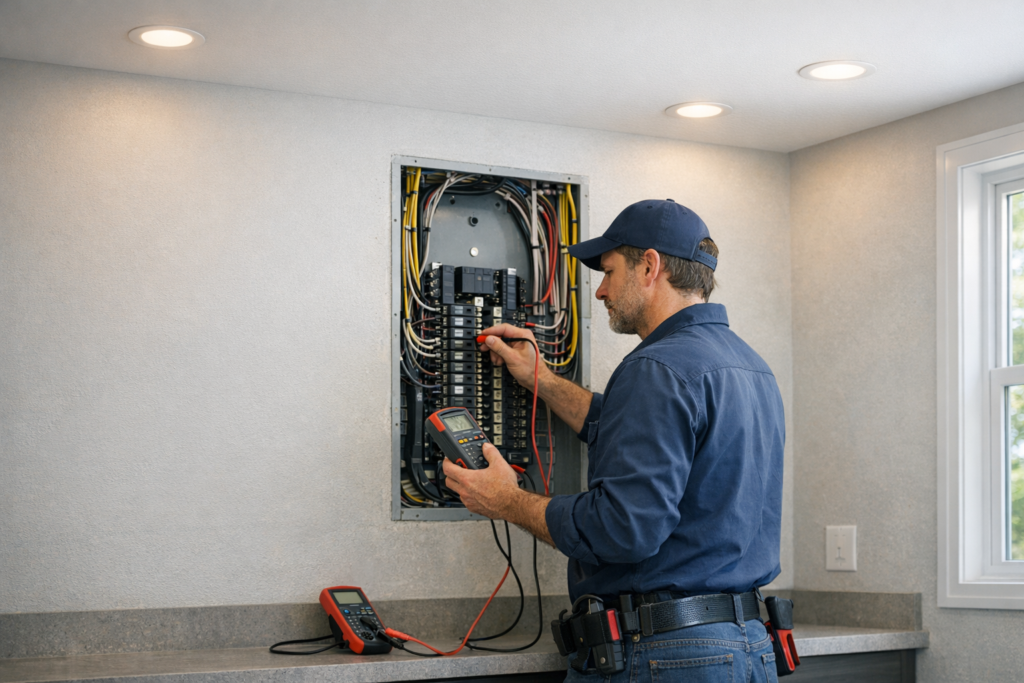
- Checking voltage behavior when the appliance starts
- Inspecting the electrical panel, breakers, and terminations
- Testing affected branch circuits
- Looking for loose, damaged, or overheated connections
- Reviewing appliance circuit size and load conditions
- Evaluating lighting controls, dimmers, and LED compatibility
- Checking grounding and bonding conditions where appropriate
- Reviewing whether the electrical service can support current and planned loads
- Identifying whether the issue may involve utility equipment
For commercial properties, troubleshooting may also involve mechanical equipment loads, three-phase equipment, tenant build-outs, panel schedules, voltage imbalance, lighting control systems, and preventative maintenance records.
Possible Solutions for Lights That Flicker With Appliances
The right repair depends on the cause. A minor lighting issue may need a simple fixture, dimmer, or connection correction. A property-wide voltage issue may require more extensive electrical work.
Dedicated Appliance Circuits
Installing dedicated circuits for high-demand equipment can reduce voltage dips on lighting circuits and improve system performance. This is commonly considered for appliances, pumps, HVAC equipment, commercial refrigeration, workshop tools, and other equipment with significant startup current.
Electrical Panel Repairs or Upgrades
If the panel has aging components, limited capacity, corrosion, damaged breakers, poor connections, or insufficient circuit space, a panel upgrade may be the most reliable long-term solution. Panel upgrades are also often considered when adding EV chargers, heat pumps, generators, additions, or major appliances.
Service Upgrades
When the entire electrical service is undersized for the property's demand, upgrading the service may be necessary. This can help support modern electrical loads more safely and reduce performance issues caused by insufficient capacity.
Repairing Loose or Damaged Wiring
If flickering is caused by a loose connection or damaged conductor, the fix may involve repairing terminations, replacing devices, correcting splices, or addressing damaged wiring. This type of work should always be performed by a qualified electrician.
Lighting and Dimmer Compatibility Improvements
LED flickering is sometimes caused or worsened by incompatible dimmers, low-quality lamps, aging drivers, or mixed bulb types on the same control. Updating dimmers, fixtures, or lamps can improve performance when the circuit itself is otherwise sound.
Generator and Transfer Equipment Considerations
In areas prone to outages, standby generators and transfer equipment can improve power reliability. However, generators must be properly sized and professionally installed so they work safely with the electrical system. Improper generator installation can create serious hazards.
Cost Considerations: What Affects the Scope of Repair?
The cost to correct flickering lights depends on what is causing the problem. A loose connection at a fixture is very different from an overloaded service that needs an upgrade.
Factors that affect the scope include:
- Whether the problem is isolated or building-wide
- The age and condition of the electrical panel
- Accessibility of wiring, junction boxes, and equipment
- Whether new circuits are needed
- Whether the appliance itself is failing
- Whether service equipment needs to be upgraded
- The complexity of commercial equipment or tenant spaces
- Any necessary coordination with utility equipment or permitting authorities
The most cost-effective approach is to diagnose the cause before replacing parts. Guessing can lead to unnecessary repairs while the actual hazard remains unresolved.
New England Electrical Systems and Seasonal Load Demands
Properties in New Hampshire, Massachusetts, Maine, and Vermont often face a combination of older wiring, historic construction, winter weather, seasonal equipment loads, and increased demand from modern technology. A home that once served basic lighting and appliances may now support heat pumps, sump pumps, EV charging, home offices, larger kitchens, security systems, backup generators, and smart devices.
Commercial and multifamily properties face similar pressures. Tenant improvements, added HVAC equipment, refrigeration, data systems, lighting retrofits, and maintenance deferrals can change how the electrical system performs over time.
If flickering has become more noticeable after adding new equipment, finishing a space, renovating a kitchen, installing HVAC equipment, or adding EV charging, the electrical system may need a load review.
Preventative Maintenance Can Help Avoid Bigger Electrical Problems
Flickering lights are often one of the first signs that an electrical system needs attention. Preventative electrical maintenance helps identify issues before they lead to downtime, equipment damage, or safety concerns.
Helpful maintenance steps include:
- Scheduling electrical inspections for older homes and commercial buildings
- Having panels evaluated when adding large appliances or equipment
- Correcting frequently tripped breakers instead of repeatedly resetting them
- Replacing damaged switches, receptacles, and fixtures
- Using properly rated surge protection for sensitive electronics
- Keeping electrical panels accessible and dry
- Reviewing standby generator readiness before storm season
- Planning upgrades before adding EV chargers, heat pumps, or major renovations
Preventative work is especially valuable for property managers, facility managers, landlords, and business owners who need reliable electrical performance and minimal disruption.
Frequently Asked Questions About Flickering Lights and Appliances
Is it normal for lights to flicker when the air conditioner turns on?
A very brief, slight dimming can be normal because air conditioners draw extra current when the compressor starts. If the flicker is strong, frequent, worsening, or affects the whole property, the circuit, panel, service, or equipment should be checked.
Why do my lights flicker when the microwave runs?
A microwave can place a significant load on a circuit. If the lights are on the same circuit or the circuit is already heavily loaded, the voltage drop may become noticeable. A dedicated circuit or wiring correction may be needed depending on the installation.
Can flickering lights damage electronics?
Minor, brief voltage dips are not usually the same as a major surge, but unstable voltage, loose neutrals, or repeated power fluctuations can be hard on electronics. Sensitive equipment should be protected, and recurring flickering should be evaluated.
Do LED lights flicker more than older bulbs?
LED lights can make voltage fluctuations more visible because their internal drivers respond differently than incandescent bulbs. Incompatible dimmers, poor-quality bulbs, or shared circuits can make LED flickering worse.
Should I replace my electrical panel if lights flicker with appliances?
Not always. The cause may be a fixture, dimmer, loose connection, overloaded circuit, appliance problem, or utility issue. However, if the panel is outdated, overloaded, damaged, or too small for modern loads, a panel upgrade may be recommended after inspection.
When to Call Electrical Constructors LLC
If your lights flicker with appliances and you are unsure whether the problem is normal or unsafe, the safest next step is a professional electrical evaluation. Electrical Constructors LLC provides residential, commercial, industrial, and new construction electrical services throughout New Hampshire, Massachusetts, Maine, and Vermont.
Our electrical services include troubleshooting, electrical repairs, panel upgrades, service upgrades, rewiring, lighting installation, generator installation, EV charger installation, surge protection, inspections, preventative maintenance, code corrections, and complete electrical system installations.
Flickering lights may be a minor nuisance, or they may be your electrical system's way of warning you about a problem. A qualified electrician can identify the cause, explain your options clearly, and help restore safe, reliable power to your property.