A commercial electrical inspection helps prevent business downtime by finding unsafe conditions, overloaded circuits, deteriorating components, and early signs of equipment failure before they interrupt operations. For businesses, property managers, facility teams, and commercial property owners, an electrical issue is rarely just an inconvenience. It can stop production, shut down offices, disrupt tenants, compromise refrigeration or security systems, and create safety risks that require immediate attention.
Electrical systems work quietly in the background, which is why problems often go unnoticed until something fails. A planned inspection gives you a clearer picture of system condition, capacity, safety, and reliability. It also helps you make informed decisions about repairs, upgrades, maintenance, and long-term electrical planning before an unexpected outage forces an emergency response.
Why Electrical Downtime Is So Costly for Businesses
When a commercial electrical system fails, the impact often extends far beyond replacing a breaker or repairing a damaged wire. Power interruptions can affect revenue, productivity, tenant satisfaction, customer experience, building security, communications, data systems, HVAC equipment, refrigeration, lighting, and specialized machinery.
For many businesses, even a short disruption can create a chain reaction. Employees may be unable to work, customers may leave, equipment may need to be reset, inventory may be at risk, and operations may not fully recover until hours after power is restored. In commercial buildings with multiple tenants, electrical problems can also create complaints, lease concerns, and emergency maintenance costs.
A commercial electrical inspection is a practical way to reduce these risks. Instead of waiting for warning signs to become failures, inspections identify conditions that need correction while there is still time to plan the work properly.
What a Commercial Electrical Inspection Looks For
A thorough electrical inspection evaluates the visible, accessible portions of a commercial electrical system and helps determine whether the system is safe, properly maintained, and suitable for current operating demands. The exact scope depends on the property, building use, equipment, and concerns, but several areas are especially important for downtime prevention.
Electrical Panels and Distribution Equipment
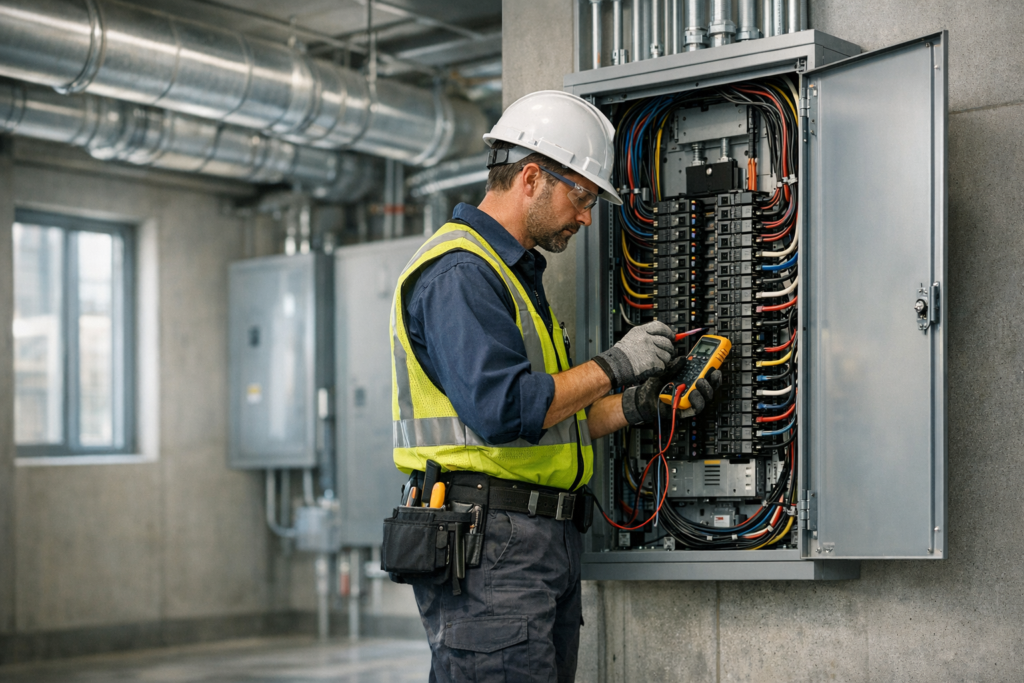
Panels, switchgear, disconnects, and distribution equipment are central to business electrical reliability. During an inspection, an electrician may look for signs of overheating, corrosion, loose connections, damaged breakers, improper labeling, missing blanks, worn components, and evidence that circuits have been added over time without a clear plan.
Panel condition matters because many business interruptions begin at the distribution level. If a breaker trips repeatedly, a connection overheats, or an old component fails, critical areas of the building may lose power without warning.
Overloaded Circuits and Capacity Concerns
Commercial spaces often evolve. Offices add workstations. Restaurants add equipment. Retail spaces install new lighting and point-of-sale systems. Warehouses add chargers, controls, machinery, and security systems. Over time, electrical demand can outgrow the original system design.
An inspection can help identify circuits that appear overloaded, equipment that may require dedicated circuits, and areas where the electrical service or panel capacity should be evaluated before expansion. This is especially important before adding EV chargers, large appliances, production equipment, HVAC upgrades, or new tenant improvements.
Loose Connections, Heat Damage, and Deterioration
Electrical systems experience heat, vibration, moisture, dust, and wear. Loose terminations and deteriorated components can create resistance, which can generate heat and eventually lead to failure. In commercial settings, these problems may develop slowly and remain hidden until equipment stops working or a safety hazard becomes obvious.
Experienced electricians know how to recognize clues such as discoloration, damaged insulation, buzzing equipment, burning odors, nuisance tripping, and signs of arcing. These conditions should never be ignored.
Lighting, Emergency Lighting, and Exit Path Reliability
Lighting failures affect safety, productivity, appearance, and customer experience. Commercial inspections may include review of general lighting, exterior lighting, parking lot lighting, emergency lighting, and exit pathway illumination where applicable.
Reliable lighting is particularly important for properties with evening operations, public access, warehouses, multifamily common areas, retail spaces, medical offices, and commercial buildings where safe movement is essential.
Grounding, Bonding, and Surge Protection
Grounding and bonding help electrical systems operate safely and protect people and equipment when faults occur. Surge protection can also reduce damage from voltage spikes caused by utility events, storms, equipment cycling, or other electrical disturbances.
Businesses in New Hampshire, Massachusetts, Maine, and Vermont often deal with severe weather, winter storms, and power quality concerns. While no device can prevent every electrical problem, proper grounding, bonding, and surge protection are important parts of a more resilient electrical system.
Generators and Standby Power Systems
For businesses that rely on generators or other backup power systems, inspections help confirm that equipment is ready before it is needed. A generator that does not start during an outage can quickly turn a manageable event into a major operational problem.
Generator-related inspection points may include transfer equipment condition, visible wiring, load considerations, maintenance concerns, and whether critical circuits are clearly identified. Backup power systems should be maintained and tested according to manufacturer recommendations and handled by qualified professionals.
How Inspections Help Prevent Business Interruptions
Electrical inspections reduce downtime by turning unknown risks into planned maintenance decisions. Instead of reacting to failures during business hours, you can prioritize repairs, schedule work during low-impact times, and budget for upgrades before the system becomes unreliable.
Common downtime-prevention benefits include:
- Finding problems early: Heat damage, deteriorated equipment, overloaded circuits, and failing components can often be addressed before they stop operations.
- Reducing emergency repairs: Planned service is usually easier to schedule and less disruptive than urgent troubleshooting after a failure.
- Improving safety: Identifying unsafe conditions helps protect employees, tenants, customers, contractors, and property.
- Supporting equipment reliability: Sensitive electronics, refrigeration, data equipment, production machinery, and HVAC systems depend on stable electrical infrastructure.
- Helping with capital planning: Inspection findings can help owners decide when to repair, replace, expand, or modernize electrical systems.
- Reducing repeat problems: A proper inspection looks for underlying causes rather than only addressing symptoms such as tripped breakers or flickering lights.
Warning Signs Your Business Should Schedule an Inspection
Some electrical problems are subtle, while others are clear warning signs that professional evaluation is needed. If your property is experiencing any of the following, it is time to schedule a commercial electrical inspection or troubleshooting service:
- Breakers trip repeatedly or fuses blow more than once
- Lights flicker, dim, or change brightness when equipment starts
- Outlets, switches, panels, or equipment feel warm to the touch
- There is a burning smell, buzzing sound, or visible discoloration near electrical equipment
- Extension cords or power strips are being used as a permanent solution
- Equipment shuts down unexpectedly or behaves inconsistently
- The building has aging panels, outdated wiring, or unclear circuit labels
- New equipment is being added and electrical capacity is uncertain
- Tenants report recurring electrical complaints
- Storms, flooding, leaks, or construction activity may have affected electrical components
Safety warning: Burning odors, sparking, smoke, scorched equipment, or repeated breaker trips should be treated seriously. Do not open panels or attempt electrical repairs unless you are qualified. Shut down affected equipment if it is safe to do so and contact a licensed electrician promptly.
What Happens During a Commercial Electrical Inspection
A professional inspection should be organized, practical, and focused on the building’s operating needs. The process typically begins with a discussion about the property, known concerns, equipment loads, recent changes, outage history, tenant issues, and future plans.
The electrician may then inspect visible electrical components such as panels, disconnects, breakers, grounding and bonding connections, lighting systems, receptacles, dedicated equipment circuits, generator connections, and areas with known performance issues. Depending on the scope, the inspection may also include testing, load evaluation, thermal observations, or recommendations for further diagnostics.
After the inspection, the most useful outcome is a clear explanation of findings. Business owners and property managers should understand which issues are urgent, which are maintenance items, and which upgrades may be worth planning for the future. Good inspection reporting helps separate true safety concerns from general improvements, so you can make decisions based on risk and operational importance.
How Often Should Commercial Properties Be Inspected?
Inspection frequency depends on the age of the building, type of occupancy, electrical load, equipment criticality, environmental conditions, and history of electrical issues. A small office with modern equipment may not need the same inspection schedule as a manufacturing facility, restaurant, medical office, multifamily building, or warehouse with heavy electrical demand.
As a practical rule, commercial properties should be inspected when purchasing or leasing a building, before major renovations, before adding significant electrical loads, after recurring electrical problems, following damage from storms or water intrusion, and as part of a preventative maintenance plan. High-demand facilities and buildings with older electrical systems may benefit from more frequent review.
If you are unsure, a licensed commercial electrician can help recommend an inspection interval based on the property’s actual use rather than a one-size-fits-all schedule.
New England Conditions Make Preventative Inspections Even More Important
Commercial properties throughout New Hampshire, Massachusetts, Maine, and Vermont often face electrical challenges tied to New England’s climate and building stock. Older buildings may have electrical systems that have been modified many times over decades. Winter weather can increase heating loads, strain backup power systems, and contribute to outages caused by snow, ice, wind, and utility interruptions.
Moisture is another concern. Snow melt, roof leaks, damp basements, coastal air in certain areas, and freeze-thaw conditions can contribute to corrosion and equipment deterioration. Even when a building appears to operate normally, hidden electrical wear may be developing behind the scenes.
Preventative inspection is especially valuable before winter, before a major buildout, or before peak operating seasons. It gives businesses time to correct problems before electrical demand increases or severe weather exposes weak points in the system.
Common Mistakes That Increase Downtime Risk
Many commercial electrical failures are preventable. The most common mistakes are not always dramatic; they are often small decisions repeated over time.
- Ignoring breakers that trip because they reset afterward
- Adding equipment without checking circuit capacity
- Using extension cords as long-term wiring
- Postponing panel upgrades even when space or capacity is limited
- Failing to label circuits clearly
- Skipping generator maintenance until an outage occurs
- Allowing unqualified repairs or temporary fixes to remain in place
- Waiting for tenant complaints before investigating old wiring or lighting problems
The most reliable commercial electrical systems are managed proactively. When electrical maintenance is treated as part of facility operations rather than an emergency expense, downtime becomes much easier to prevent.
Inspection Findings That Often Lead to Smart Upgrades
A commercial electrical inspection does not always mean major repairs are needed. Sometimes, the best result is confirmation that the system is in good condition. In other cases, inspection findings can point to upgrades that improve safety, efficiency, and long-term reliability.
Common recommendations may include panel replacement, service upgrades, dedicated circuits for equipment, lighting upgrades, surge protection, generator improvements, replacement of worn components, code corrections, improved labeling, or rewiring of problem areas. For businesses planning growth, electrical upgrades can also help ensure the building is ready for future technology, added equipment, or tenant improvements.
Energy-efficient lighting and controls are another opportunity. In many commercial properties, lighting improvements can reduce maintenance demands, improve visibility, and support a more professional environment while lowering energy usage over time.
Why Work With a Licensed Commercial Electrical Contractor
Commercial electrical systems are more complex than typical residential systems. They often involve larger services, three-phase equipment, life safety systems, tenant spaces, dedicated equipment circuits, backup power, and coordination with business operations. Inspection and repair work should be handled by qualified electricians with commercial experience.
An experienced commercial electrical contractor understands how to evaluate both safety and operational risk. The goal is not only to identify what is wrong, but also to explain what matters most, what can be scheduled, and what could affect uptime if left unresolved.
Electrical Constructors LLC provides residential, commercial, industrial, and new construction electrical services for customers throughout New Hampshire, Massachusetts, Maine, and Vermont. For commercial properties, that experience is especially important when inspections reveal the need for troubleshooting, electrical repairs, panel upgrades, service upgrades, rewiring, lighting work, generator installation, EV charger installation, surge protection, code corrections, or preventative maintenance.
Build Downtime Prevention Into Your Electrical Maintenance Plan
A commercial electrical inspection is one of the most effective ways to protect your business from avoidable interruptions. It helps uncover hidden problems, improve safety, support equipment reliability, and give owners and managers a practical plan for repairs or upgrades.
If your building has aging electrical equipment, recurring electrical issues, upcoming renovations, new equipment needs, or no recent inspection history, scheduling an inspection is a smart step. Addressing electrical concerns before they become emergencies helps keep your business operating, your property safer, and your electrical system better prepared for daily demands and New England weather.