
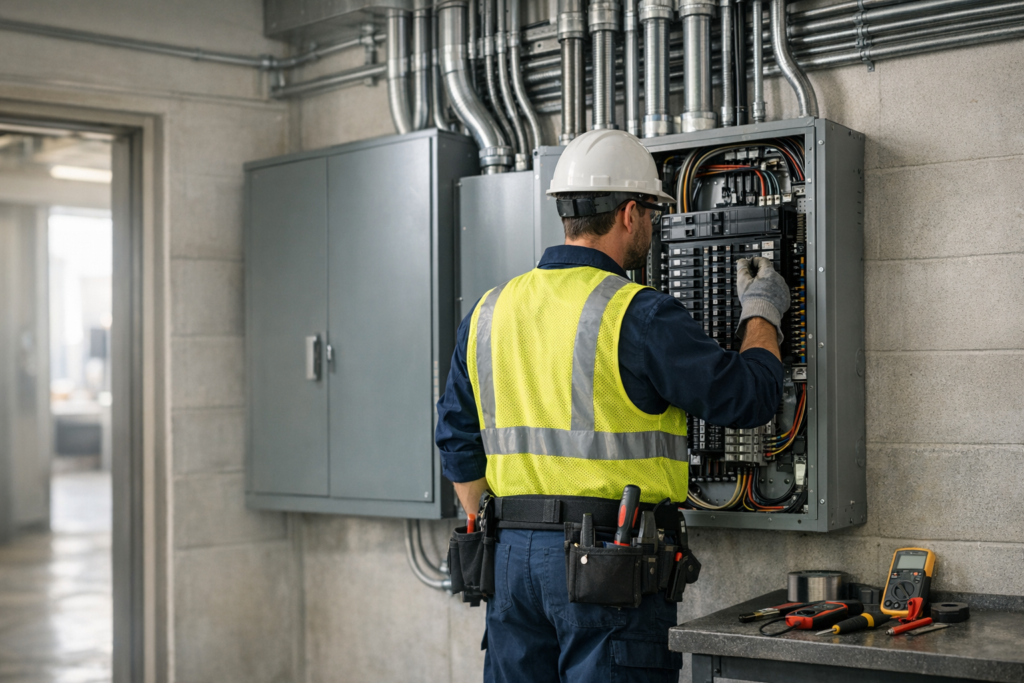
Routine electrical maintenance helps property managers reduce unexpected outages, improve tenant safety, extend the life of building systems, and control long-term repair costs. For multifamily properties, commercial buildings, mixed-use facilities, and managed real estate portfolios, electrical maintenance services are not just a convenience. They are a practical risk-management strategy that keeps buildings safer, more reliable, and easier to operate.
Why Routine Electrical Maintenance Matters for Managed Properties
Property managers are responsible for keeping buildings functional, safe, and responsive to tenant needs. Electrical issues can disrupt that responsibility quickly. A failed panel component, overloaded circuit, damaged outlet, failing exterior light, or malfunctioning emergency system can create tenant complaints, operational downtime, and potential safety concerns.
Routine electrical maintenance gives property managers a structured way to identify problems before they become urgent. Instead of waiting for a tenant to report flickering lights, tripped breakers, warm receptacles, or partial power loss, a qualified electrician can inspect key systems, test components, document deficiencies, and recommend corrections based on priority.
This is especially important throughout New Hampshire, Massachusetts, Maine, and Vermont, where many properties include older electrical infrastructure, additions completed over time, seasonal heating loads, winter storm exposure, and backup power concerns. In New England, proactive maintenance often makes the difference between a manageable repair and an avoidable emergency call.
Key Benefits of Electrical Maintenance Services for Property Managers
Electrical maintenance services are designed to support safety, reliability, code awareness, and long-term asset protection. For property managers overseeing multiple units or commercial spaces, the benefits often reach well beyond fixing visible problems.
Fewer Unexpected Electrical Failures
Electrical systems usually provide warning signs before a major failure occurs. Loose connections, heat damage, corrosion, nuisance tripping, buzzing equipment, deteriorated wiring insulation, and overloaded circuits can often be detected during routine inspections. Addressing these concerns early helps prevent service interruptions that affect tenants, employees, customers, or building operations.
Improved Tenant and Occupant Safety
Electrical hazards can develop gradually. Damaged receptacles, missing covers, improper extension cord use, overloaded outlets, exposed wiring, failed exterior lighting, and aging equipment all increase risk. Routine maintenance helps identify these issues and correct them before they create unsafe conditions.
Electrical work should always be performed by qualified, licensed electricians. Property staff may be able to recognize warning signs, but repairs, panel work, troubleshooting, and electrical modifications require proper training, equipment, and code knowledge.
Lower Emergency Repair Costs
Emergency electrical repairs are often more expensive than planned maintenance because they occur under pressure, outside normal scheduling, or after additional damage has developed. A planned maintenance program allows property managers to group repairs, budget more accurately, prioritize high-risk issues, and reduce last-minute disruptions.
Better Documentation for Property Operations
Professional maintenance creates a record of the condition of key electrical systems. This documentation can help property managers track recurring issues, plan capital improvements, support insurance or due diligence conversations, and communicate clearly with owners, boards, tenants, contractors, or facility teams.
Longer Service Life for Electrical Equipment
Electrical panels, breakers, disconnects, lighting controls, generators, motors, transformers, and distribution equipment perform best when installed correctly and maintained over time. Dirt, moisture, heat, vibration, corrosion, and loose terminations can shorten equipment life. Routine inspections and corrective maintenance help keep systems operating as intended.
What a Routine Electrical Maintenance Program Should Include
The right maintenance plan depends on the property type, age, occupancy, electrical load, and equipment on site. A multifamily building has different needs than a retail plaza, warehouse, office building, condominium association, or industrial facility. However, most effective programs include several core areas.
Electrical Panel and Distribution Equipment Inspection
Panels and distribution equipment are central to building safety and reliability. During maintenance, an electrician may check for signs of overheating, corrosion, improper labeling, missing knockouts, damaged breakers, loose covers, outdated components, double-tapped breakers where not permitted by equipment design, and evidence of moisture intrusion.
Accurate panel labeling is especially valuable for property managers. Clear circuit identification reduces troubleshooting time, helps maintenance staff respond safely, and supports future repairs or renovations.
Outlet, Switch, and Device Evaluation
Loose outlets, cracked cover plates, worn switches, and damaged receptacles are common in managed properties with frequent turnover or high occupant use. Routine checks can identify devices that need replacement before they fail or become hazardous.
In kitchens, bathrooms, laundry areas, garages, exterior locations, maintenance spaces, and other areas where shock protection may be required, electricians can evaluate whether existing devices are functioning properly and whether upgrades should be considered during planned improvements.
Lighting System Maintenance
Lighting affects safety, security, curb appeal, and energy use. Property managers should pay close attention to parking lots, walkways, stairwells, entryways, mechanical rooms, hallways, loading areas, and exterior building perimeters.
Routine lighting maintenance may include replacing failed lamps or fixtures, repairing photocells or timers, evaluating emergency and exit lighting, correcting flickering fixtures, upgrading inefficient systems, and addressing wiring issues that cause repeated failures.
Generator and Backup Power Review
In New England, winter storms, snow, ice, wind, and utility outages can place serious strain on managed properties. Buildings with generators or standby power equipment need regular attention to remain dependable when power is lost.
Generator-related electrical maintenance can include checking transfer equipment, reviewing load capacity, inspecting connections, testing startup and transfer functions as appropriate, and confirming that critical systems are properly supported. Mechanical generator service may also be needed depending on the equipment and maintenance plan.
Surge Protection and Power Quality Considerations
Modern buildings rely on sensitive electronics, network equipment, security systems, access controls, HVAC controls, appliances, point-of-sale systems, and office technology. Surge protection and power quality evaluations can help protect equipment from voltage events and identify recurring issues such as flickering lights, nuisance breaker trips, or equipment malfunctions.
EV Charger and Load Capacity Planning
More tenants, employees, and customers are asking about electric vehicle charging. Before installing EV chargers at a managed property, the electrical system should be evaluated for available capacity, safe installation options, parking layout, future expansion, and ongoing maintenance needs. Routine electrical maintenance services can help property managers understand whether existing infrastructure is ready for added demand.
Common Electrical Problems Property Managers Should Not Ignore
Small symptoms can point to larger electrical concerns. Property managers and maintenance teams should take the following warning signs seriously:
- Frequent breaker trips or recurring blown fuses
- Lights that flicker, dim, buzz, or fail repeatedly
- Warm outlets, switches, panels, or cover plates
- Burning odors, scorch marks, or discoloration near devices
- Buzzing, crackling, or popping sounds from electrical equipment
- Dead outlets or partial power loss in a unit or common area
- Extension cords or power strips being used as permanent wiring
- Exterior lights, stairwell lights, or emergency lights that do not function properly
- Corrosion, moisture, or rust near panels, disconnects, meters, or outdoor equipment
If any of these conditions are present, the safest next step is to schedule evaluation by a licensed electrician. Delaying troubleshooting can increase the risk of equipment damage, tenant inconvenience, and avoidable repair expense.
How Routine Maintenance Helps Control Operating Costs
Electrical problems are often easier and less expensive to correct when found early. A loose connection discovered during scheduled maintenance may require a targeted repair. If ignored, that same issue can lead to heat damage, failed equipment, downtime, or emergency replacement.
Routine maintenance also helps property managers make better budget decisions. Instead of reacting to one problem at a time, managers can prioritize repairs by urgency, group non-emergency work, plan panel upgrades, schedule lighting improvements, and prepare owners for future capital expenses.
Energy efficiency is another major cost factor. Lighting upgrades, occupancy sensors, improved controls, proper exterior lighting schedules, and updated electrical equipment can reduce waste while improving building performance. For commercial and multifamily properties, even modest efficiency improvements can support lower operating costs over time.
Electrical Maintenance for Residential, Commercial, and Mixed-Use Properties
Different property types require different maintenance priorities. A strong maintenance plan should reflect how the building is used and who depends on it every day.
Multifamily and Apartment Buildings
Multifamily buildings often require attention to common-area lighting, unit turnover issues, laundry room circuits, intercom or access systems, exterior lighting, panel labeling, tenant-installed devices, and aging branch circuits. Older buildings may also need periodic review for outdated wiring methods, undersized service capacity, or unpermitted modifications made over time.
Commercial Buildings and Retail Properties
Commercial spaces may have greater demands from HVAC equipment, refrigeration, office electronics, lighting controls, signage, production equipment, or tenant improvements. Routine maintenance helps property managers confirm that electrical systems continue to support current operations safely and reliably.
Condominium Associations and Managed Communities
Associations often need maintenance for shared lighting, garages, clubhouses, pumps, outdoor amenities, gate systems, and common electrical rooms. Documentation is particularly helpful for boards making repair and capital improvement decisions.
Industrial and Light Manufacturing Facilities
Industrial properties may involve higher loads, motors, control panels, dedicated equipment circuits, disconnects, and more complex distribution systems. Preventative electrical maintenance helps minimize downtime and supports safer operation for maintenance teams and equipment operators.
How Often Should Property Managers Schedule Electrical Maintenance?
The best maintenance schedule depends on building age, equipment condition, occupancy, usage, and risk tolerance. As a general planning approach, many managed properties benefit from a scheduled electrical inspection at least annually, with more frequent attention for high-use, older, mission-critical, or weather-exposed systems.
Property managers should also schedule electrical evaluation when:
- A new property is added to the management portfolio
- Tenants report recurring electrical problems
- A building is being renovated or reconfigured
- New equipment, EV chargers, HVAC systems, or commercial appliances are being added
- There has been water intrusion, storm damage, fire damage, or utility-related power issues
- Electrical panels or equipment are old, unlabeled, corroded, or frequently overloaded
- Ownership is planning a sale, refinancing, insurance review, or capital improvement project
A licensed electrician can help create a practical schedule based on actual site conditions rather than a one-size-fits-all checklist.
What Property Managers Can Do Between Professional Visits
While electrical repairs should be left to qualified electricians, property managers and maintenance staff can support safety by watching for visible issues and keeping clear records. Simple observation often helps catch problems early.
- Document tenant complaints involving lights, outlets, breakers, odors, or power loss
- Keep electrical rooms clear of storage, debris, and blocked access
- Report damaged covers, exposed wiring, or broken devices immediately
- Check common-area and exterior lighting regularly
- Track recurring breaker trips instead of repeatedly resetting them
- Maintain records of electrical repairs, inspections, upgrades, and equipment replacements
- Discourage the permanent use of extension cords and overloaded power strips
- Schedule professional troubleshooting for repeated or unexplained issues
The goal is not for property staff to perform electrical work. The goal is to recognize when something is wrong and involve a licensed professional before the problem escalates.
Common Mistakes That Lead to Electrical Maintenance Problems
Many electrical failures in managed properties are preventable. Property managers can reduce risk by avoiding several common mistakes.
Waiting Until Tenants Complain
Tenant complaints are important, but they should not be the only maintenance trigger. Some electrical hazards develop in mechanical rooms, panels, rooftops, basements, parking areas, and utility spaces where tenants may never notice them.
Using Temporary Fixes as Permanent Solutions
Extension cords, power strips, taped devices, bypassed controls, and repeatedly reset breakers are warning signs. Temporary workarounds can hide the real issue and increase risk.
Ignoring Panel Capacity During Renovations
Tenant improvements, appliance upgrades, HVAC changes, EV chargers, and added technology can increase electrical load. Before adding new equipment, property managers should confirm that the existing service, panels, and circuits are properly sized for the intended use.
Overlooking Exterior and Weather-Exposed Equipment
Snow, ice, rain, temperature swings, and road salt can affect outdoor electrical equipment throughout New Hampshire, Massachusetts, Maine, and Vermont. Meter areas, exterior disconnects, lighting circuits, signs, parking lot poles, and generator equipment should be part of the maintenance plan.
When Maintenance Becomes an Upgrade
Routine maintenance can uncover conditions that are better solved with an upgrade than repeated repair. Property managers should consider a larger electrical improvement when equipment is outdated, undersized, unreliable, difficult to source, frequently overloaded, or no longer suitable for current building use.
Common upgrade opportunities include electrical panel replacement, service upgrades, rewiring, LED lighting retrofits, surge protection, dedicated equipment circuits, emergency lighting improvements, generator installation, transfer equipment upgrades, and EV charging infrastructure.
A qualified electrical contractor can help determine whether repair, replacement, or phased improvement is the most practical option. This is especially helpful for property managers balancing tenant needs, owner budgets, and long-term building value.
How to Choose the Right Electrical Contractor for Maintenance
Property managers need an electrical contractor who understands both technical work and property operations. The right contractor should be able to troubleshoot efficiently, communicate clearly, document findings, prioritize safety concerns, and work around occupied buildings with minimal disruption.
When evaluating an electrical contractor, look for experience with:
- Residential and commercial electrical systems
- Multifamily, commercial, industrial, and new construction environments
- Electrical troubleshooting and repairs
- Panel upgrades and service upgrades
- Lighting installation and maintenance
- Generator installation and backup power systems
- EV charger installation and load planning
- Electrical inspections, code corrections, and preventative maintenance
Clear communication is essential. Property managers should expect practical findings, understandable recommendations, realistic scheduling, and transparency about which issues are urgent versus those that can be planned for future budgets.
Routine Electrical Maintenance Protects Properties Year-Round
Routine electrical maintenance is one of the most effective ways property managers can reduce risk, protect tenants, improve reliability, and preserve building value. A well-maintained electrical system supports daily operations quietly in the background, while a neglected system can become a source of repeated complaints, emergency calls, and costly downtime.
Electrical Constructors LLC provides electrical maintenance services for residential, commercial, industrial, and new construction properties throughout New Hampshire, Massachusetts, Maine, and Vermont. From troubleshooting and inspections to panel upgrades, lighting, generators, EV chargers, surge protection, and complete electrical system improvements, experienced electricians can help property managers keep buildings safer, more efficient, and prepared for long-term use.