Commercial electrical problems in office buildings can disrupt productivity, create safety risks, damage equipment, and lead to expensive emergency repairs if they are ignored. The most common issues include overloaded circuits, flickering lights, nuisance breaker trips, aging electrical panels, faulty outlets, poor power quality, emergency lighting failures, and wiring problems hidden above ceilings or behind walls. Some issues are minor signs of wear, while others indicate a system that is no longer meeting the building’s electrical demand.
Office buildings place unique demands on electrical systems. Computers, copiers, printers, network equipment, HVAC systems, conference room technology, security systems, lighting controls, breakroom appliances, and charging devices may all operate at the same time. In older buildings throughout New Hampshire, Massachusetts, Maine, and Vermont, electrical infrastructure may have been installed long before today’s technology needs were common. Understanding the warning signs can help property managers, business owners, and facility teams address problems before they become unsafe or disruptive.
Why Office Buildings Experience Electrical Problems
Electrical systems in commercial office buildings are designed to support a specific load, layout, and use. Problems often develop when the building’s electrical demand changes faster than the system is upgraded. A space originally built for basic lighting and a few receptacles may later be filled with workstations, servers, copiers, card access systems, video conferencing equipment, and electric vehicle charging needs.
Common causes of office electrical issues include:
- Outdated wiring or panels that no longer match modern electrical loads
- Tenant fit-outs and office renovations that add circuits without a full system review
- Overloaded receptacles from too many plug-in devices
- Loose terminations, worn components, or heat-damaged equipment
- Poor power quality affecting computers, servers, and sensitive electronics
- Inadequate maintenance of electrical rooms, panels, lighting, and emergency systems
- Seasonal demand changes from heating, cooling, snow-melt systems, and generator use
Because many commercial electrical problems develop gradually, routine electrical inspections and preventative maintenance are often the difference between a planned repair and an unexpected outage.
Overloaded Circuits and Breaker Trips
Frequent breaker trips are one of the most common electrical problems in office buildings. A circuit breaker is designed to interrupt power when a circuit is overloaded or when a fault condition occurs. If a breaker trips repeatedly, it should not be ignored or treated as a simple inconvenience.
In offices, overloaded circuits often happen when multiple workstations, printers, space heaters, coffee makers, or other high-demand devices are plugged into receptacles served by the same circuit. Portable space heaters are especially problematic in New England office buildings during the winter because they draw significant power and are often used in areas with older or insufficient branch circuits.
Repeated breaker trips may indicate:
- Too much equipment connected to one circuit
- A short circuit or ground fault
- A failing breaker
- Loose or damaged wiring
- Improper use of extension cords or power strips
Safety warning: A breaker that trips repeatedly should never be replaced with a larger breaker unless a qualified electrician confirms the wiring and equipment are rated for that change. Installing an oversized breaker on an undersized circuit can create a serious fire hazard.
Flickering or Dimming Lights
Flickering lights are another warning sign that should be evaluated carefully. While an occasional flicker from a loose lamp or aging fixture may be simple to correct, widespread flickering or lights that dim when equipment starts can point to a larger electrical issue.
Possible causes include loose connections, overloaded circuits, faulty lighting ballasts or drivers, poor neutral connections, aging wiring, voltage fluctuations, or problems with the building’s electrical service. In commercial settings, flickering lights can also reduce comfort and productivity, especially in offices where employees spend long hours under artificial lighting.
Modern LED lighting systems are efficient and reliable when installed correctly, but they still require compatible drivers, controls, dimmers, and wiring. If an office experiences recurring lighting problems after an LED retrofit, the issue may involve compatibility, control wiring, power quality, or installation methods rather than the fixtures alone.
Dead Outlets, Warm Receptacles, and Loose Connections
Dead outlets in an office are frustrating, but warm, discolored, buzzing, or loose receptacles are more concerning. These symptoms may indicate arcing, damaged wiring, worn contacts, overloaded outlets, or loose terminations inside the electrical box.
Office outlets see heavy use. Devices are plugged in and unplugged repeatedly, furniture may press against cords, and cleaning equipment may strain receptacles over time. Conference rooms, cubicle areas, copy rooms, and breakrooms are especially prone to receptacle wear because they support frequent and varied electrical loads.
Signs that an outlet needs professional attention include:
- Plugs falling out or fitting loosely
- Warm or hot faceplates
- Burn marks or discoloration
- Crackling, buzzing, or intermittent power
- A burning smell near the receptacle
- Repeated device power loss from the same outlet
Employees should be encouraged to report these conditions immediately. A qualified commercial electrician can test the circuit, inspect the wiring, and replace damaged devices before the issue becomes more serious.
Aging Electrical Panels and Insufficient Capacity
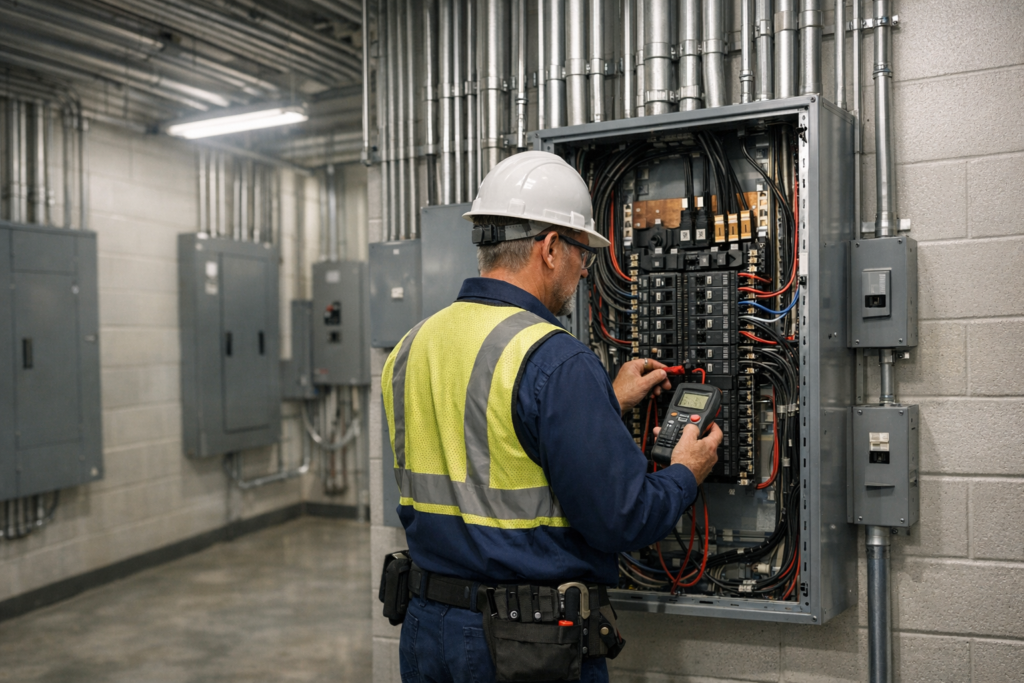
Many commercial electrical problems start at the panel. Electrical panels distribute power throughout the building, and they must be properly sized, labeled, maintained, and protected. As office buildings are renovated or expanded, older panels may become crowded, poorly labeled, or insufficient for current electrical demand.
Common panel-related issues include corrosion, missing directory information, overheating, double-tapped conductors where not permitted by the equipment, loose connections, obsolete components, and inadequate space for new circuits. In some older office buildings, panels may also be located in electrical rooms that are used for storage, limiting safe access for maintenance and emergency response.
An electrical panel upgrade or service upgrade may be necessary when an office building adds major equipment, expands tenant spaces, installs new HVAC systems, adds EV chargers, upgrades lighting controls, or experiences ongoing capacity problems. A licensed electrician can evaluate the load, condition, and configuration of the electrical distribution system before recommending repairs or upgrades.
Poor Power Quality and Sensitive Office Equipment
Modern offices rely on electronics that can be sensitive to power disturbances. Computers, servers, network switches, security systems, phone systems, medical office equipment, and point-of-sale systems may not tolerate unstable power well.
Power quality problems can appear as unexplained computer restarts, equipment lockups, premature power supply failures, dimming lights, nuisance trips, data equipment issues, or intermittent device failures. Causes may include voltage fluctuations, harmonic distortion, inadequate grounding, overloaded circuits, loose connections, or issues related to large equipment starting and stopping.
Not every equipment problem is caused by the electrical system, but recurring failures or inconsistent performance should be investigated. Electrical troubleshooting may include load measurements, voltage testing, thermal inspection where appropriate, circuit tracing, grounding evaluation, and review of how sensitive equipment is connected.
Improper Use of Extension Cords and Power Strips
Extension cords and power strips are often used as quick fixes in offices that do not have enough conveniently located receptacles. While temporary cord use may be appropriate in limited situations, relying on cords as permanent wiring is a warning sign that the electrical layout does not match the way the space is being used.
Common problems include overloaded power strips under desks, cords run across walkways, daisy-chained plug strips, damaged cord insulation, and office equipment plugged into devices not intended for high electrical loads. These conditions create trip hazards, overheating risks, and maintenance concerns.
A better long-term solution is to have a licensed electrician evaluate the office layout and install properly located receptacles, dedicated circuits, floor boxes, furniture feeds, or other code-compliant electrical infrastructure suited to the workspace.
Emergency Lighting and Exit Sign Failures
Emergency lighting and exit signs are easy to overlook until they are needed. In a power outage, fire alarm event, or evacuation, these systems help occupants move safely through the building. Failed batteries, damaged heads, burned-out lamps, faulty charging circuits, or disconnected units can leave areas without proper illumination during an emergency.
Office buildings in New England may experience power disruptions from winter storms, wind, ice, and utility issues. Emergency lighting should be included in routine inspections and maintenance planning, especially in stairwells, corridors, exits, mechanical areas, and common spaces.
If emergency lights do not activate during testing or exit signs are dim, damaged, or not illuminated, the system should be serviced by a qualified professional. These issues affect occupant safety and should not be deferred.
Lighting Control and Occupancy Sensor Issues
Lighting controls can improve energy efficiency, reduce operating costs, and support comfort, but they must be properly designed and installed. Occupancy sensors, vacancy sensors, dimmers, timers, daylight harvesting systems, and low-voltage controls can malfunction if they are wired incorrectly, poorly located, incompatible with fixtures, or not adjusted for the space.
Common complaints include lights turning off while rooms are occupied, sensors failing to detect movement, conference room lights flickering during dimming, or lights staying on after hours. These problems waste energy and frustrate employees, but they are often correctable with proper troubleshooting and adjustment.
When upgrading to LED lighting or adding controls, it is important to consider fixture compatibility, driver type, control zones, ceiling height, room layout, and how people actually use the space.
Generator and Backup Power Problems
Reliable backup power is important for many commercial properties, especially offices that support critical operations, IT infrastructure, security systems, refrigeration, medical or professional services, or tenant communication needs. Generator problems often become obvious only after utility power fails, which is the worst time to discover that the system has not been maintained.
Common generator and backup power issues include battery failure, transfer switch problems, undersized systems, neglected maintenance, fuel-related issues, and circuits that were never properly prioritized. For offices in New Hampshire, Massachusetts, Maine, and Vermont, winter storms and extended outages make generator preparedness an important part of electrical planning.
A commercial electrician can help evaluate which loads should be supported during an outage, inspect transfer equipment, coordinate generator installation, and recommend maintenance practices that improve reliability.
Hidden Wiring Problems Above Ceilings and Behind Walls
Office renovations often happen in stages. Walls are moved, cubicles are added, data cabling is installed, lighting is relocated, and tenant spaces are reconfigured. Over time, abandoned wiring, unsupported cables, improper junctions, damaged conduit, or poorly documented changes can accumulate above ceilings and behind walls.
These hidden issues may not be obvious until a renovation, inspection, equipment failure, or troubleshooting call exposes them. Warning signs can include intermittent power, mislabeled circuits, unexplained breaker trips, buzzing sounds, localized heat, or inconsistent operation of lighting and receptacles.
Before major tenant improvements, build-outs, or office expansions, an electrical assessment can identify existing deficiencies and reduce the risk of costly surprises during construction.
Electrical Problems in Older New England Office Buildings
Many office buildings throughout New Hampshire, Massachusetts, Maine, and Vermont have been renovated multiple times over decades. Some were originally built for a much different electrical load than today’s offices require. Historic and older buildings can present additional challenges, including limited electrical room space, older wiring methods, outdated panels, limited grounding, and pathways that are difficult to access without disturbing finished spaces.
Older buildings can often be upgraded safely and effectively, but they require careful planning. A qualified commercial electrician can evaluate existing conditions, identify safety concerns, and recommend practical improvements that support modern office technology while respecting the building’s structure and use.
When to Call a Commercial Electrician
Some electrical symptoms require prompt professional attention. Business owners, property managers, and facility managers should contact a licensed electrician if they notice any of the following:
- Repeated breaker trips or unexplained power loss
- Burning smells, buzzing, crackling, or visible sparks
- Warm panels, outlets, switches, or cords
- Discolored receptacles, switches, or breaker components
- Flickering lights across multiple areas
- Emergency lights or exit signs that fail testing
- Frequent equipment failures or unexplained shutdowns
- Electrical issues after renovations or tenant changes
- Insufficient outlets causing heavy power strip use
Electrical troubleshooting in commercial buildings should be handled by qualified professionals. Office electrical systems are more complex than typical residential systems, and improper repairs can create hazards, damage equipment, or lead to recurring failures.
How Preventative Electrical Maintenance Helps
Preventative maintenance helps identify commercial electrical problems before they interrupt operations. A well-planned maintenance program can improve safety, reduce downtime, extend equipment life, and help property teams budget for upgrades instead of reacting to emergencies.
Commercial electrical maintenance may include:
- Panel inspections and torque checks where appropriate
- Breaker and circuit labeling verification
- Lighting and control system inspections
- Emergency lighting and exit sign testing
- Thermal imaging when conditions warrant it
- Generator and transfer switch inspection coordination
- Receptacle, switch, and device condition checks
- Load evaluation before renovations or equipment additions
Preventative maintenance is especially valuable for multi-tenant buildings, medical offices, professional office suites, mixed-use commercial properties, and buildings with critical IT or security systems.
Cost Considerations for Office Electrical Repairs
The cost to correct commercial electrical issues depends on the problem, access, equipment condition, electrical load, and whether the repair requires minor troubleshooting or a larger upgrade. Replacing a worn receptacle is very different from upgrading a panel, tracing hidden wiring, adding dedicated circuits, or redesigning lighting controls.
Property owners should consider both immediate repair cost and long-term reliability. A low-cost patch may not be the best solution if the same circuit is overloaded, outdated, or poorly suited to current office use. In many cases, investing in dedicated circuits, panel improvements, LED lighting upgrades, surge protection, or better power distribution can reduce future service calls and improve building performance.
Building a Safer and More Reliable Office Electrical System
The best way to manage commercial electrical problems is to address them early, document repairs, and plan upgrades around how the office is actually used. That includes evaluating electrical capacity before adding equipment, avoiding permanent reliance on extension cords, maintaining emergency systems, and scheduling inspections before small issues become operational disruptions.
Electrical Constructors LLC provides residential, commercial, industrial, and new construction electrical services for customers throughout New Hampshire, Massachusetts, Maine, and Vermont. For office buildings, commercial properties, tenant improvements, and facility maintenance needs, working with an experienced electrical contractor helps ensure electrical systems are safe, dependable, and ready to support modern business operations.